Textured Stucco
Types of textured stucco
It is necessary to distinguish textured stucco (also called structural) from skimmed stucco. The purpose of the latter is thick-layer leveling of walls for painting or ceramic tile sticking. In other words, skimmed stucco is the base, a preparatory layer that is not a finishing wall coating.
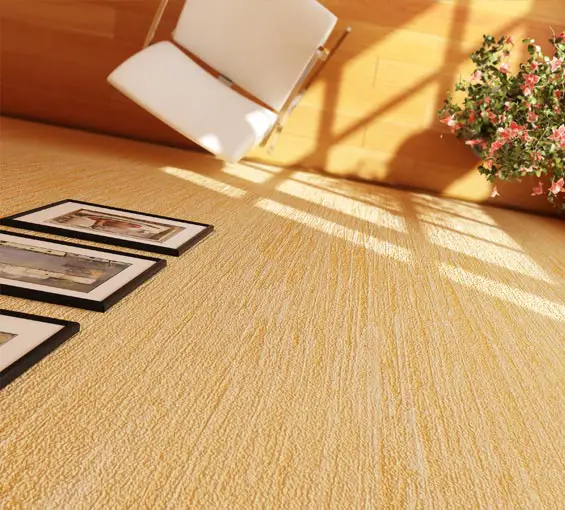
Photo 1 — Traditional Florentine stucco in wood effect (cork wood effect) Florentino by Clavel in the corridor
Types of textured stucco
It is necessary to distinguish textured stucco (also called structural) from skimmed stucco. The purpose of the latter is thick-layer leveling of walls for painting or ceramic tile sticking. In other words, skimmed stucco is the base, a preparatory layer that is not a finishing wall coating. Structural stucco, on the contrary, creates a decorative surface. This type of material is considered a finishing coating.
Textured stucco is equally good for internal works (wall, ceiling and interior structural element finishing) as well as external works (textured facade stucco — an aesthetically attractive and impact-resistant material).
They are divided by type of binding agent, as well as by the structure of the coating itself.
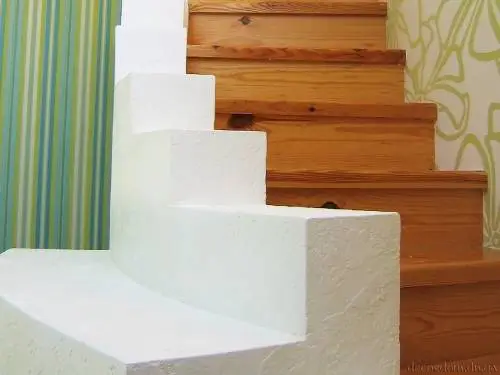
Photo 2 — Textured stucco, texture 'Marseilles wax' (made from Knauf stucco)
Types of stucco by structure:- beetle (Reibeputs)
- wool (Rollputz);
- sheepskin (Kratzputs);
- stucco paint (Streichputs).
The texture of the coating depends on the size and shape of the grain filler used in the tool, as well as on the technological techniques of material application.
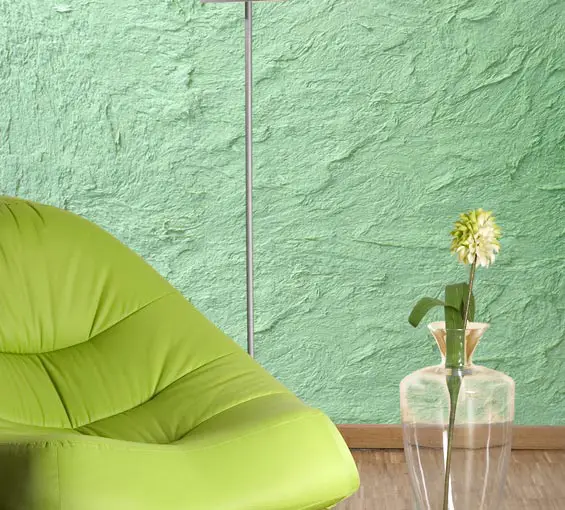
Photo 3 — Colored stucco Bousillage Rustique (Bousillage Rustique) by Clavel
Types of stucco by type of binding agent:Mineral stucco based on cement
They represent a dry mixture that needs to be mixed with water for application. This type is used on practically all mineral surfaces. The distinctive feature: high breathability and non-flammability of the material. Therefore, it is rational to use it as an external insulator.
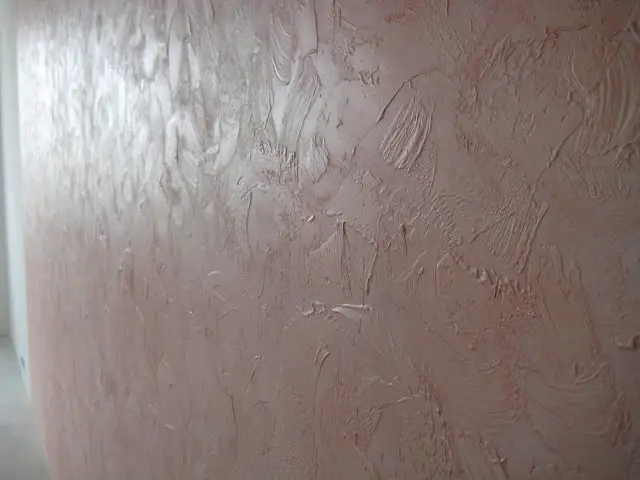
Photo 4 — Homemade textured stucco, texture 'Leonardo'
Acryl stucco based on acrylate resinsReady-to-use stucco — a water-dispersed composition. It can be applied to all types of mineral substrates, as well as on old dispersive coatings. This type of stucco is inferior to mineral in terms of breathability, but superior in climatic stability.
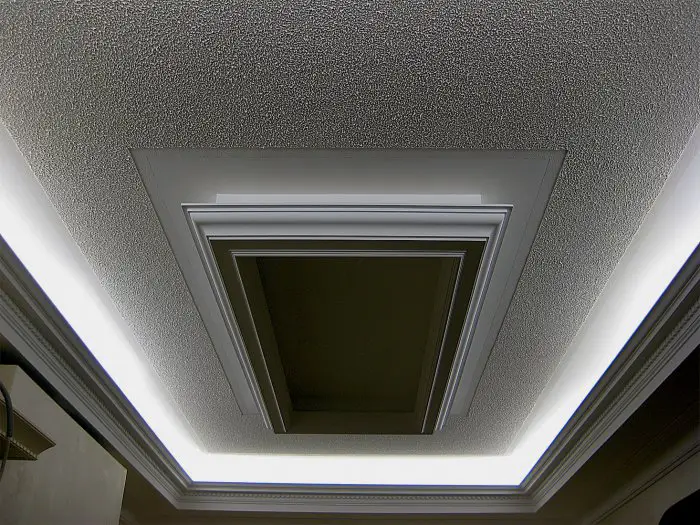
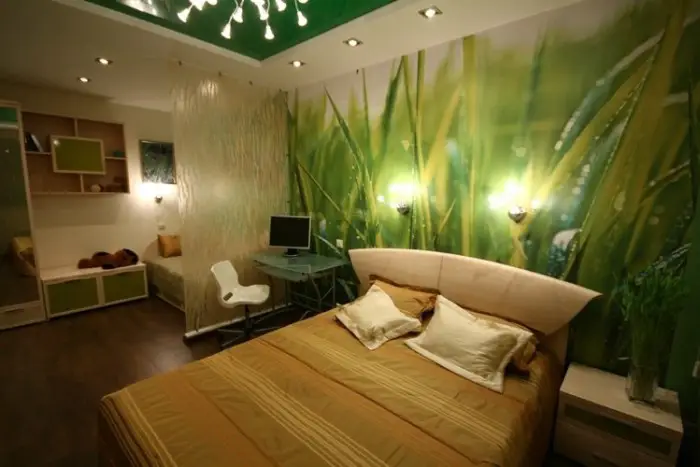
Photo 5 — Textured ceiling stucco in combination with a complex gypsum board structure and backlighting
Silicate stucco based on 'liquid' potassium glassReady-to-use composition. In addition to mineral substrates, it can be applied on silicate coatings. This type of stucco is characterized by high breathability. Color options, however, are quite limited, and the material itself costs significantly more than acrylate stucco. Silicate stucco can only be applied on silicate primers. These coatings can only be repainted or repaired with silicone or silicate materials. According to Western standards, the use of such stucco is not permitted due to its relatively toxic nature.
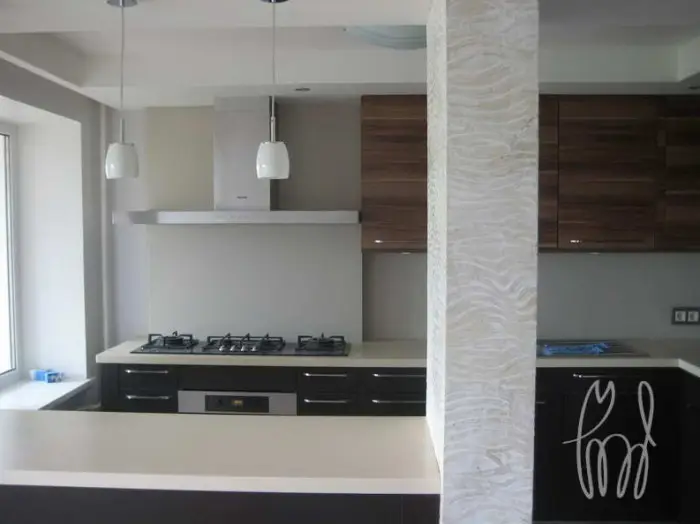
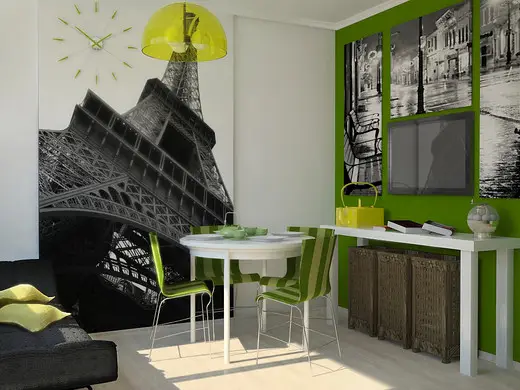
Photo 6 — Textured stucco in the kitchen
Silicone stucco based on silicone resinsAlso ready for use. This is not a material, but rather a 'collection' of advantages: such stucco can be applied to all types of mineral substrates and on old dispersive coatings; breathability indicators and water/grease repelling properties of the material are very high, this material is the most durable. A significant but quite expected drawback: high price.
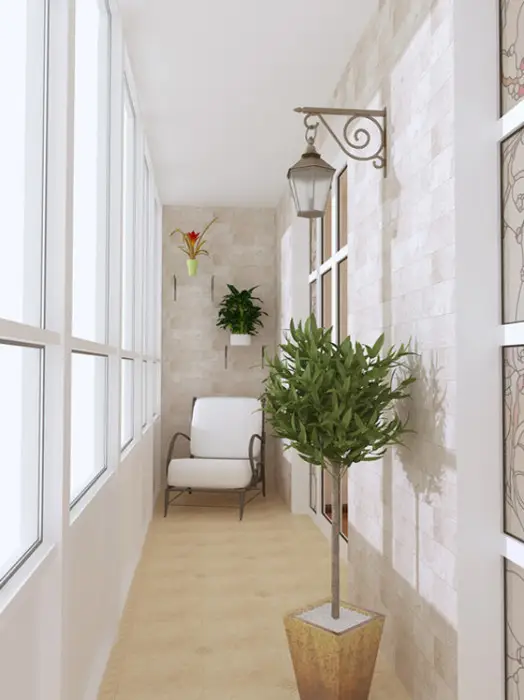
Photo 7 — Decorative stucco 'stone' on the balcony
Textured decorative stucco: application area
Article on the topic: stucco for various surfaces.
Which stucco to choose: dry mix or ready-made?
Price is the first factor in material selection. Dry mixes are cheaper than acrylate stucco, but are they such a profitable purchase as they seem at first glance?
Price, we assure you, should be of interest to you not even last.
Besides the material cost, it is worth taking into account:
- time and labor costs for material transportation;
- costs of finishing works;
- grain size of the material;
- material consumption per 1 m²;
- drying time of the composition;
- cost and methods of surface coloring;
- the need for additional works.
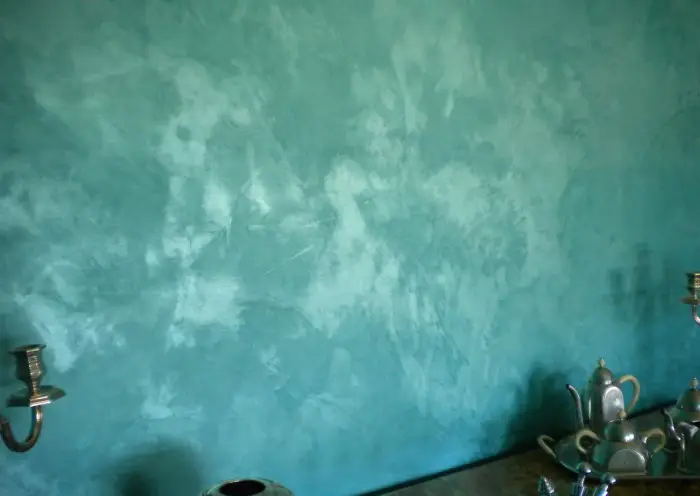
Photo 8 — Decorative stucco in 'wet silk' effect
Let's go point by point:
Mineral stucco is difficult to store and transport due to paper packaging (sensitive to moisture, possible rupture, inconvenience in lifting packages). However, dry mixes take up less space than ready-made stucco when stored. Plastic packaging of acrylate stucco can be reused multiple times: this material is easy to transport (has a handle), and does not require special storage conditions (not sensitive to moisture).
Score: 0:1 in favor of acrylate stucco.
It is not easy to properly prepare a mixture from dry stucco due to the need to follow mixing procedures. Plus, more time and effort is spent on mixing. Also, you must prepare exactly the amount of mixture you can use before it sets — no extra dry stucco can be prepared in advance. If you prepare more than needed, you waste material; if less, it takes more time to make a new batch. Not to mention the need for special tools for mixing, having a container for preparing the composition and enough water. Here — a point in favor of ready-made mixes, no alternatives.
Score: 0:2 in favor of acrylate stucco.
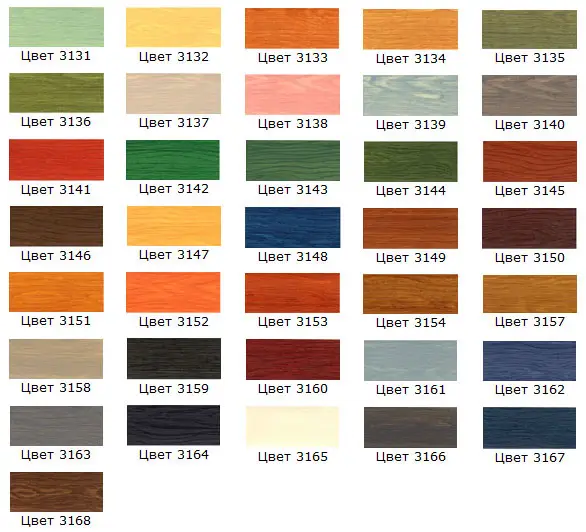
Photo 9 — Color matching chart of Tikkurila
Regarding grain size, fine grain is not produced in mineral stucco. Acrylate stucco grain can range from 0.5 mm to 4 mm. It is easier to plan a textured pattern with acrylate stucco and control material consumption.
Score: 0:3 in favor of acrylate stucco.
On average, mineral stucco uses about 3.8 kg/m², while acrylate stucco uses only 1.2 kg/m² (based on each millimeter of grain, i.e., with a 2 mm grain consumption is 2.4 kg/m²).
Score: 0:4 in favor of acrylate stucco.
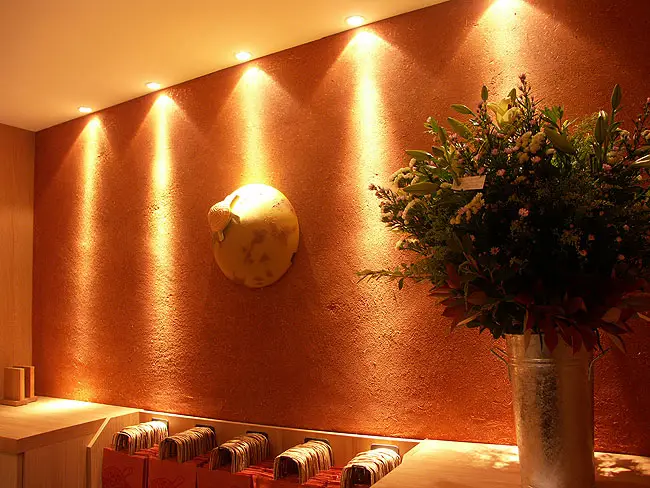
Photo 10 — Decorative stucco Ceresit, color 'brick'
Mineral stucco fully sets in 28 days, while acrylate sets in 7. If textured stucco is acrylate, painting can be done the next day, while cement-based stucco should not be painted earlier than in a month!
Score: 0:5 in favor of acrylate stucco.
Dry stucco is often white, with pastel tones being rare exceptions. Coloring such stucco is problematic due to the high likelihood of error in adding colorant. This is an expensive and difficult way to paint stucco. For painting dry mix, additional silicone primer and facade paint of the desired color must be purchased. Acrylate stucco is also available in white, but can also be colored by the manufacturer.
Score: 0:6 in favor of acrylate stucco.
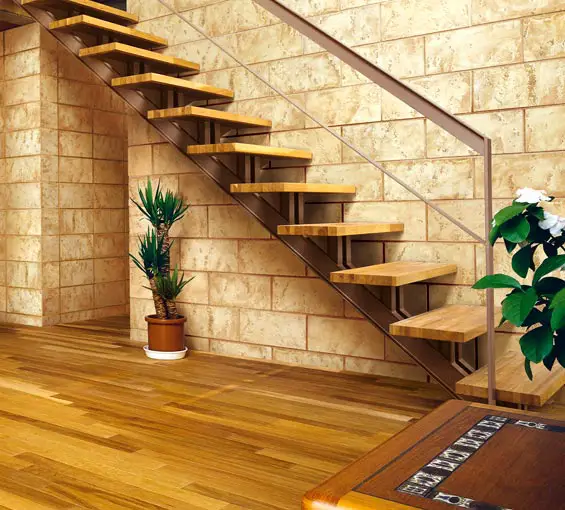
Photo 11 — Lime decorative stucco imitating the porous texture of natural stone — 'stone' Traventino by Clavel
And the last point. Dry stucco bonds worse to wall surfaces. Acrylate stucco does not require additional mandatory painting and has much higher adhesion to the base material.
Score: 0:7 in favor of the leader.
With textured stucco, we have more or less clarified our choice. Now let's look at how to apply textured stucco.
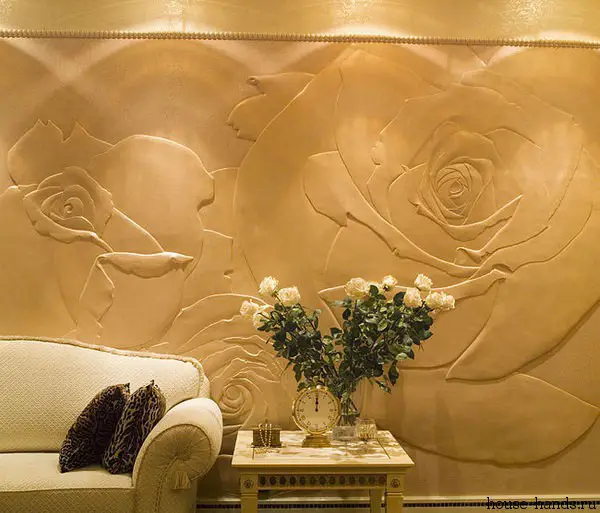
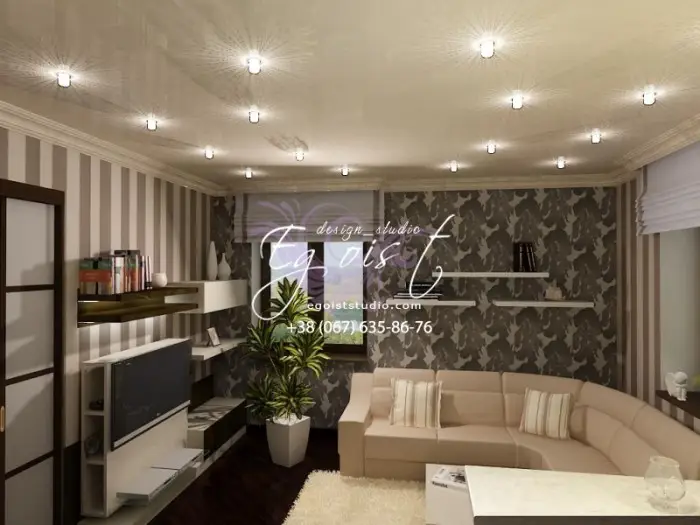
Photo 12 — Textured stucco. Volumetric flowers in the living room interior
Applying textured stucco: how to do it correctly?
The application technique of textured decorative stucco includes the following stages:
- working with the base (cleaning, preparation for stucco application);
- applying stucco;
- applying texture to the surface;
- and, if necessary, painting the stucco.
Before applying stucco, walls are primed for better material adhesion.
IMPORTANT! Some types of textured stucco require a base layer to be applied, and then the texture is laid over it. For example, the application technique of Venetian stucco looks like this: a layer of VENETO stucco, followed by up to 9 layers of textured stucco MARBELLAS, ENCAUSTO or TREVIGNANO, each of which differs in grain size and final coating appearance.
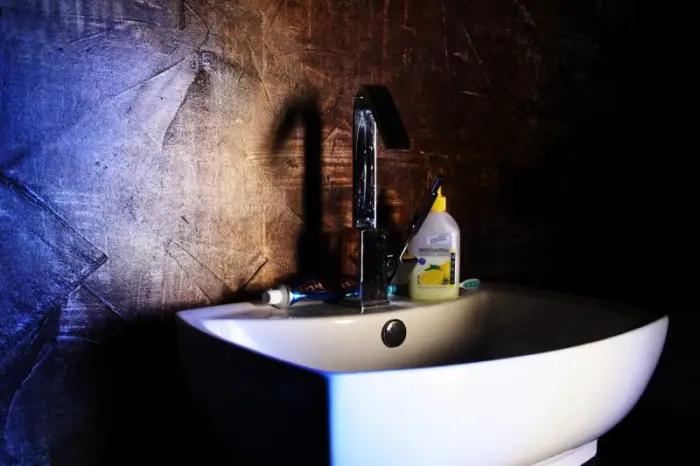
Photo 13 — Textured stucco for the bathroom
Tools for work:
- trowel;
- metal smoother;
- sponge with pores.
IMPORTANT! Since the technique of applying ready-made stucco is described below, mixing tools and containers for mixing stucco are not included in the tool list.
Manufacturers recommend that beginners not take on large volumes of work and rely solely on the description of works on the product label: some types of textured stucco, such as 'Venetian', are rather expensive and time-consuming materials. For working with them, special courses or master classes must be attended.
Working with textured stucco is extremely interesting, as a result you will not get any identical coating. It's convenient to invent new textures by applying stucco on gypsum board: a smooth surface readily absorbs moisture, has good adhesion to applied stucco, and most importantly, it's inexpensive.
Any available tools can be used in the work: templates, trowels, textured rollers (using a roller for texture application is useful when working with large areas). Such 'training' can be done quite well on a balcony in the absence of a workshop room: there's enough light and air, and it's not so scary if you get the walls or floor dirty with paint/stucco.
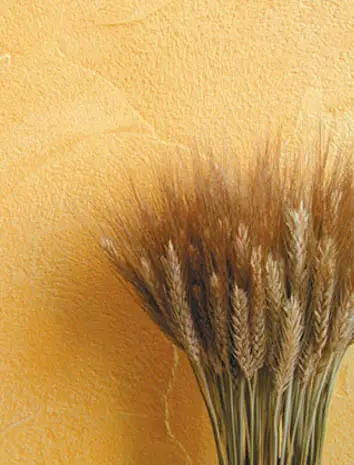
Photo 14 — Textured stucco with fibrous fibers imitating the texture of natural stone, Riviera by Clavel
Regarding the process of applying stucco to wall or ceiling surfaces, the technique is clearly visible from this photo tutorial.
Textured stucco made by yourself (PHOTOS)
Before starting the work, walls are leveled and spackled. On a dry, flat surface, 1-2 layers of primer are applied and wait for full drying. Then, using a narrow trowel, stucco is applied to the smoother.
IMPORTANT! Use primer of the same grade as the textured stucco you purchased. For example, company VGT recommends using VGT-ConcreteContact primer. The same applies to other materials used: it is better to color decorative stucco OLYMP with OLYMP colorant according to the DEKART COLOR system.
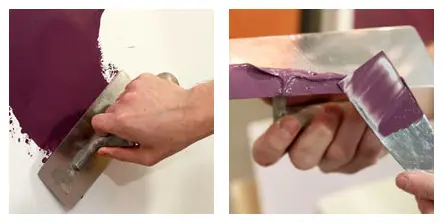
Photo 15 — Stage one
VGT: textured stucco (VIDEO)
The first base layer will set the tone for the future surface pattern. The movements of the trowel should be short and rounded. Each movement should be performed in a new random direction. The general direction of work on the surface — from left to right. Working from bottom to top or top to bottom is your choice. Practice has shown that it's more convenient to move from the upper left corner to the lower right corner.
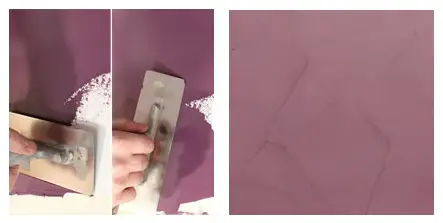
Photo 16 — Stage two
After applying stucco to the surface, a relief should form. The first textured layer dries in 8 hours. The second layer can be applied with the same trowel as the first. Try to make shorter and intermittent movements, applying stucco crosswise.
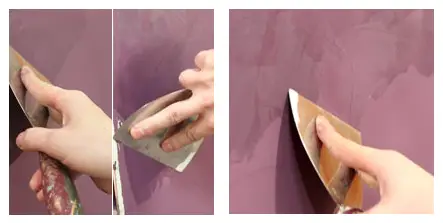
Photo 17 — Stage three
By moving crosswise, you create a 'butterfly' pattern: by moving the trowel in one direction, you apply the material, and by moving in another direction, you remove excess. Thus, you hide the relief of the first layer, but 'marble' veins appear on the surface. After the second layer dries (in 4 hours), the surface can be slightly polished with fine-grit sandpaper. At that time, you can also apply protective wax. This can be either clear wax or a coating with a decorative effect: pearl, golden or silver sheen.
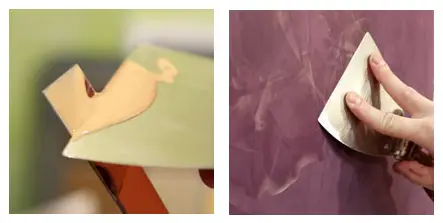
Photo 18 — Stage four
For applying wax, you can also use a soft trowel. If the previous layer was done in the 'butterfly' style, apply the wax similarly. After the surface dries, polish it using a wool cloth. Finished stucco after wax coating becomes water-resistant and can be safely washed with soap solution without using cleaning agents.
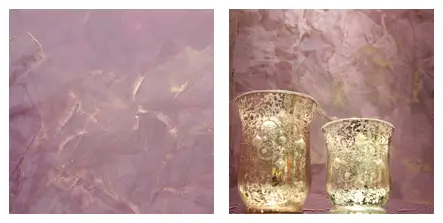
Photo 19 — Stage five
Textured stucco on walls made by yourself (VIDEO)
Price of textured stucco
The cost of textured stucco can vary significantly depending on the type of texture it creates.
For example, you can buy BOLARS Beetle stucco for $14.6/25 kg, elastic decorative surface material Wave for $42/7 kg, decorative stucco DUF Kratzputs (sheepskin) for $76/25 kg, coating Lacra Rollputz (wool) for just $21/25 kg, and Optimit Mann stucco for $30/25 kg.
Textured stucco: labor costs
- In Moscow — from 285 rubles/m²;
- In Kiev — from 69 UAH/m².