Insulation of a Wooden House – From the Outside, Features of Insulation Materials
The process of insulating a wooden house begins with laying the foundation and the first log course. Construction technology implies the initial installation of insulation between logs/rafters – a log joint sealant.
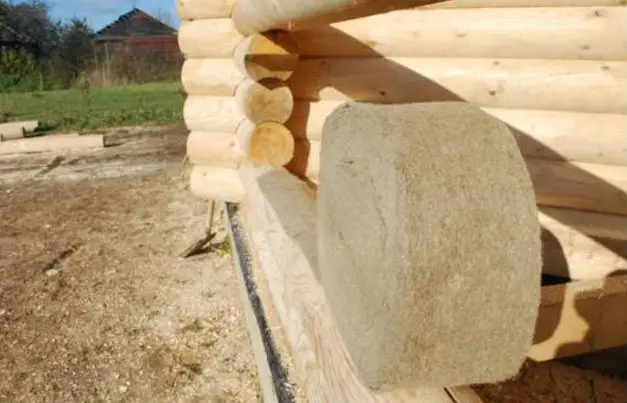
Photo 1 – Insulating the wall courses
Materials used for log joint sealing:
- natural moss;
- common hemp;
- rolled jute.
Natural insulation is placed directly into pre-cut longitudinal grooves, either sawn or chiseled. After the house is built, tamping (packing) is performed using a specialized tool called a "tamping rod" to compact the insulation.
After tamping, the effect can be enhanced by sealing joints and cracks with a sealant to ensure waterproofing.
Insulation After Settlement
After building wooden houses, wait for the settlement process to complete. Then proceed with finishing work, which must include insulation.
Insulation with Mineral WoolExternal and internal cladding of houses built from wooden logs or timber is typically done using insulation made from mineral wool.
Mineral wool insulation is popular due to the following advantages:
- close fit without additional fastening;
- reliable thermal insulation;
- sound insulation;
- ease of installation.
Mineral wool is resistant to moisture and microbial attack.
Mineral wool is available in rolls, mats, or pre-sized panels.
Mineral wool is used as an insulating layer under metal or vinyl siding, and it is commonly used when cladding with blockhouse siding.
IMPORTANT! A wooden frame (strapping) is required for installing mineral wool on walls, just as for roof insulation.
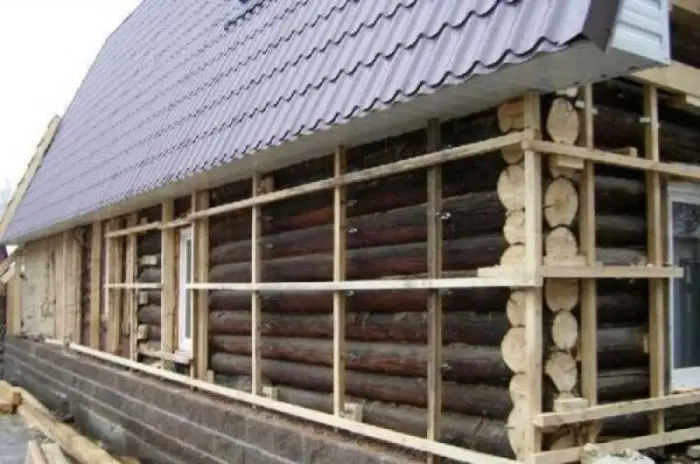
Photo 2 – Framed strapping for mineral wool
Insulation with Polystyrene (Pentaplast)Advantages of insulating walls with pentaplast (expanded polystyrene) – simple installation without a framing structure, low cost.
For cladding with this insulation, it is sufficient to attach polystyrene boards directly to the cleaned and prepared building surface using adhesive compounds and fasteners.
After covering the facade with polystyrene, decorative plaster can be applied, selected according to the architectural style.
Major drawbacks of polystyrene include:
- low vapor permeability;
- lack of fire resistance.
Therefore, for insulating wooden houses, which must "breathe" and be maximally protected from fire, polystyrene is not recommended unless installed professionally, following manufacturer guidelines and proper board alignment with required gaps.
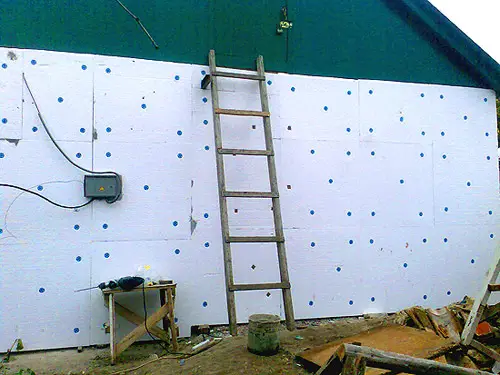
Photo 3 – Insulating with polystyrene
Insulation using this material is possible from inside or outside, provided a professional approach is followed: correct adherence to manufacturer’s instructions, proper board placement with required gaps.
Polystyrene is used for ceilings and walls.
Insulating the Floor in a Wooden House
Missing floor insulation leads to 30% heat loss.
Installation TechnologyInsulation is installed on a previously assembled frame (strapping). Standard insulation process includes:
- base layer – wooden boards or panels. Used to provide a surface for insulation installation;
- lower waterproofing layer – waterproofing membrane laid over the base panels;
- insulation material itself – can be boards, mats, or rolls;
- upper waterproofing layer – membrane secured to the prepared frame using staples or nails;
- vapor barrier.
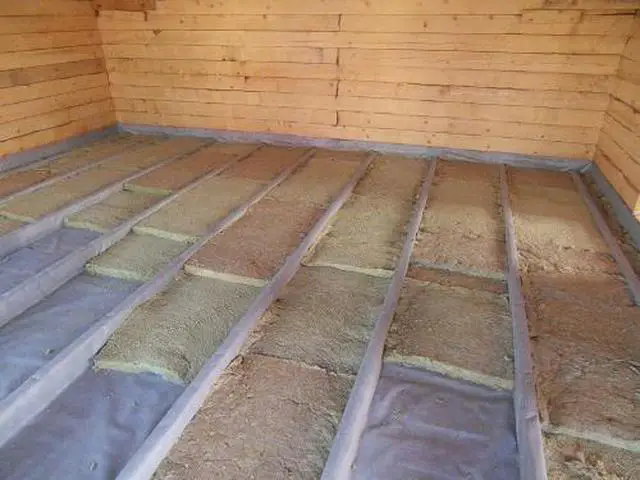
Photo 4 – Floor insulation
Materials for Floor InsulationCommon insulation materials used:
- mineral wool (glass, slag, rock);
- ecowool;
- polyurethane foam;
- foamol;
- polystyrene;
- isolon.
After completing insulation installation, you can proceed with laying the finished floor: wooden boards, laminate, parquet, etc.
Special Features of Ecowool InstallationThe installation of this modern material, ecowool, differs significantly.
This insulation consists of: 80% cellulose, 20% natural additives: boric acid, lignin-based biocide.
Advantages of ecowool:
- eco-friendliness;
- moisture resistance;
- resistance to bacterial damage;
- high thermal insulation performance;
- fire resistance – ecowool does not support combustion; it only smolders.
Disadvantage: high cost.
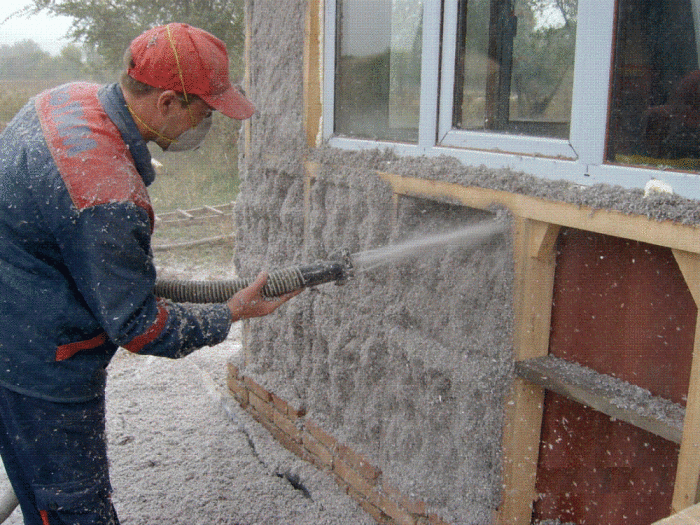
Photo 5 – Insulating with ecowool
Ecowool is available in sheet form and can be installed traditionally on strapping with underlayment and waterproofing.
A more practical and efficient method is using a blowing machine. The insulation is blown under pressure through a hose – either in liquid form or as dry mix – onto walls and floors.
The material bonds to the surface due to the adhesive properties of lignin.
Blown-in ecowool insulation technology has emerged relatively recently. Although more expensive, its practicality is undeniable.
Modern construction increasingly uses ecowool for insulating wooden houses due to its simplicity and high efficiency.
External Insulation of Wooden Houses
External insulation of wooden houses is carried out using established technical methods.
The process involves the following key steps:
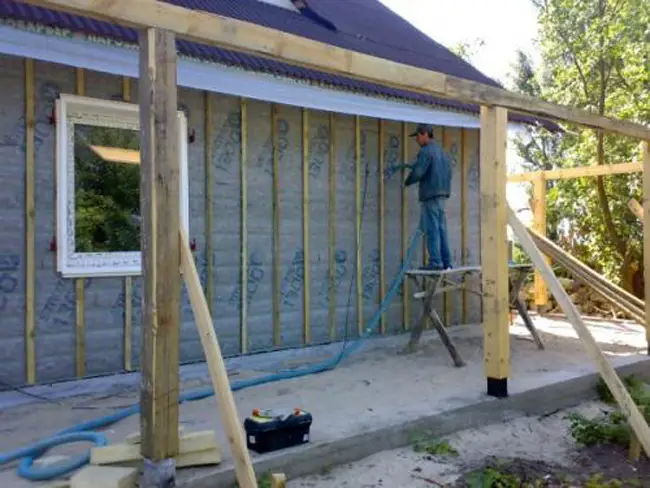
Photo 6 – External insulation process
After the insulation layer, the facade is clad with a chosen material: metal or vinyl siding, blockhouse cladding with various textures.
Video: External Insulation of a Wooden House
Video provides a clear visual demonstration of the complexity and sequence of insulating a wooden house’s facade.
" "