House from log – advantages and disadvantages, wood processing technologies
Houses built from logs are always relevant. Beautiful, durable, cozy structures are immune to changing fashion trends.
Advantages and disadvantages
Why build from natural, pre-treated wood? Let's assess undeniable benefits and possible drawbacks of structures made from solid logs.
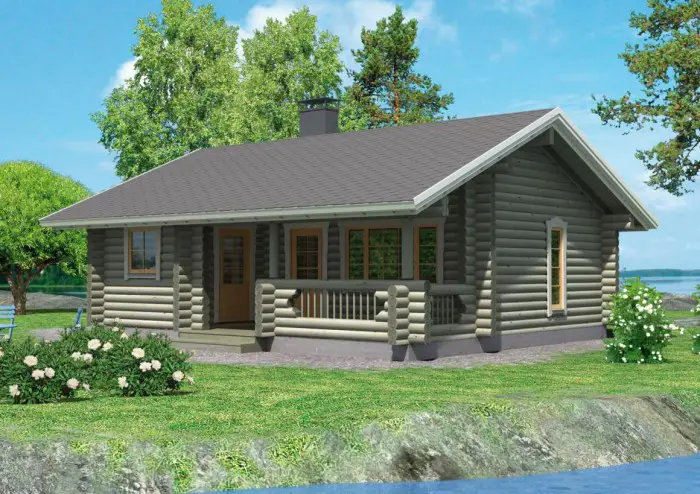
Photo 1 – House 7x8
The main advantages of log houses include:
Thermal conductivityWood has inherently low thermal conductivity. Therefore, log houses are warmer than stone or brick buildings.
For example, if a log has a diameter of 10 cm, it is equivalent to a wall built two bricks thick, with a total thickness of 51 cm. Building a house from thick logs can significantly reduce heating costs in winter, without needing to insulate walls with mineral wool or similar materials.
Energy savings during heating season are further enhanced by a wooden house’s ability to maintain an optimal internal microclimate. In summer, such a house heats up slowly, and pleasant coolness remains in rooms for a long time. Therefore, you can save on air conditioning use and electricity consumption, especially when using large-diameter logs.
VentilationWood naturally allows air to pass through microscopic pores. Therefore, even with closed windows and doors, the house is replenished with fresh, clean air by up to 20% without needing to ventilate!
HumidityThe humidity level in a house built from round logs is always maintained at an optimal level. Wood 'breathes' – it performs natural moisture exchange.
Fire resistanceWood is flammable. During log cabin construction, pre-treated logs are used, which are impregnated with specialized, reliable protective agents – fire retardants. These substances ensure fire resistance for decades. Additionally, fire protection can always be extended using impregnation.
Eco-friendlinessNatural wood is the most environmentally friendly material used by builders today. No harmful chemicals or toxins are present in the logs. You, your family, and loved ones will live in a completely safe home.
AestheticsTalking about the beauty of wood could go on forever. Natural wood can be enhanced with stylish finishes. Exclusive log homes are luxurious and highly attractive structures!
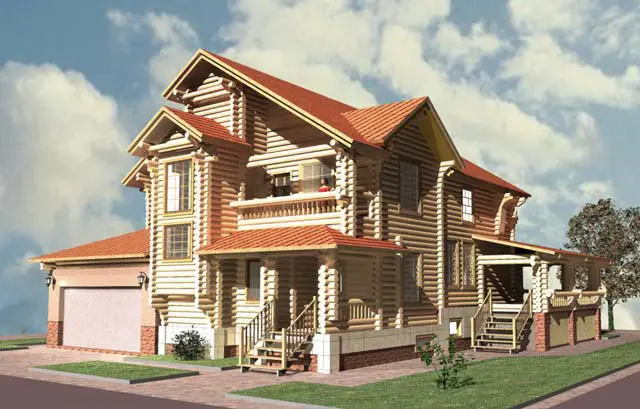
Photo 2 – Luxury log house
Log cabins can be built in a chalet style, or you can choose a Finnish design.
Moreover, houses made from pre-treated, machine-sanded logs do not require additional finishing materials. Basic treatment with antiseptics and lacquer coatings is sufficient.
EfficiencyConstructing a house frame of 10x12 m or 10x10 m can take only 2–3 weeks. Houses of 6x8 m or 6x7 m can be built in 1.5–2 weeks.
Construction is convenient and resembles assembling a kit, without using cement mortar.
Disadvantages of log houses include:
ShrinkageShrinkage is unavoidable. Even when using pre-treated logs, you must wait until the structure has fully settled.
Shrinkage duration varies – from 6 months to 2 years. You can reduce this process by purchasing machine-sanded, factory-dried logs.
Non-sanded logs require additional labor for cleaning, leveling, sanding, and drying. Therefore, such material delays construction and increases settlement time.
IMPORTANT! Install doors and windows, and perform internal and external finishing only after the settlement process is complete! After settling, the structure may sink up to 7 cm.
House from calibrated logs
Building a house from pre-treated, calibrated logs is convenient and cost-effective. Here’s how the material is prepared:
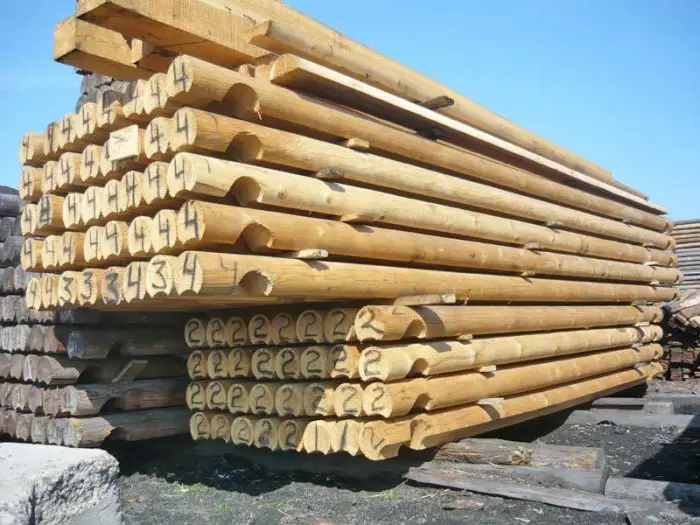
Photo 3 – Calibrated log
Advantages of building with calibrated logs
External appearanceThe external look of such a structure is stunning in natural beauty. Internal and external finishing of the log cabin can be omitted.
Absence of large gapsManual processing of calibrated logs allows saving on interstave insulation (placed between logs), as large gaps are prevented during assembly.
House from hand-joined logs
A high-quality log is required for a hand-joined log house.
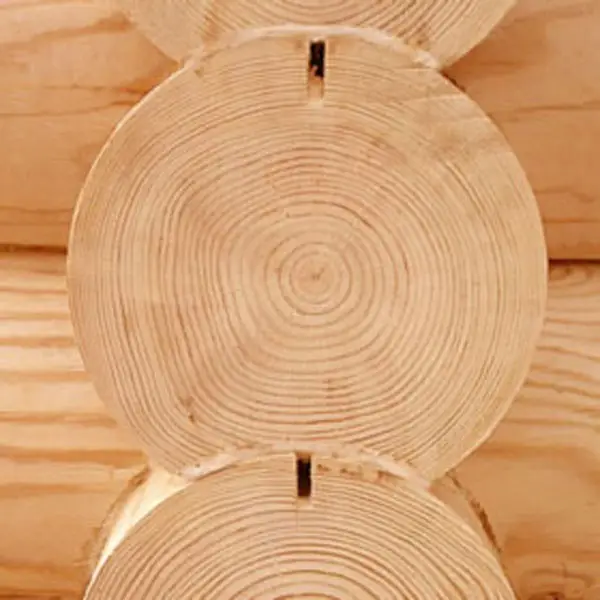
Photo 4 – Log without defects
Log selection
Key parameters considered when selecting logs:
IMPORTANT! If budget allows, it is recommended to use 'dry-stem' wood – wood dried naturally.
Log processing technologies
There are two current manual processing techniques:
- Unpeeled (bark-retaining) log;
- Planed (smoothed) log.
An unpeeled log is considered 'under-processed'. Minimal bark removal preserves sapwood. A natural resin layer remains, maintaining wood’s ability to 'breathe', and increasing material durability.
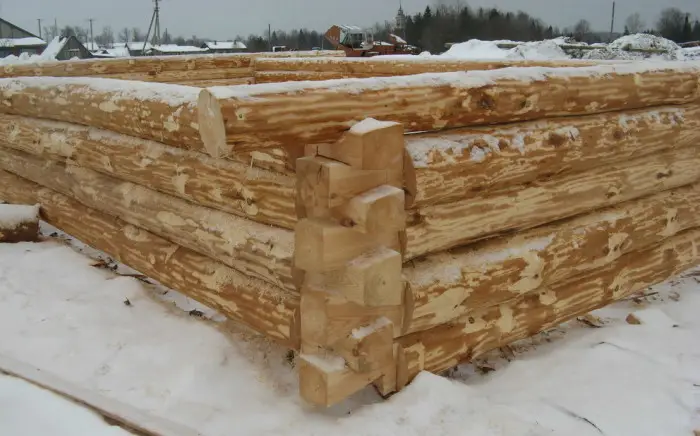
Photo 5 – Log cabin made from unpeeled logs
Planed logProcessed with an electric planer. A slight taper remains between the base and top of the log.
Log houses built from hand-processed logs are shown in photos.
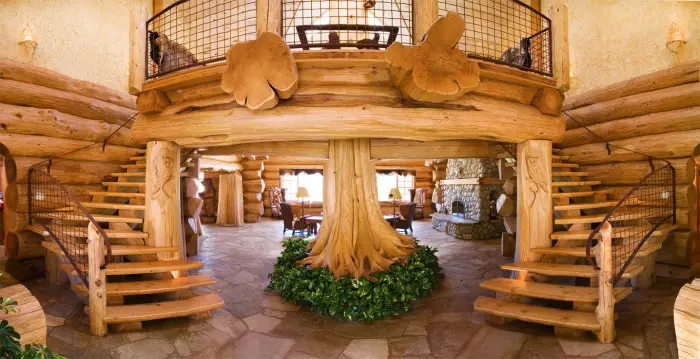
Photo 6 – Hand-joined logs
Video: Log house
Video shows amazing interior designs you can apply to your new 'natural' home.
Log house prices
Cost of log houses depends on these factors:
- project cost;
- material cost;
- labor costs;
- transport and unloading.
Project complexity influences pricing. Important factors: wood species selection, house size, and finishing quality.
For example, a 10x10 m house built from 180 mm diameter logs costs from $14,000. Finishing work increases the cost by up to 50%.