There can be your advertisement
300x150
Double-Pitched Roof with Your Own Hands
The roof crowns the entire building. It's crucial that it complements the architectural idea started on the facade, especially in the case of a private cottage. How beautiful and practical a gabled roof can be, so easily mistakes can be made during its construction.
Roofing work is significantly more expensive than other construction tasks due to the complexity of execution and the need for specialized professional skills in installers. Therefore, when installing a pitched roof, the golden rule 'measure seven times, cut once' has never been more relevant.

In this article, we offer a step-by-step guide to building a gabled roof on the example of a wooden framed house. All information provided is advisory in nature, so some steps may vary depending on individual circumstances.
The main construction material required for building the roof frame is timber. We will need beams with cross-sections of 50 x 150 mm and 150 x 150 mm. The quantity of timber depends on the roof's configuration, height, and the building's perimeter.
Preparation for Roof Installation
Before starting roof installation, it's necessary to install a floor slab separating the attic space from the lower level. This is done using wooden beams that span from one wall to the opposite wall, resting on the perimeter timber.
Beam cross-section should be 50 x 150 mm if the attic won't be used, or 150 x 150 mm if the attic space will be habitable. For greater structural stability, floor beams should ideally rest on the wall plate (mauerlat) at points where vertical supports of the house frame are located.
Floor beams, also known as overhangs or 'transfers', will simultaneously serve as roof eaves. They must extend beyond the building's outer walls by at least 40 cm. This measure is essential to protect walls and foundation from diagonal rain and runoff water from the roof to the base of the structure.
Perpendicular to the overhangs, a 50 x 150 mm timber beam is installed along the entire building perimeter. This will serve as the base for the dormer wall supports. Fastening can be done using nails or screws.
After the beam is laid, proceed to install vertical supports and their top plate. Supports are made from 50 x 150 mm timber. Spacing depends on load calculations for the specific roof. In any case, spacing should be between 600–1200 mm, and ideally a multiple of 300 mm — this size is most convenient for efficient material cutting with minimal waste.
Installing the Truss System
Before installing rafters, extend the walls with two gables and complete them at the highest point of the future roof ridge. Gable supports can be made from 50 x 150 mm timber, occasionally doubled at intervals of 1–1.5 meters.
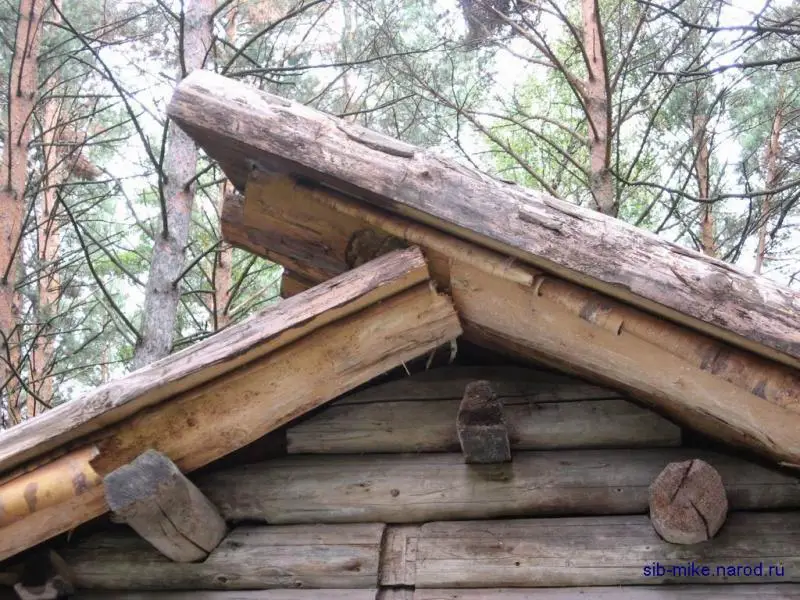
Rafters are placed on top of the dormer wall's top plate, standing on edge. They connect at the ridge point and at the points where they rest on the top plate and wall plate. For maximum stability, rafters are carefully trimmed and fitted to the overhangs almost to perfection.
An alternative method to enhance rafter stability is to embed the rafter foot into the overhang beam. After completing the rafter installation, all excess timber length is trimmed at the peak so that the rafter pair forms a perfect 'A' shape.
Roof Sheathing and Cladding
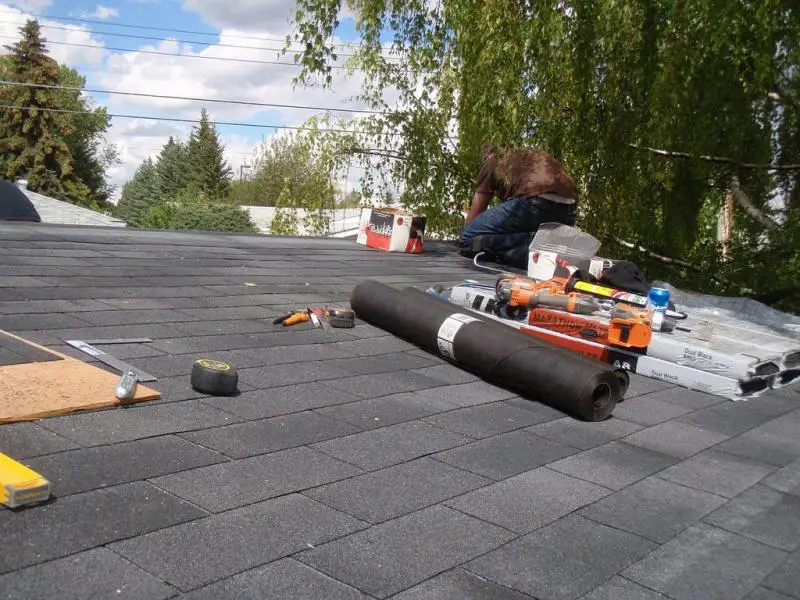
After completing rafter installation, install the sheathing using unplaned boards 22–25 mm thick. The sheathing should be laid in staggered joints to increase overall roof strength. Then, secure a waterproof membrane using a construction stapler and install the chosen roofing material.
If using bituminous tile or similar material, the sheathing must be made from oriented strand board (OSB) or moisture-resistant plywood — in this case, it must be solid, not spaced. During roofing installation, especially when the roof is not yet covered with the final finish, wind direction and the structure’s potential sail effect must be carefully considered.
On average, installing a gabled roof takes about 3–4 days for a team of three workers and one assistant.