Foundation Pouring Technologies
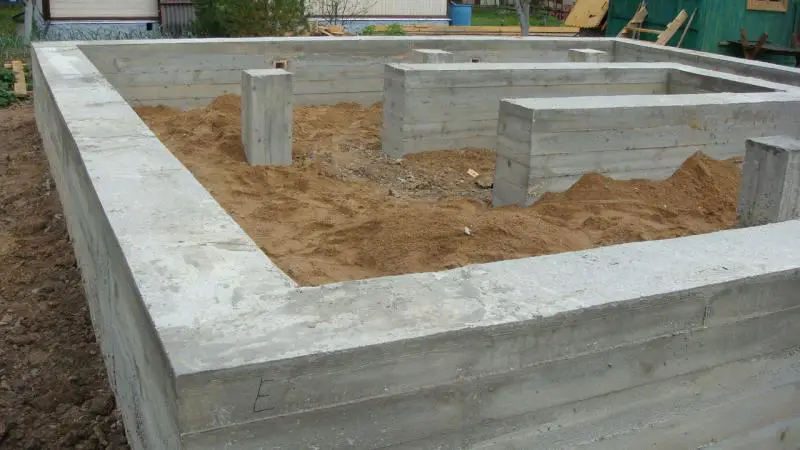
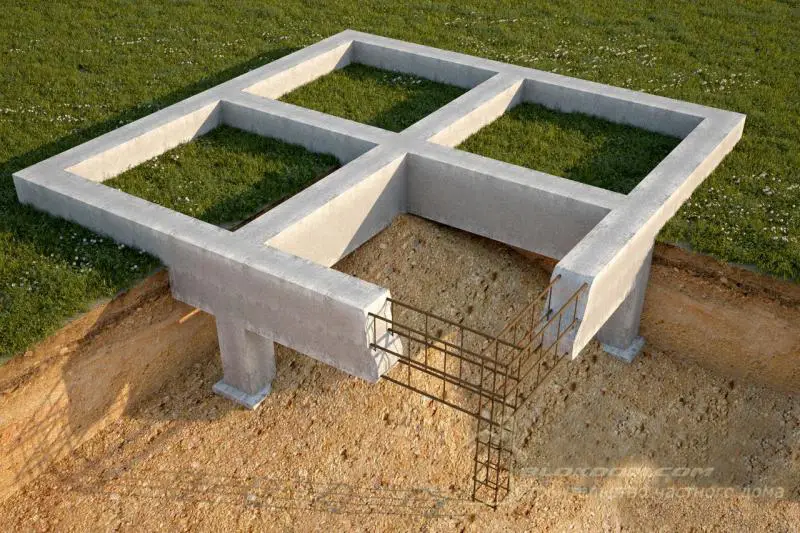
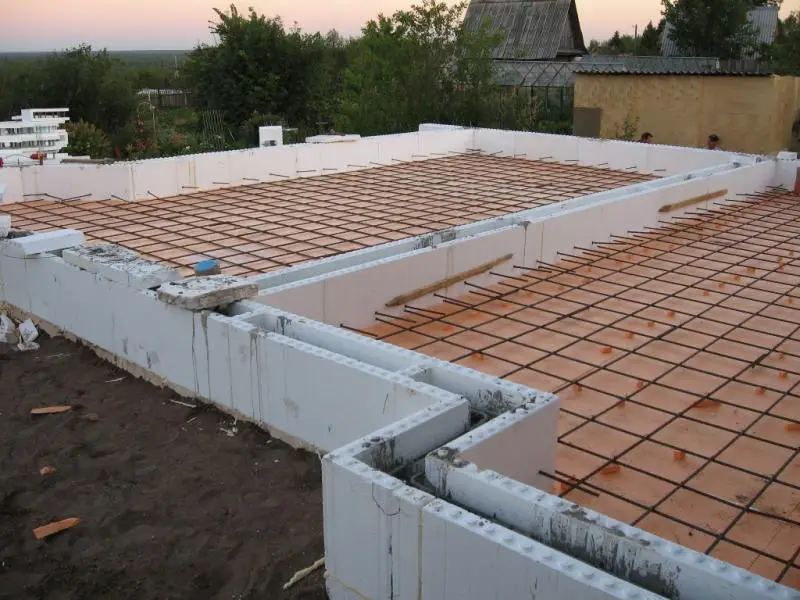
Foundation pouring is carried out in stages:
- preparatory work on site preparation for the foundation,
- layout marking,
- foundation base cushion installation,
- formwork installation,
- reinforcement of the future foundation,
- direct pouring.
If you follow the pouring technology and carry out all actions in sequence, you can be confident that your house will stand on a strong and reliable foundation.
Preparation Works for Foundation Pouring
Before starting the preparatory works, builders must carefully study the building’s working project. All tasks will be carried out according to this plan—from the first excavated pit on the site to the moment when a cat (or rooster) is introduced into the house.
First, mark the ground surface to indicate where the foundation trench or pit will be dug. Then perform earthworks. After completion, proceed to install the foundation base cushion. The type of base must match the project specifications (sand, gravel, or concrete).
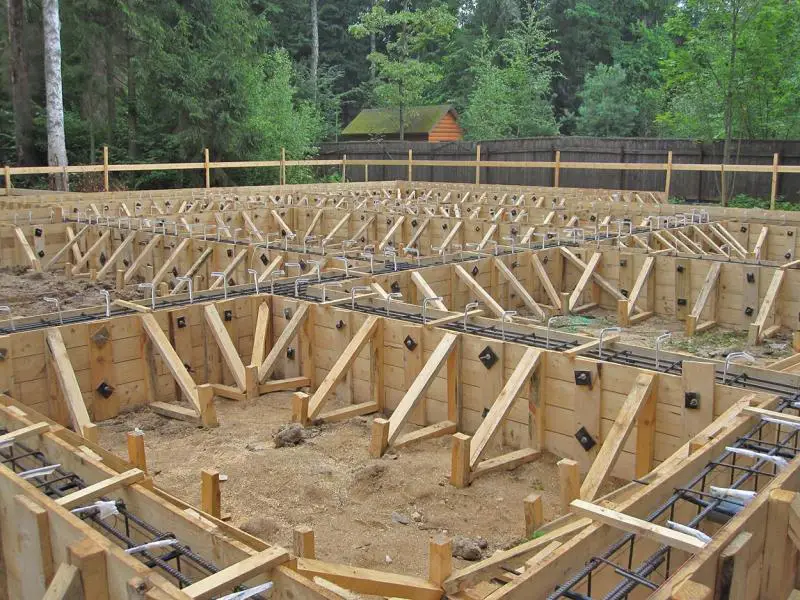
Next, install formwork. Its height and thickness must meet foundation requirements—formwork height must not be less than foundation height, and wood thickness must withstand concrete pressure.
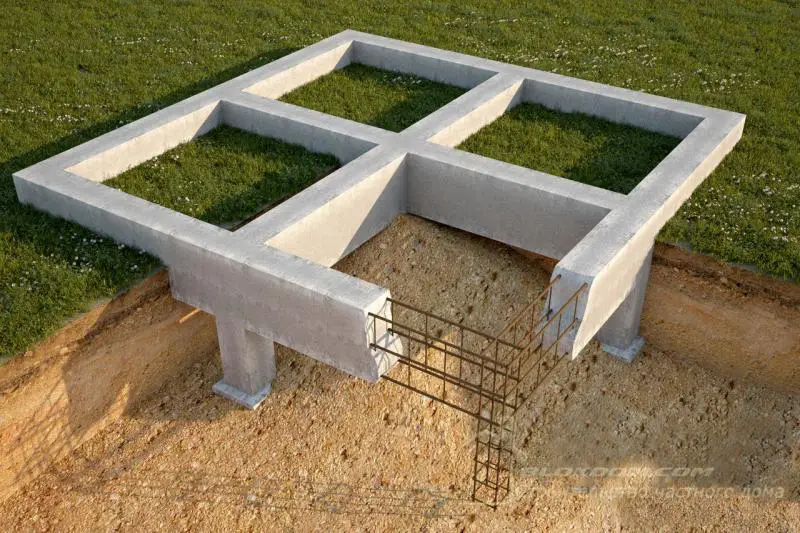
After formwork is installed and securely fastened, begin reinforcing the future foundation. Use steel bars (8–12 mm diameter) to create a mesh (cell size: 0.15×0.15 m), placed inside the formwork cavity.
The final stage is direct foundation pouring. Today, two main methods are used:
- by hand,
- using concrete mixers.
Regardless of the method, the entire pouring process must be completed in one continuous pour.
Manual Foundation Pouring Technology
After completing all preparatory tasks, begin foundation pouring. Ensure at least two concrete mixers and sufficient workers are available to operate them efficiently.
Regardless of equipment or workforce size, it’s impossible to pour the entire foundation at once. Therefore, pour in layers of approximately 0.3–0.4 m per pass, while evenly distributing concrete along the trench perimeter.
Use a deep vibrator (or standard trowel) to compact the mixture, removing air pockets. Stop when the familiar substance known as 'milk' appears on the surface. Fully remove this layer.
Apply the next layer no later than 2–3 hours after the previous one. Continue all steps similarly until the foundation is fully poured. The final layer must be carefully leveled. Allow 4–6 weeks for full concrete curing.
Foundation Pouring Using a Concrete Mixer
The advantage of using a concrete mixer is undeniable. The entire process can be completed within a few hours (though costs will be significantly higher than manual pouring).
First, order concrete of a specific grade from a production facility. Calculate required volume by multiplying total trench length, width, and height. For example: 40 m length, 0.8 m height, 0.5 m width → 25.6 m³. With a 10% safety margin, order 28.16 m³.
To allow mixers to reach trenches, clear the area of debris. However, do not assume that workers are unnecessary when mixers deliver ready-mix. Vehicles cannot reach all trenches, so manual transport is required. Additionally, fast pouring demands workers to use trowels and level the mix along the formwork perimeter.
After spreading concrete around the foundation perimeter, ensure no air remains in the mix. Use a deep vibrator. Final steps: surface leveling and removal of 'milk' residue.
Without a doubt, pouring using a concrete mixer is superior. However, due to cost, most private homeowners still choose manual pouring during foundation construction.