Creative Ways Framed Prints Can Brighten Your Home
Blank walls can leave an otherwise beautifully appointed room feeling ungrounded and unfinished. Bringing curated artwork into your living space does far more than cover empty drywall; as studies and interior psychologists note, art gives a sense of structure, ease, and inspiration to your place. Whether your home is modern, historic, or somewhere in between, framed artwork adds warmth, anchors sightlines, and introduces personal story into your rooms.
While there are endless decorative avenues, from woven tapestries to sculpted wall relief, framed prints remain one of the most versatile, accessible, and high-impact design tools available. Today, high-quality framed prints span expressive abstracts, architectural line drawings, vintage lithographs, and striking black and white photography. In this guide, we explore how to style framed art like a designer: from nailing scale and hanging heights to mastering gallery layouts, choosing custom framing materials, and illuminating your art for maximum impact.
Essential Styling Takeaways
- Hang single prints or gallery groupings so their center sits 57 to 60 inches from the floor to match standard gallery sightlines.
- Span roughly two-thirds to three-quarters of your furniture width when arranging art above a sofa, credenza, or headboard.
- Leave 6 to 10 inches of breathing room between the top of your furniture and the bottom edge of your picture frames.
- Layer art on shallow picture ledges or lean oversized frames on mantels for an adaptable display that avoids wall damage.
- Protect your prints from fading and ambient reflection by choosing archival mat boards and UV-filtering acrylic or museum glass.
- Aim ceiling spotlights or directional track heads at a 30-degree angle toward the frame center to prevent surface glare.
How to Style and Display Framed Prints: A Complete Design Guide
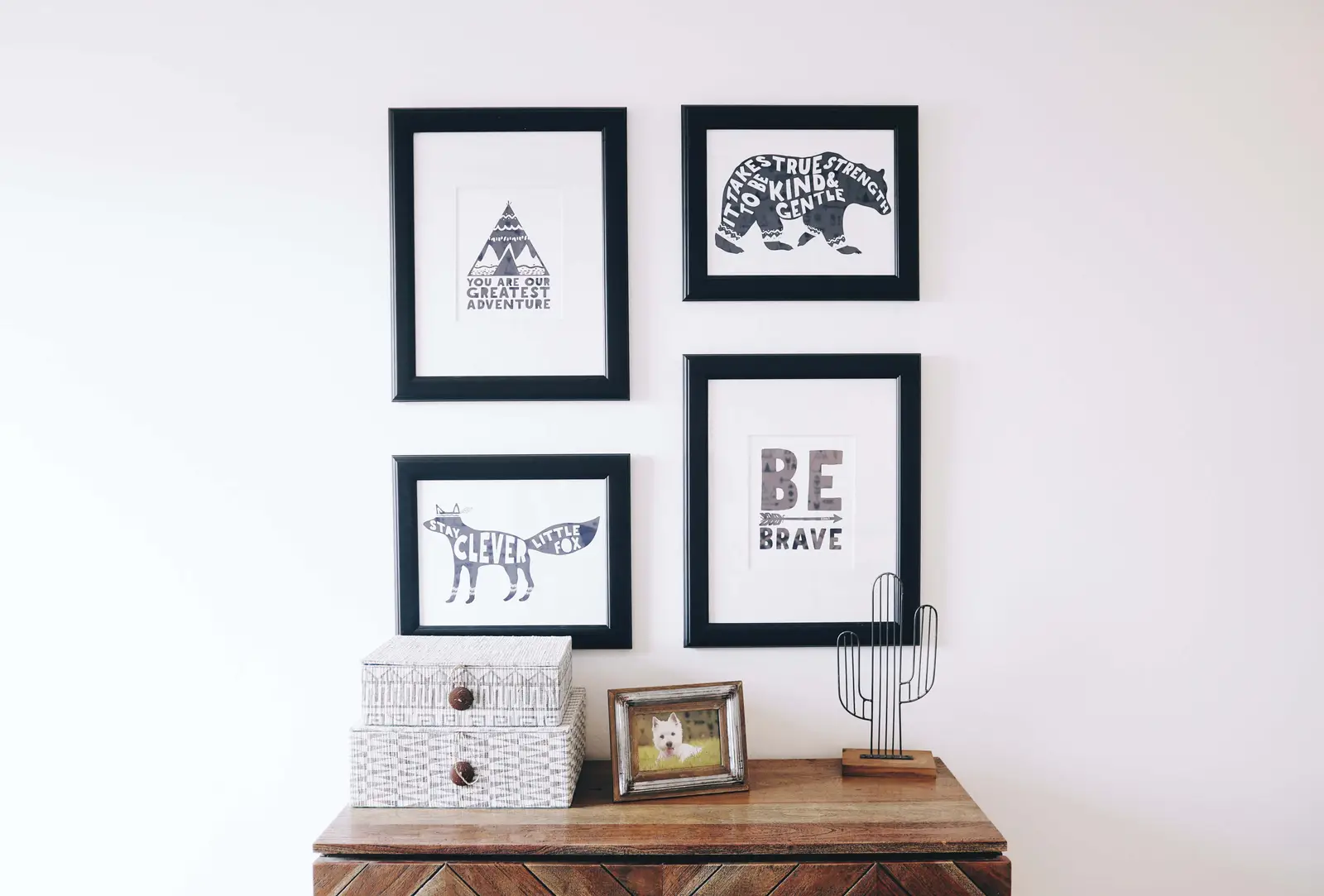
Photo by Josh Hemsley on Unsplash
Essential Rules for Scale, Hanging Heights, and Spacing
Position the vertical center of your art 57 to 60 inches from the floor, and keep frames 6 to 10 inches above furniture while spanning roughly two-thirds of its width.
The most common mistake when decorating with framed prints is not the artwork itself, but improper scale and hanging height. Hanging art at the correct architectural height establishes immediate balance and visual rhythm across the room. Galleries follow proven formulas that prevent art from floating awkwardly near the ceiling or feeling cramped against low baseboards.
As a golden baseline, position the vertical center of an isolated framed print or an entire cluster between 57 and 60 inches from the finished floor. This eye-level benchmark matches standard gallery installation standards and aligns with natural human sightlines. When placing artwork above furniture such as a sofa, headboard, or credenza, position the bottom edge of the frame roughly 6 to 10 inches above the furniture’s top edge so the pieces feel visually connected rather than disconnected.
To avoid undersized art that looks lost on a large wall, adhere to the two-thirds rule: the total width of your framed print, or group of prints, should span approximately two-thirds to three-quarters the overall width of the furniture piece sitting below it.
| Placement Location | Ideal Width Ratio | Vertical Distance from Base | Spacing Between Frames |
|---|---|---|---|
| Above a Sofa or Credenza | 60% to 75% of furniture width | 6 to 10 inches above top edge | 2 to 3 inches apart |
| Above a Bed Headboard | 65% to 75% of headboard width | 8 to 10 inches above headboard | 2 to 4 inches apart |
| Open Hallway or Entry Wall | Scaled to wall proportion | 57 to 60 inches to center of art | 1.5 to 3 inches apart |
| Above a Fireplace Mantel | 70% to 80% of firebox / mantel shelf | 4 to 7 inches above shelf | Single piece or layered |
Creative Ways to Display Framed Prints
Use uniform grid arrangements for structured symmetry, or combine floating picture ledges and leaning frames to create casual layered depth without hammering extra nails.
Moving beyond standard single-nail placements opens up dynamic styling opportunities that can suit both formal and relaxed interiors. Changing how you display framed prints transforms ordinary prints into intentional architectural features. Depending on the mood and function of the space, different arrangement techniques can expand perceived room dimensions and emphasize ceiling heights.
Precision Grids and Gallery Wall Layout Ideas
A symmetrical grid of matching frames is perfect for creating visual order in dining rooms, wide hallways, and behind living room seating. By using identical frame profiles, uniform matting, and precisely measured 2-inch margins, a series of 4, 6, or 9 smaller wall prints instantly reads as one commanding architectural installation. For a more relaxed, eclectic aesthetic, an organic salon-style gallery wall combines mismatched frames, varied dimensions, and assorted mediums. To keep an asymmetrical gallery cohesive, maintain a consistent tonal thread through your mat boards or frame finishes, and work outward from a single prominent anchor piece.
Picture Ledge Styling and Casual Leaning
If you prefer flexibility or rent your home, floating picture ledges offer endless styling variety without repeatedly driving nails into plaster. A shallow wooden or matte metal ledge lets you layer prints of varying heights, overlapping frames gently to create depth and shadow. You can also casually lean large-scale framed prints on top of low sideboards, console tables, or fireplace mantels. Grounding the frame directly against a flat surface gives your decor a modern, studio-inspired warmth that feels collected rather than rigid.
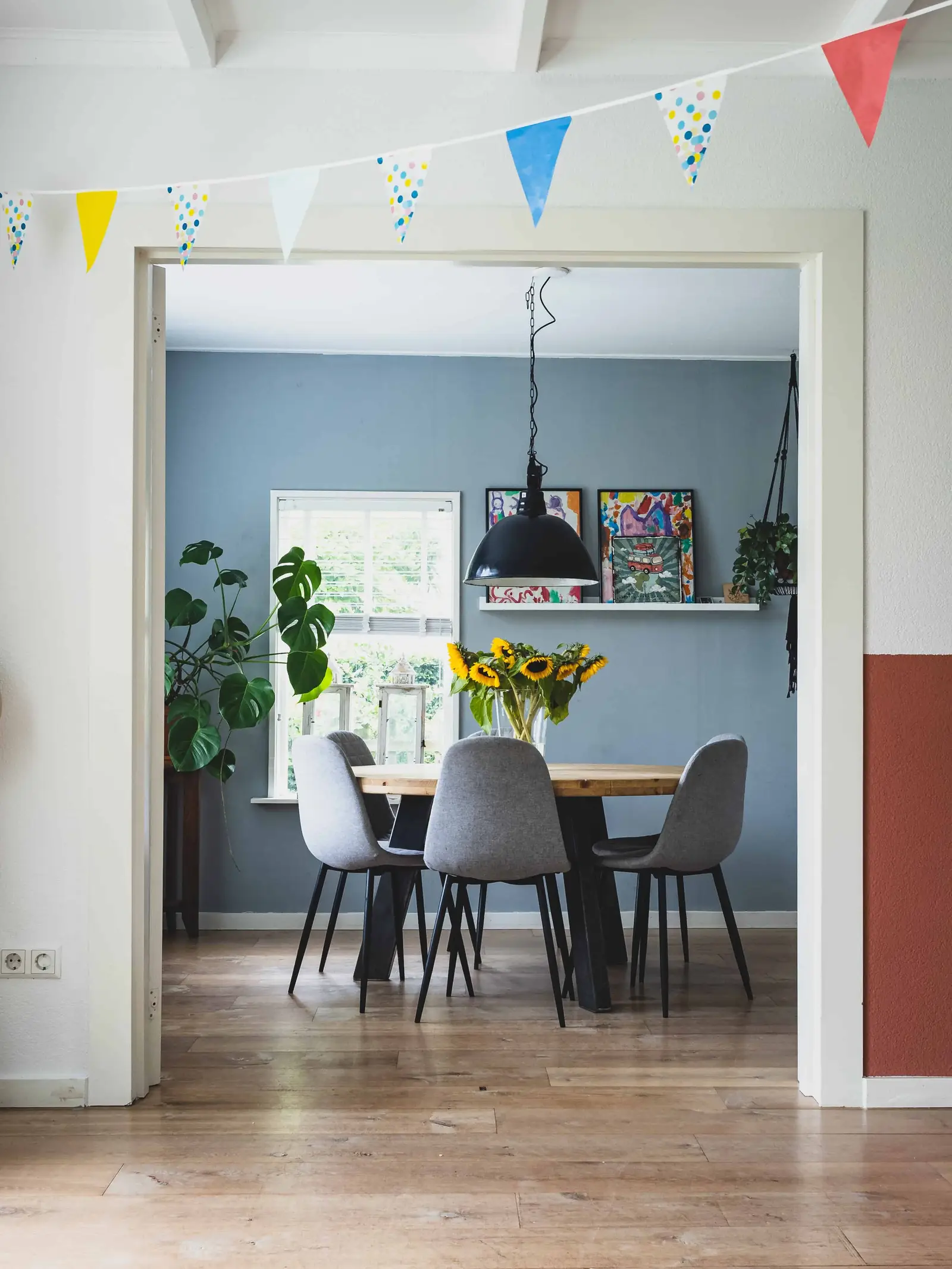
Photo by Sven Brandsma on Unsplash
Framing Art Prints: Profiles, Mat Boards, and Glazing
Pair wide archival mat boards with frame finishes that complement your room palette, and select UV-filtering glass or lightweight acrylic to avoid glare and sun fading.
The frame you select serves as the bridge connecting your two-dimensional print to your three-dimensional interior architecture. Thoughtful custom or ready-made framing elevates simple paper prints into gallery-quality design elements. Every component, from the wood species to the glass coating, plays a role in preservation and visual delivery.
Choosing the Right Frame Finish
Match your frame profile to the period and material palette of your space. Slim black metal profiles offer crisp modern contrast, whereas warm white oak and walnut frames introduce organic texture suited to Scandinavian, mid-century, and transitional schemes. Gilded or ornately carved moldings introduce vintage charm, especially when paired with modern abstract art or minimalist botanical drawings.
Mat Board Proportions and Color
Never underestimate the visual breathing room an archival mat board provides. A wide 3- to 4-inch mat board automatically adds prestige to smaller prints, drawing the viewer’s focus inward. While bright white mats offer clean lines for graphic photography, warm off-white or light linen mats flatter vintage etchings, sketches, and sepia prints. For deep drama, consider a dark charcoal mat inside a black frame to make vibrant compositions pop.
Glass vs. Acrylic: Protection and Glare Control
Standard float glass is cost-effective, but it reflects ambient glare and adds significant weight to oversized frames. For large prints, lightweight acrylic provides shatter-resistant safety, which is especially important over beds or in family rooms. If your art faces direct sunlight or bright window exposures, invest in conservation clear glass or non-reflective museum acrylic to filter harmful UV rays and preserve colors from fading.
Thinking Beyond Paper: Framing Unconventional Objects and Textures
Wall art does not need to be limited to traditional ink on paper. Incorporating tactile and unexpected artifacts into your frame layouts enriches your walls with authentic dimension and tactile interest. Deep shadowboxes and floating mounts allow three-dimensional items to share wall space alongside traditional art prints.
Consider introducing pressed botanicals between double-paned floating glass, vintage hand-embroidered textiles, patterned wallpaper swatches, or heirloom postcards gathered during travels. Combining these textural items into a salon wall softens rigid drywall surfaces and introduces conversation-starting history that store-bought print sets cannot replicate on their own.
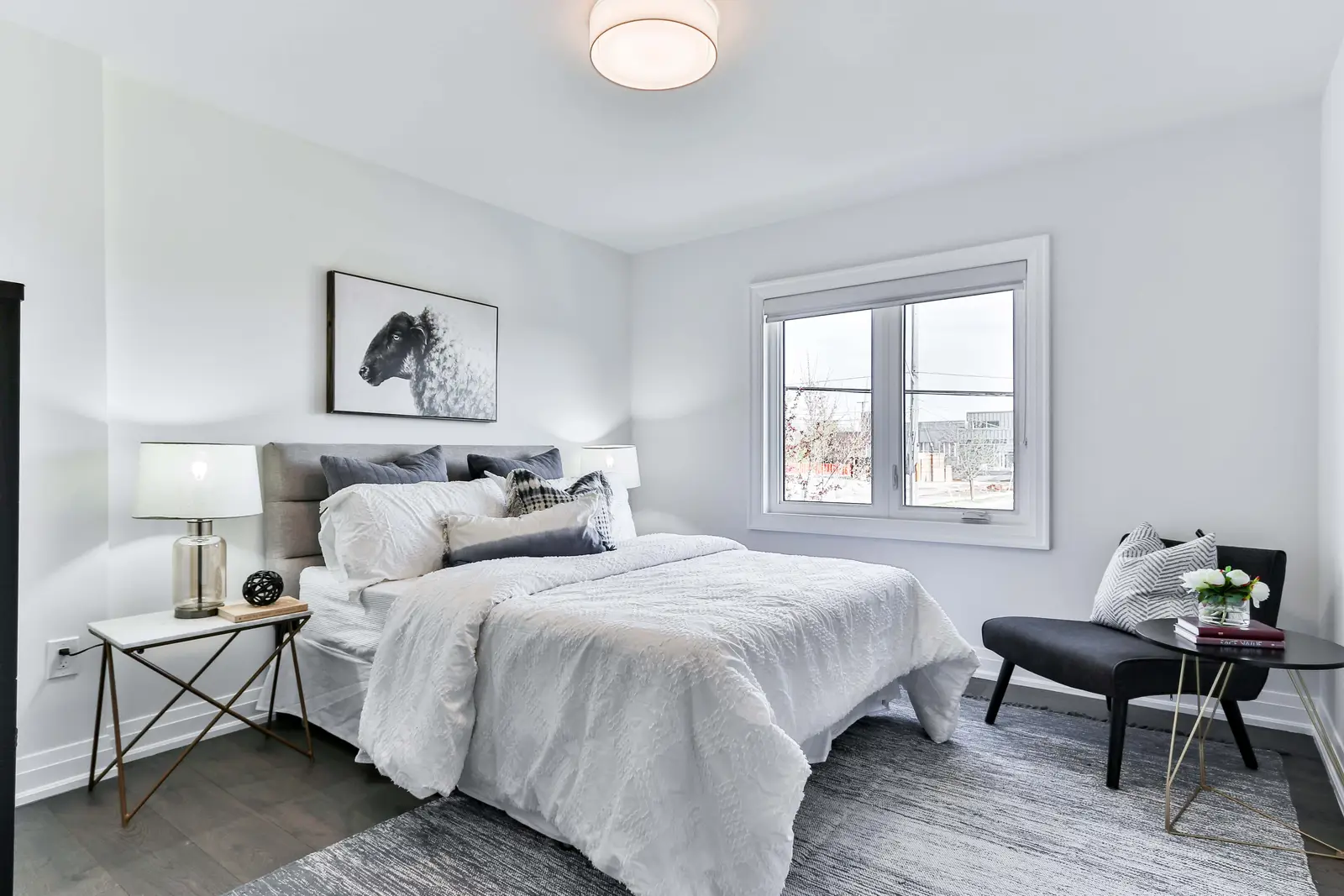
Photo by Sidekix Media on Unsplash
Room-by-Room Wall Art Ideas
Every room in a home serves a distinct practical and emotional function, which should guide your choice of subject matter, frame materials, and layout style. Tailoring your framed prints to individual room functions brings spatial harmony to your entire floor plan.
Making an Impact in the Living Room
Your living room is the primary gathering space where bold visual statements set the tone for the entire residence. If you have expansive walls, anchor the seating zone with one oversized statement canvas or a matching diptych. To counter a large piece on one side of the room, arrange a group of smaller wall prints of uniform dimensions across the opposing wall to establish balanced visual weight. In compact living rooms, a tighter gallery wall above an accent credenza keeps decor expressive without feeling cluttered.
Setting the Mood in the Dining Room
In the dining area, art should establish ambiance without distracting from conversations around the table. A tailored grid of vintage architectural drawings, monochrome botanicals, or cherished family portraits framed in identical dark profiles creates an atmosphere of warm hospitality. Alternatively, shallow floating ledges displaying framed oil-study prints let you swap out themes as seasons shift, bringing tactile variation to dinner parties.
Creating a Restful Bedroom Sanctuary
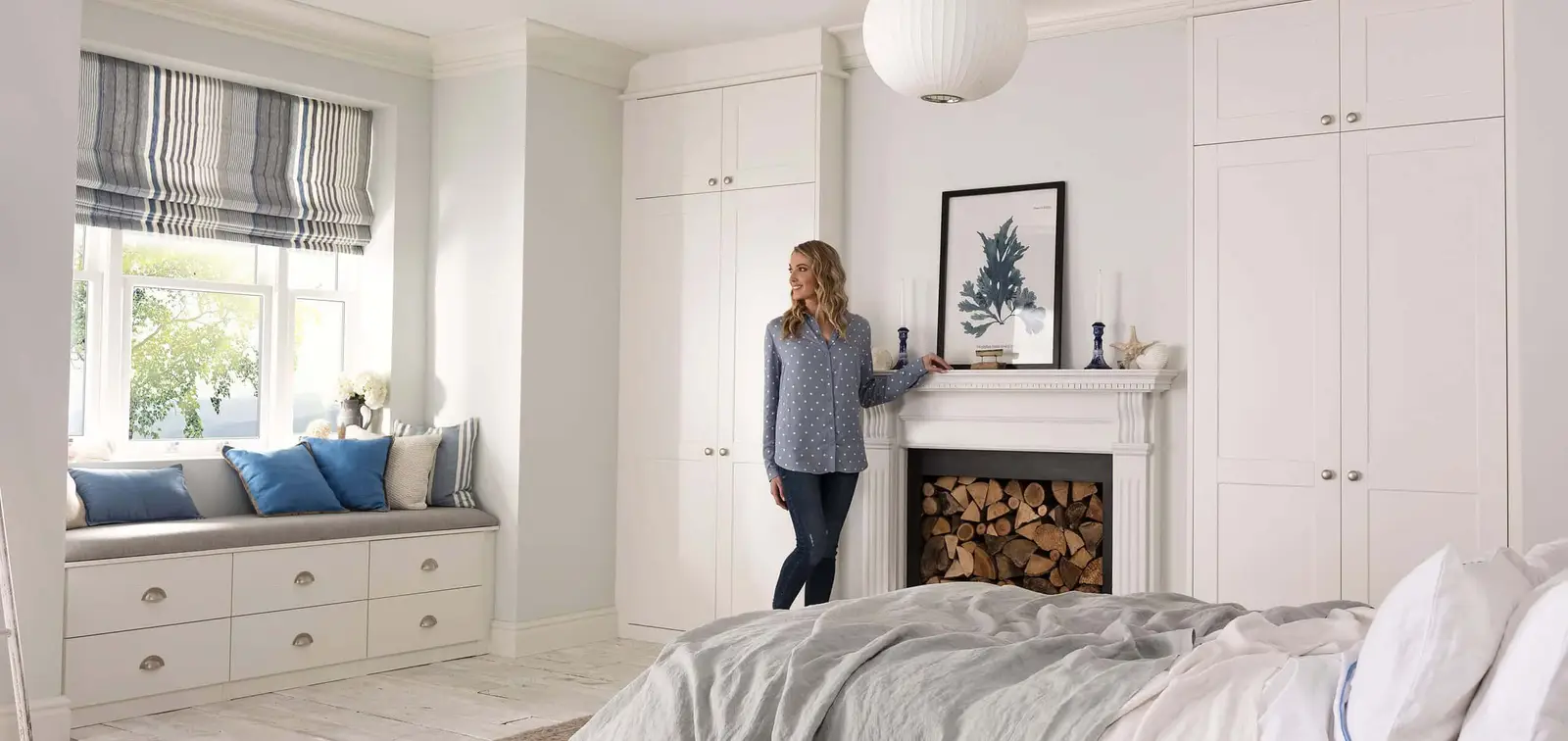
Bedrooms require an intentional departure from high-energy stimulation. Framed prints above the bed or opposite the mattress should foster quiet contemplation in your sleeping heaven. Choose misty landscapes, soft tonal watercolors, or quiet black and white photography. Pair natural wood frames with peaceful textures to complement your bedroom’s overall decor. If hanging directly above the headboard, ensure frames are securely anchored into wall studs using heavy-duty picture hardware.
Styling Functional Spaces: Kitchens and Entryways
High-traffic and task-oriented rooms deserve artistic consideration as well. In the kitchen, hang small framed still lifes, vintage culinary menus, or typography prints on unused walls between pantry doors or over a dry bar. Because kitchens experience moisture and grease, choose sealed frames with protective glass fronts rather than raw stretched canvas. In narrow hallways and entry vestibules, a sequential vertical stack of two or three portrait-oriented prints draws the gaze upward and makes compact footprints feel grander.
Inspiring Focus in the Home Office
Whether you have a dedicated library or a nook carved out of a guest bedroom, your workspace art should encourage productivity and mental clarity. Mount floating ledges above your desk to layer inspiring sketches, typographic quotes, and architectural photography that you can rotate easily. On the wall opposite your desk, a clean gallery wall provides a soothing, visually rich backdrop for video calls and creative breaks.

Photo by Albuu – Design de Álbuns on Unsplash
Lighting Your Framed Art for Maximum Impact
Even the most exquisite artwork can look flat and dull if left in shadowed corners. Dedicated accent lighting brings out hidden pigment layers, texture, and paper grain in framed artwork. Well-planned illumination completes the professional gallery aesthetic at home.
For statement pieces and formal dining spaces, traditional over-frame picture lights add classic elegance. Today’s options include both hardwired brass fixtures and minimalist, rechargeable LED cordless sconces that mount effortlessly without opening drywall. When planning ceiling-recessed spotlights or directional track heads, angle the light beams at approximately 30 degrees toward the center of the frame. This angle eliminates glare on glass surfaces while avoiding cast shadows below the frame molding.
Bringing Your Walls to Life
Thoughtfully selected and styled framed prints do more than fill empty plaster; they establish scale, reinforce your architectural palette, and tell the story of the people living within the home. By respecting basic hanging heights, selecting quality matting and frame profiles, and thoughtfully arranging pieces room by room, you can transform any space into a warm, inspiring sanctuary. Focus on artwork that genuinely resonates with your personal taste, and let your walls evolve naturally over time.