Watch the video:
Gloves: a small detail with a big task
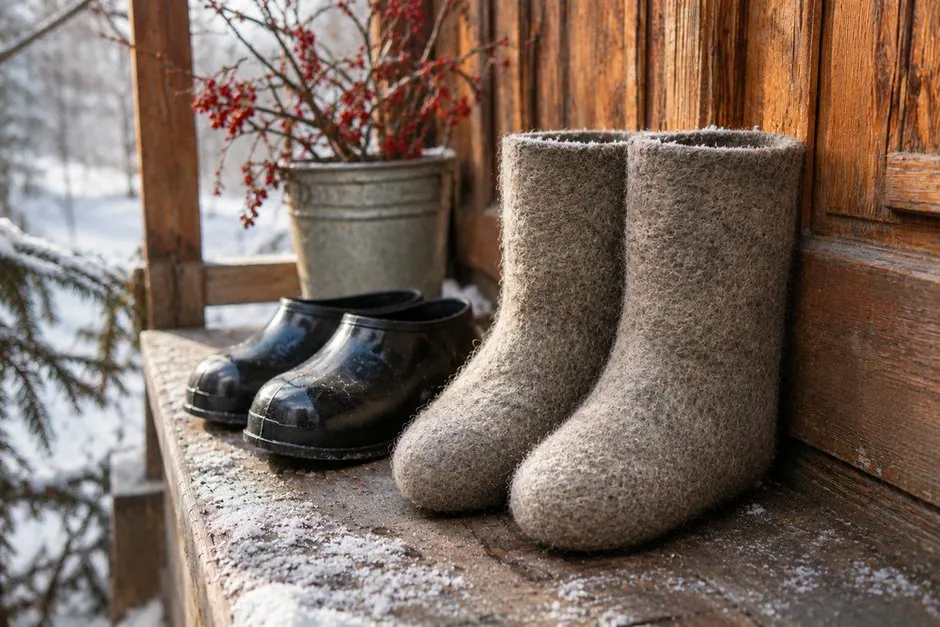
Rubber galoshes protected the lower part of the boots from water and dirt. They also prevented the felt sole from wearing out quickly.
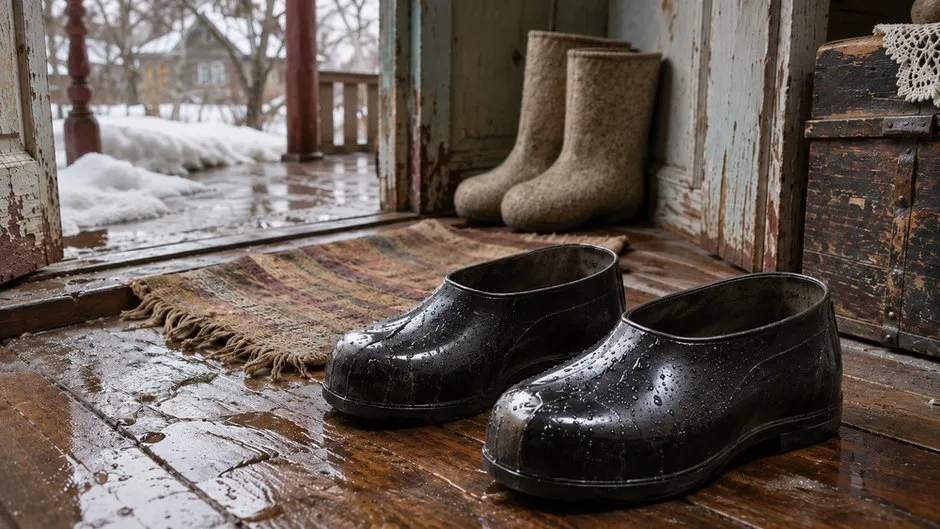
It was a convenient combination: warm felt on the inside and rubber on the outside.But galoshes were not meant only for boots.They were worn over leather shoes and boots to keep the footwear dry in rain and sludge. There were even special models for women’s heels—with a cutout for it.
Such galoshes can be seen in museum collections. The variety was especially extensive in the mid-20th century: men’s, women’s, and children’s models were produced, each differing in shape and purpose.
This was a completely separate item in the shoe collection. Gaiters were chosen based on the size and shape of the pair they were intended to be worn over.
What were bots and burkas called?
There’s an interesting detail here: today these terms are easily confused with each other.
- Bootswere often higher protective shoes worn over dresses or shoes. They covered not only the toe and sole but also most of the foot, with some models covering the ankle as well.Women’s rubber boots might have laces, a small heel, or a special design for wearing over fancy shoes.Examples from the 1950s–1960s exist in museum collections, showing that protective footwear could be quite elegant.
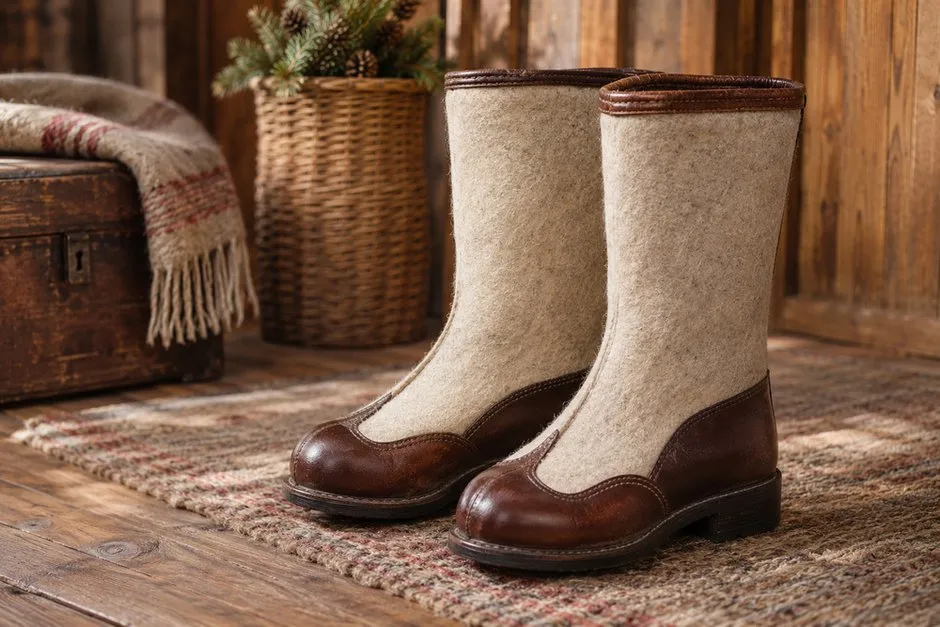
- Burkas were another type. These referred to warm boots made of wool or felt, often with leather trim and a reinforced bottom.Unlike galoshes, burkas were standalone shoes. They were sewn from separate parts, whereas traditional valenki were made by rolling dough.
Names and styles could vary depending on region and time, so not all bots and burkas looked the same.
What to Do with Shoes After a Winter Walk
In winter, it was important not only to choose the right shoes but also to take care of them.
- Upon returning home, galoshes could be taken off and cleaned of dirt separately. If boots got wet, they needed to be dried.
- In homes with stove heating, shoes were placed near the heat source. Later, radiators were also used for this purpose. However, excessive heating could damage the materials or change the shape of the shoes.
- A more gentle method is to dry them at room temperature, away from direct heat. To maintain their shape, paper can be placed inside to absorb some of the moisture.
- Removable insoles are also convenient to take out separately. This way they dry faster, and there is less moisture inside the boots.
This practice is still common today: after walking on wet snow, it’s better to dry winter boots before using them again.
What Remains of Our Old Winter Footwear
Valenki are still being made and worn. There are traditional felt models, versions with rubber soles, and modern boots with wool inserts.
The concept of galoshes is also easy to recognize. Nowadays, protective covers are produced that are worn over shoes in rainy and muddy weather.In winter boots, there is a combination of a waterproof outer material and a warm inner layer. Sometimes the insulating lining can be removed and dried separately.These are not exact copies of old shoes, but the goals remain the same: keeping the feet warm, protecting them from moisture, and allowing the shoes to dry after walking.
There is another important detail that is independent of the season. Winter footwear must fit properly. Too tight shoes squeeze the foot, while ones that are too loose make walking uncomfortable. This is especially important when choosing children’s shoes.
Boots, overboots, and galoshes illustrate how diverse winter footwear once was. Different solutions existed for extreme cold, wet snow, and urban slush, with some items even being combined. And while it might seem unusual today to see overboots paired with galoshes, this isn’t unusual in the history of our daily life. Behind these two layers of footwear lies a simple idea that remains relevant today: warmth and water protection don’t always have to come from the same material.