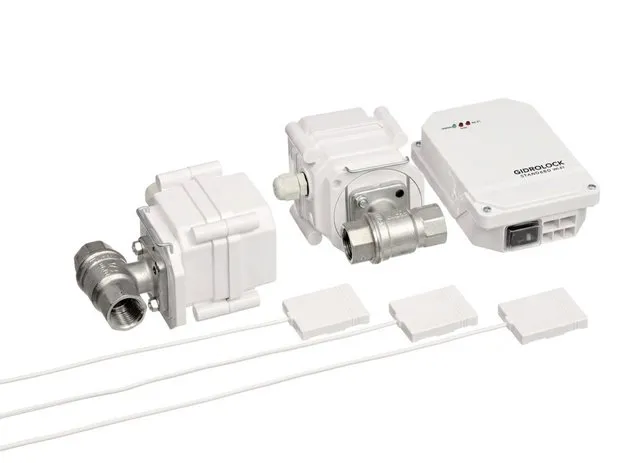
Before choosing a system, find out:
how many water supply fixtures and individual lines are in the apartment or house;
what the diameter of the pipes is;
how many areas at risk of leaks need to be monitored;
Is it possible to run wires to the sensors?
Is there a power outlet near the installation location of the unit?
Are phone notifications and remote control required?
Tip: In Gidrolock systems, the sensor sends a signal to the control unit, after which the electric actuator closes the ball valve – the water shutdown takes about 15 seconds. At the same time, audio and visual alerts are activated, and Wi-Fi models can send a notification to a smartphone.
It is better to choose a kit together with a specialist. They will check the diameter of the pipes, the voltage of the actuators, and the feasibility of installing valves. Gidrolock equipment is manufactured in Russia, and the product warranty is 30 years.
Count water faucets, not bathrooms
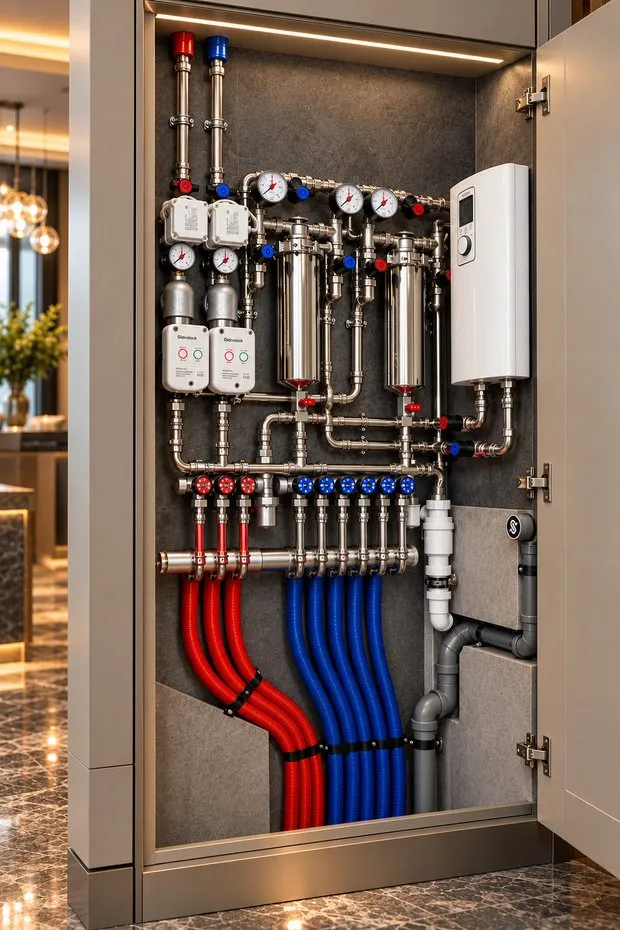
The number of faucets depends not on the number of rooms but on the number of pipes that supply water to the dwelling. If cold and hot water come from a single common junction, usually two faucets are needed—one for each pipe.
Two bathrooms can be connected to the same water supply valve. In this case, there is no need to install separate faucet sets for each room. However, if the bathroom and guest bathroom are connected to different valves, both lines need to be protected. Up to four electric actuators can be connected to a single Gidrolock control unit. With the standard setting, all connected faucets will close upon receiving a signal from the sensor.
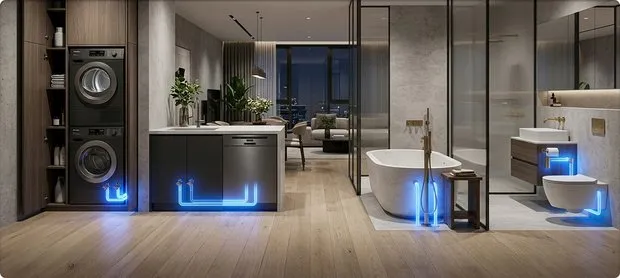
If the fixtures need to be controlled independently, you can install a unit with separate control or two separate systems. The second option is suitable when the fixtures are far apart and it’s difficult to run cables between them. You should also consider protection for the heating system, boiler, and filtration system. It’s better not to combine all the utilities into one line: a leak near the sink shouldn’t leave the house without heating.
Calculate the number of sensors
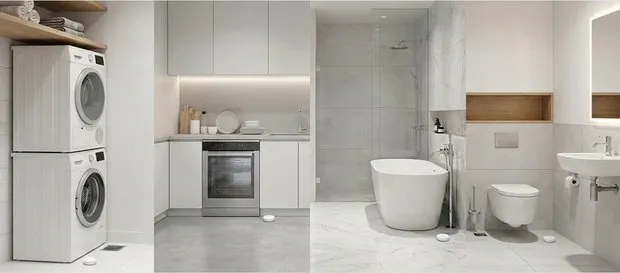
There is no universal formula for this. Sensors should be installed in every location where water might appear due to damaged hoses, connections, or household appliances. The more such points there are, the more devices will be required.
Special attention should be paid to flexible hoses connecting faucets, toilets, washing machines, and dishwashers. An expert from Gidrolock calls such connections some of the most vulnerable. The sensor must be placed so that water reaches it immediately after the hose is damaged, before it has time to spread throughout the room.
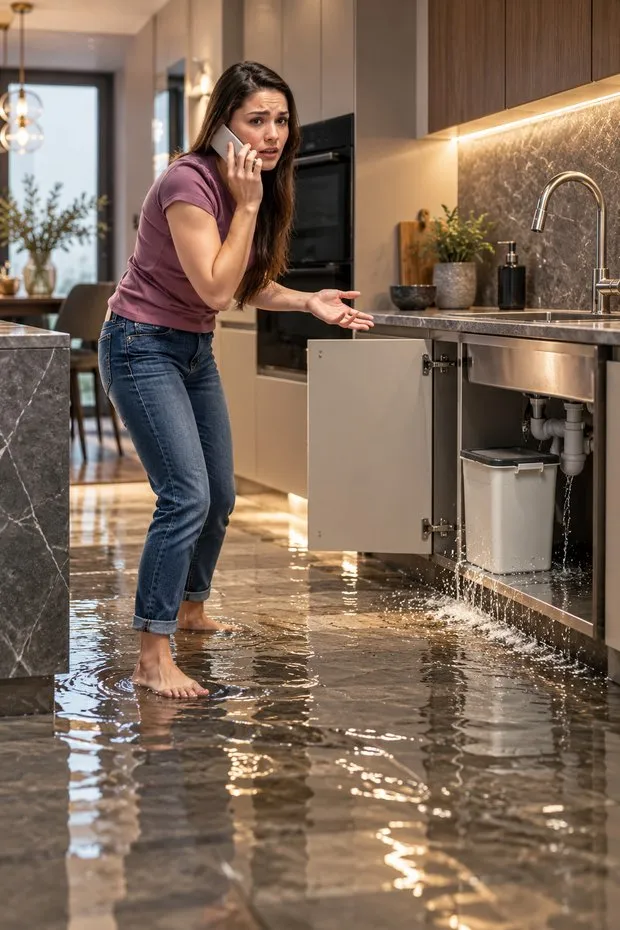
In the kitchen, space is usually protected under the sink and around the dishwasher. In the bathroom, it’s the areas near the washing machine, sink, bathtub or shower, toilet, and water heater. If the plumbing is hidden behind fixtures or access panels, a sensor will also be needed inside the plumbing niche. This area is often overlooked, even though a leak behind a closed panel may not be noticed right away.
The sensor must remain accessible at the same time. Do not move it too far under furniture or plumbing fixtures so that you have to remove something to check it.
Tip: For an apartment with two separate pipes, the Gidrolock Premium Plus Double unit is suitable. It allows independent control of two lines: in case of a leak, you can only shut off the pipe where water is detected.
This solution is also useful in a country house when separate control of water supply and heating is needed. The unit supports up to eight zones – four on each line. In the event of a power outage, the system continues to operate from a built-in battery for 7-10 days in standby mode.
Choose wired or wireless sensors
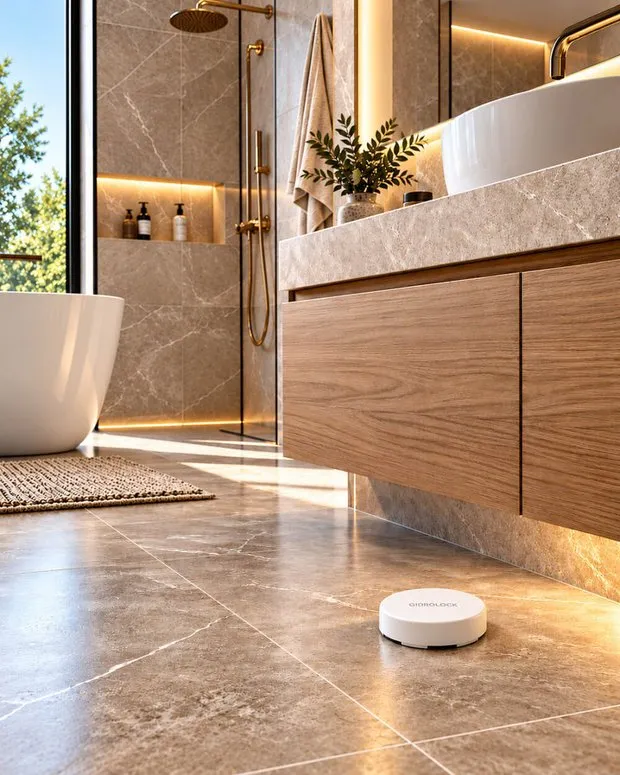
It is more convenient to install a wired system during renovation. Cables can be run in advance from the kitchen, bathrooms, and laundry area to the control panel, and then concealed under the finishing touches. There is no need to replace batteries in such sensors. If the renovation is already complete, a wireless option is suitable. Radio sensors are placed near plumbing fixtures and household appliances without requiring new wiring in the walls. In everyday use, they function just like wired sensors.
The batteries in the radio sensor last approximately 5-7 years. The system will alert in advance when the charge starts to decrease. It is recommended to clean both wired and wireless sensors of dust every six months and check them according to the instructions. In an open area, the range of radio communication can reach 500 meters. Inside a house, walls and ceilings weaken the signal, so it is important to check each sensor in its permanent location after installation. If the connection is insufficient, a repeater can be installed.
Provide a backup power source
During a water leak in an apartment, electricity may be cut off. For example, if water gets into a socket, the circuit breaker will shut down the area. Without a backup power source, the system will stop functioning at that moment.
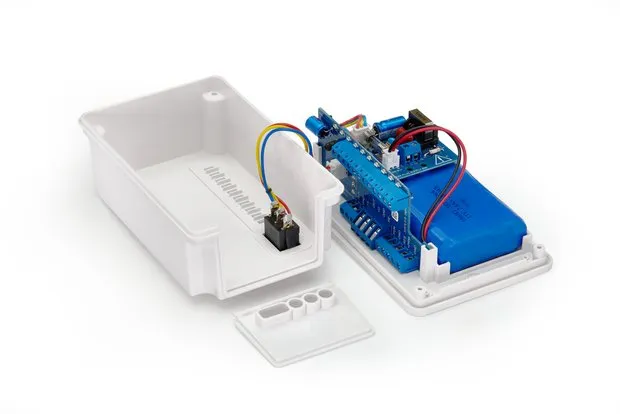
The built-in battery solves this problem. The unit automatically switches to it and continues to receive signals from sensors and control the valves. Backup power is essential for rural homes, apartments that are often unoccupied, and areas where many electrical appliances are located near the plumbing.
Consider the repair stage
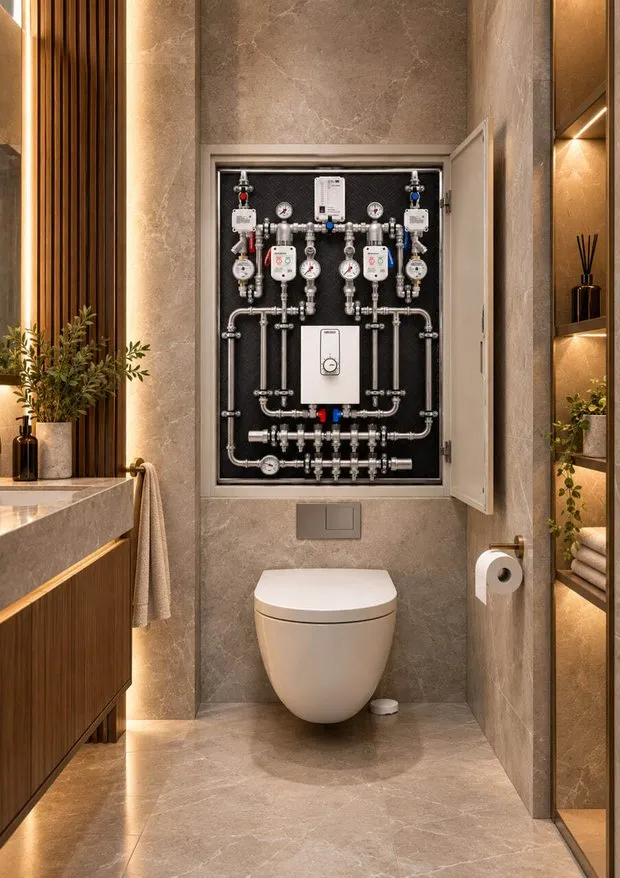
If the renovation has just begun, it is convenient to choose a system with wired sensors. The cables can be hidden in the walls, and space can be reserved in the plumbing cabinet for the control panel and valves in advance. Meanwhile, the equipment must remain accessible for inspection and maintenance.
For a finished interior, Gidrolock Premium Plus Radio Wi-Fi is suitable. It includes two electrically driven valves, two radio sensors, one wired sensor, and a control panel with a battery. Wireless sensors can be installed without running cables throughout the room.
In the event of a leak, the system will send a notification to the smartphone, and if power is lost, it will continue to operate using the battery. The control unit itself is connected to a 220 V power supply during normal operation. Before purchasing, it is still necessary to check the kit’s components against the diameter of the pipes, the number of water inlets, and the number of zones that need to be protected.
Plan the protection for your rural home separately
In apartments and houses, the system operates on the same principle, but houses usually have more potentially dangerous areas. Sensors may be needed in the boiler room, laundry room, kitchen, bathrooms on different floors, and near water heaters.
The Gidrolock Cottage Plus kit is designed for houses with a single inlet pipe. It includes one electrically operated valve, two wired sensors, and a control unit with a backup battery. It is more convenient to install the wiring for such a system during construction or renovation.
If water comes from a well or borehole, simply blocking the pipe is not enough—the pump will continue to supply water. Therefore, in case of a leak, the system must simultaneously close the valve and stop the pump. For this purpose, a separate relay will be needed, and it’s best to consult a specialist regarding the wiring diagram.
In a house with a water tank, it is recommended to install faucets on both sides of the tank. If only the inlet pipe is closed, water stored in the tank will continue to flow into the damaged system. If the pump remains turned on, it will refill the tank again.
Check device compatibility
If you purchase a control unit, sensors, and actuators separately, make sure they are compatible with each other. One of the key parameters is voltage. A 12 V unit cannot control a 220 V actuator, and connecting them in reverse can damage the equipment.
The diameter of the ball valve must match that of the pipes. A too-narrow valve may reduce pressure, while an improperly sized valve may not fit at all. Consult the diagram in the equipment manual before connecting. According to Gidrolock experts, about 90% of support requests are related to errors in system selection or installation.
After installation, conduct a test: sequentially moisten each sensor and ensure that the relevant valves close and the alarm activates. It is recommended to repeat this check approximately every six months and after any work on the plumbing system.
To choose a leak protection system, first calculate the water inlets and areas where leaks may occur. Then decide on the connection method, number of faucets, and backup power supply. Different solutions are suitable for apartments during renovation, fully furnished interiors, and rural homes, so you should start not with purchasing a kit but with a layout of the plumbing system.
erid:2W5zFJhF4wC. Advertising. gidrolock.ru. OOO “HYDRORESOURCES”. INN 5029179222