In the evening at home, it’s as bright as in the office: how to change the lighting without renovation
This situation is familiar to many apartments, where there is only one main light fixture in a room. However, the lighting that is convenient for cleaning or working isn’t necessarily suitable for a relaxing evening. And it’s not just about the atmosphere: light affects a person’s internal biological clock.
We’ll explore how to change the lighting without renovation, why small lamps are needed, and why simply replacing cold light with warm light may not be enough.
One chandelier isn’t always enough for the whole day
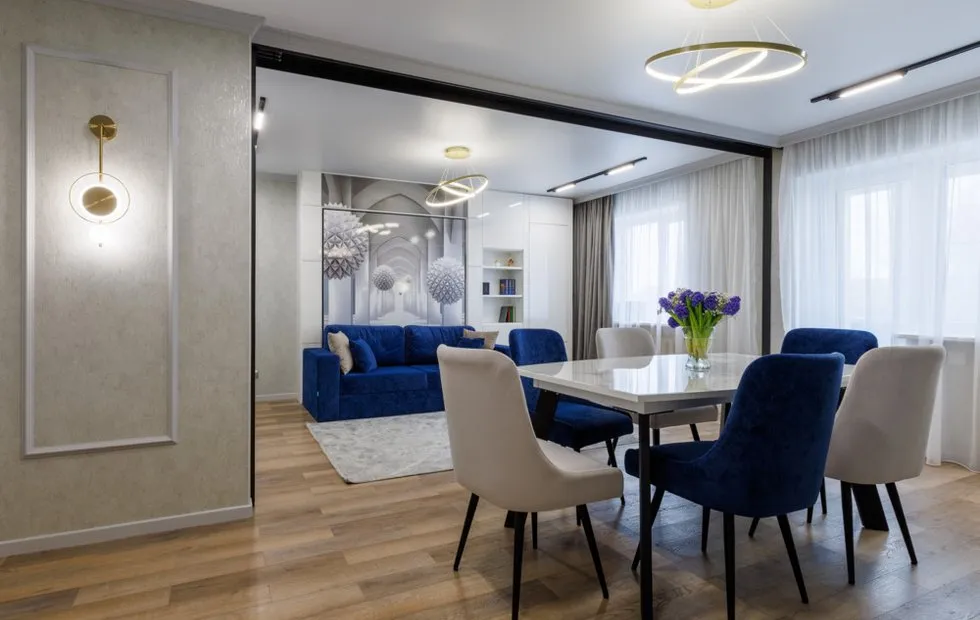
In the morning, one needs to head to work, during the day handle household chores, and in the evening relax. Yet the lighting in a room often remains the same. A single chandelier is supposed to illuminate the closet, coffee table, sofa, and all other corners of the living room at once. This is convenient for cleaning. But in the evening, when someone is sitting on the sofa or watching TV, such brightness can be excessive. Especially if the light fixture is located directly above the seating area and its bulbs are clearly visible from the sofa.
That’s why modern interiors use different lighting scenarios. In other words, different light fixtures are turned on for various activities, rather than trying to handle all tasks with one chandelier. And there’s no need to redo the electrical wiring for this purpose.
Why Bright Light in the Evening Is Not Just a Comfort Issue
Our bodies are adapted to the cycle of light and darkness. During the day, light helps maintain wakefulness. In the evening, its reduction becomes one of the signals that night is approaching. Light entering the eyes affects the function of internal biological clocks and the production of melatonin, the hormone involved in regulating sleep.
Studies show that sufficiently bright lighting before bedtime can delay the evening rise in melatonin levels. This is why an international group of researchers recommended in their 2022 guidelines to reduce light exposure about three hours before usual bedtime.
This does not mean one must stay in darkness after 9 p.m. Moreover, people go to bed at different times. The practical meaning of the recommendation is to gradually reduce the brightness of household lighting as bedtime approaches, while maintaining enough light for everyday activities.
Warm lights can also be too bright
It is often recommended to simply replace cold white lights with warm ones. This can indeed make a room appear more cozy visually. But it’s easy to confuse two different characteristics here. Color temperature indicates how warm or cool white light appears. It is specified on the light bulb packaging in kelvins. For example, light around 2700–3000 K is generally perceived as warm. However, color temperature does not indicate how brightly the light bulb illuminates the room.
One can install a powerful warm light bulb that will illuminate the entire living room. It will look more pleasant, but the amount of light reaching the eyes will remain high. On the contrary, a small lamp with moderate brightness might be more convenient for later in the evening.
Therefore, when choosing a light bulb, it is important to consider not only the kelvins but also the luminous flux, which is indicated in lumens, as well as the location of the light fixture itself.
In simpler terms, it matters not only what color the light is but also how much light is available around you.
The simplest solution is to use several light sources instead of one
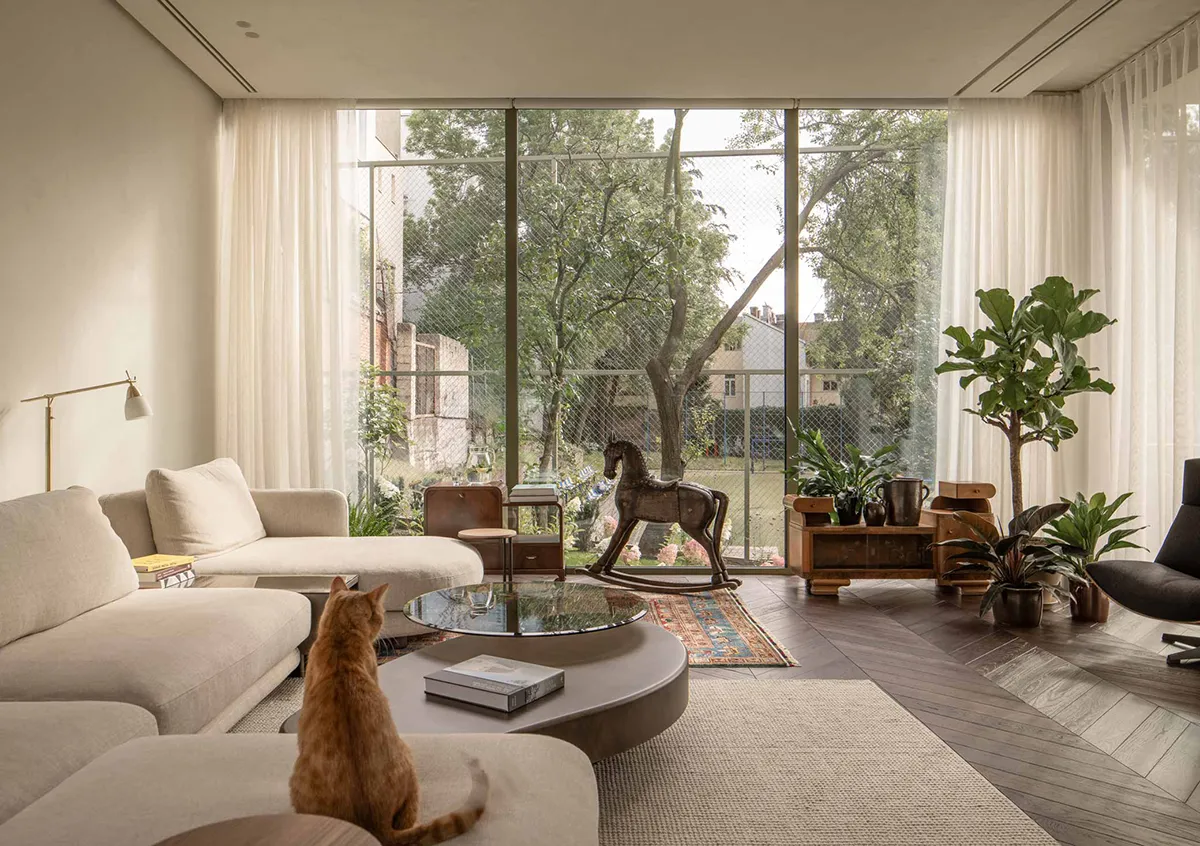
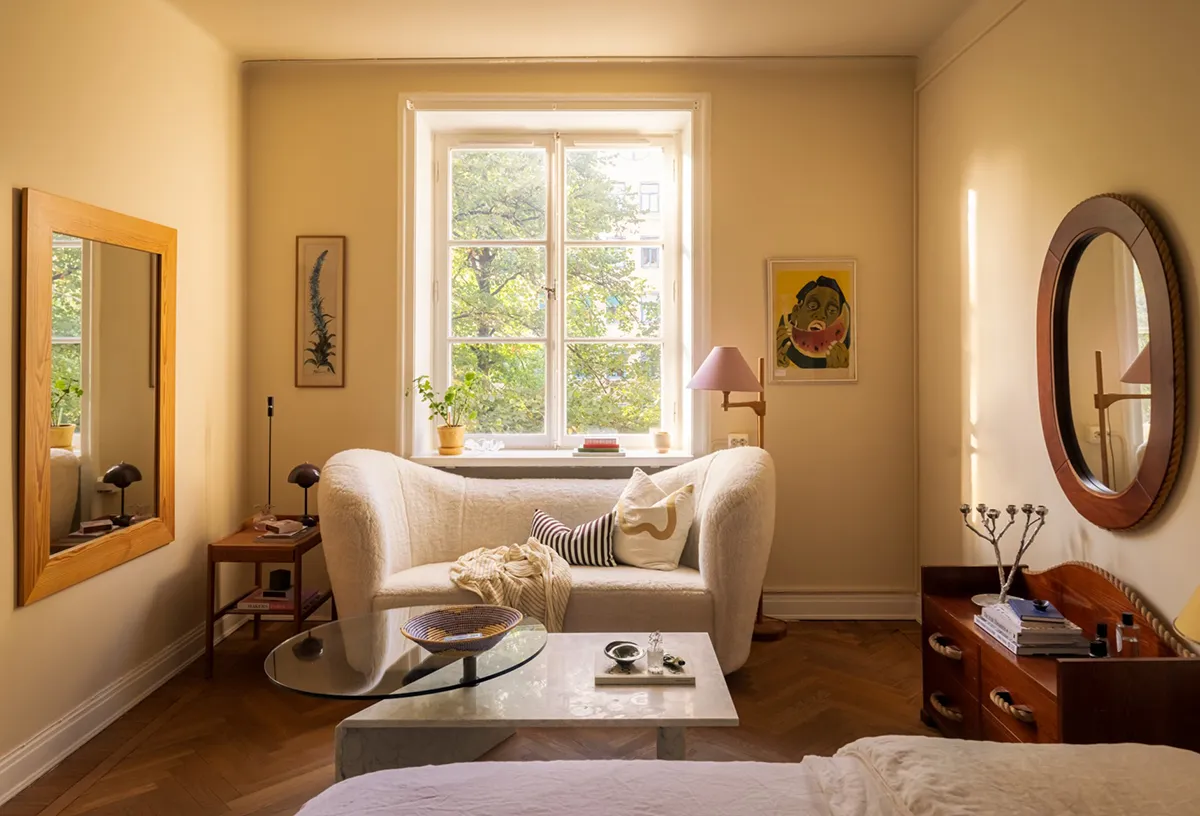
Imagine a typical living room: a sofa, a TV, a coffee table, and a cabinet. During the day, you can turn on the main chandelier. In the evening, you can leave only small lamps on where they are truly needed. For example, a table lamp next to the sofa and a desk lamp on the dresser. This way, there’s no need to illuminate the entire room with equal brightness.
But there’s an important detail here. Two small lamps don’t necessarily produce less light than one chandelier. It all depends on the wattage of the bulbs, the lampshades, and the direction of the light. For evening lighting, it’s better to choose lamps that don’t shine directly into the eyes and allow for a moderate level of brightness around the seating area.
If you are sitting on the sofa and looking directly at an exposed, bright light bulb, even a small lamp can be irritating. A lamp with a shade that covers the light source and directs it toward a book or table is often more convenient.
How to Adjust Lighting in Different Rooms
There is no one-size-fits-all solution for this. It’s much more helpful to consider what you do in a particular room:
In the living room. Leave the overhead light on for cleaning and household tasks. For watching movies or having a relaxed evening, try a floor lamp, table lamp, or lampshade if you already have them. Do not direct a bright light directly at the TV screen to avoid glare.
In the bedroom. Instead of a chandelier, you can use a bedside lamp before bed. If you enjoy reading, choose a light that illuminates the pages well without shining directly in your face.
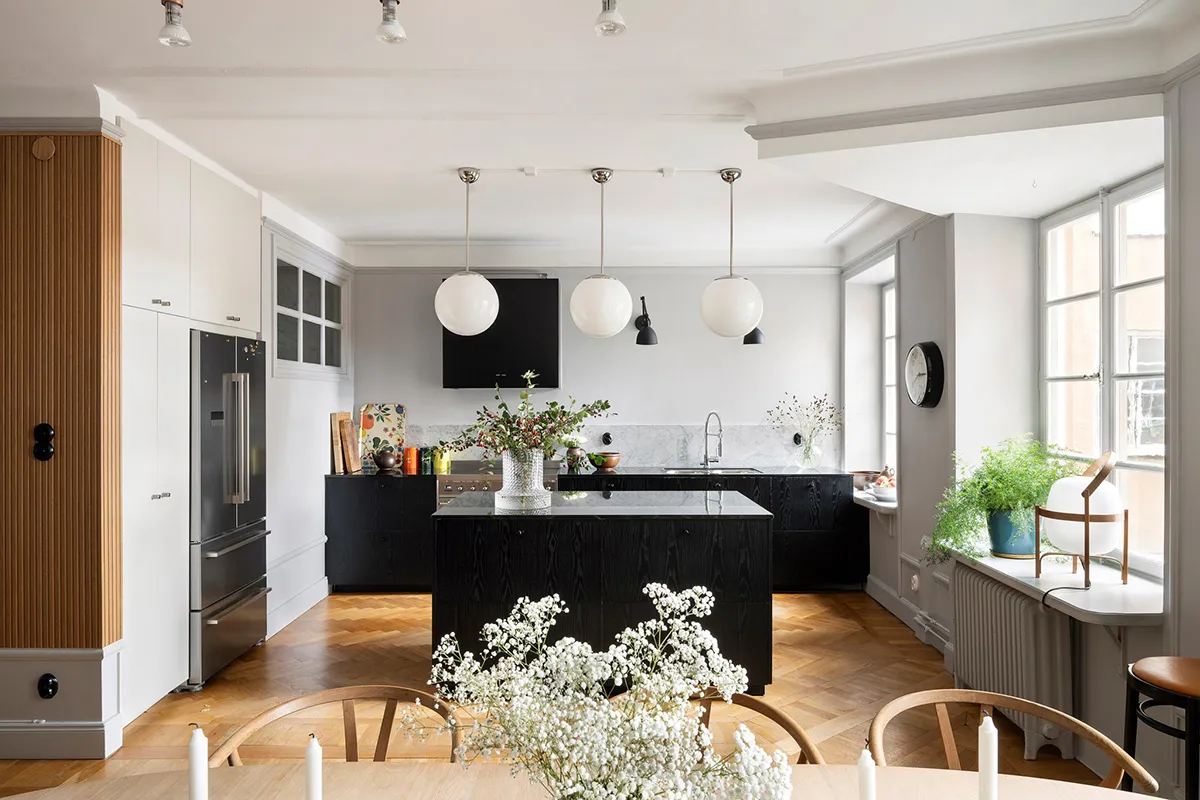
In the kitchen. Good lighting above the work surface is necessary while cooking. But after dinner, it’s not always necessary to keep all the overhead lights on. Sometimes a small lamp in the dining area is sufficient if it provides adequate visibility.
In the hallway. Main lighting is needed when you’re about to go out or packing things. For moving around at night, a small motion-sensor lamp might be useful to avoid turning on a bright chandelier.
The key is not to make the apartment dark just for a nice atmosphere. Wherever you’re cutting food, reading small text, or moving up stairs, there should be sufficient lighting.
What if there’s only one chandelier in the room?
This isn’t a reason to start repairs. The most affordable solution is to add a floor lamp or a table lamp that plugs into a regular outlet. As a starting point, you can even move a lamp from another room and use it for a few evenings to see if it’s convenient as a replacement for a chandelier.
If you want to adjust the brightness of the main lighting, there are lamps that offer this feature. Some allow you to change the brightness using an app or remote control without replacing the wall switch. But it’s important to check compatibility here. Not every LED lamp is designed to work with a standard dimmer. And installing a wall dimmer may require checking the wiring and the involvement of an electrician. For simple evening lighting, all of this isn’t necessary.
Sometimes, just one well-placed floor lamp is enough to completely transform the atmosphere of a room.
Why Beautiful Warm Light Can Sometimes Be Too Much
There is a common interior design mistake: people buy several decorative lamps with warm lighting and turn them on all at once. The room does look impressive. But if a floor lamp, table lamp, desk lamp, and LED strip are all shining brightly, the overall lighting can still be excessive. In other words, it’s not the idea of having multiple light sources that matters, but the ability to choose which ones are active at any given time.
You don’t necessarily have to turn on all the decorative lighting in the evening. Try leaving just one or two lamps on and see if they’re sufficient for relaxation.
Another consideration is screens. Even if the chandelier is turned off, a bright phone or tablet held close to your face still emits light. Lowering the screen brightness in the evening can also be helpful. A single warm color tone for the display isn’t enough for this purpose.
Try Three Evenings with Different Lighting
To figure out what’s missing in your apartment, you don’t have to start by buying new lights. Conduct a simple experiment:
First evening. Keep the usual lighting. Pay attention to where the light is too bright and where it is, on the other hand, insufficient.
Second evening. Turn off the main chandelier and use only the table lamps or floor lamps available. See if it’s convenient to read, talk, and move around the room.
Third evening. Try a combination: use main lighting for household tasks, then a softer lighting scheme in the relaxation area.
Compare which option is more convenient. It might turn out that only one floor lamp by the sofa is needed. Or that the existing lamps are simply poorly positioned.
Evaluating the result should consider not only how cozy the room looks but also convenience: whether you have to squint, if there are glare issues, how well objects are visible, and whether you want to turn on the chandelier again.
Such an experiment will help determine the right lighting, but it is not a method for diagnosing sleep problems.
There’s no need to darken the whole house
There is also the opposite extreme: upon hearing about the impact of light on sleep, people start avoiding bright lighting even during the day. But it is important for the body to have a distinction between day and night.
During the day, it is beneficial to get enough light, especially natural light. In the evening, as bedtime approaches, the brightness of artificial lighting can be gradually reduced.
The lighting requirements vary in this regard. Older adults and those with poor eyesight often need brighter lighting for reading and safe movement. Therefore, safety and visual comfort are always more important than striving for some ideal evening dimness.
And certainly, one should not expect a new lamp to solve the problem of insomnia on its own.
What Kind of Light Is Best for Evenings
For most apartments, a simple principle works well: bright overall lighting for active household tasks, and softer, more localized lighting for relaxation. Instead of one chandelier that operates the same way from morning to night, several light sources can be used and turned on as needed. There’s no need to buy an expensive lighting system, change the ceiling, or install dozens of lamps.
Sometimes, simply moving a table lamp, adding a floor lamp near the sofa, or learning how to reduce the brightness of existing lights is sufficient.
The room will remain the same, but it will be noticeably more pleasant to use in the evening. Additionally, the body will be exposed to less excessive light in the hours before bedtime.