How to Combine a Bedroom and Living Room: 8 Useful Tips
Modern interior design 'two in one' is no longer rare. Especially popular are combinations of living room and bedroom, living room and kitchen, or living room and study.
The relaxation zone can be seamlessly integrated with the work area. But how to combine a living room with a bedroom? After all, these are two different functional spaces: public and intimate. Today we’ll give you practical tips to help you solve this challenge.
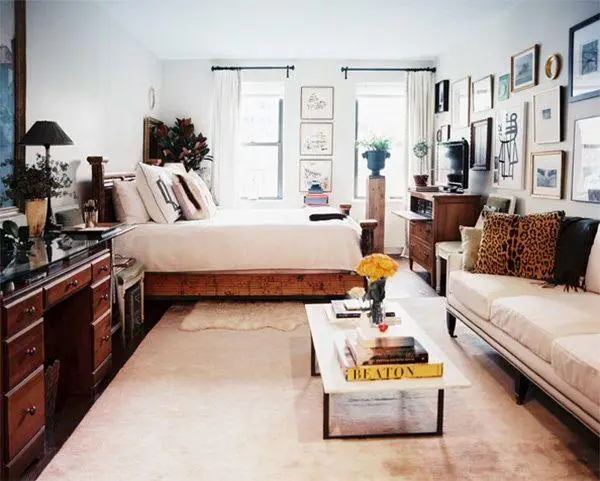
Tip #1: Far from the Passage
It’s better to place the bedroom near a window, away from the main doorway. This ensures greater comfort and prevents outsiders from entering private areas.
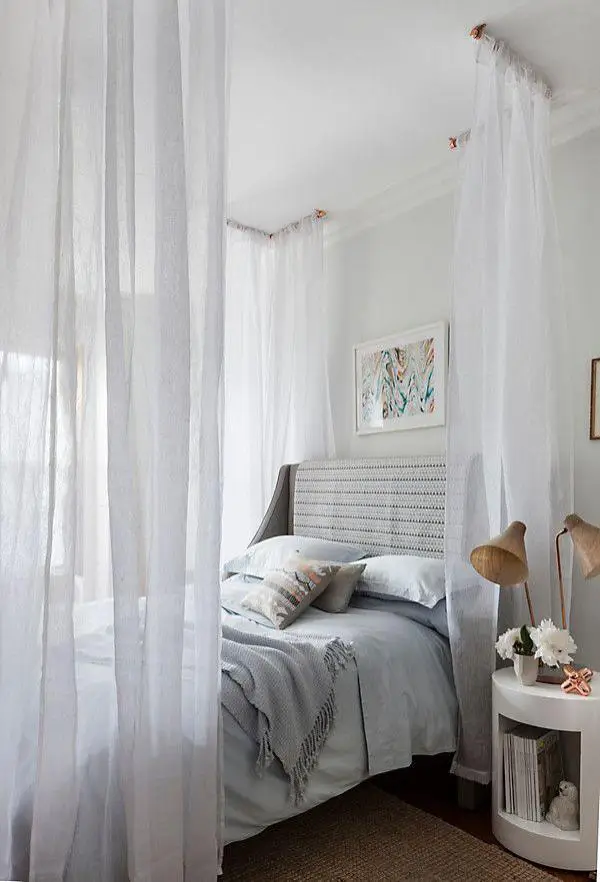
Tip #2: Curtains
You can separate the two zones using standard curtains. Choose colors that match your interior or window curtains. They can be lightweight or heavy, light or dark.
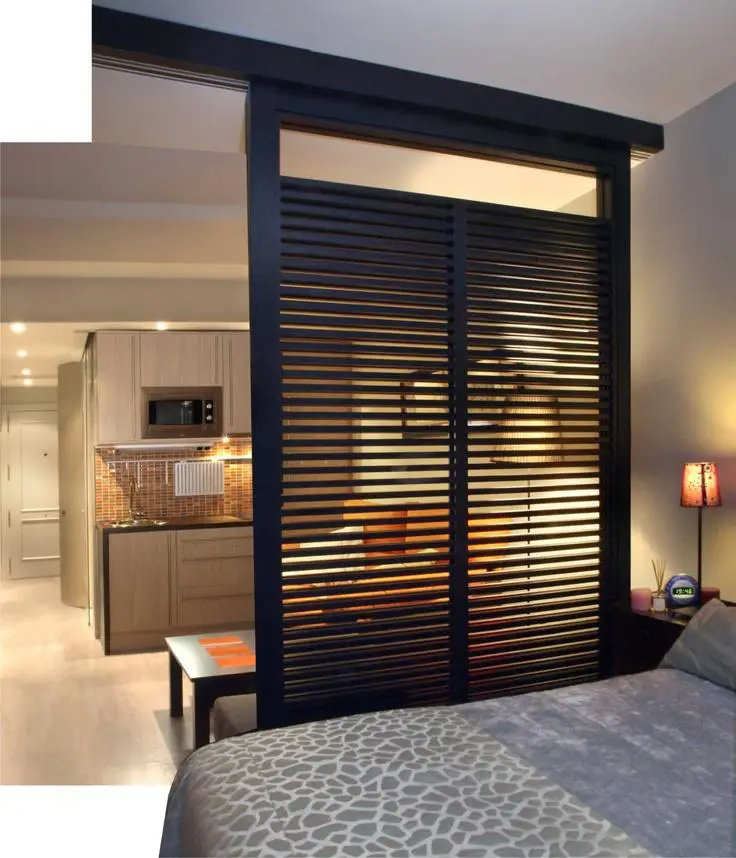
Tip #3: Partitions, Room Dividers
If possible, create semi-partitions using materials like gypsum board, bamboo, translucent plastic, or glass blocks.
In Japanese-style interiors, you can install a fully closing partition. To avoid the 'aquarium effect', order glass with frosted patterns, sandblasting, or tinting.
By the way, room dividers (screens) make excellent tools for solving this challenge. One or several can serve as effective zoning elements.
Tip #4: Cabinets, Shelves, Storage Units
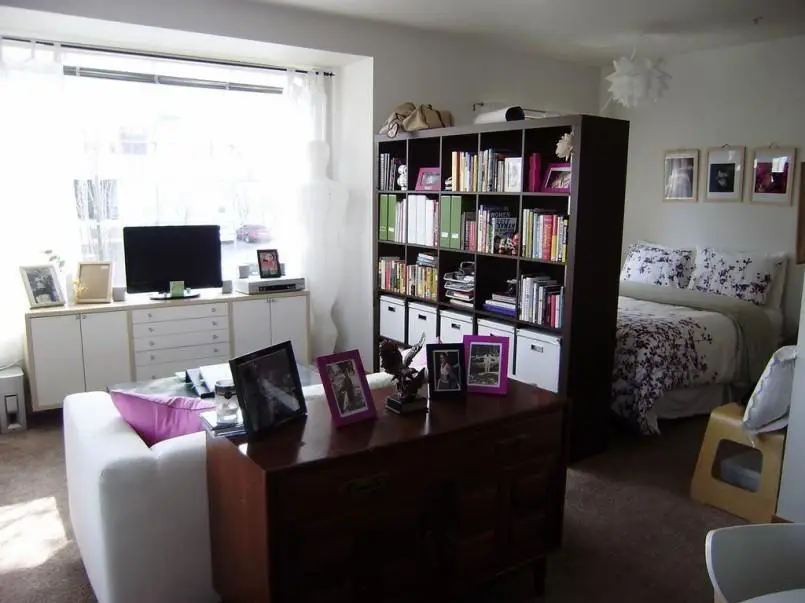
You can use cabinets to divide space between two zones. This creates a functional barrier for storage. Opt for compact, non-bulky furniture.
Open high shelves are ideal as room dividers. Plus, they allow more natural light into the living area.
Tip #5: Color and Lighting
If you don’t need physical partitions, separate the bedroom from the living room using lighting and color. Install several lamps in the living room to increase brightness. For the bedroom, use separate switches and choose softer, dimmer lighting.
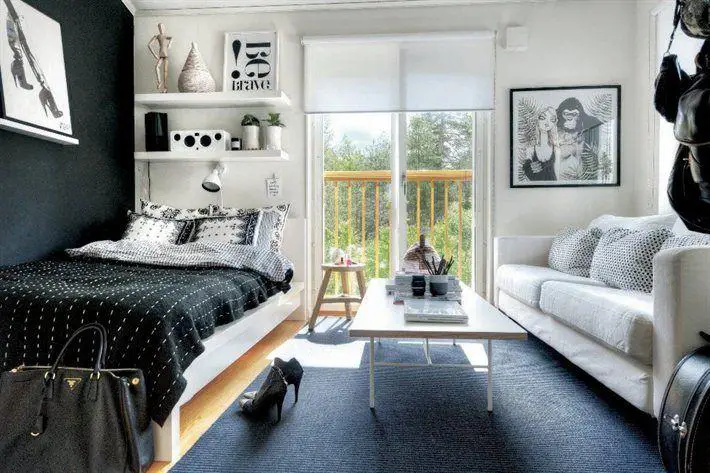
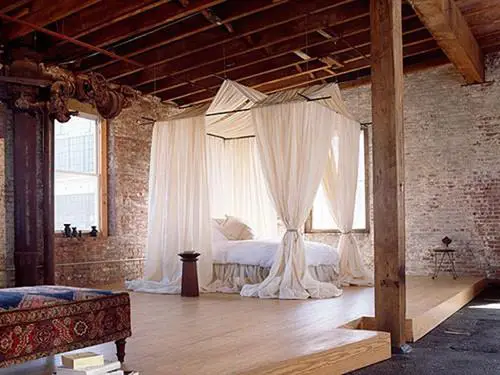
Tip #6: Platform or Canopy
You can define the bedroom using a platform. For a more intimate atmosphere, use a canopy.
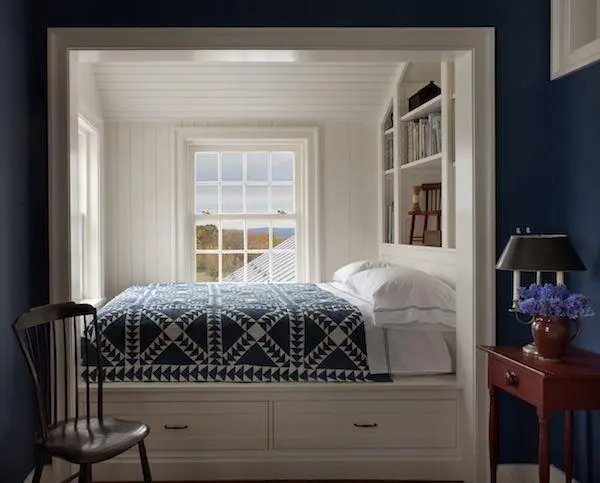
Tip #7: Bed Headboard
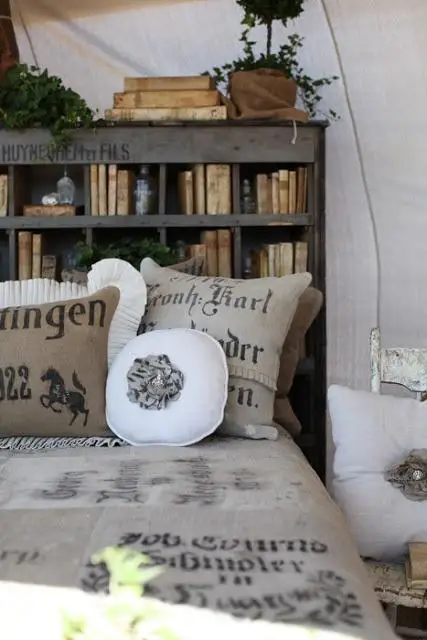
The bed headboard can serve as a barrier between zones. Choose a design where the headboard is made as a shelf, console, or display unit. This eliminates the need for bedside tables—economical and practical!
Tip #8: Plasma TV
A large plasma TV can double as a room divider. If mounted on a swivel bracket, it can be viewed from both the living room and bedroom.
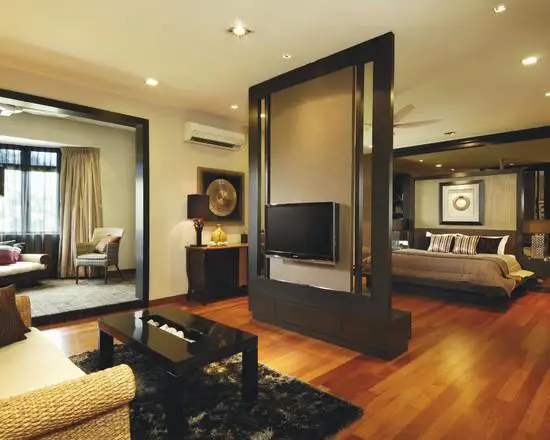
As you can see, with smart space planning, you can create a sleeping area, relaxation zone, and guest area within a single room, while also hiding items in built-in shelves and cabinets. A few more tips... Choose furniture with small wheels for easy repositioning. To save space, pick a bed with built-in storage drawers.