Advantages of Using Wooden Strips in Construction
Wooden strips are not a new design invention. However, their modern application in today's market, from fences to walls and ceilings, highlights unique architectural possibilities thanks to their natural aesthetics and practicality. They are suitable for both interior and exterior projects, offering numerous advantages when used in construction and design, which we will discuss in detail further in this article.

What Defines a 'Wooden Strip'?
A strip is a piece of material, historically made from wood but also available in other materials such as aluminum, used in architecture and construction. Several wooden strips together create a linear pattern. This helps to add texture and volume to facades, interiors, or special elements.
metallic and Wooden Strips
When considering wooden strips, it's important to compare the two main types on the market. Strips come in two primary forms: metallic, such as aluminum and wooden (wood). Metallic strips, usually made from aluminum or steel, offer easy installation without the need for drilling. On the other hand, wooden strips, typically made from pine or spruce, are more expensive than their metallic counterparts. However, they lack fire resistance and can be difficult to find the required lengths, despite having better thermal insulation.
Alternatively, aluminum beams offer a range of benefits including strength, lightweight construction, ease of finding and installing, as well as fire resistance.
Advantages of Wooden Strips – Versatility
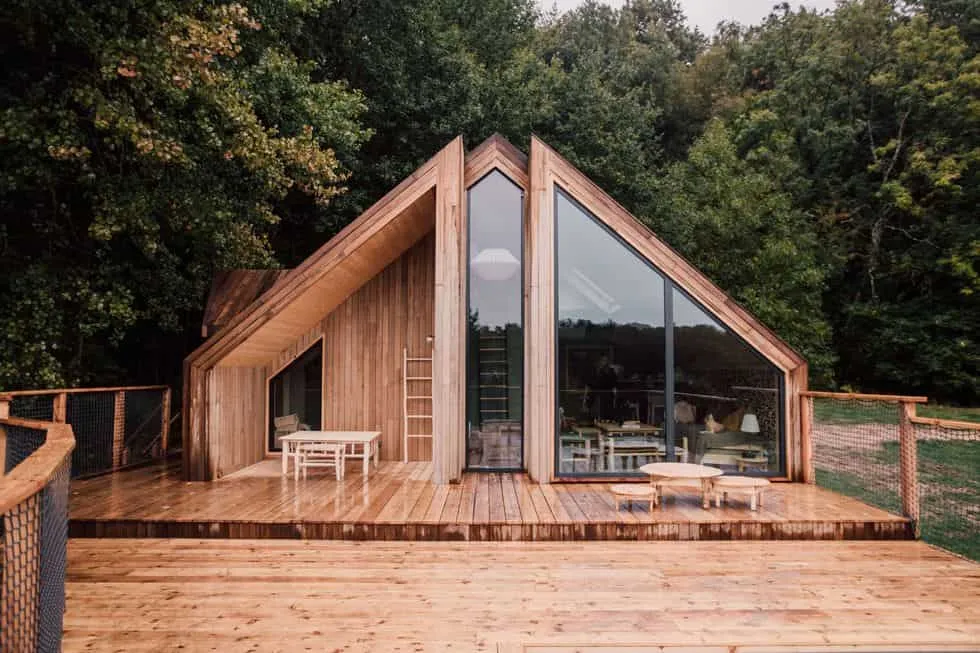
Wooden strips offer versatility, allowing them to be individually cut and processed or easily installed as a prefabricated modular system. This versatility also extends to their use in design. They are often one of the first choices for fencing due to the combination of privacy, while maintaining sunlight and light. Wooden strips for ceilings are often used to make a statement, adding style to what could be a dull application. Outdoors, wooden strips on facades offer broad versatility, allowing adjustment of strip width and depth—thick or thin—as well as the spacing between them.
Advantages of Wooden Strips – Light and Sun Control
Wooden strips provide a functional solution for controlling natural light and solar illumination in architectural spaces. Strategically placed these strips determine the amount of penetrating or blocked sunlight, affecting privacy and visibility. An example would be using wooden strips in a spiral staircase railing. In this case, the strips play a key role in limiting natural light penetration while maintaining a sense of transparency and openness, as well as visual connection.
Additionally, wooden strips can function like a brise-soleil, effectively deflecting sunlight and minimizing heat buildup and direct solar exposure. A house's facade can integrate wooden strips on one side to reduce but not fully block sunlight in certain areas, such as an indoor courtyard or outdoor dining area. The dual functionality of wooden strips makes them a valuable element in architectural design, balancing light play, privacy, and thermal factors.
Advantages of Wooden Strips – Sound Insulation
When used in ceilings, wooden strips can serve a dual function—amplifying or softening noise within a room. Whether aiming to enhance or reduce the acoustic atmosphere, a wooden strip ceiling can be invaluable. Wood, being a natural sound-absorbing material, plays a key role in creating the desired ambiance. Sound-absorbing wooden ceilings effectively absorb noise due to their internal wood composition.
Additionally, a suspended wooden ceiling with strips is designed with multiple layers, allowing sound to surround the strips and elements of space. This construction allows sound to pass through the ceiling rather than reflecting within the room. This contrasts with more traditional, flat and less permeable ceilings where sound typically bounces back.
Advantages of Wooden Strips – Privacy
Wooden strips are an excellent solution for ensuring privacy in home design due to their ability to harmoniously combine privacy, lighting, and aesthetics.
This ties back to our first point about versatility, in this case—adaptability. The width and spacing between strips are decisive factors determining the level of coverage in a zone. Carefully adjusting these parameters, homeowners can set visibility levels to their preferences. Choosing narrower spacing and wider strips achieves a delicate balance that significantly reduces visibility, offering enhanced privacy.
Advantages of Wooden Strips – Easy Installation
Besides their appealing aesthetics, the installation of wooden strips surpasses speed and efficiency compared to other applications. Their innovative design makes them extremely easy to install. In projects where time constraints often lead to compromises in quality, using wooden strips ensures that achieving the desired look and feel does not compromise on quality. Strips with clamps provide even greater efficiency by simplifying the installation process.