Solar Elegance: Transforming Aesthetics with Panels
In our time, solar panels no longer surprise anyone. Alternative energy sources have become widespread in many countries. This is explained by their availability and the benefits justifying the investments.
The industry is rapidly developing, opening new interesting and practical solutions. Their goal goes beyond efficient use of solar energy; they have also become an indispensable part of modern home and business design projects.
Many architects and designers use solar panels as decorative elements, integrating them into building facades and creating unique structures. This approach allows improving the appearance of buildings and highlighting solar elegance for a sustainable lifestyle.
We have prepared an overview of solar panels and also explained how panels combine aesthetics and functionality, as well as technological solutions that make them more efficient and integrated.
Solar Panels: Devices Changing the World
Source: eEquals
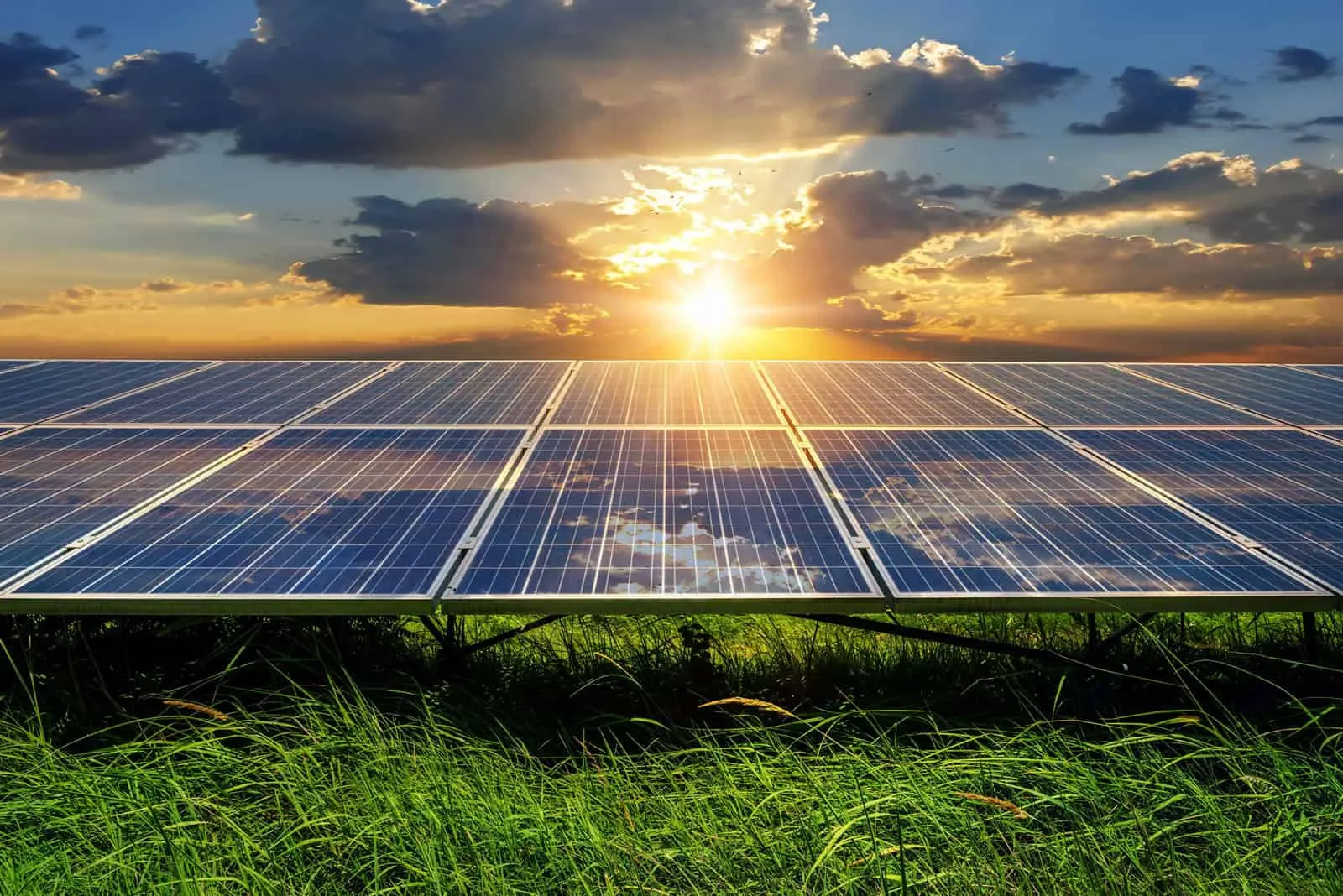
Solar panels are an additional or primary source of energy. They collect sunlight and convert it into electrical energy for various household and other needs. The design of solar panels is based on photovoltaic semiconductors, also known as solar cells.
The principle of operation of these panels is simple. They are installed in places with unlimited access to sunlight. When rays hit the silicon plates, electrons are released. They begin to move through conductors. Then an inverter converts direct current into alternating current, which is needed for powering various objects.
How do solar panels work? – Richard Komp
Solar panels are increasingly installed on country plots and suburban houses. They are often chosen by residents of regions not connected to power grids or where installed capacity is insufficient for normal operation of electrical appliances.
- Gitnux forecasts that the global solar energy market will reach $223.3 billion by 2026. This statistic shows the huge potential of solar energy and indicates growing demand for solar panels in the coming years.
These panels are used not only for household consumption. They are installed in medical facilities and enterprises. Widely in demand in manufacturing, road construction, and various industrial objects.
Demand for panels is driven by their eco-friendliness. They use only the natural energy source - sunlight. The planet's resources are not consumed, and the environment is not harmed.
Besides, solar panels are practical and convenient to use for the following reasons:
- They contain no mechanical parts, so they operate silently and can be installed on the roofs of residential buildings.
- They do not emit greenhouse gases or waste, which is highly valued by environmentalists.
- Operating costs are minimal and they do not require technical maintenance.
- Their service life is significant: according to Solstice data, some solar panels have been working for 40 years and still provide efficiency of 80% or higher.
Another significant advantage is that solar panels are insured. Usually, homeowners' insurance policies cover solar panels installed on and inside the house as permanent components of real estate. However, there are situations where these devices are insured as separate products.
Types of Solar Panels
Source: LocalProElectrical
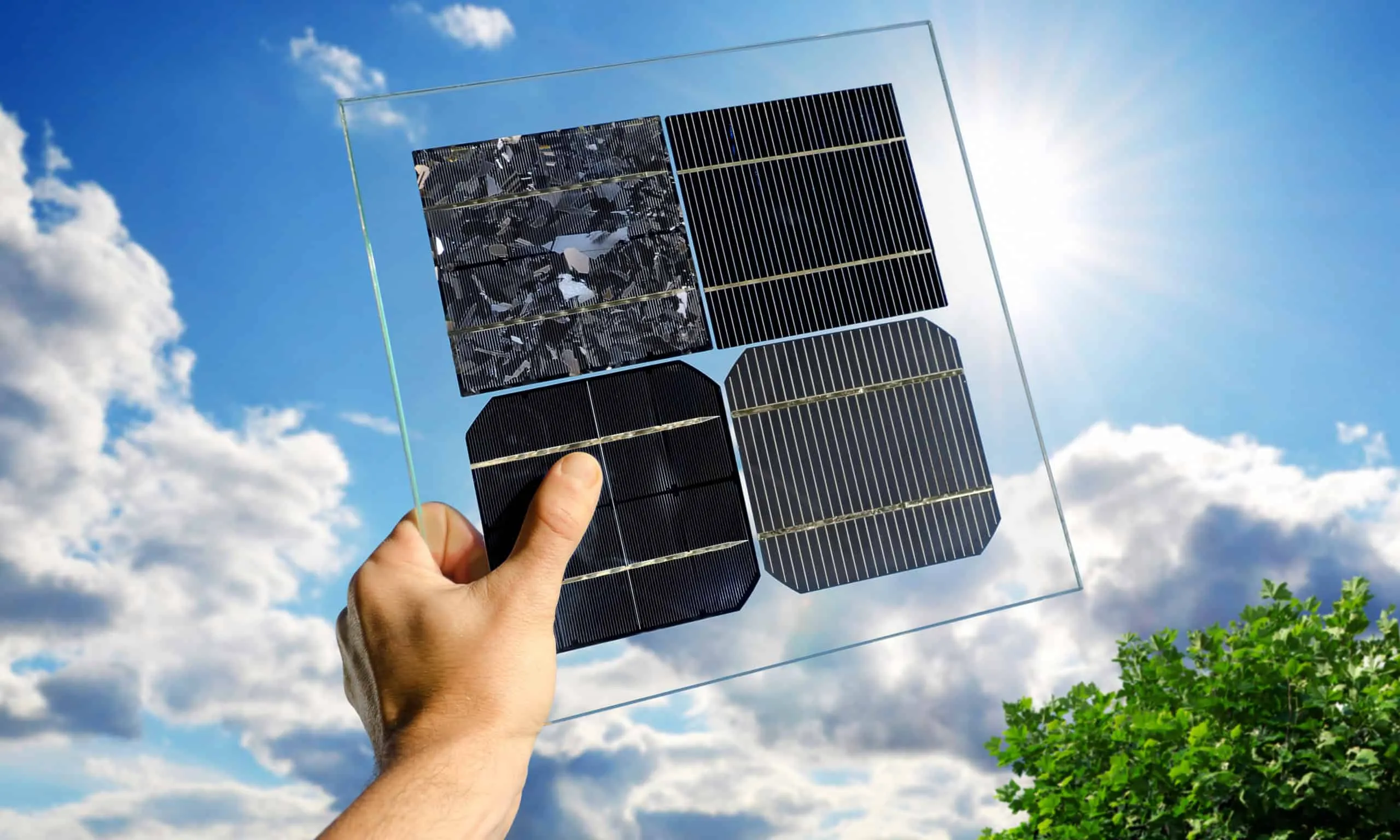
There are three main types of devices:
Each type has its own advantages and limitations. The choice of a specific type depends on the particular needs and characteristics of an architectural project.
Innovations in Solar Panels: Opening New Possibilities
Modern technologies allow creating solar panels of various shapes and sizes, opening new possibilities for designers. From rectangular panels to circular ones, from transparent to colored - the choice is vast. Let's look at the most popular:
Transparent Solar Panels
This is a new direction in design. They allow light to pass through while still generating electricity. This makes them ideal for use in windows or glass building facades.
Colored Solar Panels
Source: apartment therapy
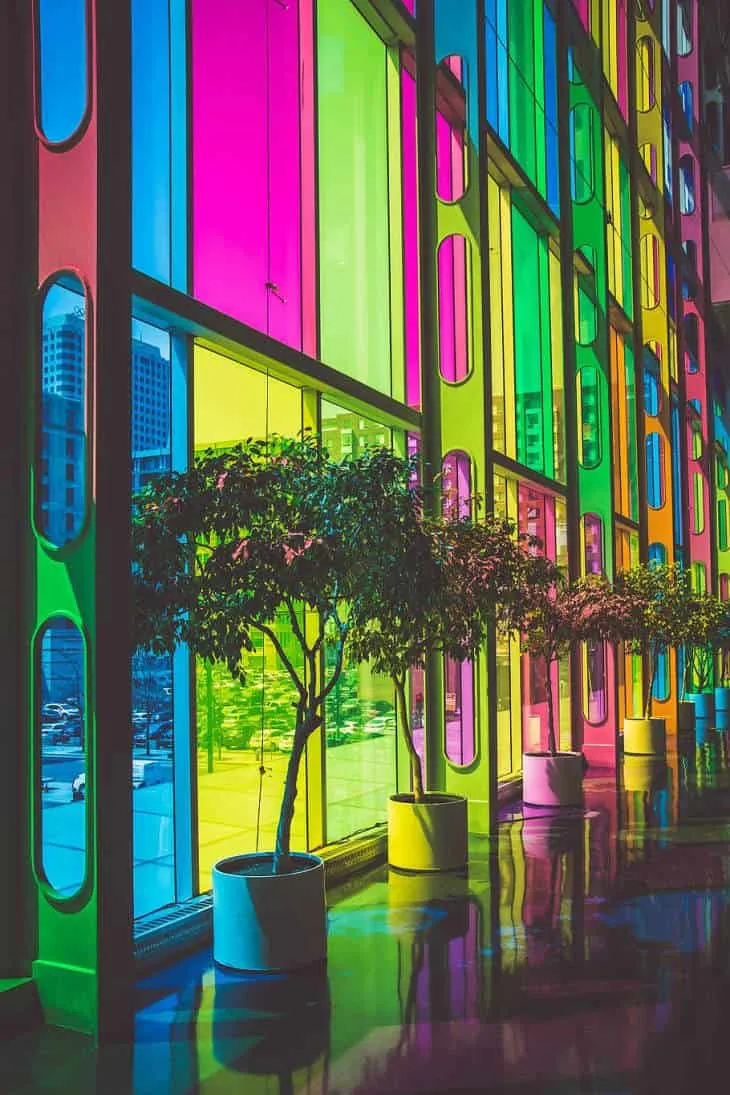
These are artistic solar panels that offer new opportunities for integration into a building's architectural appearance. They can be customized to any color, creating unique and attractive designs.
Flexible Solar Panels
Flexible solar panels combine monocrystalline cells and laminates, allowing adaptation to curved surfaces. They are excellent for use on yachts, trailers, and roofs with uneven surfaces.
Solar Panel Umbrellas
This seemingly ordinary beach umbrella is not as simple as it appears. Besides providing shade under the scorching sun, it can serve as a charging device for mobile devices and even be used to cool the area under the umbrella.
The umbrella can be installed anywhere and does not require additional mounting or special conditions. The umbrella stand and base ensure structural stability even in strong gusts of wind.
Innovations in design open unlimited possibilities for integrating solar panels into modern architecture. They make these devices more accessible and attractive to various industries, helping move towards an eco-friendly future.
How to Increase Solar Panel Efficiency?
Although the aesthetics of solar panels is important, functionality and productivity remain key in device design. Solar energy providers strive to maximize their efficiency. This can be achieved through the following factors:
- Configuration Optimization. Shape affects the ability of panels to absorb sunlight. For example, round models are more efficient in absorbing light during the day because they have a larger surface area facing the sun. Rectangular or square panels are often used on rooftops and building facades because they're easier to integrate into structural design.
- Panel Placement. The placement of solar devices also plays an important role in their efficiency. When installed on the ground, there's a possibility to adjust the tilt angle to an optimal angle for each season. This solution helps increase overall solar panel efficiency.
Developers and designers work together to create solar panels that optimally combine functionality, eco-friendliness, and stylish appearance. This maximizes the use of solar energy while maintaining the aesthetics of solar panels in architecture and harmony with the environment.
Solar Panels in Residential Projects: Efficiency with Aesthetic Preservation
Integrating sustainable strategies into architectural projects is not just a trend but a necessity. Each day we become more aware of the importance of responsible management of natural resources and understanding ecological factors.
Solar energy design is one of the most common strategies in residential architecture. Many countries around the world encourage adopting solar systems to reduce dependence on traditional energy sources and minimize harmful environmental impact.
However, despite the popularity of solar panels, their influence on aesthetics remains a barrier for architects. The main task is to integrate them into architecture at the initial design stage, not just add them to a completed project.
Now there are alternative solutions that allow applying the technology in design projects. Modern photovoltaic panels can be used not only as an energy source but also as cladding elements on flat or sloped roofs, building facades, and shading elements such as terraces, solar partitions, verandas, and other solar decorative objects.
Let's look at several examples of successful projects with integrated solar panels.
The Yin-Yang House
Source: ArchDaily
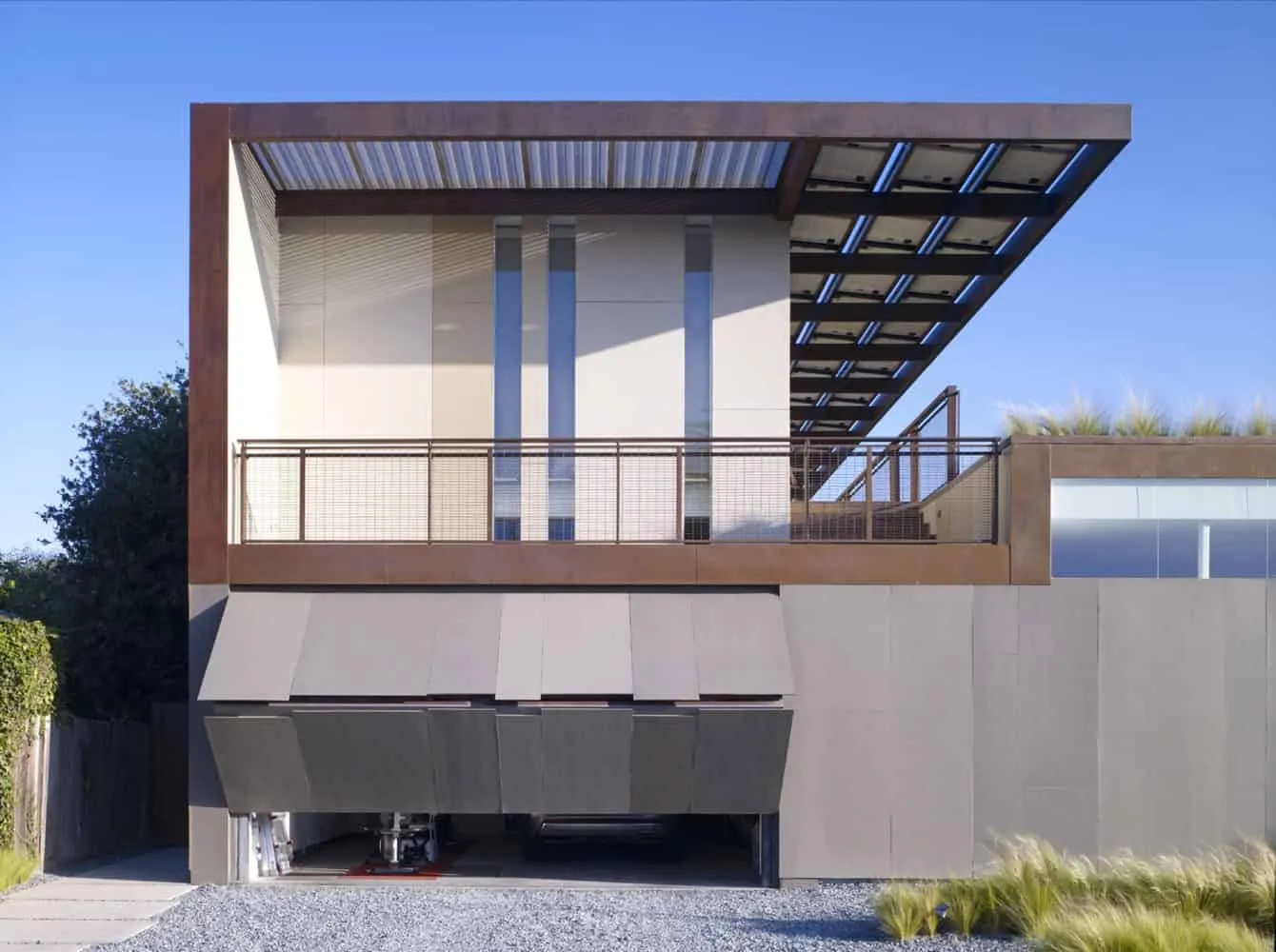
The Yin-Yang House, built in California, is a bright example of modern architecture where solar panels were integrated from the beginning of the design process.
The system developed by students from the US Department of Energy flawlessly combines solar elegance with the aesthetics of good residential architecture. Dual-sided photovoltaic panels can absorb solar energy from both direct light on the front surface and reflected light from the back side, maximizing the amount of energy generated per square meter. In addition, they offer visual appeal and create an interesting composition when used for decorating balconies.
The Bunnean Beach House
Source: ArchDaily
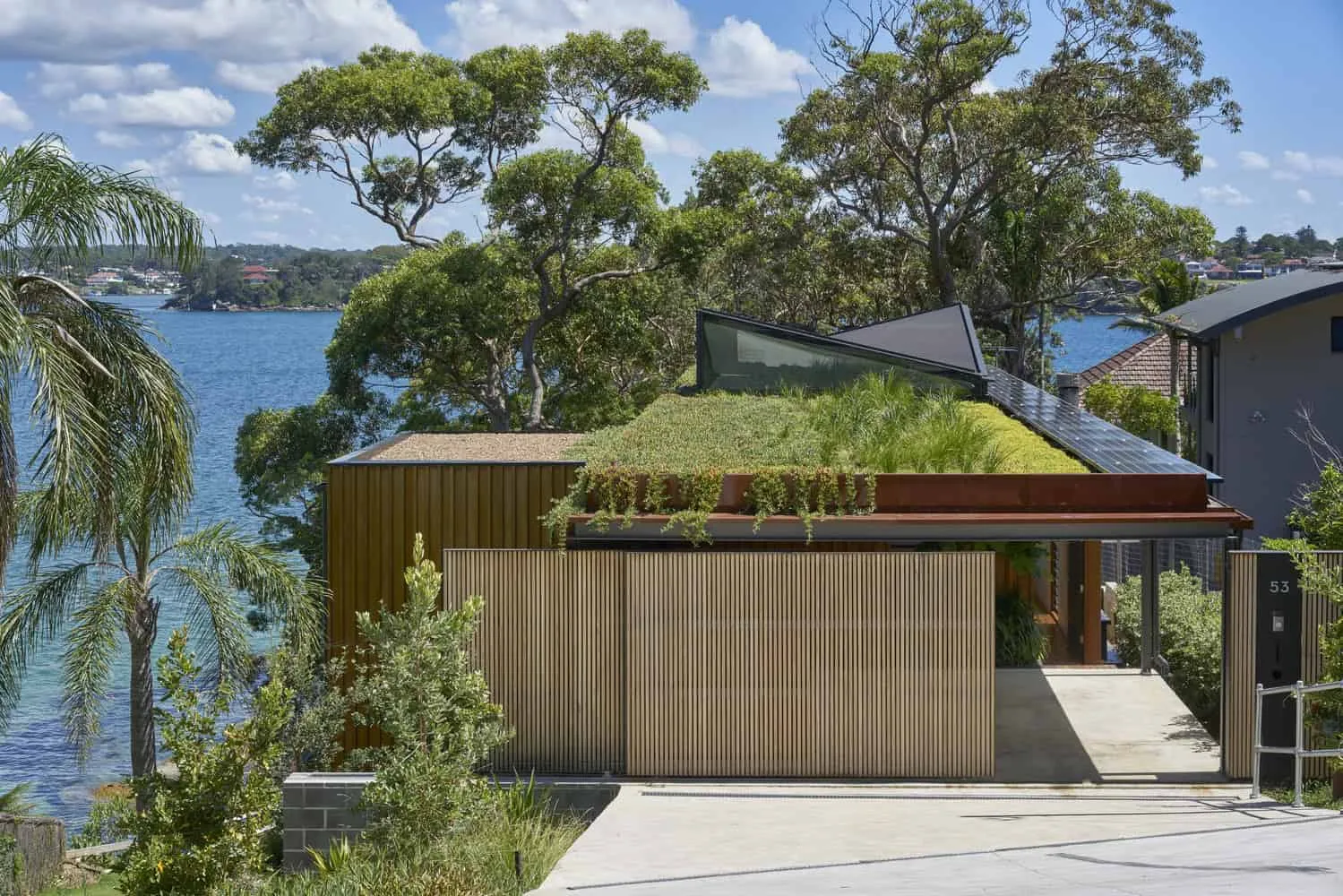
The Bunnean Beach House includes a photovoltaic system with 16 solar panels and a Tesla battery. This system was integrated as part of the linear reflecting pond in the roof design with garden. It provides all energy needs for the owner.
When developing solar elegance for homes, special attention was paid to ensuring that photovoltaic panels flawlessly complement the appearance and style of a roof with garden, demonstrating how ecological elements can enhance rather than detract from design.
The Jenson-DeLeeuw NZE House
Source: ArchDaily
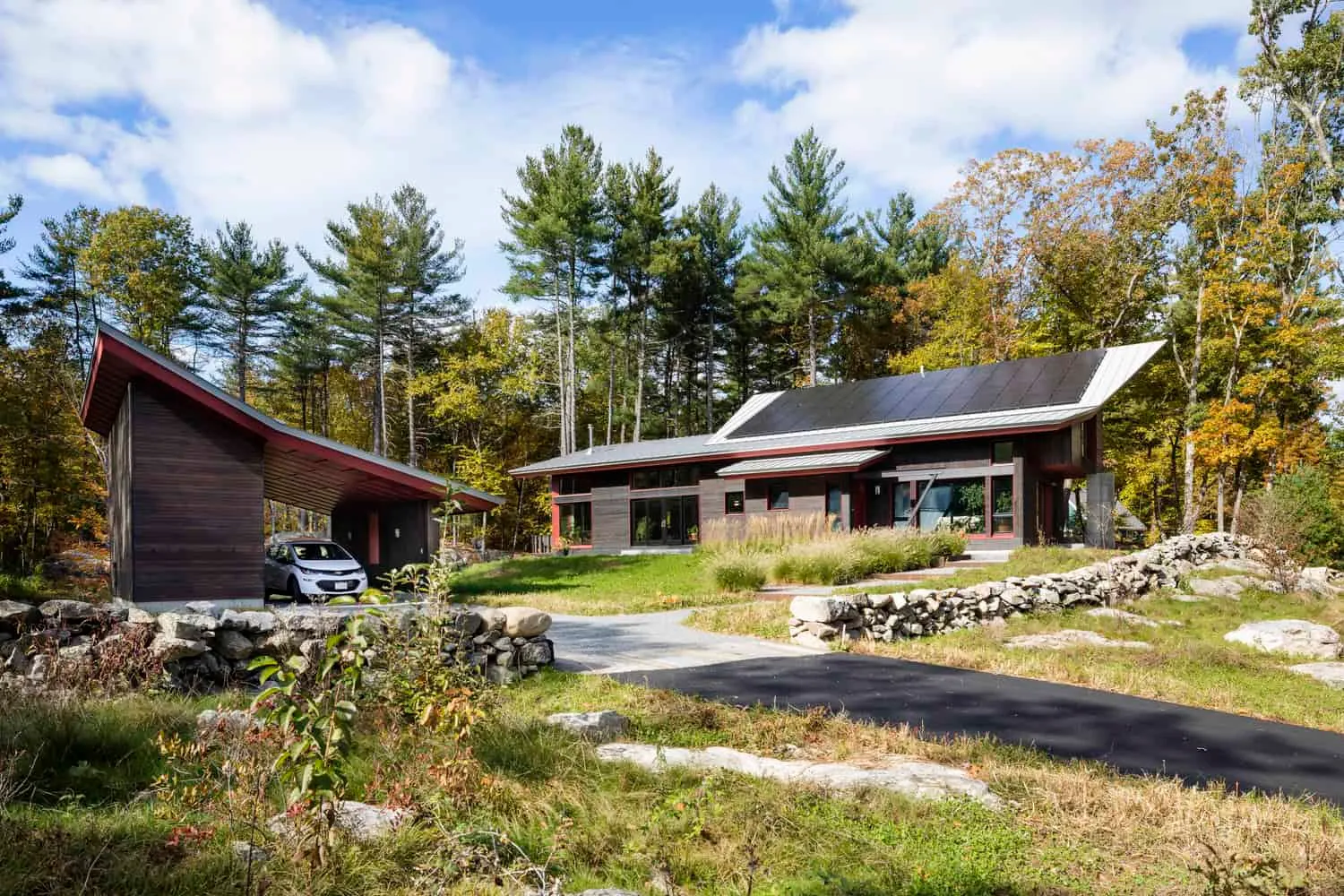
The project located in the USA, although based on more traditional solutions, looks very neat. A 200 square meter house can generate enough renewable energy to meet all its energy needs and even charge an electric car. The storage system tracks daily reserves, preserving excess energy for evening use or on cloudy days.
The roof is designed to maximize the placement of 56 photovoltaic panels, creating a unified energy field. Its dark color harmonizes with the materials used in the external finish of the house.
There are still limited options on the alternative energy market, especially in terms of aesthetics. Nevertheless, technologies continue to improve daily, making solar panels not only an energy source but also an architectural even artistic element that can complement the concept of a building's style.
Is It Worth Using Elegant Solar Solutions?
Solar panels are photovoltaic devices that convert solar light energy into electricity. They are silent, eco-friendly and have a long service life. Moreover, these energy sources have become an indispensable part of design solutions that flawlessly combine functionality and aesthetics.
Solar technology aesthetics provides a unique opportunity to save on electricity and give your property a modern look.
Don't miss the opportunity to benefit from photovoltaic devices. Turn your ideas into stylish and aesthetically pleasing architectural projects.
Frequently Asked Questions
What distinguishes aesthetically designed solar panels from regular ones?
Aesthetic applications of solar panels stand out for their attractive appearance. They can be presented in various stylistic variants - different colors, textures and shapes to match the design and concept of a project.
What advantages do solar panels offer?
Besides reducing dependence on traditional energy sources, eco-friendliness and durability, these panels can enhance the appearance of buildings.
In which architectural projects can solar panels be integrated?
Solar panels can be successfully integrated into various architectural projects, including residential homes, commercial buildings and public facilities. Moreover, solar aesthetics in landscape design is very popular.