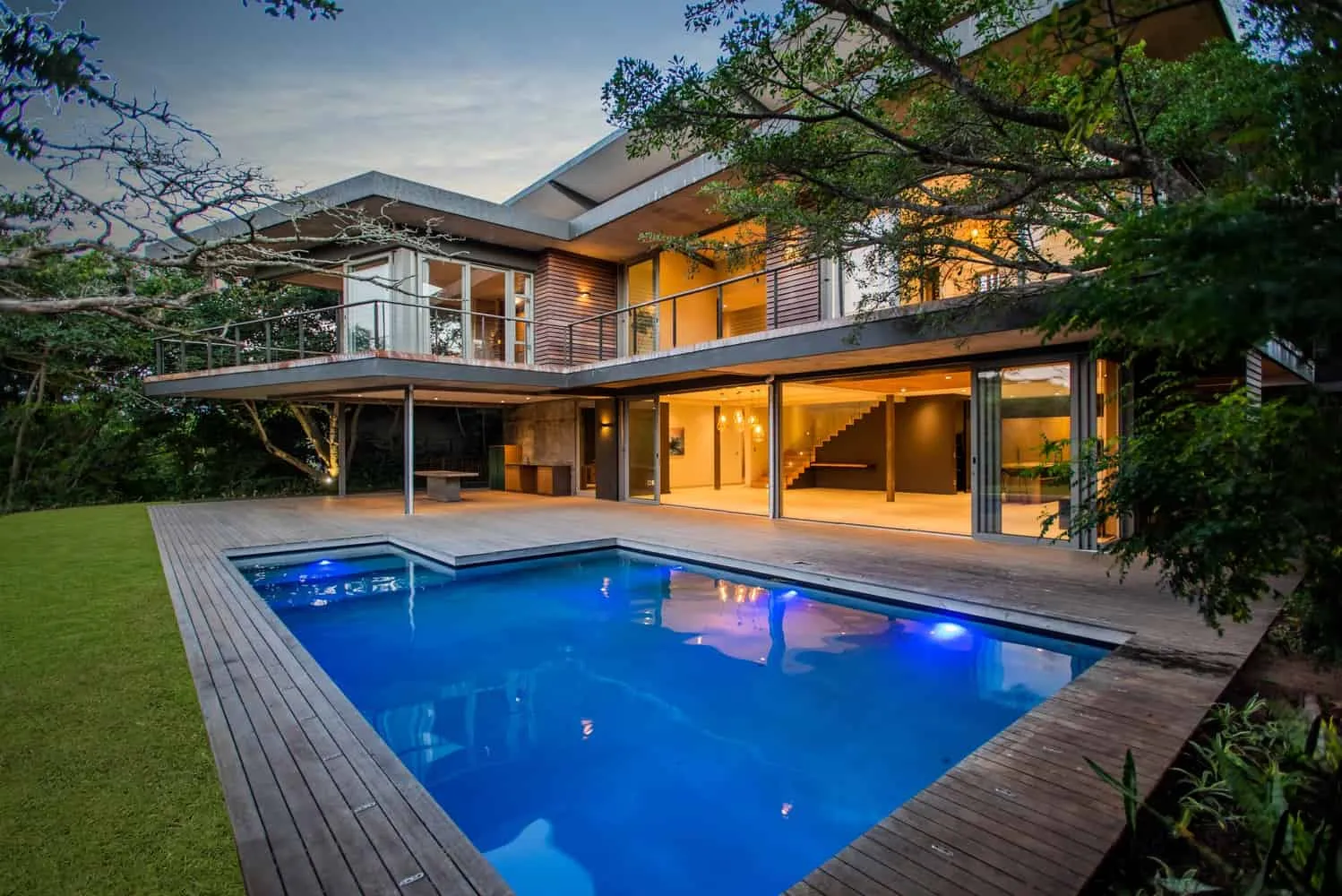
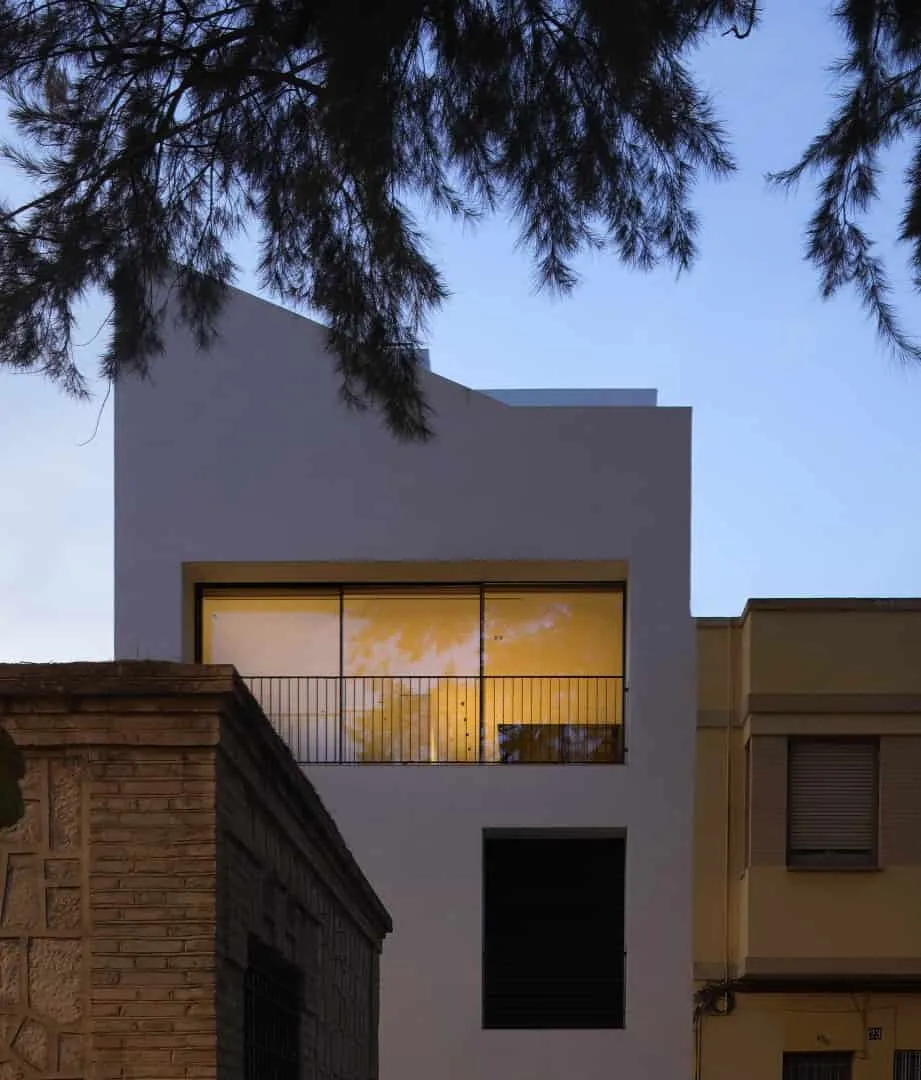
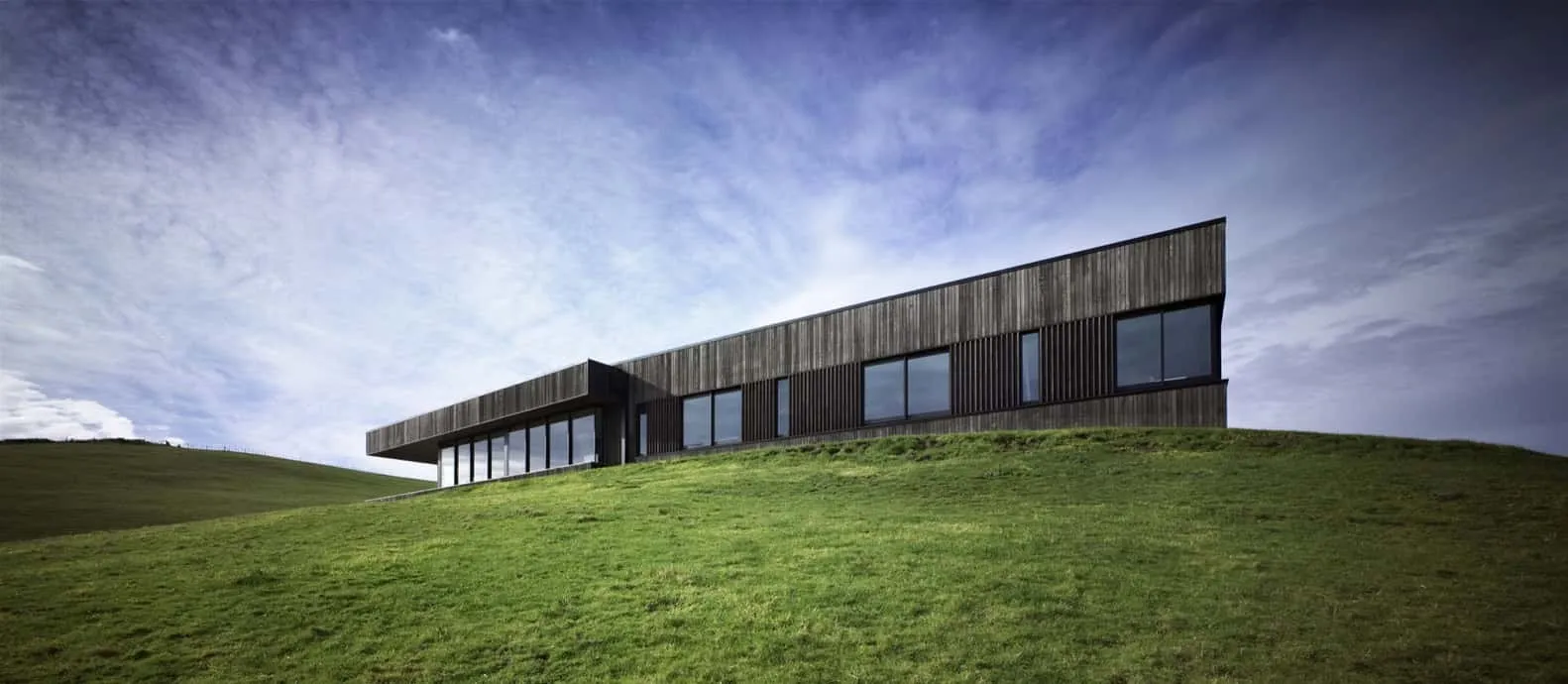
Pittwater House by Andrew Burges Architects in Palm Beach, Australia
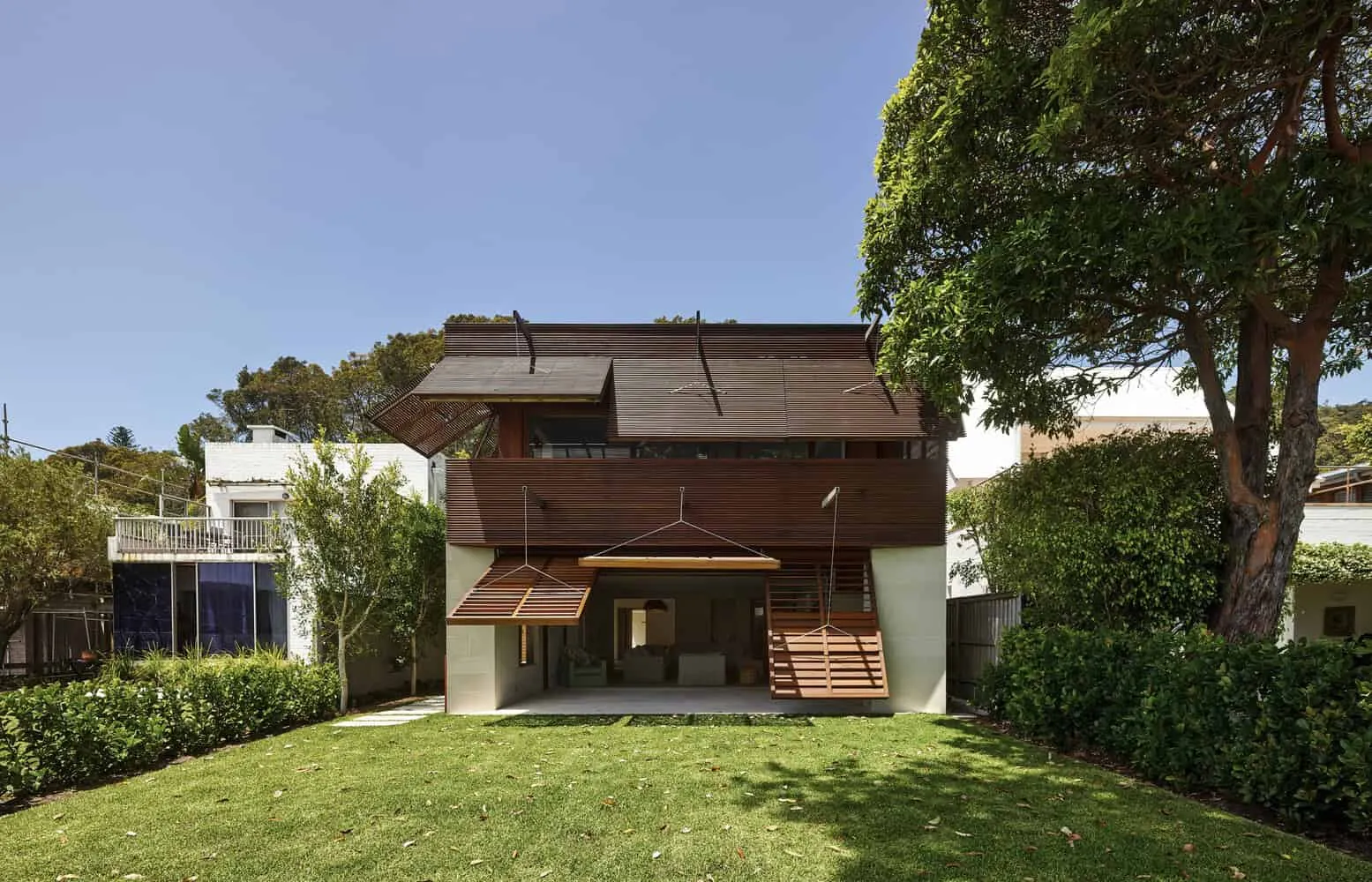
Project: Pittwater House
Architects: Andrew Burges Architects
Location: Palm Beach, Sydney, Australia
Area: 4,574 sq ft
Photography: Peter Bennetts
Pittwater House by Andrew Burges Architects
The Pittwater House is an impressive modern beach house designed for retirees to accommodate guests from large families. Located on the beautiful Palm Beach in Sydney, Australia, with over 4500 square feet of living space, Andrew Burges Architects successfully executed their task. However, this is not the only project from their portfolio we have featured before, so if you liked this project, you may also want to check out the Bismarck House project in Sydney.
Our task for the Pittwater House was to create a beach house for retirees that would be large enough to host guests from extended families — children and grandchildren. The character of the house should resemble early Palm Beach beach houses with a stone base and wooden cladding above. The foundation of the house was already defined by existing development consent.
The site is located on a narrow flat strip of land between the slope of Palm Beach and Pittwater Lake. This special geography gives this waterfront property a dual public side — the street along Barrenjoey Road and the beach on the shore of Pittwater Lake.
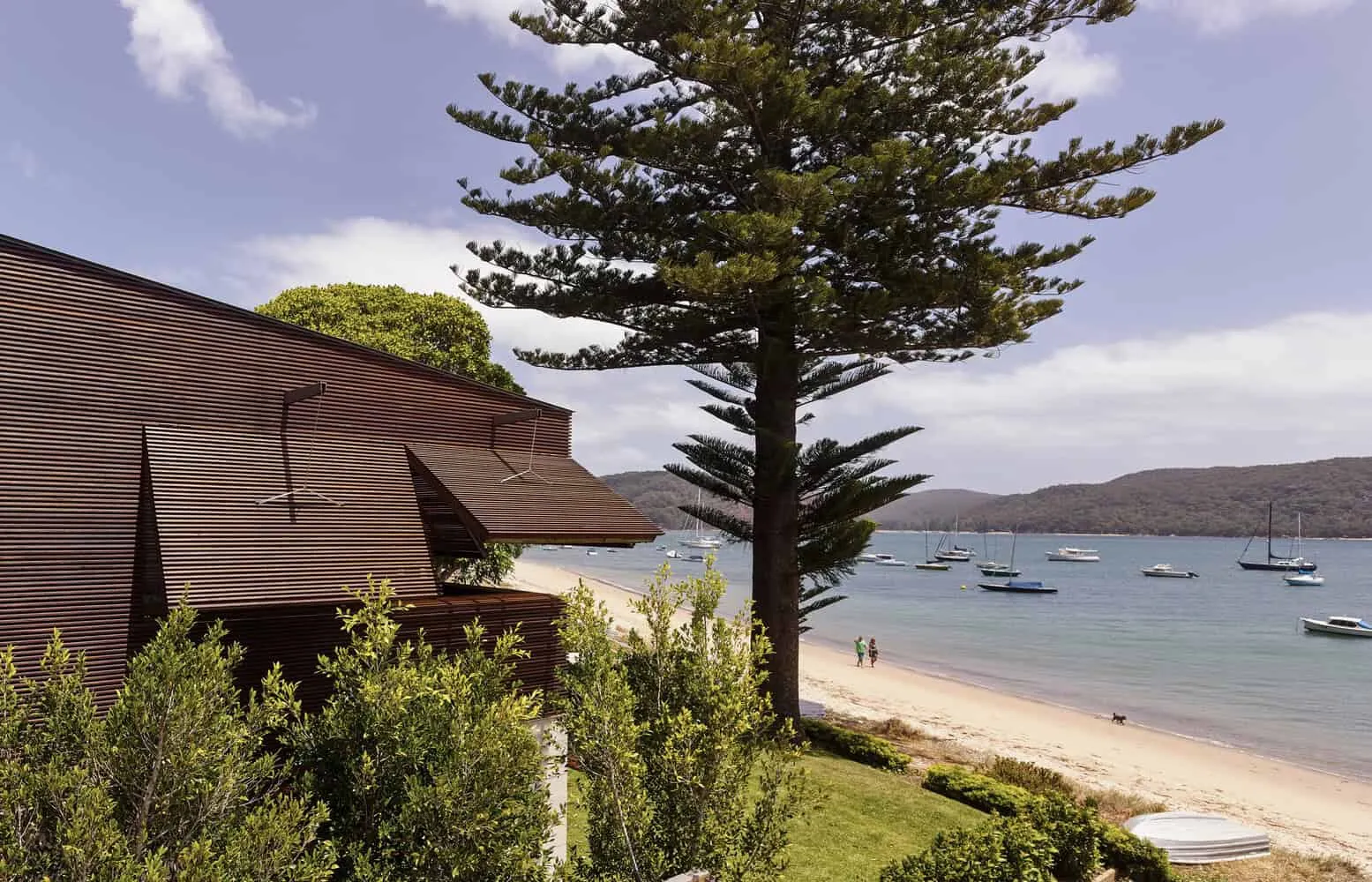
From this task and the site's characteristics, three aspects shaped our conceptual approach to the project:
- How to soften the scale pressure arising from a modern beach house as a gathering point for multiple generations — a pressure that often increases the scale of new homes to such an extent that there is no common character with small holiday properties that defined the favorable landscape image of the area first.
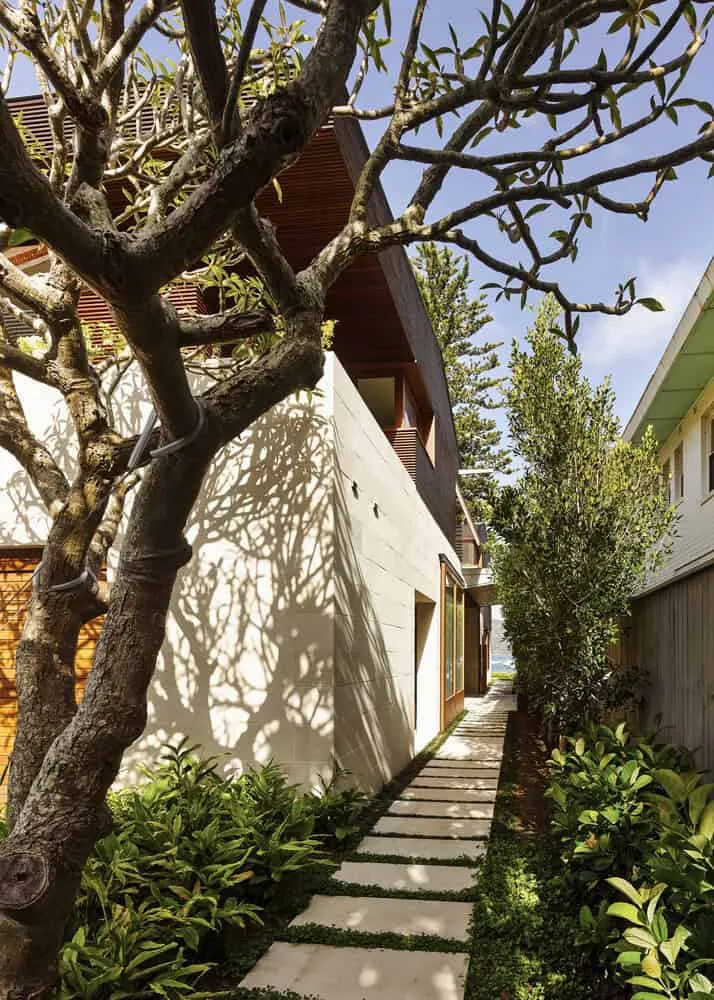
- How to create thresholds that could connect with the geography of Pittwater Lake while ensuring full privacy from the dual public street side on the east and the beach on the west.
- How to find a unique contemporary expression of early indigenous stone and wooden beach house.
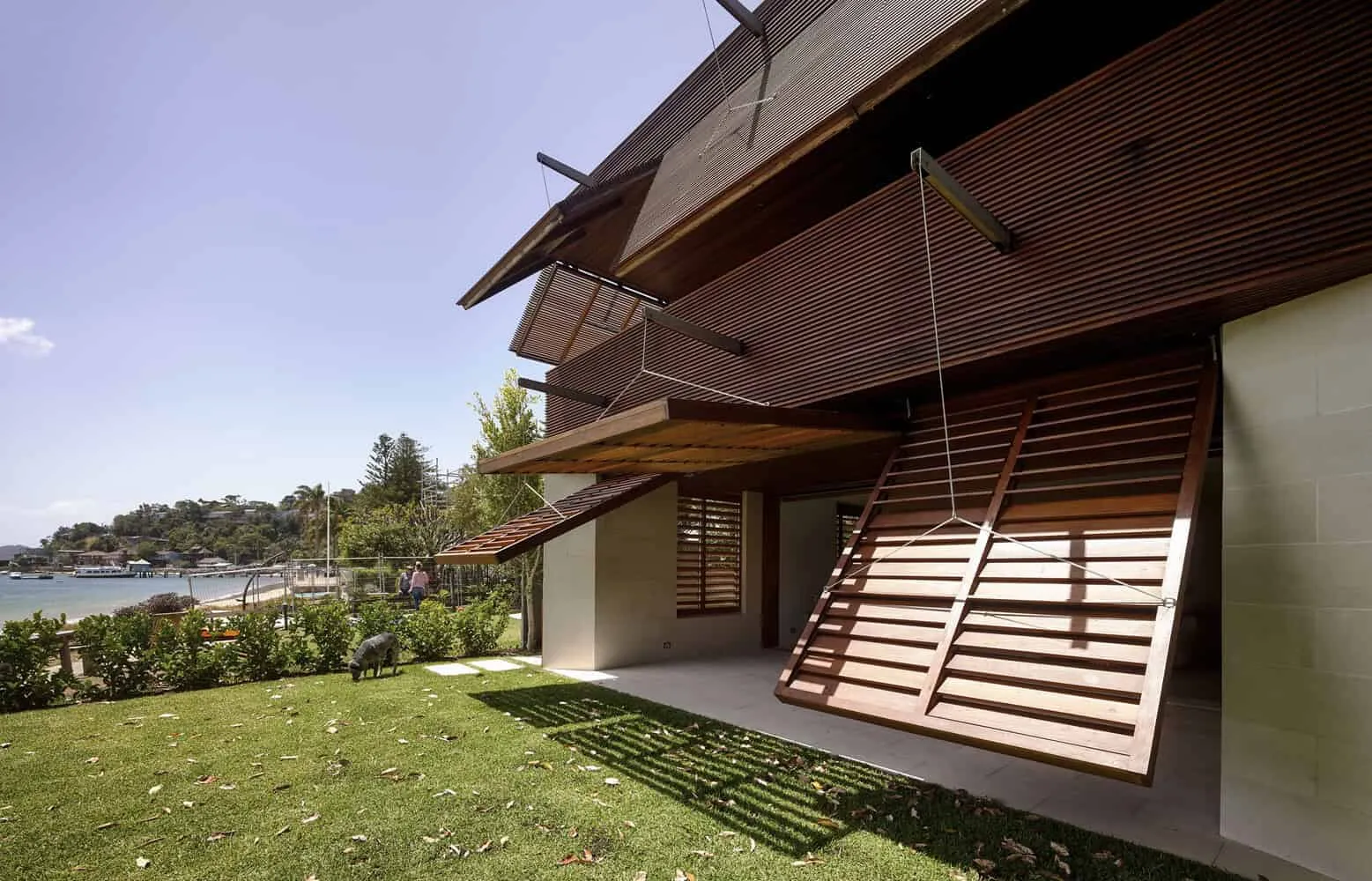
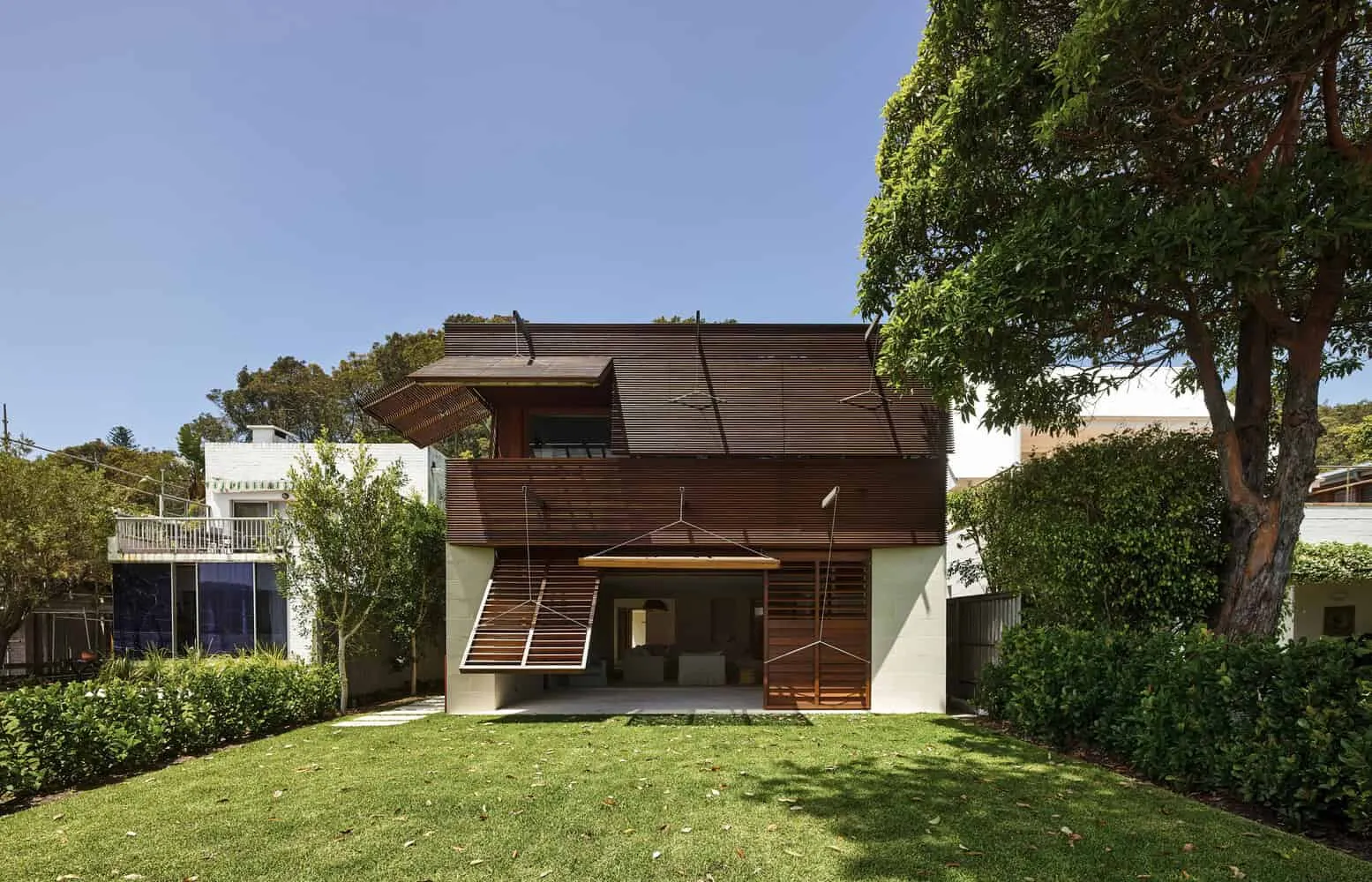
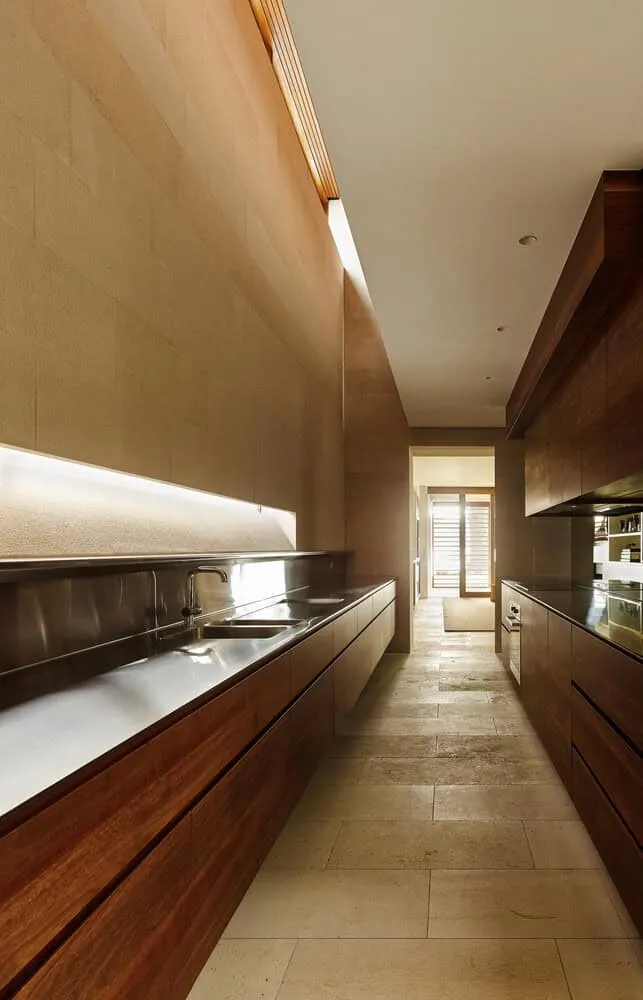
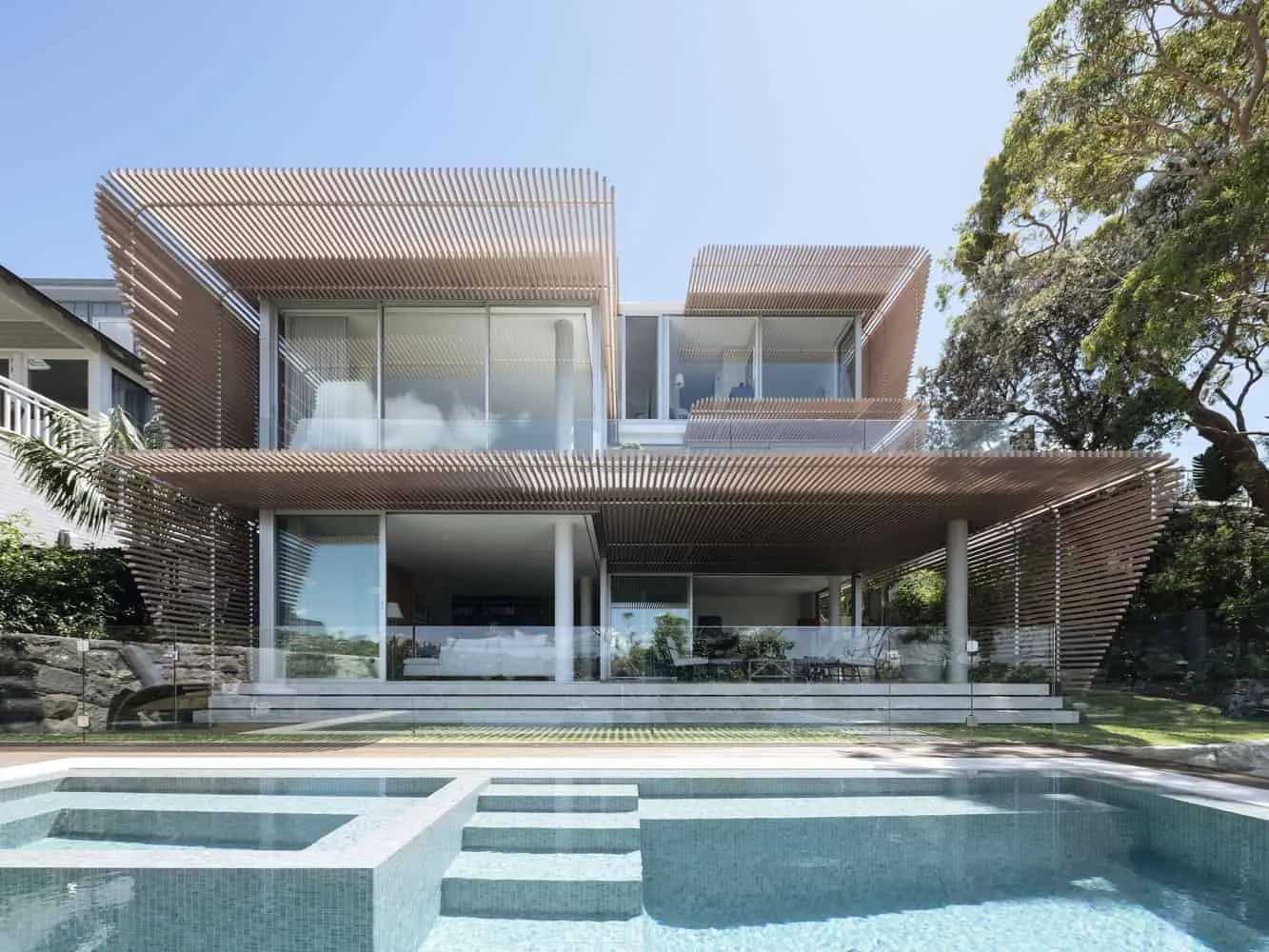
Our strategy was to divide the house area into two identical pavilions facing the street or sea, connected by a northern double interior/exterior space where the kitchen and dining room were located. This manipulation of the building's overall form within the given contour more than halved the perceived size of the house when viewed from the public street or beach side.
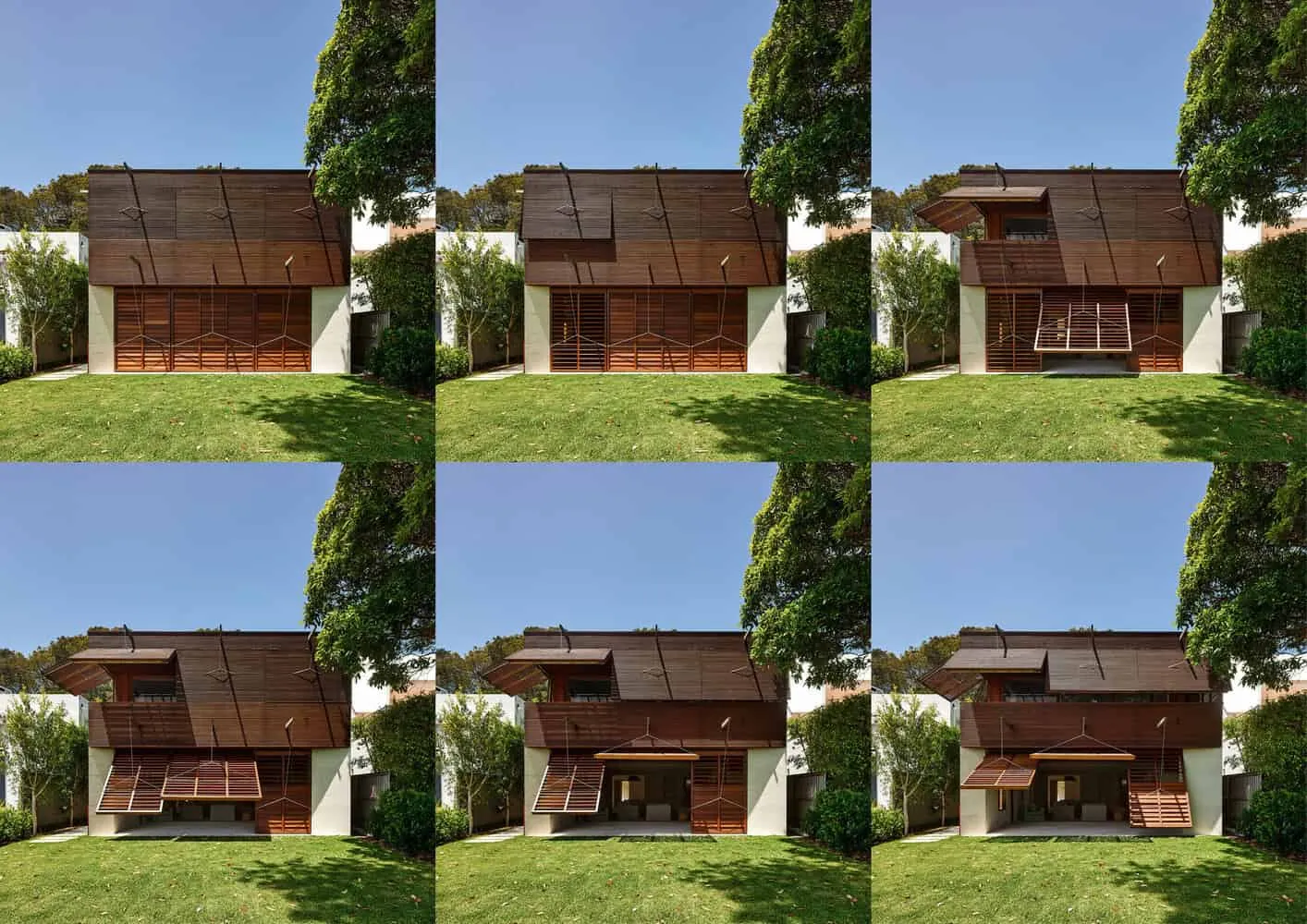
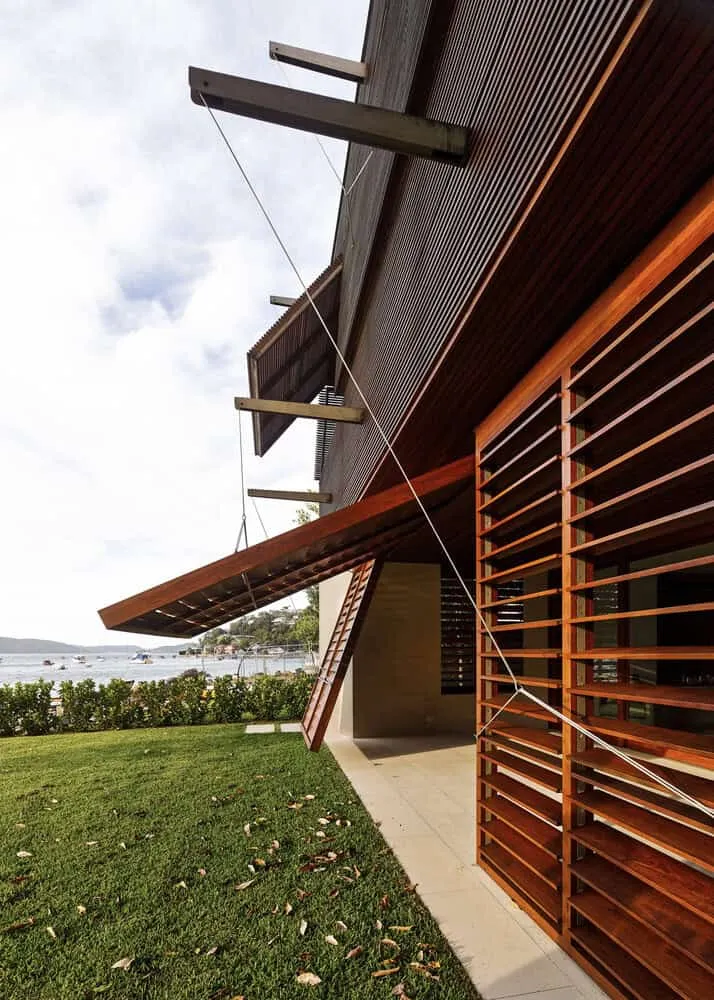
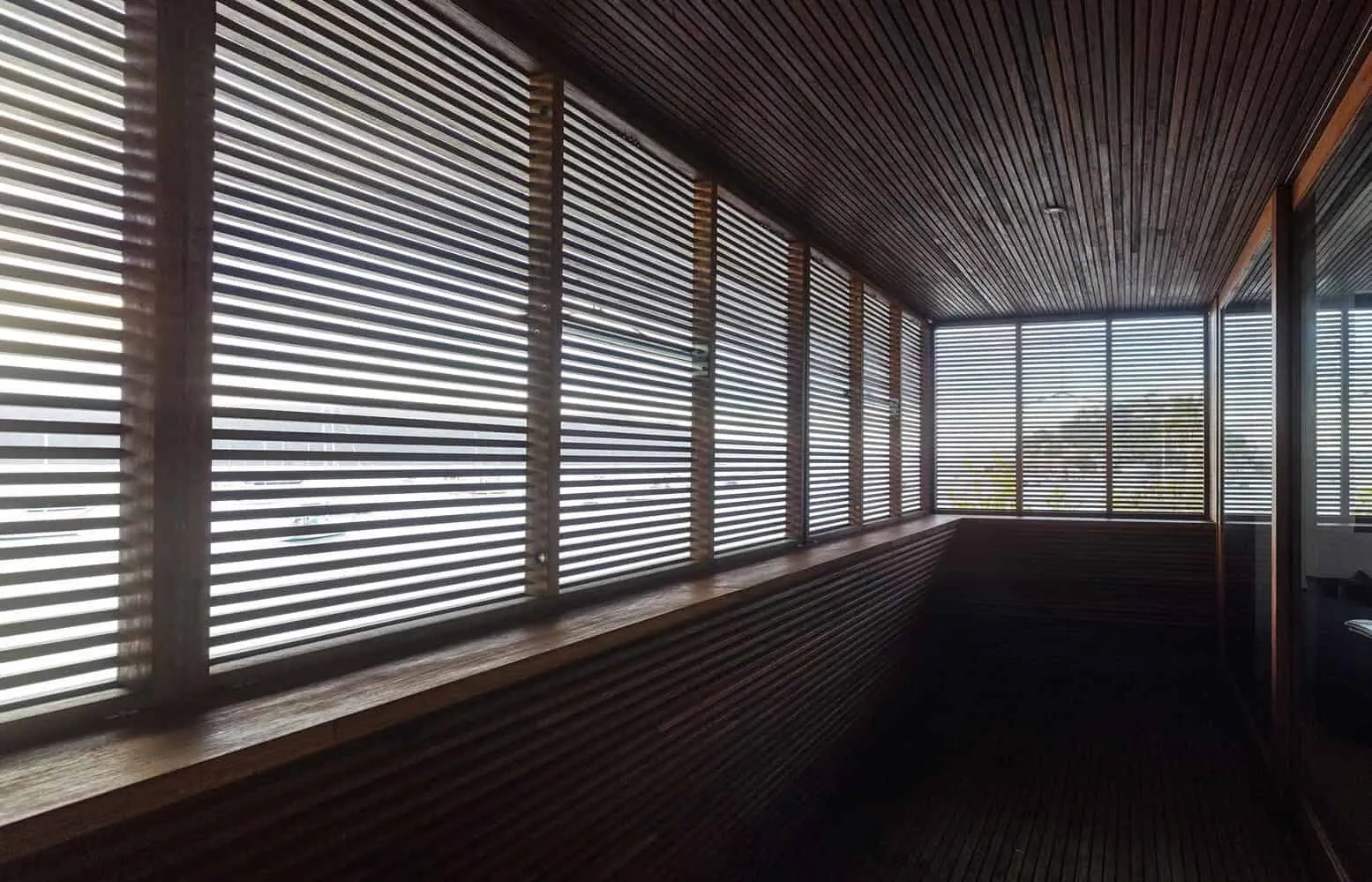
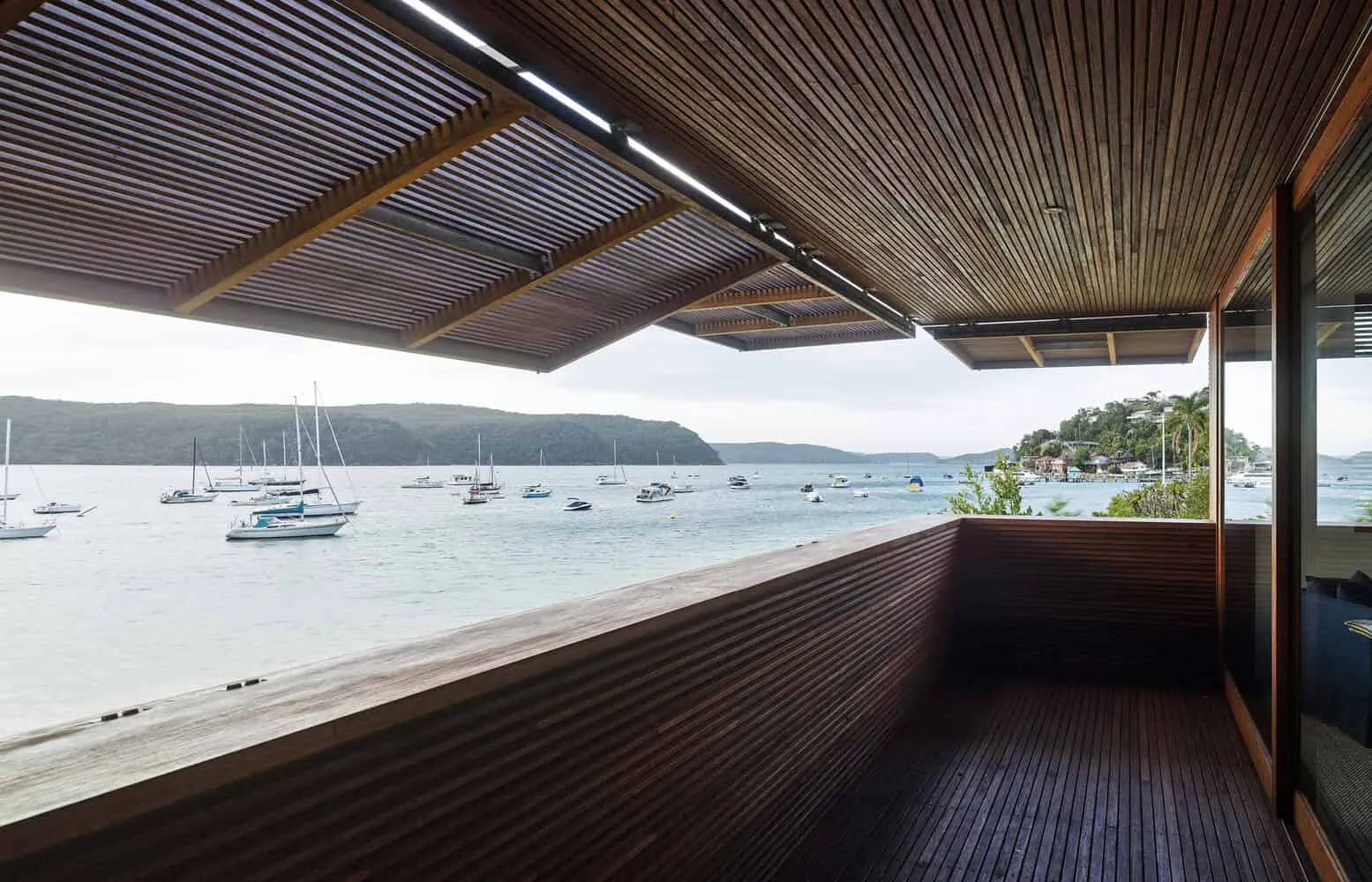
In response to privacy concerns, especially on the beach-facing facade, we developed a reinforced threshold with a functional facade borrowed from many boats nearby. Using a rope and pulley system on stainless steel brackets, controlled by linear actuators, the facade can be opened or closed for infinite combinations of shade, lighting and privacy depending on the western orientation and views toward Pittwater Lake.
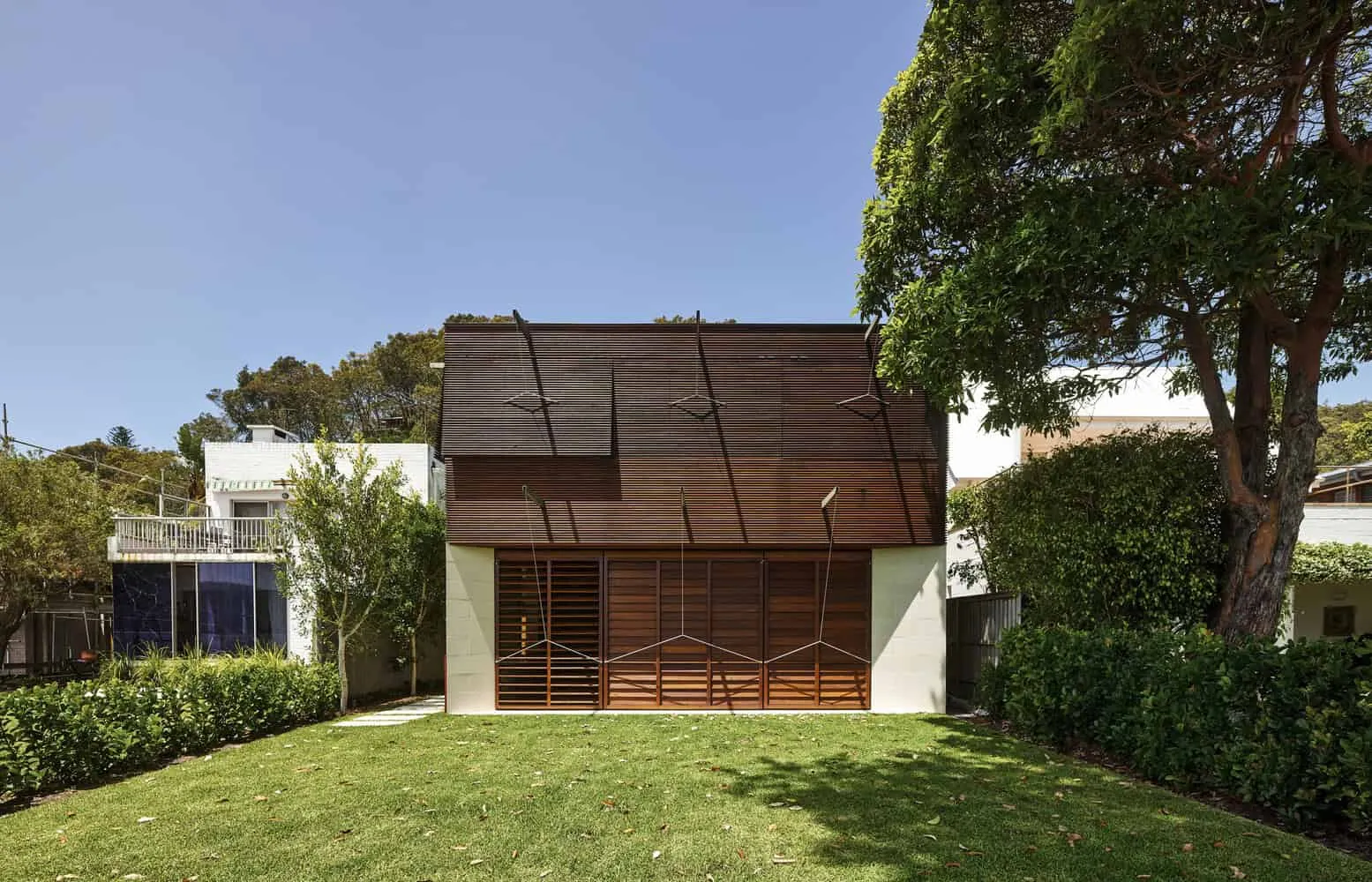
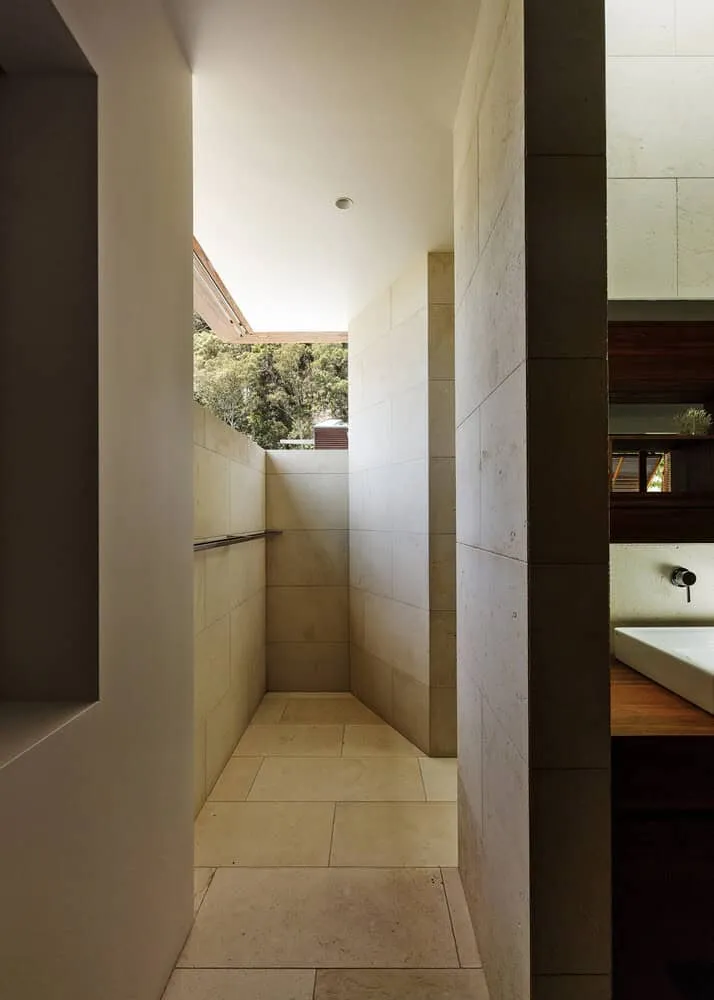
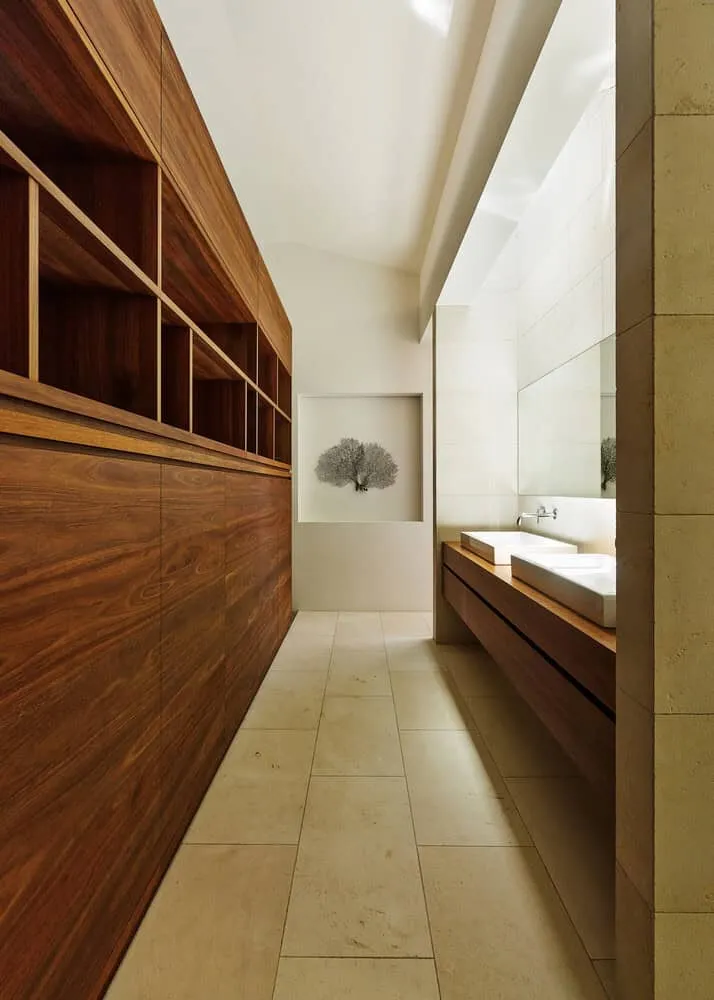
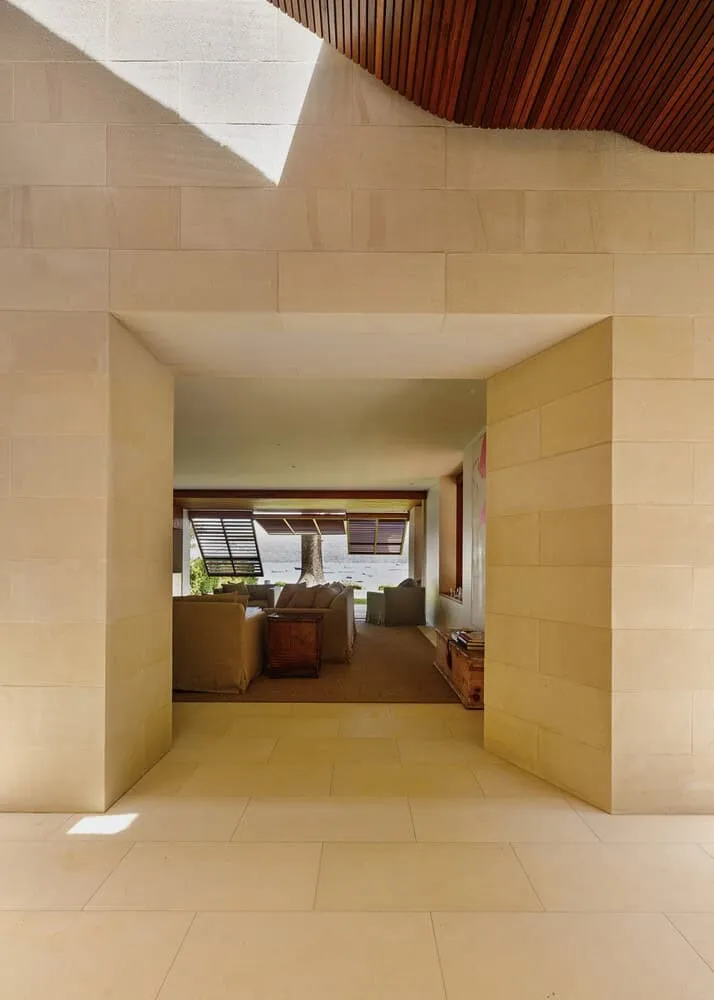
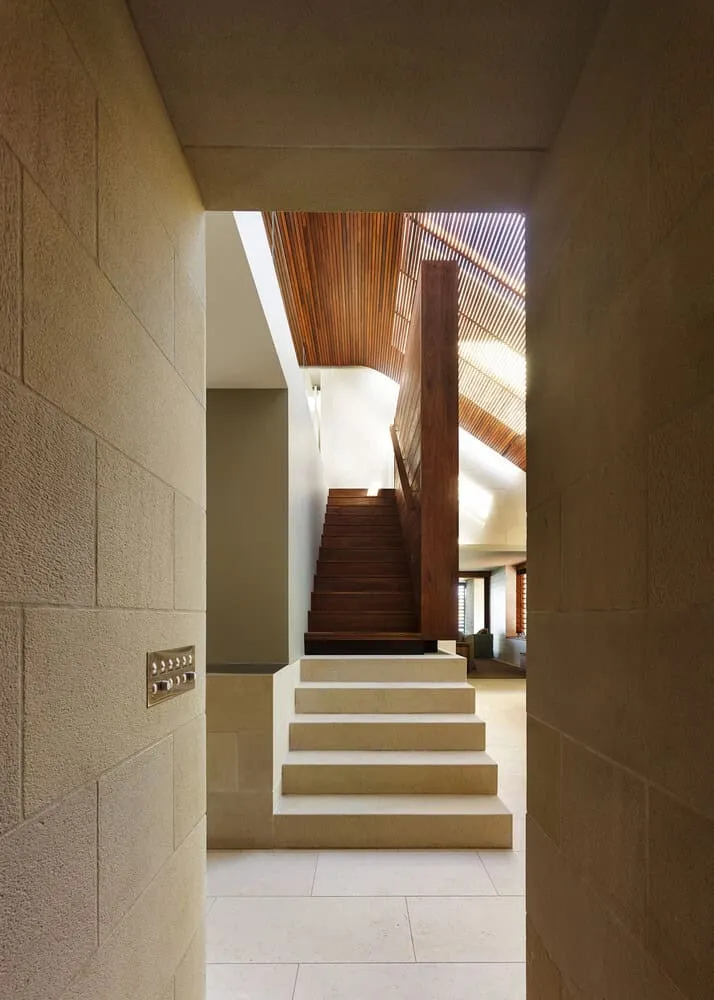
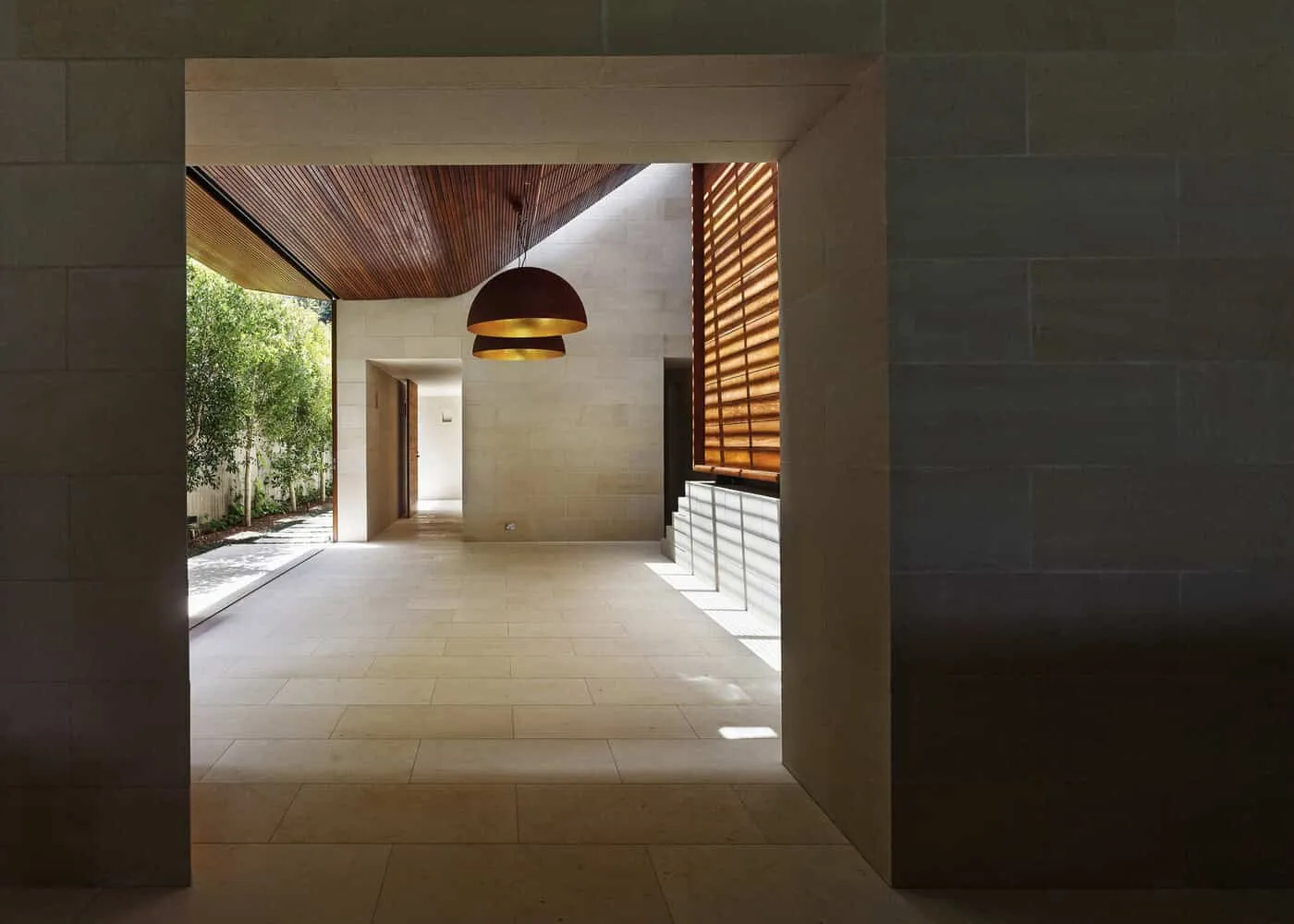
Developing the material structure of the house, we aimed to give each of the two used materials — wood and stone — their own monolithic character, highlighting the simple layering game of early indigenous beach houses. Monolithicity of stone was achieved through thick, carefully shaped thresholds that gave the stone a carved appearance.
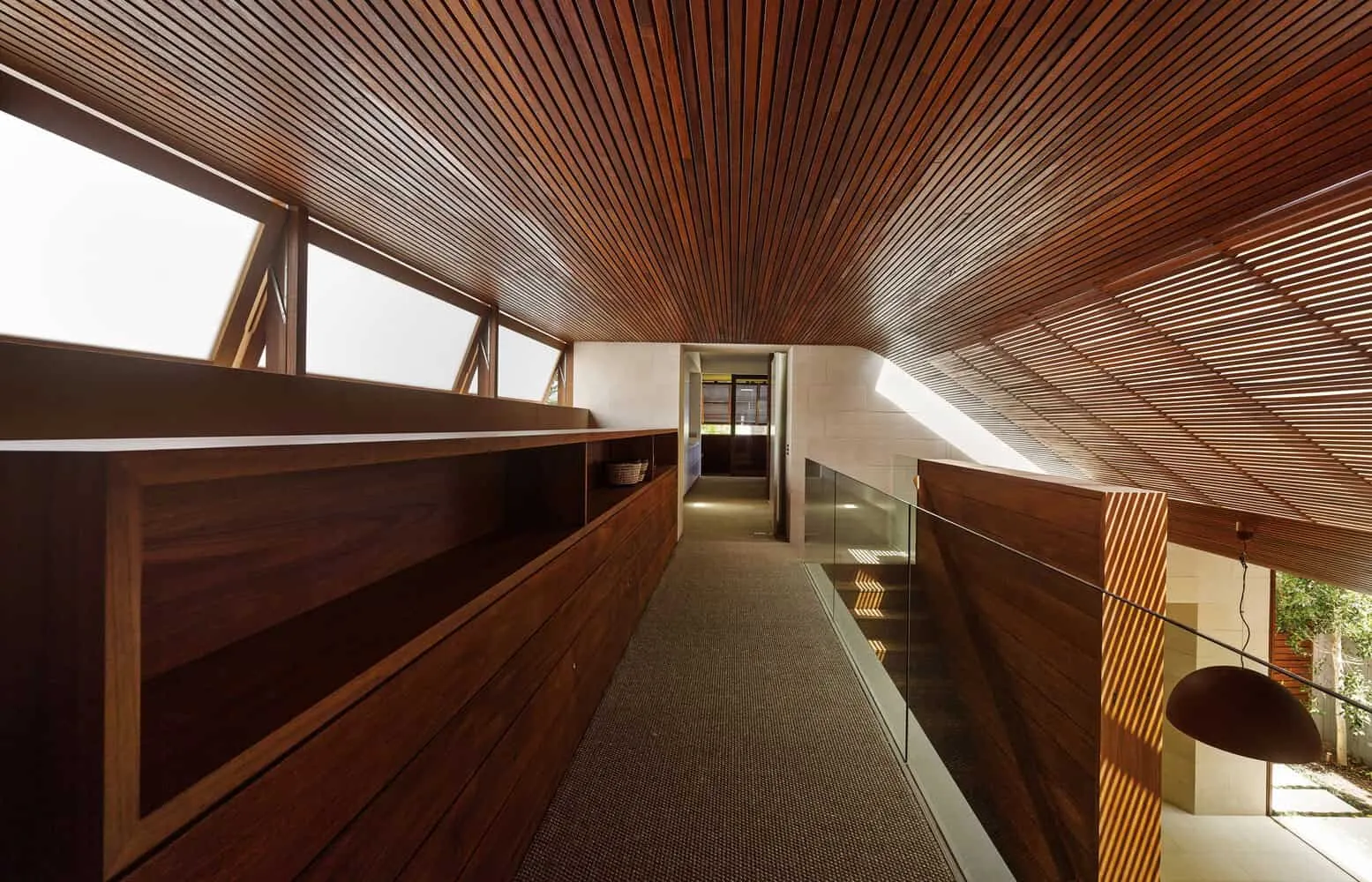
Monolithicity of wood was achieved through carefully organized interaction between wooden elements where there was no visible difference in language between individual repurposed timber, screen systems and doors/windows.
–Andrew Burges Architects