Redecorate Your House with Contemporary Modern Sofas
Few pieces of furniture define the architectural tone of a home as decisively as the living room sofa. While seating has evolved continuously since its emergence in seventeenth-century European salons, today’s sofa has moved far beyond a mere utilitarian bench for resting. In high-end interior architecture, contemporary modern sofas function as structural anchor points that organize open floor plans, dictate circulation pathways, and establish tactile luxury.
Whether you are outfitting a sprawling urban loft, designing a curated refuge in an open-concept residence, or appointing a quiet reading library, selecting the right sofa demands balancing sculptural beauty with ergonomic precision. In this comprehensive guide, we explore the nuances distinguishing modern from contemporary design, break down essential silhouettes, analyze high-performance upholstery, and share the spatial planning rules we use to seamlessly integrate luxury contemporary sofas into any interior.
Key Design Takeaways
- Modern sofas follow mid-twentieth-century functionalism, whereas contemporary sofas embrace fluid forms, bold proportions, and custom modular configurations.
- Modern curved sofas and central island sectionals let you float seating off perimeter walls to improve circulation in open-plan rooms.
- Maintain 30 to 36 inches of clear walkway around your sofa layout and 14 to 18 inches between seat cushions and coffee tables.
- Opt for high-traffic upholstery fabrics that test to at least 25,000 double rubs using the Wyzenbeek or Martindale standard.
- Ground linear sofas with organic accent tables, and anchor modular seating arrangements using rugs wide enough to catch at least the front feet.
The Complete Guide to Contemporary Modern Sofas: Silhouettes, Proportions, and Architectural Styling
Few pieces of furniture define the architectural tone of a home as decisively as the living room sofa. While seating has evolved continuously since its emergence in seventeenth-century European salons, today’s sofa has moved far beyond a mere utilitarian bench for resting. In high-end interior architecture, contemporary modern sofas function as structural anchor points that organize open floor plans, dictate circulation pathways, and establish tactile luxury.
Whether you are outfitting a sprawling urban loft, designing a curated refuge in an open-concept residence, or appointing a quiet reading library, selecting the right sofa demands balancing sculptural beauty with ergonomic precision. In this comprehensive guide, we explore the nuances distinguishing modern from contemporary design, break down essential silhouettes, analyze high-performance upholstery, and share the spatial planning rules we use to seamlessly integrate luxury contemporary sofas into any interior.
Understanding the Difference: Contemporary vs Modern Sofa Design
Modern design reflects a specific mid-century movement emphasizing honest structure, while contemporary design evolves dynamically with present-day silhouettes, fluid geometry, and bespoke modularity.
In everyday conversation, people often use the terms modern and contemporary interchangeably, but in the realm of interior architecture, they represent distinct philosophies. Understanding how they differ helps you curate a living space with intention rather than accidental styling.
“Modern” design refers to a specific, historically bounded era rooted in the early-to-mid twentieth century, pioneered by the Bauhaus school, Mid-Century Modernism, and Scandinavian functionalism. A true modern sofa emphasizes honest materiality, unadorned geometry, and visible structural mechanics. Think of exposed tubular steel frames, warm walnut tapered legs, squared tailoring, and unyielding adherence to the maxim that form follows function.
By contrast, contemporary design is not tethered to a static historical period; it is the living language of design being created right now. Contemporary sofas borrow the rigorous simplicity and lack of superfluous ornament from modernism, yet they freely experiment with fluid silhouettes, unconventional proportions, and cutting-edge engineering. When we talk about contemporary modern sofas today, we are referencing pieces that blend the structural discipline of classic modernism with the sculptural, highly customizable spirit of present-day living.
Defining Contemporary Sofa Styles and Architectural Silhouettes
Contemporary furniture designers continually challenge standard expectations of how a sofa should occupy a room. Rather than confining seating to predictable three-seater rectangles, today’s collections explore expressive geometries, expansive modularity, and continuous curves that interact directly with the surrounding architecture.
Modern Curved Sofas and Organic Sculptures
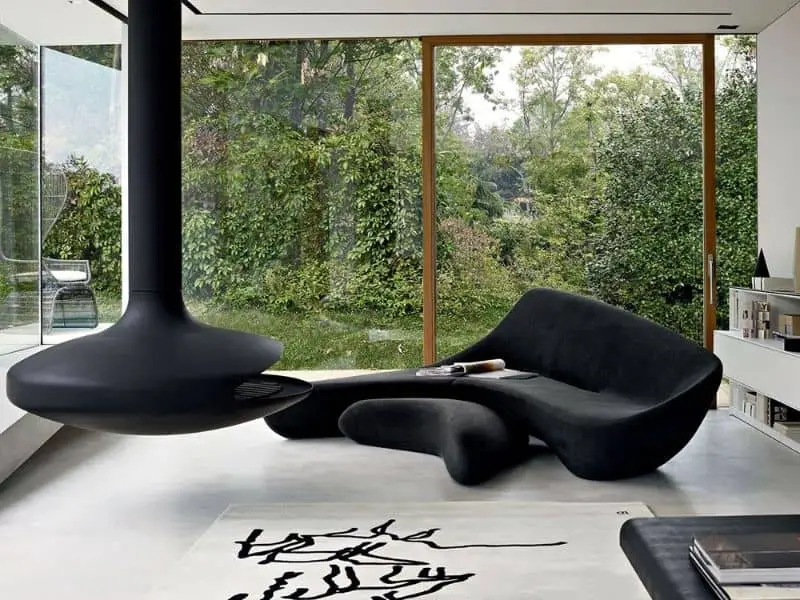
Curved seating has firmly established itself as a foundational element of contemporary interior design. Instead of hugging flat perimeter walls, modern curved sofas invite floating placement in the center of a room. Pioneering silhouettes, such as the iconic B&B Italia Moon System sofa designed by the late architect Zaha Hadid, demonstrate how furniture can echo the fluid lines of expressive modern architecture. These organic silhouettes eliminate sharp corners, soften expansive concrete or stone surfaces, and naturally draw guests into an intimate, conversational circle.
Modern Modular Sofas and Configurable Islands
Modern floor plans rarely adhere to rigid, compartmentalized rooms, which makes dynamic seating configurations essential. As demonstrated in the collection of Poliform contemporary modern sofas, seating systems can now be engineered to recreate intricate geometric shapes or adapt seamlessly to complicated, unconventional architectural footprints. These modular systems use distinct building blocks, including armless central chairs, extended divans, integrated stone side tables, and corner chaises.
For expansive open-concept residences, contemporary modern sofas designed as central “refuge islands” are an exceptional approach. These bidirectional or 360-degree modular islands feature backrests situated in the center, allowing family members to lounge facing the fireplace on one side while conversation flows toward the kitchen or garden terrace on the other. Instead of acting as an obstacle, the sofa becomes a multifunctional social hub connecting multiple zones.
Low-Profile Platforms and Linear Minimalism
Low-slung sofas with deep horizontal proportions introduce a relaxed, lounge-forward atmosphere rooted in Japanese minimalist sensibilities. By keeping backrest heights low (often between 26 and 30 inches), these low-profile platforms maintain unobstructed sightlines across wide-plank floors and floor-to-ceiling windows. Their substantial plinths, recessed wooden bases, or ultra-thin metal blade feet create an illusion of weightlessness while grounding high-ceilinged spaces.
Vintage Shapes with Renewed Tailoring
Contemporary design does not abandon the past; it refines it through an austere lens. Designers frequently reinterpret classic silhouettes, such as the Chesterfield or the traditional tuxedo sofa, by paring back decorative flourishes. Intricate woodwork, tufted buttons, and ornate carved moldings give way to razor-sharp seams, simplified continuous contours, and bold monolithic cushions. The result is a piece that retains the comforting familiarity of a vintage silhouette while speaking the crisp visual dialect of a contemporary home.
Spatial Planning: Scaling a Contemporary Living Room Sofa
Always preserve at least 30 to 36 inches of clearance for primary walkways and 14 to 18 inches between sofa cushions and coffee tables to guarantee effortless traffic flow.
Even the most exquisite luxury contemporary sofa will disappoint if its scale clashes with the architectural volume of your home. Before committing to a specific design, we recommend drafting your floor plan with meticulous attention to clearance, depth, and proportion.
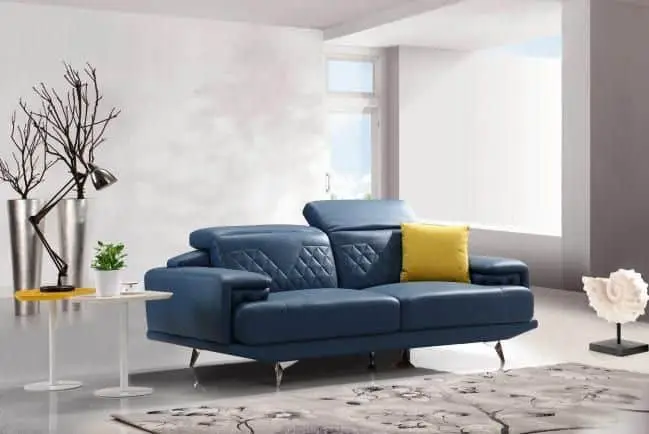
Proper circulation pathways make the difference between an effortless room and a congested one. You should maintain a minimum of 30 to 36 inches of open walkway between your sofa and adjacent walls, credenzas, or adjoining furniture zones. When positioning a coffee table, leave approximately 14 to 18 inches of clearance from the front edge of the seat cushions: close enough to set down a drink comfortably, but wide enough to allow natural legroom.
To match your sofa’s proportions to your space, consider how its dimensions relate to room size and intended usage:
| Room Type | Recommended Layout | Typical Seat Depth | Key Planning Consideration |
|---|---|---|---|
| Compact Apartment / Study | Streamlined 2- to 3-seater linear sofa | 34 to 37 inches | Select raised legs to reveal floor area and visually expand room volume. |
| Open-Plan Living Zone | Multi-piece modular sectional or island configuration | 38 to 44 inches | Ensure the low backrest preserves clear sightlines toward windows and views. |
| Formal Salon / Sitting Room | Curved conversational sofa paired with sculptural armchairs | 35 to 38 inches | Float seating centrally on an expansive area rug, away from perimeter walls. |
| Primary Dressing Suite / Cabinet | Compact sculptural settee or backless upholstered bench | 30 to 34 inches | Prioritize slim profiles that offer occasional seating without blocking wardrobe doors. |
Material Selection: Balancing Aesthetics with Everyday Durability
To withstand everyday household use without premature wear, choose upholstery fabrics verified at a minimum threshold of 25,000 to 30,000 double rubs.
Contemporary modern sofas rely on clean planes and uninterrupted surfaces, which means the quality of the upholstery fabric is immediately visible. The right textile must satisfy two distinct demands: providing rich tactile appeal while withstanding years of daily use.
Evaluating fabric durability begins with the Wyzenbeek or Martindale double-rub test, where an upholstery fabric for high-traffic living spaces should score at least 25,000 to 30,000 cycles. In addition to rub counts, fiber composition dictates how a sofa handles light exposure, stains, and daily wear.
- Performance Textured Weaves: Engineered from solution-dyed acrylics, polyesters, or blended yarns, performance weaves mimic the natural hand of linen or heavy wool while resisting liquids, UV fading, and pill development. They represent the gold standard for sun-drenched living rooms and active households.
- Sculptural Bouclé and Textured Wools: Highly popular on curved and organic silhouettes, bouclé offers dense looped fibers that highlight the soft geometry of contemporary furniture. While comfortable and visually striking, bouclé requires careful maintenance in homes with pets, as claws can snag the delicate loops.
- Architectural Velvets: Cotton, mohair, and performance velvets produce saturated, light-reflecting depth that complements minimalist spaces. Mohair velvet, in particular, offers extraordinary natural resilience, easily outlasting standard synthetic textiles while developing a gentle vintage patina.
- Full-Grain and Semi-Aniline Leathers: High-end contemporary sofas frequently contrast razor-thin metal frames with supple, buttery leather. Semi-aniline hides preserve the organic texture and breathable qualities of natural leather while incorporating a light protective finish that resists premature staining.
Architectural Styling: Anchoring Your Living Space
A contemporary living room sofa should never sit isolated in a vacuum; it requires thoughtful dialogue with surrounding architectural elements, floor coverings, and ambient lighting to feel fully resolved.
A properly sized area rug anchors your seating arrangement, establishing the perimeter of the living zone within an open floor plan. For large contemporary sectionals, select a rug vast enough that all sofa feet rest comfortably on its surface, or at least ensure the front legs extend at least 8 to 12 inches onto the rug. This avoids the common design mistake of a “floating island” rug that shrinks the perceived footprint of the room.
When selecting occasional and coffee tables, introduce contrasting geometric forms to counterbalance the dominant lines of your seating. If your contemporary modular sofa is composed of sharp rectangular modules, pair it with a pair of round travertine tables or an amoebic glass centerpiece. Conversely, if your focal point is a sweeping, organic curved sofa, ground it with an austere, low-profile blackened steel or poured concrete cube.
Finally, consider how light interacts with the sofa’s silhouette throughout the day. Rather than relying on a single overhead pendant, layer indirect illumination around the seating area. Position an arched architectural floor lamp to cast a focused glow over one armrest, flank the opposite side with a warm ceramic table lamp, and install subtle floor-level cove lighting along perimeter walls. This deliberate interplay of shadow and light accentuates the tailoring, seams, and sculptural presence of contemporary seating.
Conclusion: Choosing a Contemporary Sofa with Staying Power
A thoughtfully chosen contemporary modern sofa is more than a comfortable place to unwind at the end of the day: it is a significant architectural investment that shapes how you experience your living environment. By looking beyond short-lived fads, selecting durable materials suited to your lifestyle, and verifying that the sofa’s proportions harmonize with your floor plan, you ensure your seating remains as functional as it is visually captivating. As contemporary designers continue to rethink domestic spaces, investing in high-caliber tailoring and versatile modularity guarantees that your living room remains effortlessly welcoming for years to come.