Hidden Wiring in Wooden House
Hidden Wiring
Hidden wiring is more protected from external influences and does not spoil the appearance of walls. However, it is also more expensive in terms of time and money, labor-intensive, difficult to inspect the condition of wires and replace them without damaging the finish, not knowing their location when drilling holes can hit the wire. Despite this list of drawbacks, hidden wiring is used very often.
There are several possible options for how to "hide" wiring, and they depend on whether the hidden wiring is installed in a wooden house or apartment, under plaster or under gypsum board, etc.
The installation of electrical wiring is regulated by the Rules for the Installation of Electrical Installations or abbreviated PUE.
According to PUE, hidden internal wiring can be laid in the following ways:

Photo 1 — Metal Conduit R3-CZ made of galvanized iron with asbestos sealing
The main requirement for wiring is fire safety. For this reason, more stringent requirements are imposed on constructions made of combustible materials regarding hidden wiring.
- In a frame wooden house, wires installed in voids must be in non-combustible metal pipes and boxes that will not allow ignition in case of a short circuit. The metal must be protected from corrosion.
It should be remembered that in humid rooms the use of insulated pipes with metallic casings is prohibited, so it is important to monitor moisture levels.
Some use corrugated PVC conduits even in a log cabin, but this is risky as the material is flammable. Another option is plastic boxes that do not spread fire (some consider this method to be open wiring, others - hidden wiring), but it is also not in compliance with PUE and poses a fire hazard.
Flexible metal conduits with asbestos seals are an intermediate option acceptable in buildings made of combustible materials. Ideally, metal conduits that do not support combustion, PVC corrugated tubes and plastic boxes should only be used in such a structure if they are completely surrounded by a layer of plaster or another non-combustible material.
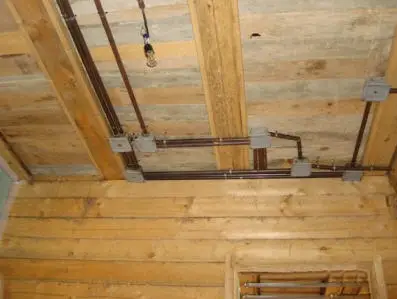
Photo 2 — Hidden Wiring in Wooden House in Metal Pipes
- For a house built from wood - a combustible material - only copper wiring is suitable.
- The wire cross-section is selected according to the load on the network. The wire type is chosen depending on the operating voltage for which the wire insulation is designed. Some types suitable for hidden wiring in a wooden house:
- VVG and NYM - cables with copper cores and PVC sheath, having similar technical characteristics, self-extinguishing when laid individually. For bundled installation, NYMnG-LS or VVGnG are used.
- PV and APV - insulation of cores and sheath do not support combustion, etc.

Schema 1 — VVG Cable Schema
IMPORTANT! It is advisable to draw up and save a plan of hidden wiring. Wiring should not be installed chaotically in different directions. The cable must run strictly horizontally or vertically, parallel to the wall. The route should be the shortest possible. Running multiple adjacent cables together is not allowed - there must be a distance between them.
At intersections, additional insulation is provided - for example, the wire is wound with tape. Chapter 2 of PUE contains rules according to which wiring is installed.
Electrical Installation Devices
Unfortunately, many do not pay sufficient attention to the selection of junction boxes and other components, switches, and outlets for hidden wiring. These and other devices must be selected specifically for hidden wiring since they are part of the system, and their choice will determine the house's electrical supply.
Junction Box for Hidden Wiring
For hidden wiring in a wooden house, only metal junction boxes are needed, which are installed in accessible locations for maintenance. Junction boxes for hidden wiring are usually labeled as such in catalogs. For example, a metal junction box for hidden wiring, model U-198.
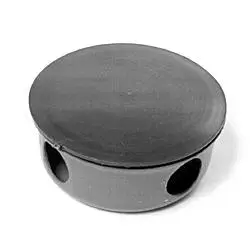
Photo 3 — Metal Junction Box U-198
Outlet for Hidden Wiring with Earth Connection
An outlet with earth connection is needed for powerful household appliances, such as a water heater. Unlike a regular outlet, an outlet for hidden wiring with earth connection has three contacts for connecting wires (live, neutral, earth).
It is better to leave the installation of the outlet to an electrician, but you can choose the appropriate outlet yourself. A metal installation box for the outlet is desirable. It is advisable to install several outlets - at least a double outlet will be useful.
A good manufacturer of outlets for hidden wiring with earth connection is "Schneider Electric," which produces the Etude series, for example, model RC16-007K. This two-outlet hidden wiring outlet: price in Moscow - 104 rubles, in Kyiv - 21 UAH. Its technical specifications:
- nominal voltage: 50 Hz, 230 V;
- nominal current: 16 A;
- type of wire terminal: screw-type;
- wire cross-section: up to 2.5 mm²;
- color: cream.
IMPORTANT! When connecting a double outlet, the live and neutral wires must be connected to DIFFERENT conductive plates. Not following this rule will cause a short circuit.
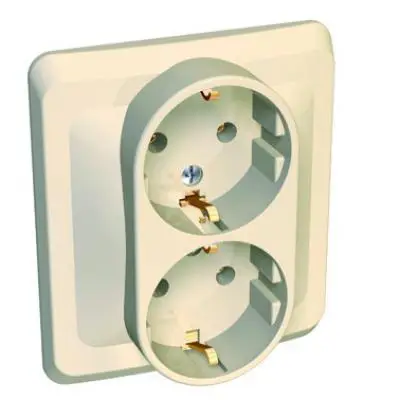
Photo 4 — Lexel Etude RC16-007K Double with Earth Connection, No Shutters
Single-Pole Switch for Hidden Wiring
A two-pole switch for hidden wiring and a single-pole switch for hidden wiring differ in the number of contacts to be connected. In the first, there are three terminals to which wires are connected, in the second - two.
To replace a regular single-pole switch, the apartment must be de-energized, the absence of voltage in outlets checked, the old switch removed, and the two wires connected to the two terminals of the new switch in any sequence, then secure it to the wall, fit the cover, restore power, and check its operation.
To install a switch for hidden wiring in a new location, an installation box is needed, as with other system components, it is preferable to make it from metal. Among switches and similar devices for hidden wiring, French Legrand have proven themselves.
For example, a 10A - IP44 - 250V ivory white VALENA single-pole switch (model 774101) - a waterproof single-pole switch for hidden wiring, price in Kyiv - 102 UAH, in Moscow - 250 rubles. Technical specifications are indicated in the name.
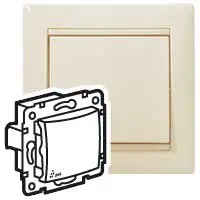
Photo 5 — 10A - IP44 - 250V Ivory White VALENA Single-Pole Switch
Detecting Hidden Wiring
Since most homeowners do not know the layout of wiring in their house, there is a question of how to detect hidden wiring.
When electrical wires are damaged, short-circuited, or burned out, to find and fix the fault, replace a wire or simply not hit it when nailing or drilling holes, you need to know how to find hidden wiring in the wall. A device for detecting hidden wiring can help determine the route of hidden wiring, also known as a detector, tester, scanner, sensor, or tracer.
The search device may vary depending on what needs to be detected, the depth at which wires run, etc. A trace detector can detect the electric field created by wires or work on the principle of a metal detector.
A wiring indicator may combine these two principles. When choosing how to find hidden wiring in a wall, what tool to use, one should consider the device's range of action.
For example, the Hidden Wire Indicator E121 (Woodpecker) allows detecting wiring up to 7 cm deep, the PDO 6 from "BOSCH" has a range of up to 6 cm, and for greater depth - up to 30 cm - the POSP-1 radar is suitable, etc.
The simplest scheme for finding hidden wiring consists of a transistor, headphones, and several power supply elements. The route is determined by the area where the sound is loudest.
Schema of Hidden Wire Detector
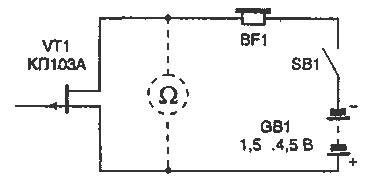
Schema 2 — The Simplest Schema of a Hidden Wire Detector