Assembly of a Log Cabin from Profiled Timber – Advantages of the Material
Building a log cabin from profiled timber offers significant benefits. You can use the structure as a full-fledged house, country cottage, sauna, or guest house.
The simplicity of erecting a building from factory-prepared timber allows you to assemble the frame of a standard 100m² house in just two weeks!
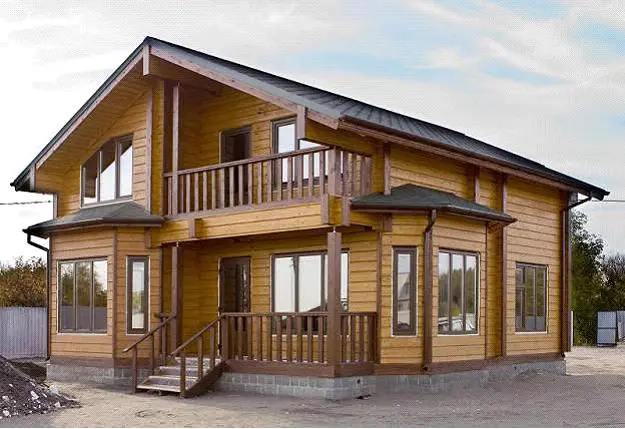
Photo 1 – Log cabin made from profiled timber
If you plan to build the cabin yourself, start with selecting high-quality material.
Contents:
- Choosing the timber
- Advantages of profiled timber
- Assembly of a log cabin from profiled timber
- Foundation
- Logs (rows)
- Openings
- Roofing
- Chinking
- Video: Assembly of a log cabin from profiled timber
- Industrial production of log cabins from profiled timber
- $ Prices for log cabins made from profiled timber
Choosing the Timber
First rule: build using dry timber! When selecting material, consider these details:
- Timber must not have damaged areas: wormholes, blue stain, mold, or fungal infestation;
- Buy treated timber without warping, with properly cut grooves;
- Solid timber must have a consistent diameter along its entire length.
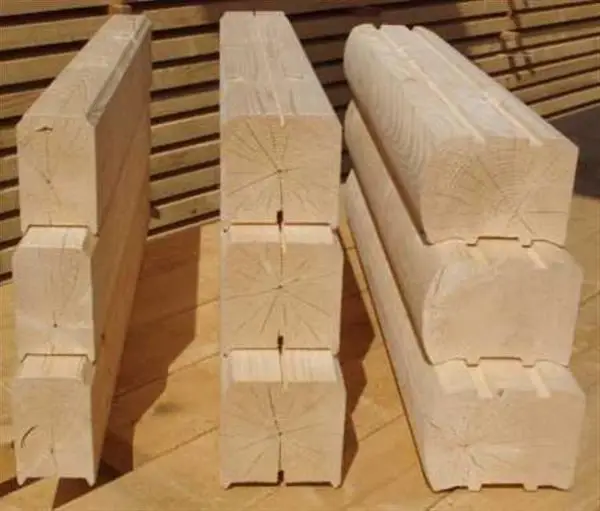
Photo 2 – Selecting timber
Advantages of Profiled Timber
Undeniable advantages of timber with profiled grooves include:
- Simple assembly. Logs are laid like a construction kit;
- Gaps between logs are barely visible. Timber with properly cut grooves fits tightly together;
- Due to tight jointing, less sealing material is required.
Assembly of a Log Cabin from Profiled Timber
The process of assembling a profiled log cabin is simple. The construction sequence is similar to building with round logs.
Foundation
Assemble the cabin on a prepared foundation. You can use special blocks, create a monolithic foundation, or build a pile (pile) foundation.
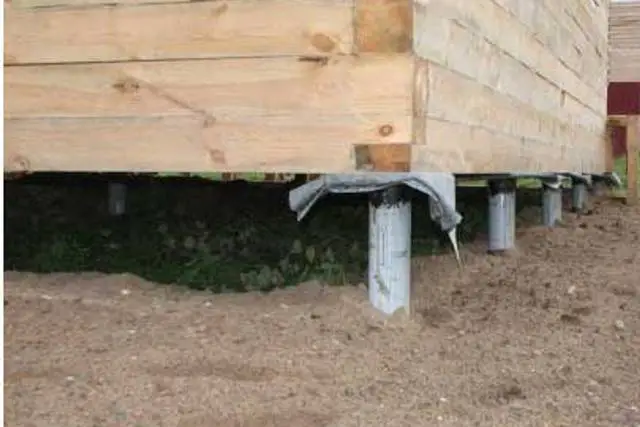
Photo 3 – Pile foundation
Apply a waterproofing layer on top of the concrete surface. Traditional roofing felt (rubberoid) can be used as the insulating material.
After the felt, lay underlayment boards. Then, apply the sealing material. Any material can be used: natural moss, hemp, jute fiber.
IMPORTANT! It is convenient to use rolled jute with a composite composition: 50% flax and 50% synthetic fiber.
Logs (Rows)
After preparing the foundation and waterproofing layer, you can lay the first row. Timber is placed on the sealing material and secured with dowels.
If you purchased timber with pre-cut sockets for connection, the process will be faster. If you need to cut the end joints manually, choose a technique. For example, you can use a 'hand' or 'socket' joint.
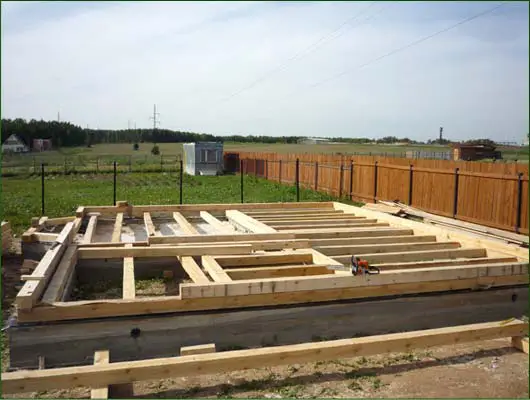
Photo 4 – Laying logs
IMPORTANT! The 'hand' joint technique is optimal for profiled timber. It allows for external finishing, such as siding, after settling.
Openings
It is recommended to cut openings during cabin construction. However, install window and door panels after the settling process is complete.
Roofing
Roofing work includes installing the sheathing, followed by the roofing material.
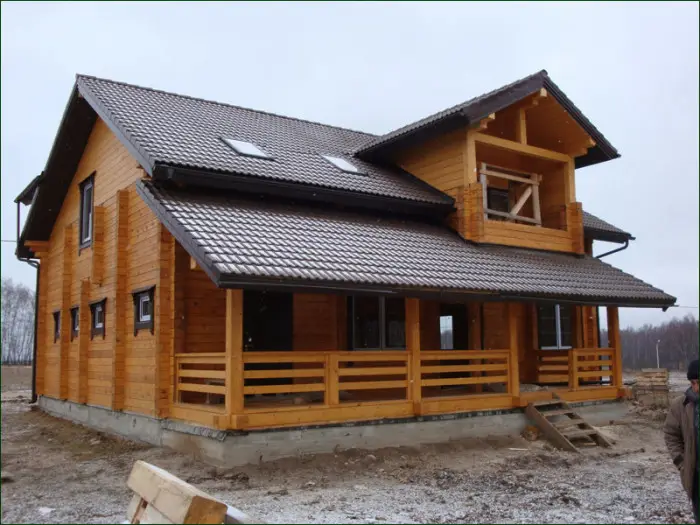
Photo 5 – Roof of the log cabin
Chinking
Chinking is typically done in two stages. The first chinking occurs immediately after construction.
The second chinking is done after the settling period and serves as the final stage.
Learn more about chinking: internal and external finishing of log cabins.
Video: Assembly of a Log Cabin from Profiled Timber
You can watch the assembly process of a log cabin based on a project using profiled timber in video format.
Industrial Production of Log Cabins from Profiled Timber
Professional industrial production of wooden log cabins significantly reduces labor costs for building structures of any scale.
Profiled timber is prepared for fast assembly. It is specially processed on machines. The precisely cut grooves allow builders to assemble the cabin without additional work.
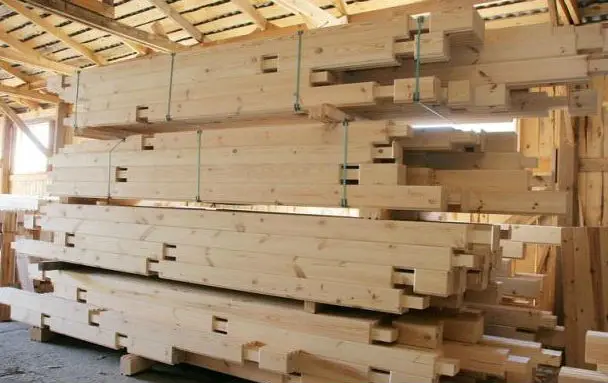
Photo 6 – Timber ready for assembly
By the way, if you order a ready-made cabin, the end sections of the timber will already have pre-cut sockets for a locking connection.
Industrial preparation of timber with a profile for a specific project may include drilling holes for dowels.
$ Prices for Log Cabins Made from Profiled Timber
Prices for ready-to-build cabins, fully supplied with the required amount of timber, start from $160 per 1m².