Painting a Wooden House – Exterior and Interior, Choosing the Right Coating
Wooden houses require mandatory painting with special impregnations. Lacquer and paint compositions can be used optionally, depending on style preferences for facade and interior finishing.
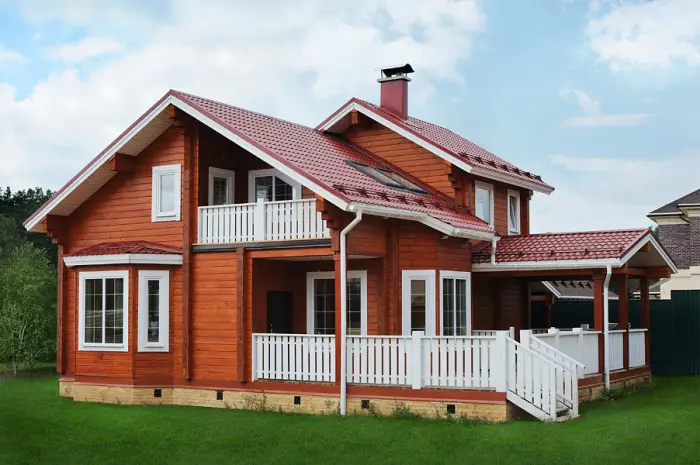
Photo 1 – Painting a wooden house
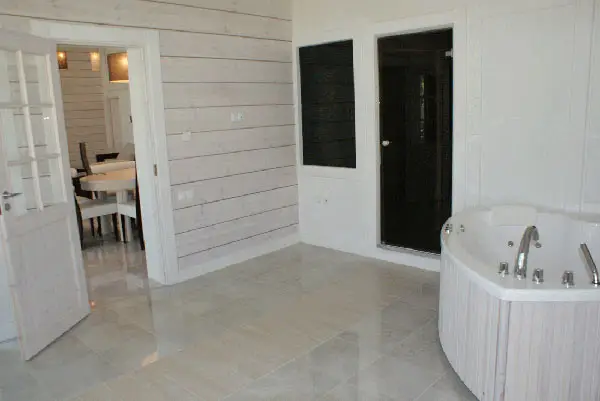
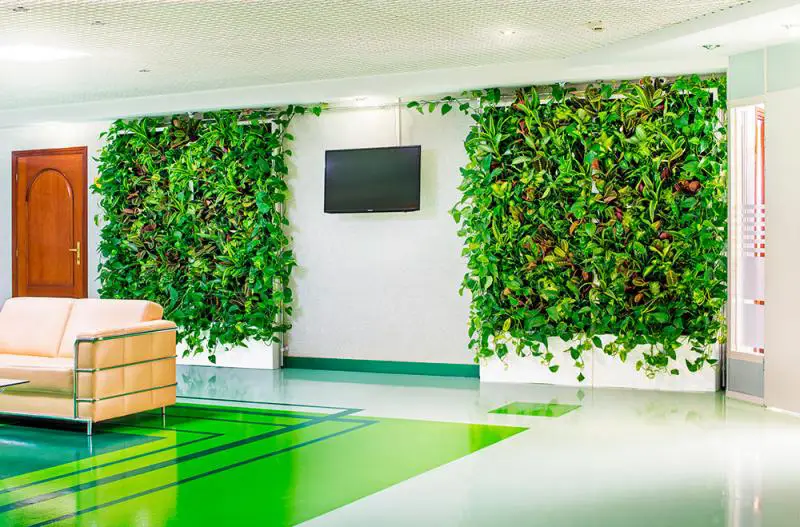
Photo 2 – Interior painting
Wood is initially sanded both inside and outside, then treated with antiseptics. These treatments protect the material from:
- woodworm;
- rot;
- mold and fungal infestation;
- moisture;
- ultraviolet radiation.
After antiseptic treatment, fire-retardant agents (anti-pyretics) may be applied to wood.
Only after impregnation can paints and varnishes be applied.
IMPORTANT! Wooden houses can only be painted after the settling process is complete. Settlement time varies: from 6 months to 2–3 years. During this period, the structure may decrease in height by up to 7 cm.
Also, wooden structures should undergo caulking, followed by high-quality sanding. Only after completing these steps can wall, ceiling, floor, and other elements be painted.
What is the best way to paint a wooden house from the outside?
There are synthetic lacquer and paint compositions and natural ones. Paints and varnishes come in various colors, matte, and glossy finishes. High-quality lacquer and paint products are offered by brands Becker and Tikkurila.
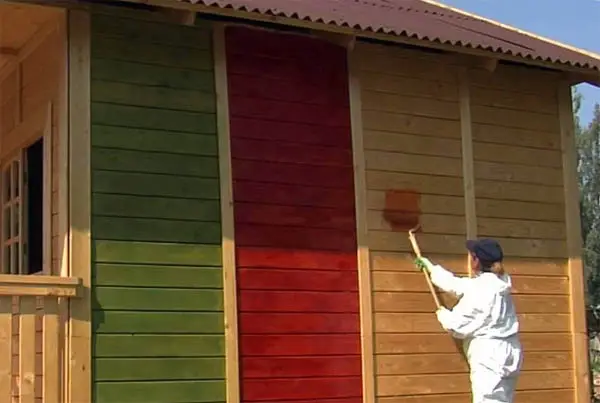
Photo 3 – Exterior painting
Large areas are conveniently painted using a specialized spray gun. Edges require more paint or varnish application.
Paint rollers can also be used.
AcrylicsMost durable compositions. They are elastic – capable of adapting to wood deformation. The manufacturer’s guaranteed lifespan of acrylics is 10 years. For example, high-quality products from the brand CAPAROL can be used.
Acrylics are characterized by:
- enhanced resistance to fungal infestation;
- water resistance;
- breathability;
- wide range of color options.
Acrylics dry quickly and do not leave unwanted drips when applied correctly.
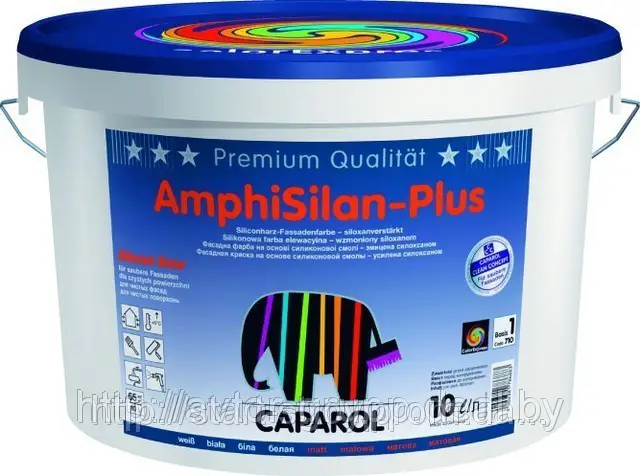
Photo 4 – Exterior acrylic paints
Oil-based paintTraditional oil-based paints are less resistant to external aggressions and dry more slowly. During their service life, they may change from glossy to matte finish. Their lifespan is about 6 years. We recommend using products from the brand TIKKURILA.
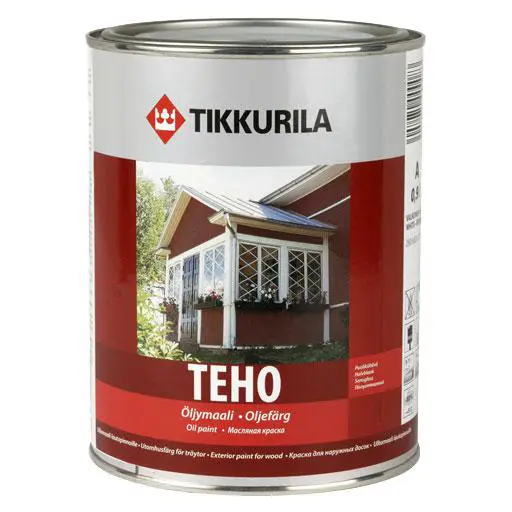
Photo 5 – Oil-based paint
VarnishVarnish coatings come in the following types:
- alkyd;
- polyurethane;
- alkyd-urethane;
- oil-based;
- nitro lacquer;
- spirit-based.
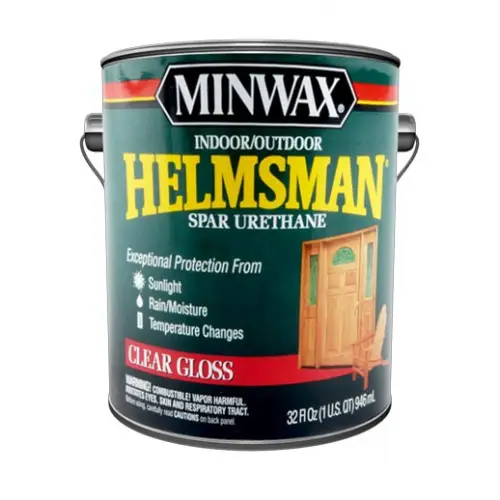
Photo 6 – Varnish
Alkyd varnishes are the most popular due to their fast-drying, non-toxic structure and the ability to purchase with a desired color.
Which paint is best for a wooden house?
Currently, alkyd paint is considered the best. Advantages are obvious:
- wide range of attractive shades;
- high resistance to climatic aggressions;
- color does not change under UV light or moisture;
- elasticity allows adaptation to temporary deformations in wooden structures;
- breathability helps maintain a comfortable indoor microclimate;
- resistance to rot, mold, and fungal infestation;
- resistance to woodworm.
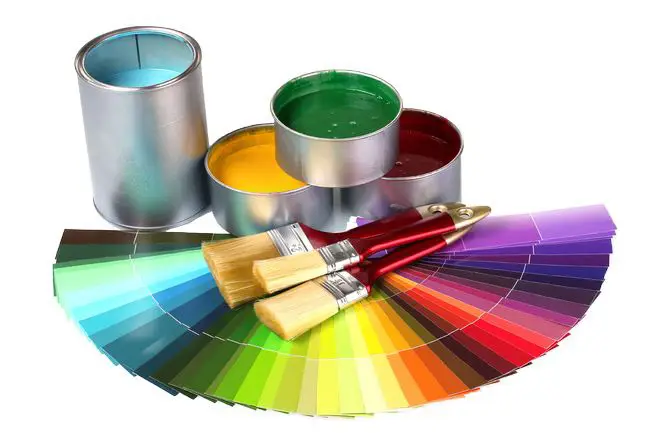
Photo 7 – Alkyd paint color palette
IMPORTANT! The durability, effectiveness, and appearance of any coating applied to a wooden house facade always depend on proper surface preparation: quality of sanding and elimination of biological and mechanical wood damage.
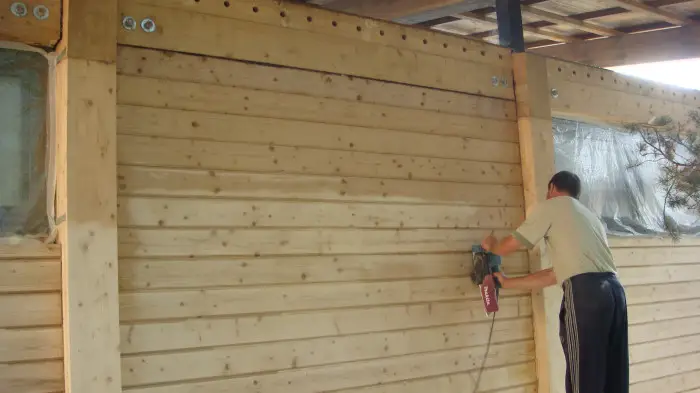
Photo 8 – Pre-painting sanding
Cost of painting a wooden house
Pricing for painting wooden houses varies. Cost is determined by:
- cost of lacquer and paint materials;
- application technology used;
- method of application.
For example, semi-transparent painting, including mechanical sanding, antiseptic application, application of a lacquer-based stain, interlayer sanding, and a second coat of lacquer or stain, starts from $25 per m².
Adding primers and facade varnish increases the cost. This method starts from $30 per m².
Less expensive is painting with oil-based compositions, including sanding and priming. The cost of exterior painting starts from $20 per m².