Why Every Beautiful Interior Needs a View – Even Without a Window
How landscape photography can bring depth, perspective and a connection to the natural world into our living spaces.
Some of the most memorable architectural spaces are defined not by what is inside them, but by what can be seen beyond their walls. A window overlooking rolling countryside, a courtyard framed by glass or an uninterrupted view towards the sea can become as much a part of an interior as its furniture, materials and lighting.
Architects understand the importance of framing a view. The position, proportions and orientation of a window can influence how we experience a room, directing our attention towards the surrounding landscape and creating a relationship between the building and its environment.
A beautiful example is Welch House by The Manser Practice on the Isle of Wight, where expansive picture windows bring the woodland and waters of the Solent into the visual experience of the interior. The simplicity of the internal architecture allows the landscape itself to become the focal point.
Yet not every home overlooks somewhere beautiful. Urban apartments may face neighbouring buildings, bedrooms may look onto brick walls, and hallways often have no windows at all.
What if the view itself could become something we choose?
Creating a View Where None Exists
Landscape photography offers an interesting opportunity to extend the visual boundaries of an interior without altering its physical structure.
A photograph of distant mountains, an open stretch of countryside or a winding path through woodland invites the eye to travel beyond the surface of the wall. Although the image is two-dimensional, its composition creates an impression of distance through perspective, scale, light and atmosphere.
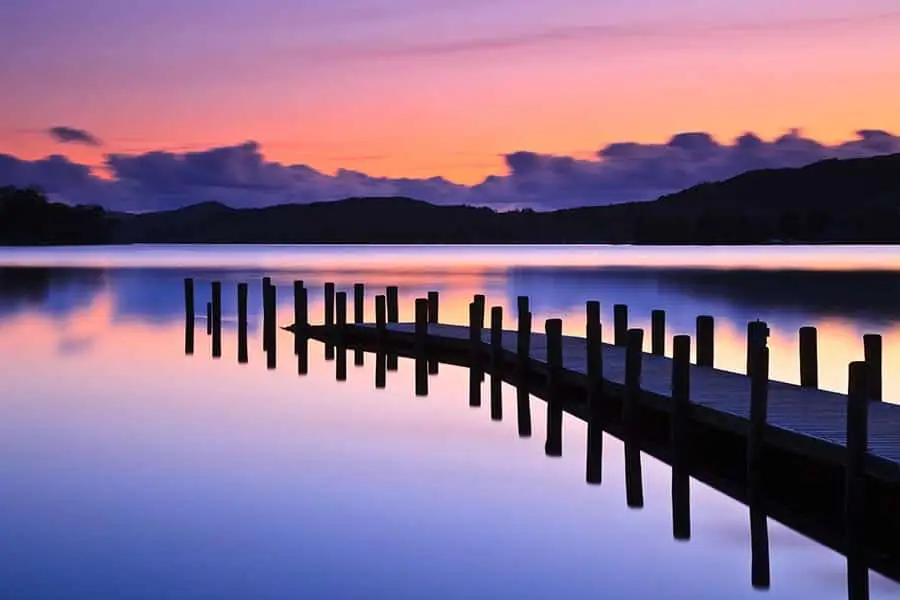
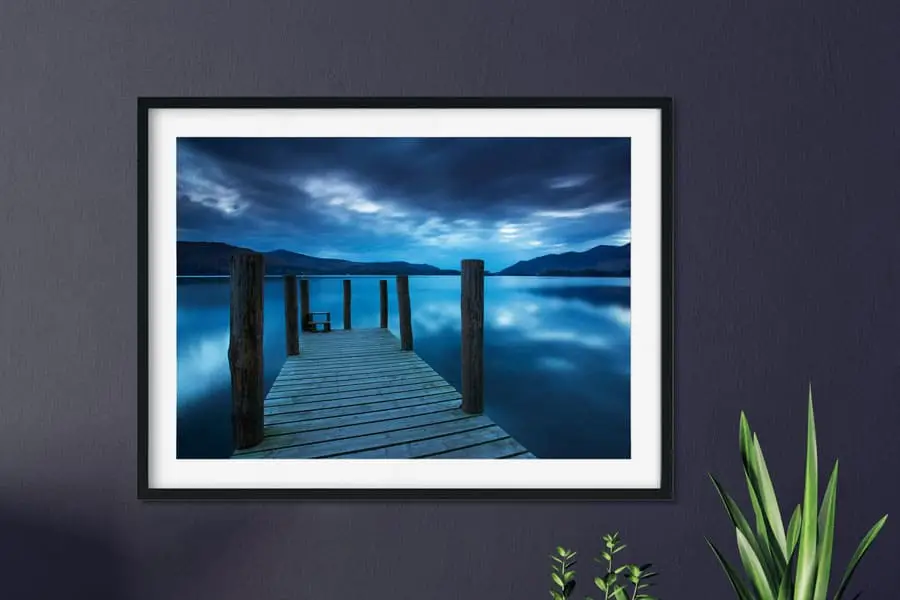
Photographers frequently use foreground interest, leading lines and layers within a landscape to create this sense of depth. A footpath disappearing into the hills or a jetty extending towards a distant horizon gives the eye a natural direction in which to travel.
Within an interior, these same photographic techniques can introduce a feeling of openness, particularly where space or natural views are limited.
Independent photographic galleries such as Fotoviva bring together different interpretations of the natural world through their collections of photographic landscape prints. From expansive mountain scenery to intimate woodland compositions, each photograph offers a different visual experience and a different relationship with the room around it.
A landscape becomes more than something to decorate a wall with. It becomes somewhere to look.
The Picture Frame as an Architectural Window
There is an interesting parallel between the design of a window and the presentation of a framed photograph.
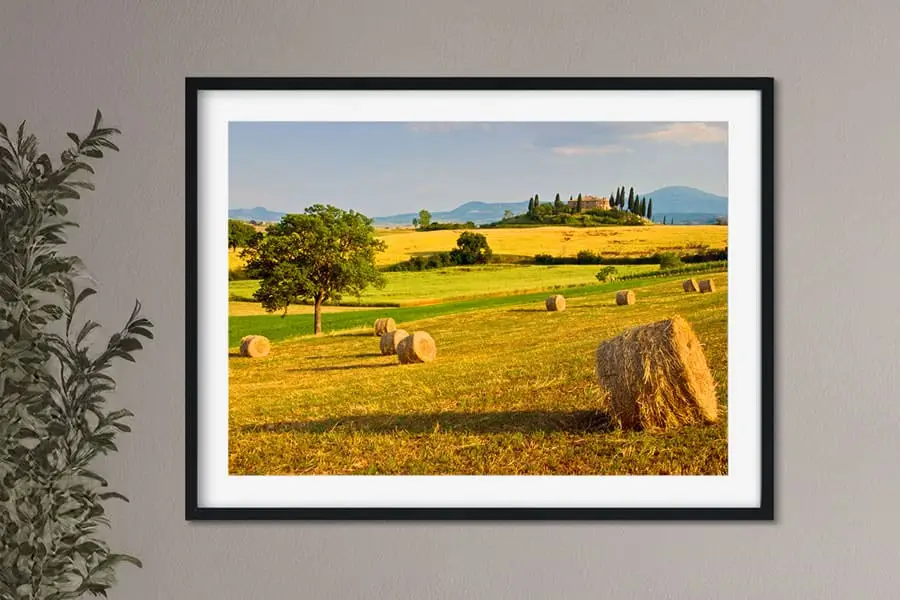
Both establish a boundary between two environments. A window frame defines the landscape beyond the building, while a picture frame defines the world captured within a photograph. In each case, the frame directs our attention, separates the view from its surroundings and gives it a distinct presence within the architecture of a room.
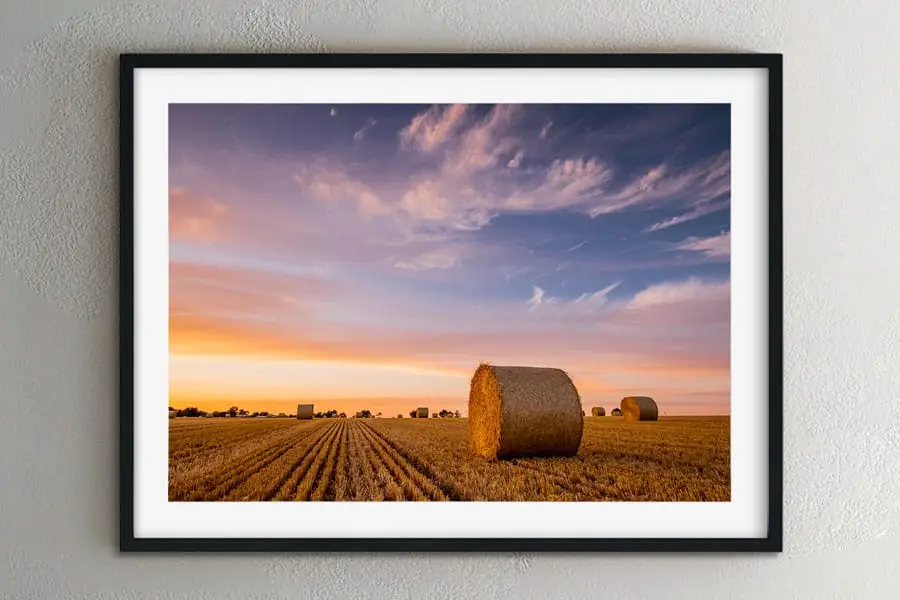
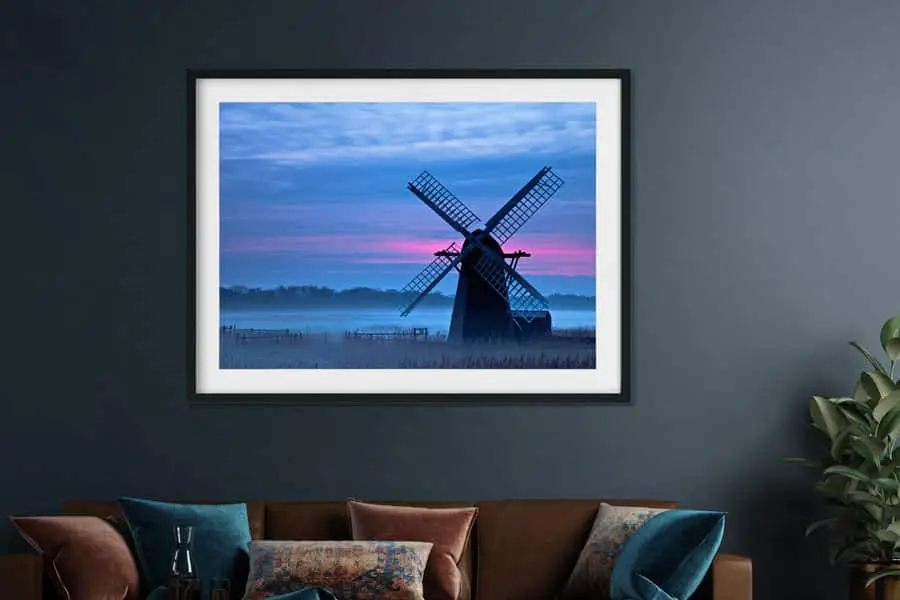
This is particularly apparent with landscape photography presented within a traditional picture frame and white mount. The mount introduces a breathing space between the image and the frame, allowing the composition to exist independently of the colours and textures of the surrounding interior.
The frame itself becomes an architectural detail.
A black timber frame can echo the clean lines of contemporary glazing and steelwork. Natural ash complements lighter interiors that draw upon Scandinavian design principles, while walnut introduces warmth alongside richer woods, leather and textured fabrics.
Unlike frameless artwork, framed photographic prints have a clearly defined visual perimeter. This makes them particularly effective when creating the impression of looking through an opening towards another place.
A window gives us a view determined by geography. A framed photograph gives us a view determined by imagination.
A city apartment can overlook the Scottish Highlands, a suburban bedroom can open onto a mist-covered lake, and a windowless hallway can lead into an ancient woodland.
Bringing the Natural World Indoors
The growing interest in biophilic design reflects a desire to maintain a connection with nature within the buildings we inhabit.
Natural materials, indoor planting, daylight and views of greenery are all familiar elements of this architectural approach. Photography offers another way to introduce aspects of the natural environment, particularly where direct access to outdoor views is restricted.
The relationship between architecture and nature is beautifully illustrated by Landscape House by Maud Caubet in south-western France. Its interior palette draws inspiration from the surrounding pine forest and nearby Atlantic coast, demonstrating how the colours, textures and character of a landscape can inform the design of a living space.
There is also scientific research exploring our response to images of nature. A 2019 systematic review published in the International Journal of Environmental Research and Public Health found that many indoor experiments involving visual representations of natural environments reported more relaxed physiological responses compared with control stimuli.
A photograph is not a substitute for spending time outdoors, but it may offer a small opportunity to reconnect with nature during everyday life.
The soft tonal transitions of a misty landscape, the organic patterns of woodland or the stillness of a mountain lake can introduce a different visual rhythm into interiors otherwise dominated by straight lines, hard surfaces and manufactured materials.
Sometimes it is this contrast between the built and natural environments that makes a room feel more balanced.
Choosing the Right Landscape for an Interior
Just as architects consider the orientation of a building and the views available from each room, choosing photographic art benefits from thinking about how a space is experienced.
In smaller living rooms, landscapes with open horizons and distant focal points can introduce a sense of visual depth. Expansive skies, coastal scenes and gently rolling countryside allow the eye to move through the image without encountering an immediate visual barrier.
Bedrooms often lend themselves to quieter compositions. Still water, soft morning light and muted natural colours can complement an interior designed around rest and relaxation.
Woodland photography offers a more intimate experience. The vertical lines of trees can work particularly well in narrow spaces, while the irregular forms of branches and foliage introduce organic detail into otherwise minimal interiors.
Larger living and dining spaces can accommodate more dramatic scenery. Rugged mountain landscapes, changing weather and striking geological formations can provide a strong focal point without the need for additional decorative elements.
Colour is equally important, although a photograph does not necessarily need to match its surroundings. A room furnished in neutral tones may benefit from the rich greens of a forest or the deep blues of a distant mountain range. Alternatively, black and white landscape photography allows the emphasis to fall upon light, form and texture rather than colour.
The most successful choice often comes from recognising how a particular landscape makes us feel, rather than simply selecting an image that matches the cushions.
Giving the View the Space It Deserves
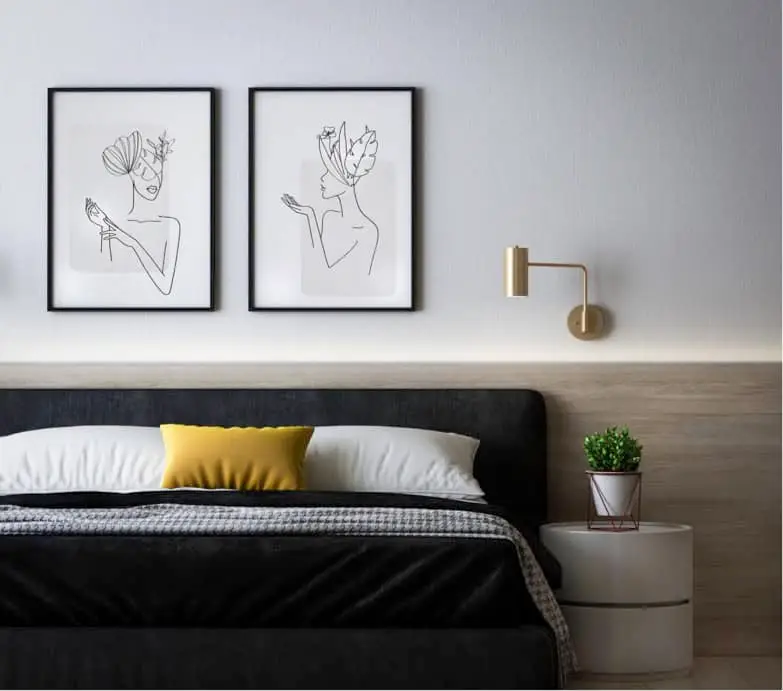
The scale and positioning of photographic art can determine whether it feels like an incidental decoration or an integral part of the interior.
Architectural windows are proportioned in relation to the walls surrounding them. A similar principle applies to artwork. A large, uninterrupted wall may benefit from a generously sized landscape photograph rather than several smaller pictures competing for attention.
Leaving sufficient space around the artwork allows the eye to settle on the image and appreciate its composition. In this respect, the empty wall surrounding a photograph can be as important as the photograph itself.
Placement also deserves consideration. Rather than automatically hanging artwork above a piece of furniture, think about the natural sightlines within the room.
Where does the eye travel when entering the space? What can be seen from a favourite armchair? Is there an otherwise uninteresting wall at the end of a corridor?
Positioning a landscape photograph at the end of a hallway can create a visual destination, drawing attention through the space in much the same way as a carefully positioned architectural opening.
Lighting should support this experience. Soft, indirect illumination can reveal the tonal detail within a photograph without introducing distracting reflections across the glazing.
The intention is not necessarily to make the artwork dominate the room, but to give the landscape enough presence to become part of its character.
The Beauty of a View That Never Changes
An architectural view is constantly influenced by the passing of time. Light moves across the landscape, the seasons change and familiar scenery takes on a different appearance throughout the day.
Photography preserves a single moment within that changing environment.
Behind every landscape photograph is a particular combination of place, light, weather and timing. A fleeting moment of sunlight across a hillside, the stillness of water before dawn or the arrival of mist between trees may exist for only a few minutes before disappearing.
The photographer captures something that might never be seen in quite the same way again.
Bringing that photograph into an interior allows us to live with a moment from somewhere beyond our everyday surroundings. It might remind us of a childhood holiday, a familiar walking route or a place we have always wanted to visit.
Over time, the photograph becomes part of the personal geography of the home.
A View That Is Uniquely Yours
Beautiful interiors are not solely about the arrangement of furniture, the quality of materials or the choice of colours. They are also about the experience of inhabiting a space.
A room that gives the eye somewhere to wander can feel quite different from one in which every sightline ends at a wall.
Landscape photography offers a quiet way to introduce that experience. It requires no structural alterations, no additional floor space and no particular architectural style. It simply asks us to consider what we would enjoy looking towards.
Perhaps the most beautiful view in your home need not be the one outside your window.
It might be the one you choose to frame.