How to Spruce Up Your Reading Room?
A dedicated reading space is more than just a quiet corner with a chair; it is a personal sanctuary crafted for focus, comfort, and restoration. Whether you have an entire spare room to transform into an expansive home library or an awkward alcove under the stairs, thoughtful architectural and interior design principles can turn any underused footprint into an inviting retreat. In this guide, you will learn how to design an ergonomic seating area, layer glare-free task lighting, improve room acoustics, curate stunning bookshelves, and select functional furnishings that make stepping into your literary oasis the best part of your day.
Reading Room Essentials
- Anchor your space with an ergonomic armchair offering high back support and pair it with an ottoman for healthy circulation.
- Position an adjustable task lamp slightly behind your shoulder using warm bulbs between 2700K and 3000K to prevent chronic eye strain.
- Apply the two-thirds rule to bookshelves by filling two parts with books and reserving one part for art and open negative space.
- Muffle room echoes using high-pile wool rugs and floor-to-ceiling drapery while establishing a strict tech-free boundary.
- Choose a companion side table that sits level with or two inches below the chair armrest for convenient access to drinks and spectacles.
- Wrap the room in cocooning paint shades such as forest green or warm taupe and layer tactile wool throws for sensory comfort.
How to Spruce Up Your Reading Room: Design Ideas for a Cozy Literary Sanctuary
Choose Ergonomic Seating That Balances Comfort and Posture
Select an armchair with generous lumbar support and pair it with an ottoman so your feet stay supported and your posture remains comfortable during long reads.
Every exceptional reading sanctuary revolves around seating, and selecting the right piece requires balancing deep lounging comfort with healthy physical support. Sitting for extended periods puts measurable strain on your lumbar spine and cervical vertebrae if your chair does not provide adequate posture alignment. Prioritize an armchair with high back support and a gentle incline that cushions your spine without causing you to slouch.
Before buying furniture, measure your available floor area carefully to maintain balanced circulation paths. When you consult a reading chair guide, pay close attention to seat depth: if your thighs are fully supported and your feet can rest flat on the floor or an ottoman, you have found a healthy proportion. Pair your primary chair with a companion piece that elevates your legs, which promotes better blood circulation during long reading marathons.
If you are working with alternative room shapes, several seating arrangements work exceptionally well depending on your space:
- Classic Club Chairs or Wingbacks: Ideal for traditional library nooks, offering wrap-around side wings that naturally block peripheral visual distractions.
- Chaise Lounges and Daybeds: Excellent for generous rooms or long walls, allowing you to stretch out horizontally while keeping your torso supported with bolster pillows.
- Built-In Window Seats: Perfect for a small space reading nook, transforming dead square footage into functional storage and lounging with a custom high-density foam cushion.
- Oversized Swivel Chairs: Practical for open-plan living areas, allowing you to pivot toward natural window daylight or back toward the room as needed.
Investing in supportive seating is the foundation of a sustainable reading habit. If you do not feel completely relaxed, it becomes difficult to sink into a narrative and grow the habit of reading over the long term.
Design a Layered Lighting Scheme to Protect Your Eyes
Layer warm ambient light with an adjustable task lamp placed slightly behind your shoulder to illuminate pages without casting glare across your field of vision.
Lighting can make or break the atmosphere of a reading room, directly dictating whether your space feels cold and fatiguing or warm and cocooning. Relying strictly on a single overhead fixture casts harsh shadows across book pages, while under-illuminated rooms force your pupils to constantly dilate and contract. Layering your reading room lighting ideas ensures your eyes stay comfortable even during multi-hour reading sessions.
A successful lighting plan integrates three distinct tiers of illumination:
| Lighting Layer | Primary Fixture Type | Recommended Color Temperature | Function in a Reading Room |
|---|---|---|---|
| Ambient | Dimmable flush-mount ceiling fixtures, cove uplighting, or soft pendants | 2700K (Warm White) | Provides overall baseline illumination without glare. |
| Task | Adjustable swing-arm wall sconces, pharmacy floor lamps, or directional desk lamps | 2700K to 3000K (Soft White) | Focuses clear, adjustable light directly onto book pages. |
| Accent | Picture lights above bookshelves, LED under-shelf strip lighting, or warm table lamps | 2200K to 2700K (Very Warm) | Highlights architectural features, book spines, and artwork. |
When positioning your dedicated task lamp, place the light source slightly behind your shoulder on the side opposite your dominant reading hand, or angled downward directly beside your chair. This geometry directs light onto the page while eliminating reflections off glossy paper and keeping direct glare out of your eyes. For anyone wearing reading glasses, balance ambient and task levels evenly, and take short visual breaks every twenty minutes to look at an object twenty feet away, which prevents chronic eye fatigue.
Curate and Style Your Bookshelves with Architectural Balance
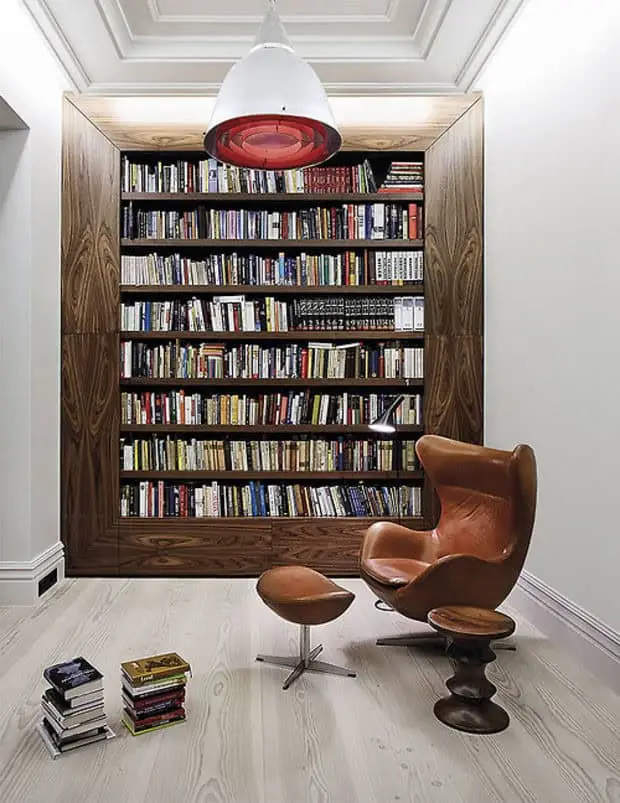
Bookshelves form the visual heart and structural backbone of any home library design. Simply cramming paperbacks edge-to-edge across every shelf often makes a room look visually heavy, cluttered, and smaller than it actually is. Curating your collection with deliberate rhythm and negative space elevates plain storage shelves into a sophisticated architectural feature.
To organize your books while maintaining aesthetic harmony, consider how you group your volumes:
- Categorical Sorting: Arrange books by genre, topic, or author for intuitive browsing that keeps reference works and beloved fiction quick to locate.
- Spine Color Grouping: Cluster spines by complementary tonal families for a striking visual impact, especially effective in modern and eclectic spaces.
- Horizontal and Vertical Stacks: Break up long vertical rows by laying larger art books horizontally, using them as platforms for small decorative objects.
- The One-Third Rule: Dedicate two-thirds of each shelf to books and reserve the remaining third for open negative space, framed prints, or ceramic vessels.
If you prefer an uncluttered, serene look, explore the clean lines of a Scandinavian study space, where light timber shelves, crisp white walls, and concealed storage lower visual noise. Keep your current reading rotation within arms reach on the eye-level shelves, tucking older or rare collections onto upper levels.
Soften Room Acoustics and Eliminate Digital Distractions
The quiet quality of a reading room is just as vital as its visual appearance. Hard flooring, bare drywall, and unadorned windows bounce sound waves around the room, magnifying everyday household noises like ticking clocks, television dialogue, and hallway foot traffic. Incorporating tactile, sound-absorbent materials creates a muffled, peaceful environment where you can absorb every sentence in complete serenity.
Start from the ground up by layering a thick, high-pile wool area rug or a natural jute base topped with a plush runner over hardwood or tile floors. Pair your rug with dense, floor-to-ceiling drapery; heavy linen, velvet, or thermal blackout fabrics dampen exterior street racket while adding luxurious texture to window frames. If your walls remain echoey, hang woven wall tapestries, fabric bulletin boards, or acoustic felt art panels disguised as modern wall hangings.
Equally critical is setting up an intentional digital boundary. Research confirms that checking notifications every few minutes breaks concentration and impairs sustained reading comprehension. Establish your reading room as a designated tech-free haven:
- Keep smartphones, tablets, and laptops outside the doorway on an entryway charging console.
- Replace mobile alarms with a quiet mechanical analog clock or an hourglass.
- If you read on an e-reader, select a dedicated e-ink device without notification pop-ups, social media apps, or backlit LED screens.
- Use a pair of noise-canceling headphones or a compact white noise machine playing subtle rain or library sounds if outside noises persist.
Position Functional Surfaces for Drinks, Lighting, and Book Displays
Position your side table level with or up to two inches below your chair armrest so you can set down mugs and reading glasses without twisting your upper body.
No reading nook is fully resolved without functional horizontal surfaces placed within comfortable arm span. Trying to hold a heavy hardcover, a hot mug of tea, and reading glasses without a nearby surface quickly causes physical strain and disrupts your focus. A well-chosen side table provides necessary utility while completing the sculptural composition of your seating arrangement.
When selecting a side table, evaluate its height relative to your armchair. The ideal tabletop should sit level with or two inches below the arm of your chair, allowing you to set down a hot mug or pen without awkward reaching or twisting your shoulder. Consider these space-saving surface options for varied room footprints:
- Cantilevered C-Tables: The low profile base slides smoothly beneath your chair or sofa, floating the tabletop directly over your lap for tight quarters.
- Tiered Accent Tables: Offer multiple circular or square shelves, providing space for a reading lamp on top with current reads and bookmarks below.
- Narrow Drink Tables: Featuring pedestals with small marble or brass tops measuring eight to ten inches wide, perfect for squeezing into tight reading nooks.
- Floating Wall Shelves: Mounted directly beside the chair back at elbow height, freeing up valuable floor space in compact rooms.
Equipping your reading area with accessible surfaces helps you keep hydration, notebooks, and spectacles nearby. Remember to remove reading glasses periodically during deep sessions, giving your eye muscles a necessary break to prevent ocular fatigue.
Embrace Moody Color Palettes and Tactile Decor Accents
Color psychology plays a profound role in how our brains wind down and transition into reflective, focused states. While stark white rooms feel bright and energetic, they can sometimes appear clinical and distract the eye from the warm tones of printed pages. Applying deep, saturated paint colors or warm earthy neutrals creates a cocooning atmosphere that encourages deep relaxation.
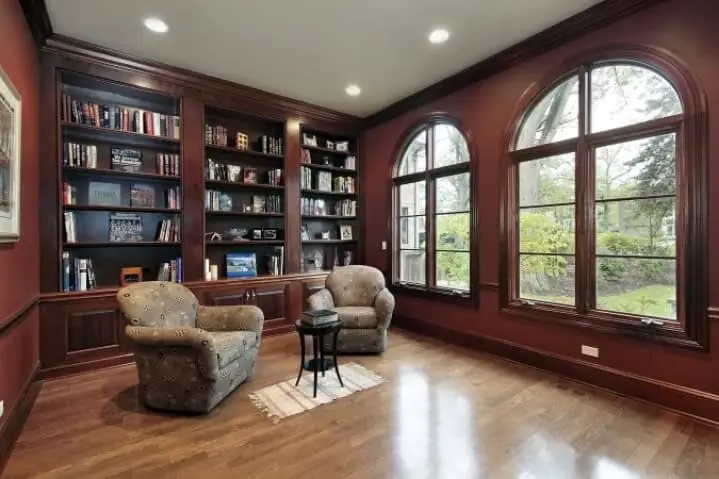
A powerful design trend for home libraries and reading dens is color drenching: painting your walls, baseboards, door trim, crown molding, and even built-in cabinetry in the same rich hue. Deep forest greens, moody inky navies, warm terracotta, and dusty charcoal wrap the room in a unified envelope that visually dissolves sharp corners. If you prefer a lighter, airier space, warm taupe, buttery linen, and muted sage green provide gentle, low-contrast alternatives that soothe the senses.
Round out your reading room decor ideas with tactile, multi-sensory layers:
- Textured Throws: Drape a heavy cashmere, chunky knit wool, or brushed mohair blanket over the chair back to stay warm during chilly evenings.
- Supportive Throw Pillows: Add a small down-filled lumbar pillow to fine-tune your lower back support against firm upholstery.
- Air-Purifying Plants: Introduce snake plants, rubber trees, or trailing pothos on high shelves to purify the air and inject natural vitality.
- Aromatherapy: Light candles with woodsy notes of cedarwood, amber, sandalwood, or tobacco leaf to establish a calming sensory ritual every time you sit down to read.
Whether you are outfitting a full home library or updating a teen study space with versatile study room design ideas, balancing rich finishes with tactile comfort creates a personalized room you will look forward to visiting every day.
Conclusion
Sprucing up your reading room does not require extensive renovations or an endless budget; it simply requires thoughtful intention around how you experience the space. By anchoring your room with an ergonomically supportive chair, dialing in a layered, warm lighting plan, taming unwanted acoustic echoes, and curating your favorite books on thoughtfully styled shelves, you create a private retreat tailored to deep thought and quiet rejuvenation. Turn off your notifications, settle into your favorite armchair with a warm drink, and enjoy the transformative comfort of your newly elevated literary sanctuary.