8 Creative Ways With Bunk Beds for Kids’ Rooms
By Laura Gaskill, Houzz
Bunk beds for kids’ rooms remain one of the smartest ways to maximize floor space in 2026. From space-saving bunk beds for small rooms to multi-sleeper setups for the entire crew, these elevated designs deliver unmatched versatility. Whether you are gathering built-in bunk bed ideas or looking for compact loft beds with study zones, you will find practical inspiration in these 8 standout bedrooms. Explore each setup below, then share your favorite in the Comments.
Related: How to Incorporate Bunk Beds in Your Guest Room
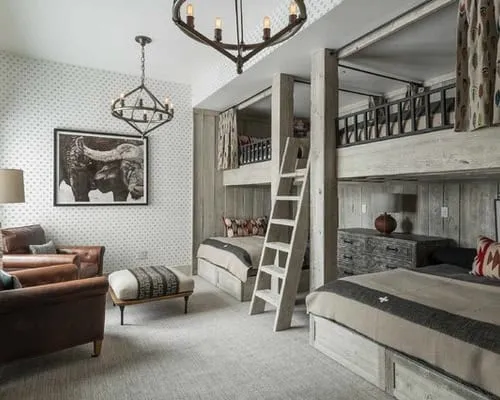
8. Luxury lodge. The hefty timber frames, rustic chandeliers and leather armchairs here look straight out of a mountain lodge, yet they are sturdy enough for active kids. Placing twin beds above larger lower mattresses creates a versatile layout that comfortably accommodates older children or visiting adults. When planning an elevated layout, remember basic bunk bed safety for kids: upper bunks are recommended strictly for children aged six and older.
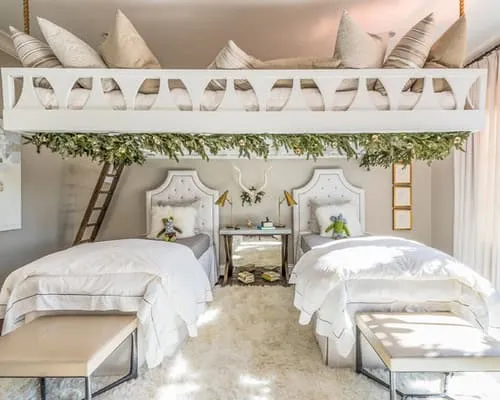
7. Play loft. Loft beds for kids’ rooms excel at carving out dedicated play zones without eating up precious floor area. Spanning nearly the full width of the room, this custom loft creates an imaginative reading nook and play fort framed by faux greenery and plush cushions. A serene palette of soft white and beige keeps the aesthetic calm, understated and clutter-free.
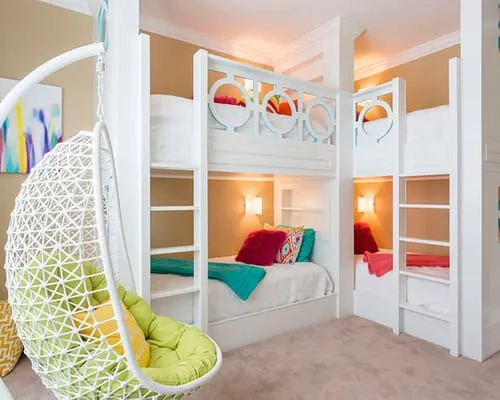
6. Corner bunks. Corner and L-shaped bunk beds for shared rooms maximize tight footprints while keeping the center of the bedroom wide open. Snapping the frames neatly into the corner gives kids a cozy, sheltered retreat that makes bedtime fun. Freeing up that central floor space also leaves plenty of room for playful extras, like a hanging lounge chair that younger kids and tweens will both love.
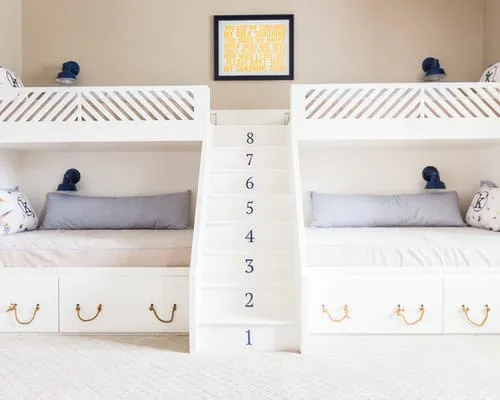
5. Super stairs. Wide staircase steps offer a safer, more stable climb than vertical ladders while easily incorporating built-in storage drawers. Deep steps make it far simpler for parents to climb up and change top-bunk bedding, and each riser can hide toys, clothes or extra blankets. Adding painted numbers or custom decals turns these practical built-ins into an eye-catching design statement.
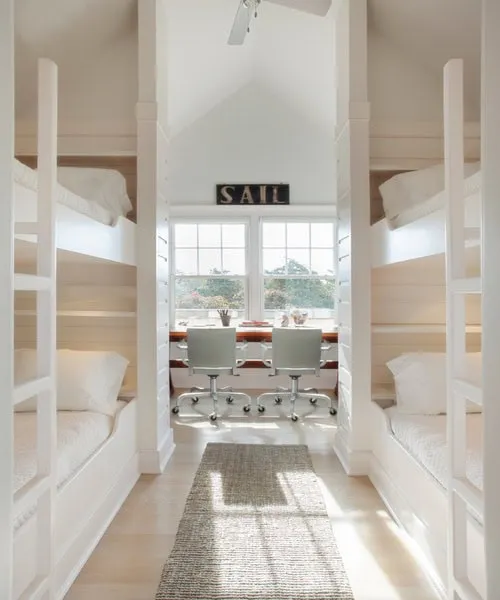
4. Pass-through. Creative built-in bunk bed ideas can turn awkward architectural niches and sloped ceilings into highly functional sleeping zones. By tucking the frames directly under the eaves, these homeowners established a combined sleeping area and homework station along the perimeter. A clean palette of natural wood and light paint keeps the low-ceilinged space feeling open and airy.
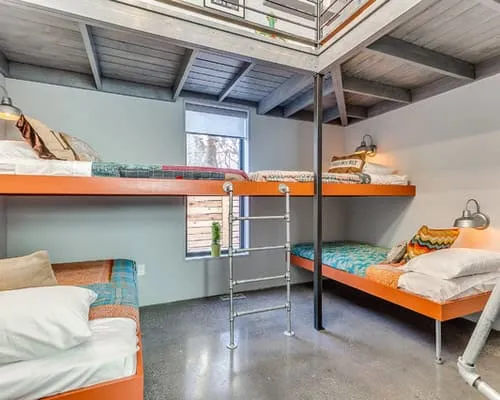
3. Industrial modern. Staggered, low-profile bunk arrangements provide an ideal solution for rooms with low ceilings or younger children. With polished concrete floors, galvanized pipe supports and bold orange beds, this space pairs modern flair with durable materials. Because the upper bunk overlaps only the foot of the lower beds, the platform sits at just 42 inches high, well below the standard height of 60 to 72 inches.
Bedding: Anthropologie; paint by Sherwin-Williams: Silver Strand (walls) and Tango (beds)
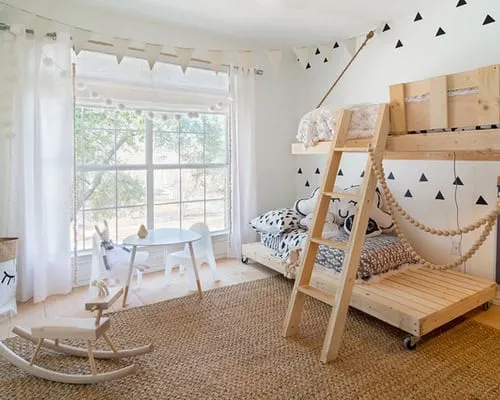
2. White and wood. Adaptable and modular configurations give you the freedom to rearrange a shared bedroom as your children grow. Natural wood finishes, a woven jute rug and crisp geometric patterns give this space unmistakable Scandinavian charm. The bottom bed is set on heavy-duty casters so you can easily roll it around the room, while its extended length doubles as a comfortable daytime seating bench.
Wall paint: Distant Gray, Benjamin Moore; bed: custom, Urbanology Designs
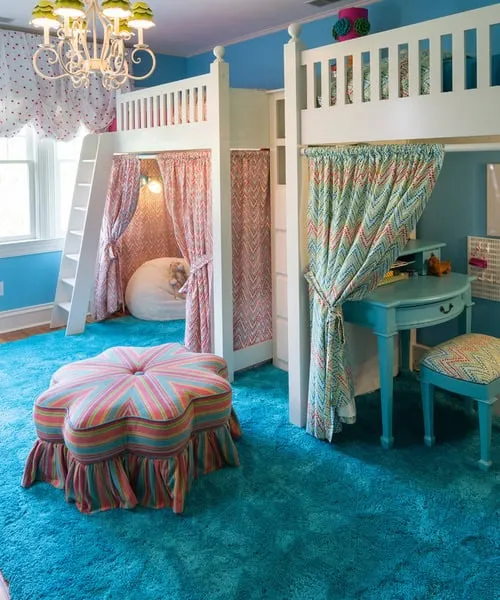
1. Curtained hideaways. Investing in bunk beds with storage and desk nooks underneath turns a compact shared bedroom into an all-in-one suite. In this layout, twin loft beds lift the mattresses off the ground to reveal quiet workstations and reading corners down below. Flowing privacy curtains let each sibling pull the drapery shut whenever they need a quiet study bubble or a calm place to unwind.