Villa Berkell by architect Paul de Ruyter in Venendaal, Netherlands
Project: Villa Berkell Architects: Paul de Ruyter Architecture Location: Venendaal, Netherlands Area: 2,981 sq ft Photos: Provided by Paul de Ruyter Architecture
Villa Berkell by architect Paul de Ruyter in Venendaal
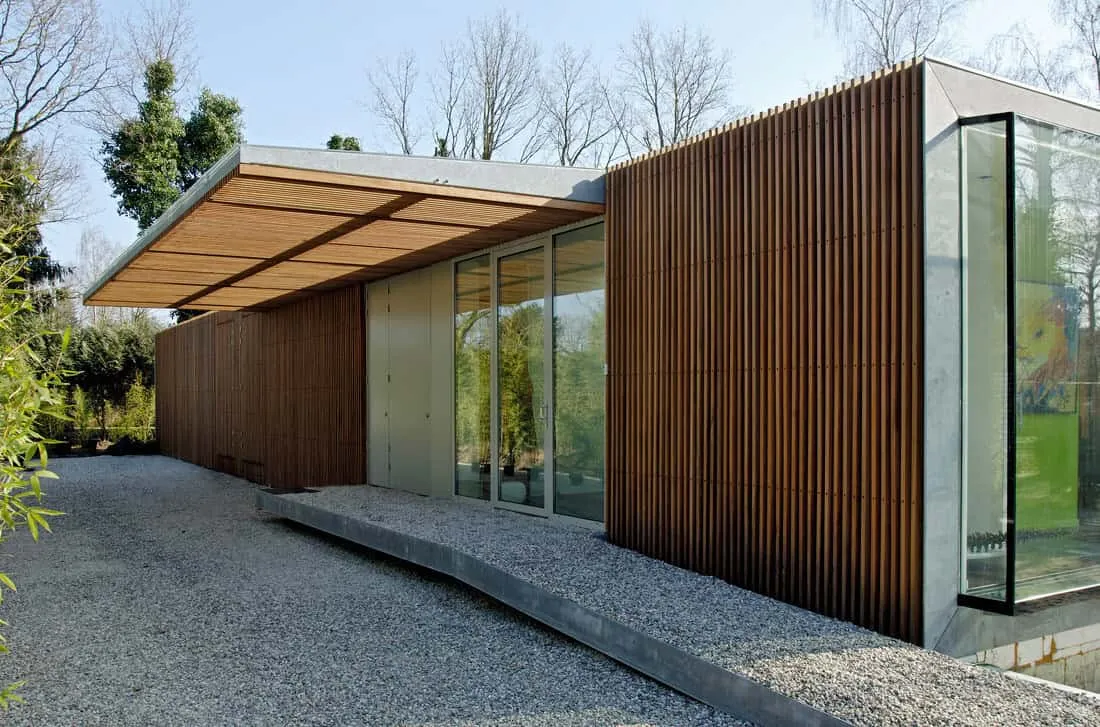
Villa Berkell is a beautiful modern home located on a scenic property surrounded by nature in Venendaal, Netherlands. The plot previously housed a bungalow from the 1970s. The new building creates around 3,000 square feet of minimalist modern living space framed by glass that encompasses stunning natural landscapes from all sides. The project was completed by architects Paul de Ruyter, whose name you might have heard in our review of other projects such as Villa Kogelhof on North Beveland.
Villa Berkell in Venendaal (Netherlands) was built on a plot that previously housed a bungalow from the 1970s. The owners wanted to renovate the bungalow, but following Paul de Ruyter's recommendation they decided to demolish it and free up space for a completely new design.
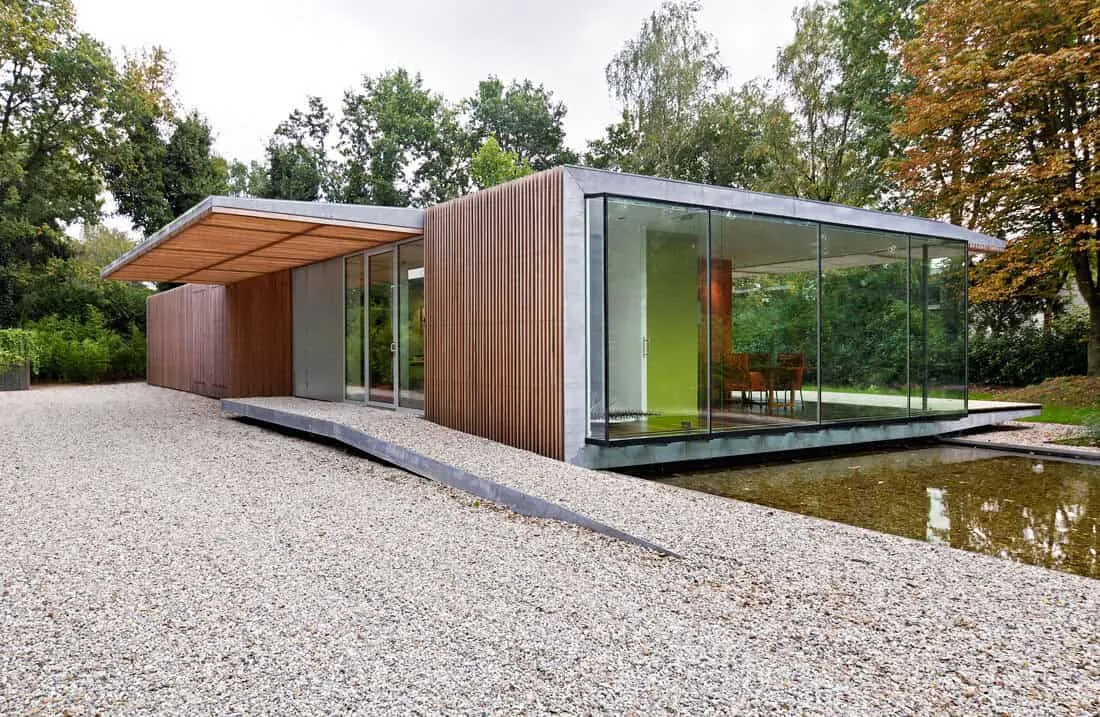
The forests around the villa are dense, which emphasizes the importance of maximizing light penetration into the house. However, the more glass used in the building, the harder it is to maintain the boundary between inside and outside, private and public. Therefore, the plot is divided into three long strips at right angles to the road. The lower and most southern strip is designated for the garden, the middle one contains the villa itself, while the northernmost strip provides access to the house: here is located the driveway, parking and entrance. This layout means that parts of the house the residents prefer to keep private remain out of sight.
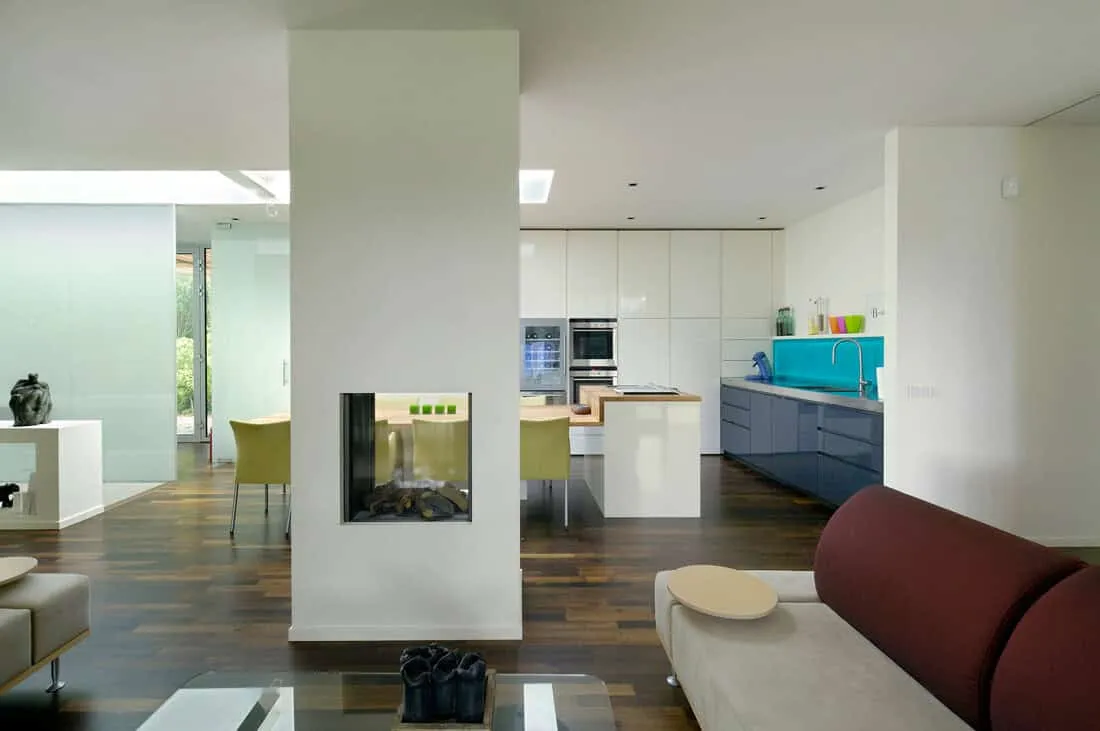
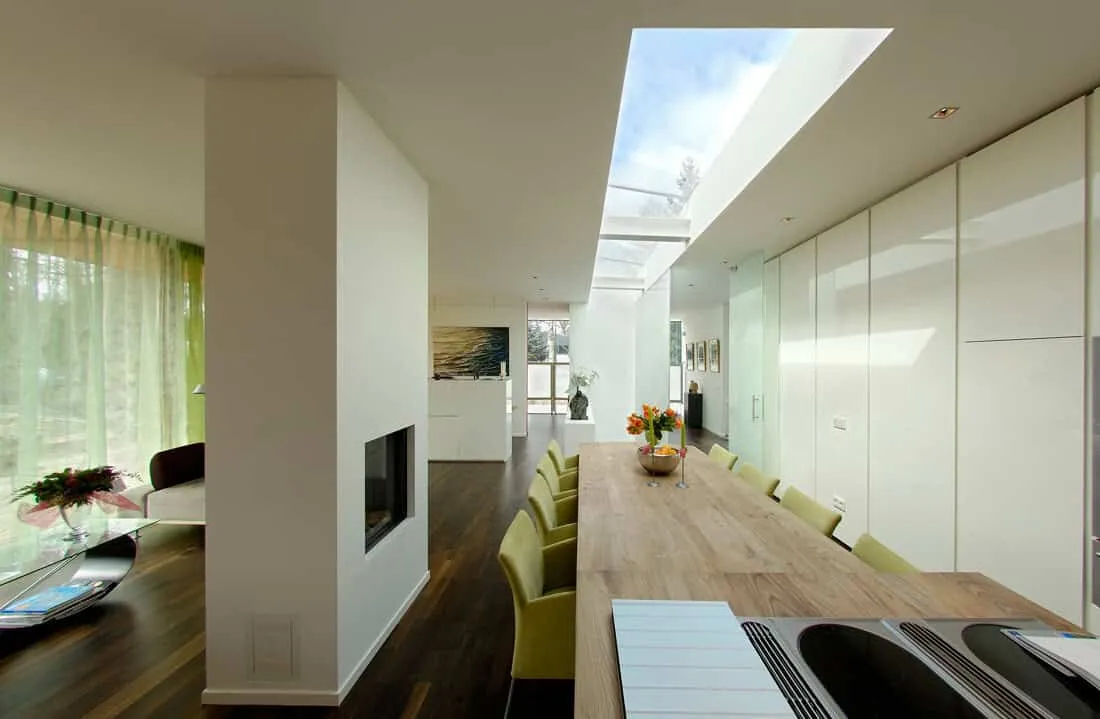
The layout of the plot is repeated in the building plan. It's also divided into three strips along the length of the 30-meter villa. To provide both openness and comfort for living, the building plan is divided accordingly. The eastern section near the road contains more 'public' functions: entrance hall, office, kitchen and living room; whereas the western section farthest from the road is reserved for more intimate activities: corridor serving as a TV zone, bedrooms and bathroom. This means the character of functions gradually becomes more intimate. Each function has its own area inside the house, which can be partitioned off using semi-transparent sliding walls.
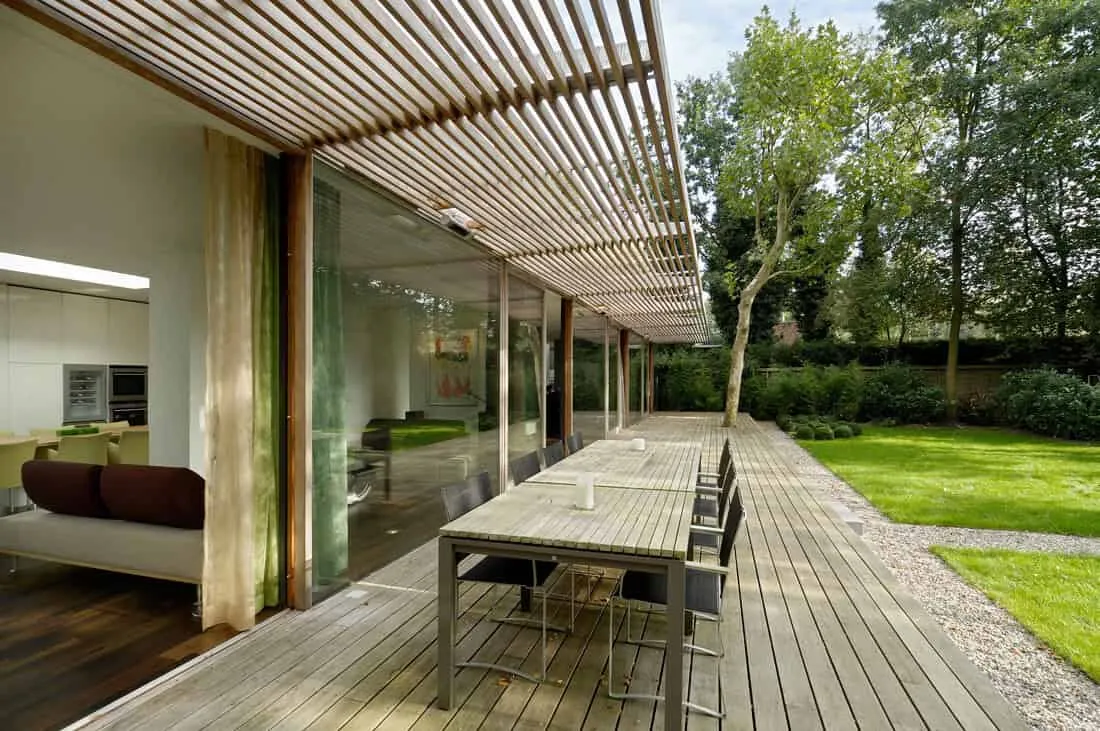
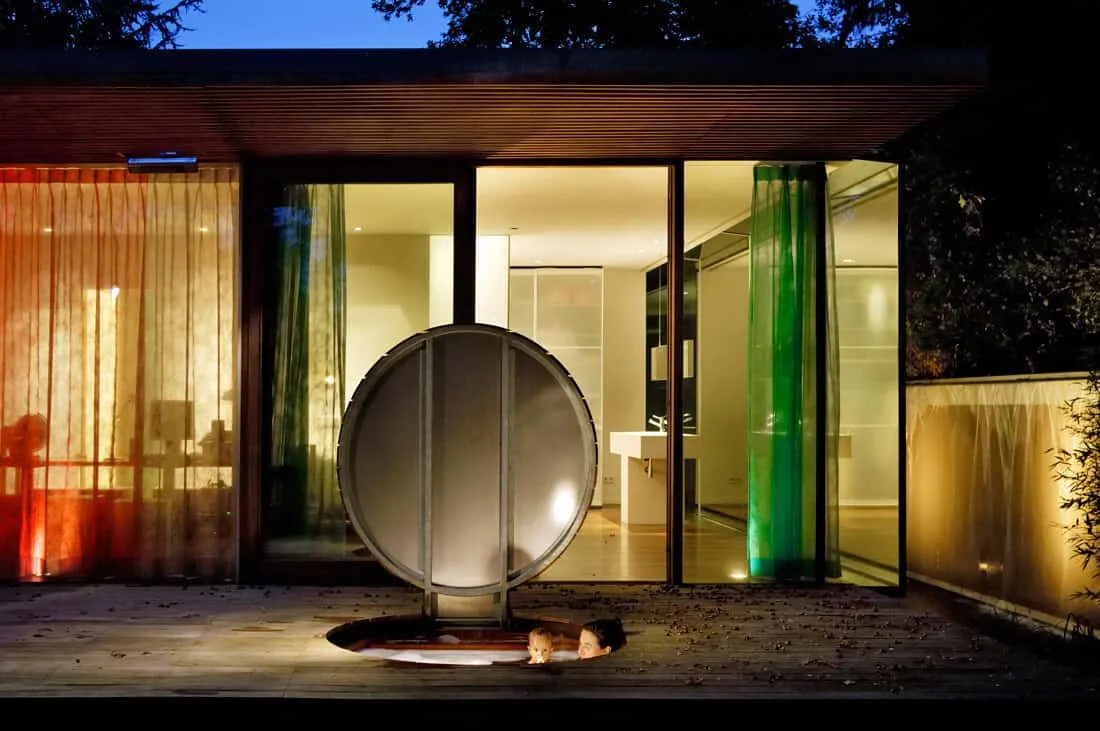
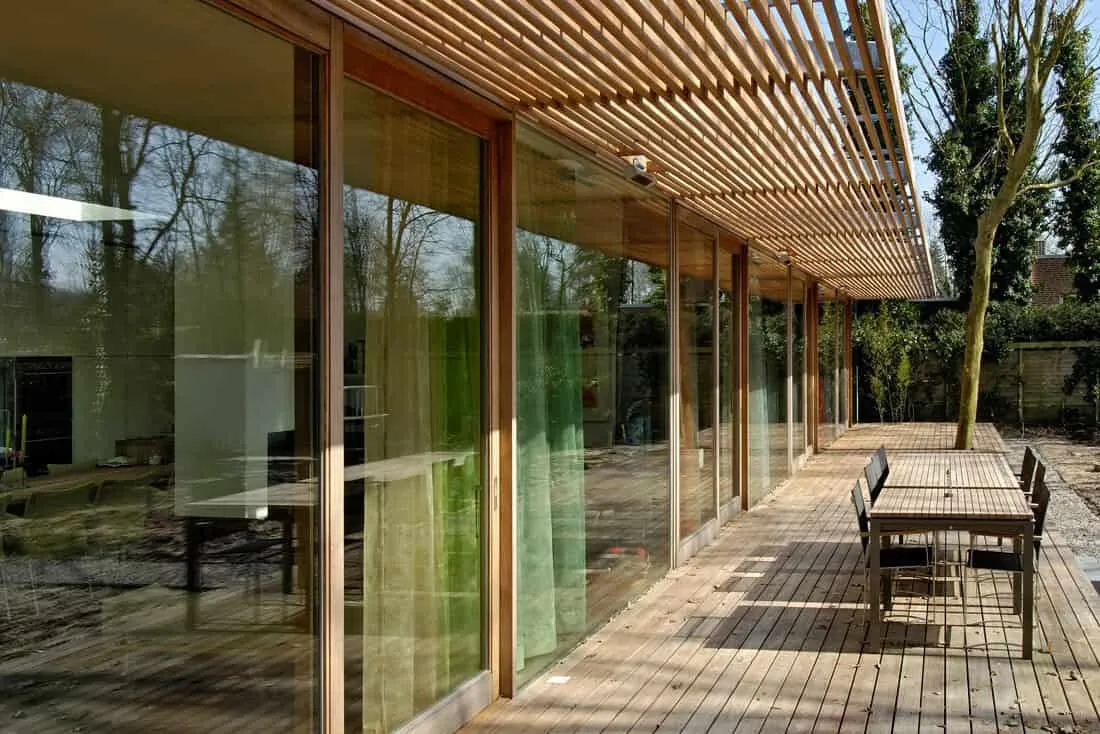
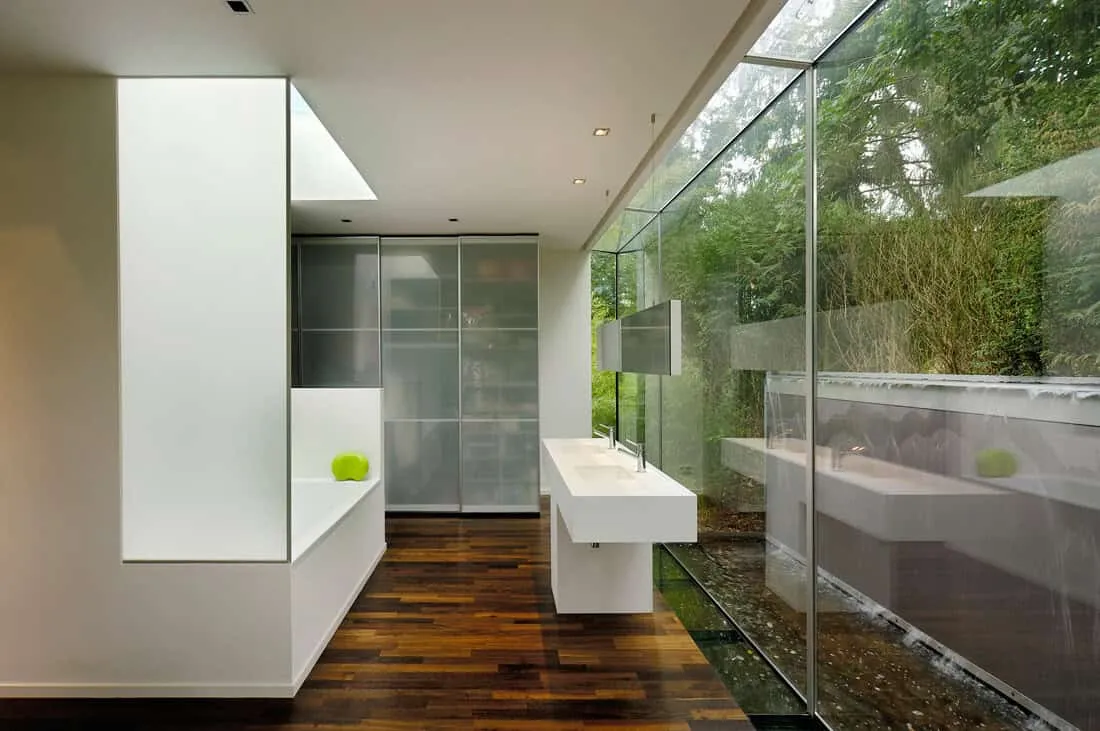
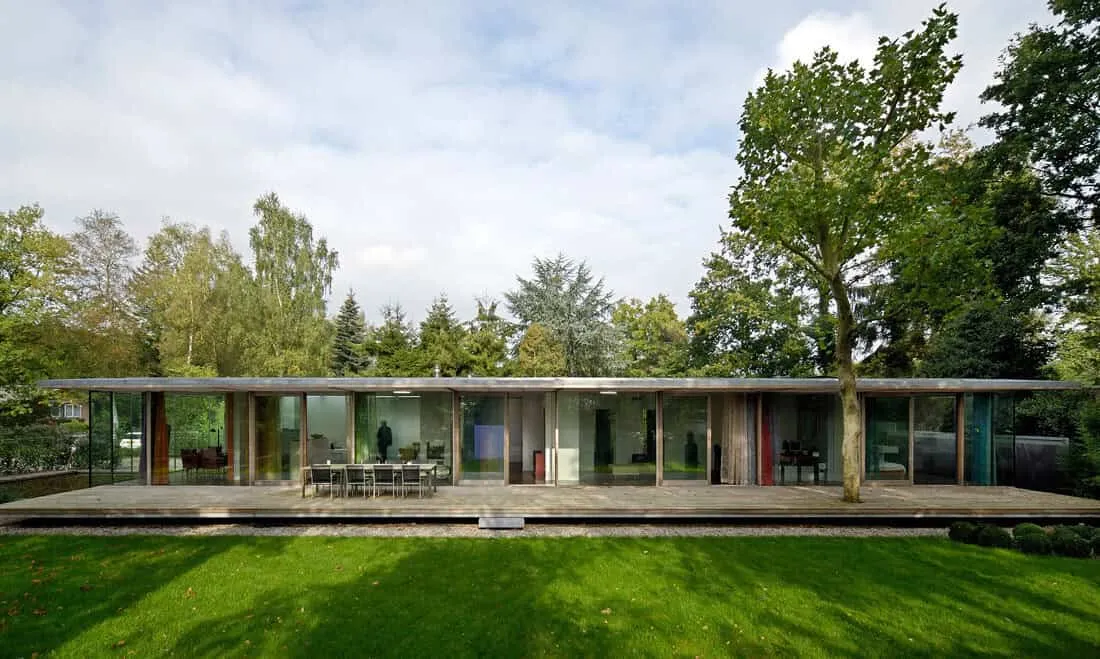
To create openness and lightness, as well as give residents a sense of living on the street among greenery, the house is fully oriented toward the secluded garden to the south. Each room of the villa opens directly onto this garden because three out of four facades are made of glass.
Spacious wooden terrace forms an outdoor room, partially covered by a wood canopy supported by steel brackets that taper upward. This gives it the appearance of floating above the ground. Ponds are installed on both sides of the villa, so the house also seems elevated above ground level, emphasizing the lightness of construction.
–Paul de Ruyter Architecture