TI House by NOARQ: Minimalist Revival in the Urban Setting of Santo Tirso
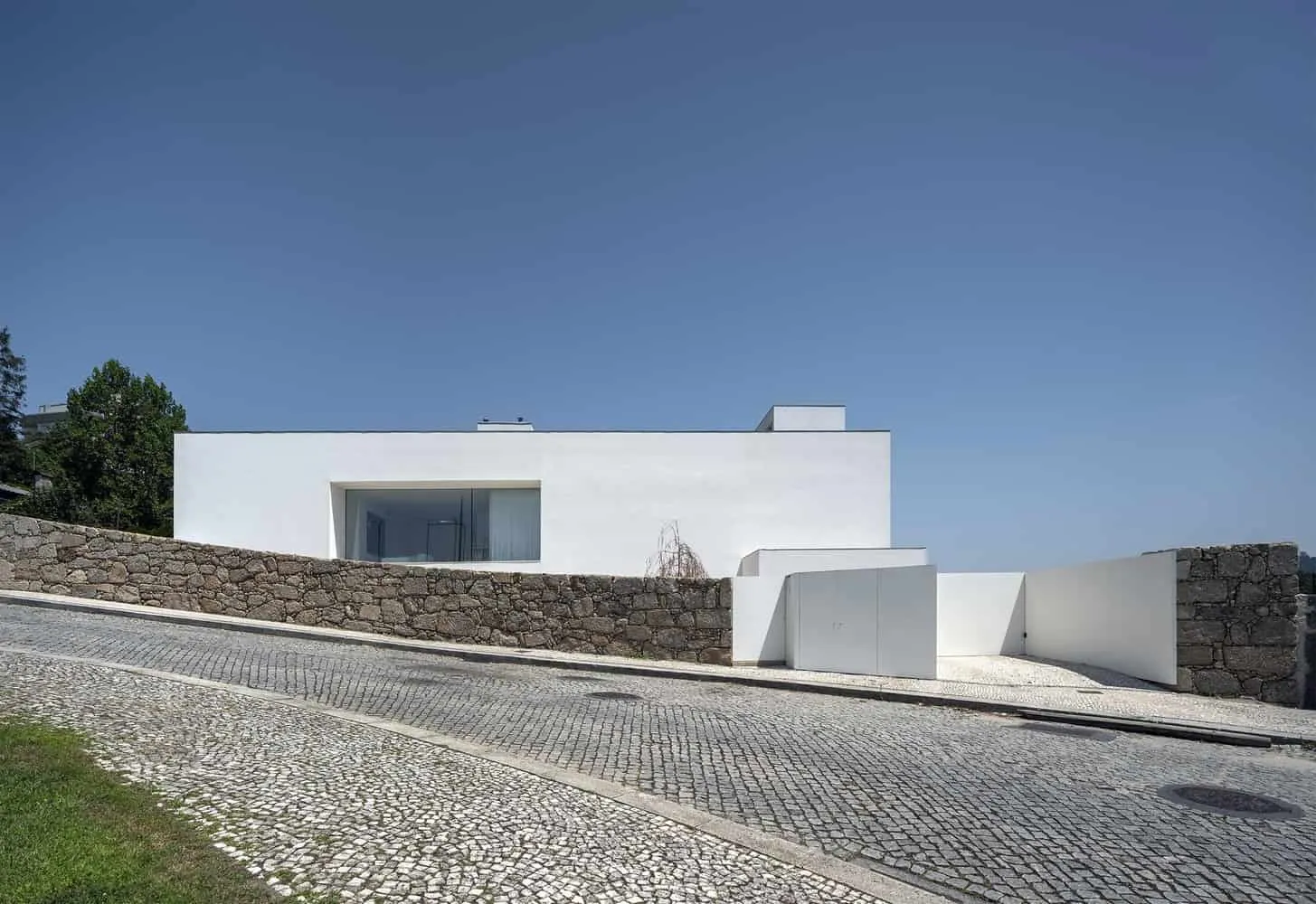
At the heart of Santo Tirso, between the Aires Mateus Data Center and the Matadouro Park, stands a transformed house. The TI House, renovated by NOARQ in 2022, is a striking example of architectural reduction, where every element is refined, each movement purposeful, and every detail honest.
Previously abandoned, destroyed, and architecturally chaotic, the building was transformed into a modern residential space of calm rigor. By removing layers of disorder and revealing a clean spatial form, NOARQ created a bright, functional, and deeply contextual home.
Site and Constraints: Cutting Clarity from Complexity
The plot is central, sloped, and partially shaded—conditions that initially worked against the original structure. The house was built below street level, resulting in narrow, dark gardens and awkward adjacencies. Window openings were chaotic, facades lacked hierarchy, and interiors bore traces of random additions.
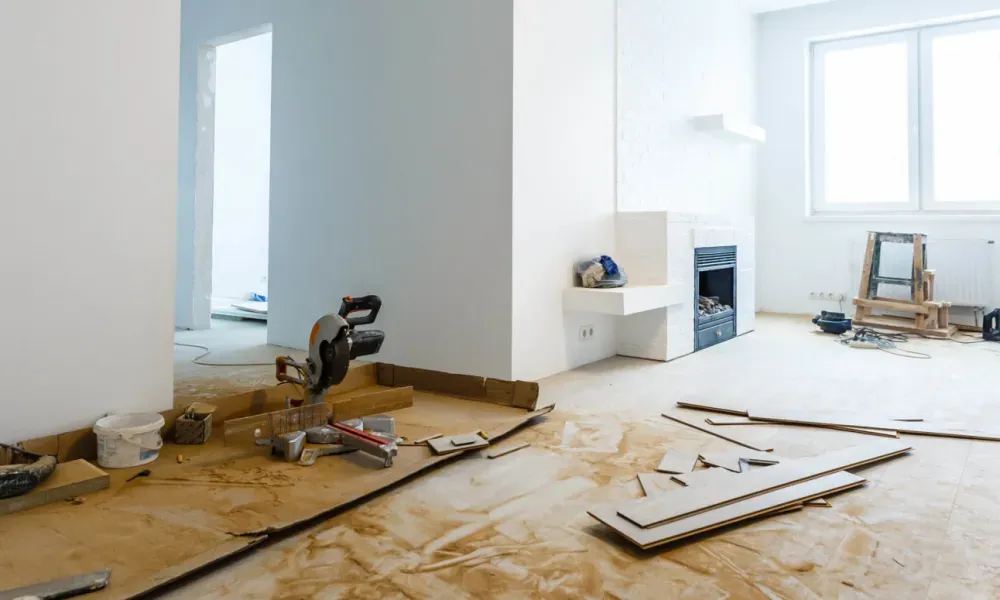
The first step taken by NOARQ was bold yet simple: demolition of the unnecessary. The “stage concrete element” on the facade was removed. Suspended ceilings, excess chandeliers, and hanging iron structures inside were stripped away. This act of subtraction revealed the house's skeleton and opened it up for reimagining.
Next, they aligned the openings with intention, installed single glass openings along the facade, reworked the ceilings, and redesigned stairs and doors to create consistency. The ambition: a excavated white mass with wooden voids and transparency.
Architectural Strategy: Void, Mass, and Precision
TI House is built around a minimalist lexicon: white volume, strategic voids, wooden cladding, and soft lighting.
-
Facades: Each wall is simplified to a single glass opening that frames views of the outside world.
-
Volume and Void: The house presents itself as a mass interrupted by calculated cutouts—voids that direct light, shape views, and animate the interior.
-
Programmatic Clarity: Interior zones were rationalized: private rooms, public areas, technical sections—each conforms to simple geometry and is connected through expressive translation.
-
Stairs and Transitions: Stairs were reoriented to complement the new spatial structure, creating moments of compression and expansion, movement and pause.
As a result, the house seems built from light, shadow, and proportion, rather than ornament or decoration.
Materials and Atmosphere
NOARQ employed material honesty:
-
Natural plaster and rough mortar replaced damaged stone floors, unifying surfaces.
-
Wooden surfaces—doors, panels, screens—remain matte and non-glossy, adding tactility to interiors.
-
Minimalist concrete elements remain structural anchors, blending with white walls to form a serene palette.
-
Light and shadow are as important as these surfaces; carefully planned lighting, hidden fixtures, and architectural light solutions reveal form rather than obscure it.
The result is elegant restraint: spaces that seem refined yet never dull.
Spatial Experience: Transition, Embrace, Frame
Walking through TI House is an act of spatial choreography:
-
You enter through the street frame into a vestibule void, supported by minimal proportions and light transitions.
-
Movement flows through compressed thresholds—low ceilings, opening frames—and then opens into spacious living volumes.
-
Views are accentuated: the single glass openings function like framed photos of garden, sky, or tree.
-
At night, warmth inside softly glows through surfaces, transforming the boxes into lanterns in the landscape.
This is a choreography of restraint—every transition has meaning.
Lighting and Comfort
TI House is designed for both brightness and comfort:
-
Natural daylight penetrates through single glass openings and architectural gaps.
-
Hidden lighting systems are either embedded in structure or expressed as objects only where it makes sense (e.g., a pendant light above the dining table).
-
Underfloor heating systems ensure thermal comfort invisibly, allowing architecture to remain clean.
-
Ventilation and thermal control use openings and orientation to reduce reliance on mechanical systems in moderate climates.
The house becomes a device for serenity—spaces that regulate mood, day and night with grace.
Why TI House Surpasses Competitors
Claustrophobic Storytelling—transformation from ruins to refined architecture gives it an edge in narrative.
Minimal Complexity—the house uses very few elements, but each carries meaning and precision.
Emotional Resonance—spaces are not only functional, but evoke quiet reflection.
SEO Potential—keywords like minimal transformation Portugal, transforming architecture Santo Tirso, single glass openings facade are rarely intentionally targeted.
Visual Uniqueness—renders and photos—white walls, deep cuts, soft trees—stand out in news feeds and search results.