Rio Sedro House by Plan:b arquitectos in Monitos, Colombia
Project: Rio Sedro House
Architects: Plan:b arquitectos
Location: Monitos, Colombia
Photography: Sergio Gómez
Rio Sedro House by Plan:b arquitectos
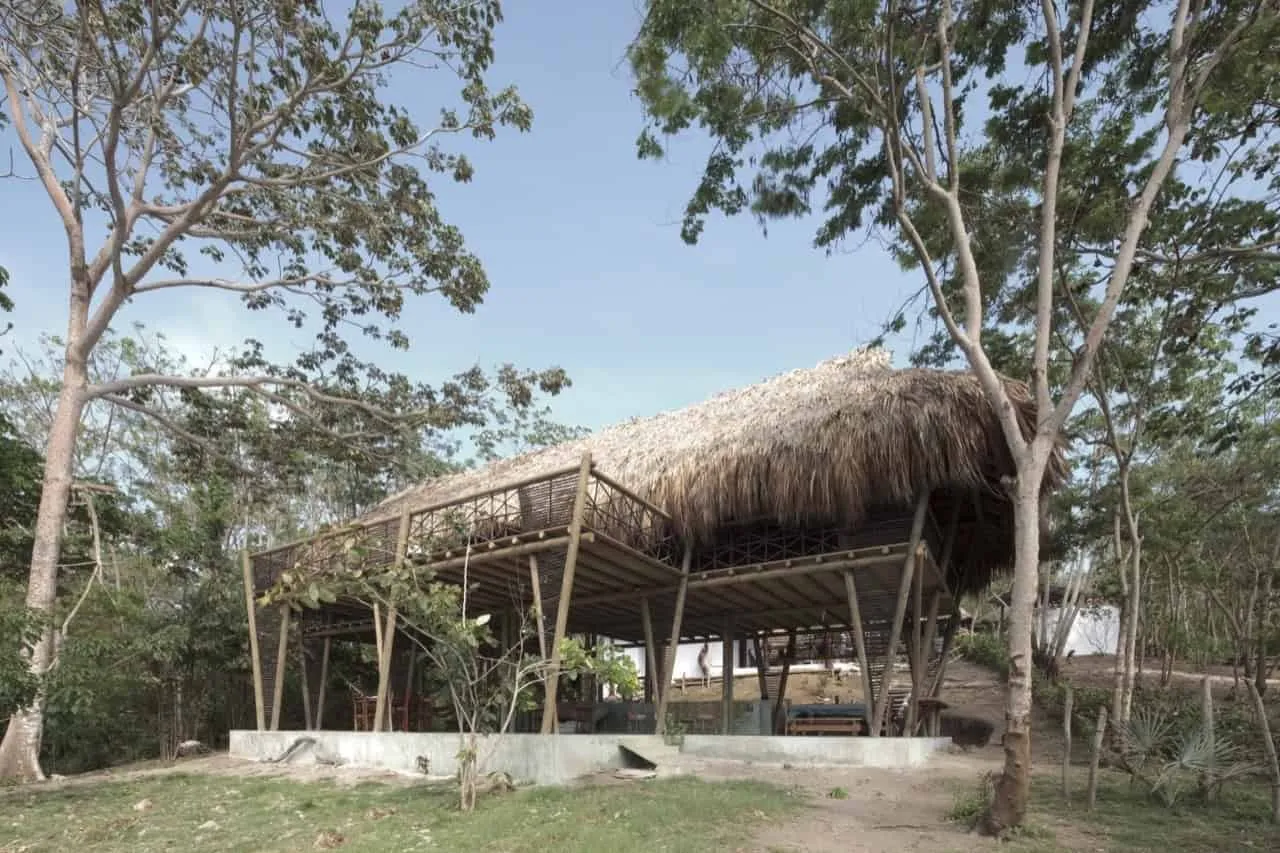
The Rio Sedro House in Colombia is a sustainable building that integrates with the surrounding ecosystem of the tropical dry forest. The structure was built using cultivated, immunized and certified Caribbean pine, processed with sustainable methods to avoid the use of local timber species. The roof was constructed using branches from the 'Palm Amarga' plant, while the fencing elements were made from stems of the 'Palmalata' plant which can be sustainably harvested.
The building features an open and permeable design that allows passive cooling through cross-ventilation and precise bioclimatic characteristics. The elevated and open first floor acts as a covered platform for all areas of daytime activity, while the second floor provides a more intimate space for nighttime rest. The level difference creates separation between daytime and nighttime activities, allowing the house to be permeated by vegetation and weather on the first floor but with greater control and limitation at the second level.
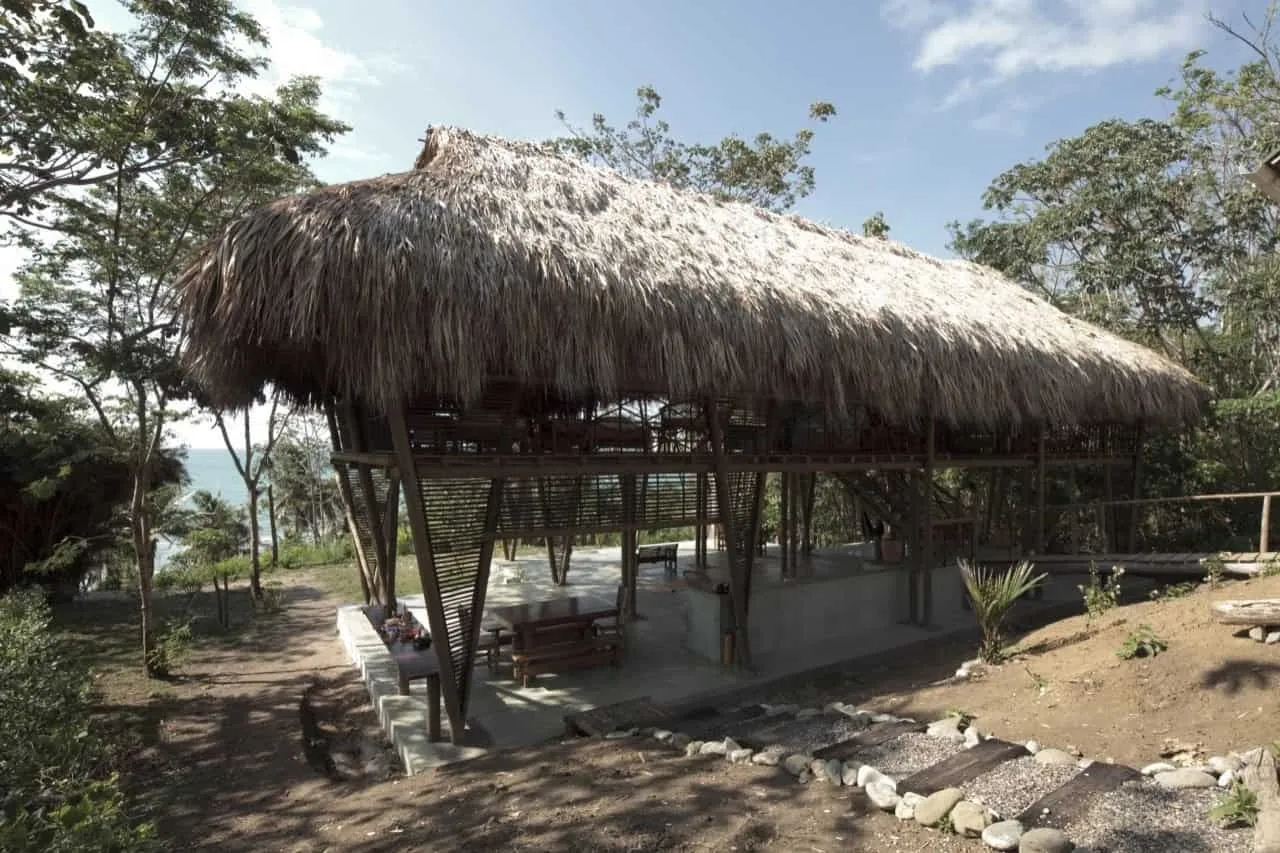
This building harmoniously integrates into the ecosystem of the tropical dry forest located on the Caribbean coast in Colombia. Historically, this area has suffered extensive deforestation due to continuous cattle grazing and mass tree planting. This significantly impacted mangrove forests and their biodiversity.
Considering this, the house presents an open and modular design that avoids using local timber species. It is built on cultivated, immunized, and certified Caribbean pine processed with sustainable methods. Before thinking about structural elements capable of resisting loads and forces, we considered a structure that could be permeated through the environment. The structural and modular capabilities of the chosen construction system ultimately define several technical, tectonic, and geometric aspects of the building—such as sloped diagonal columns, platform height, roof slope, span length and more. Following local traditional building practices, the roof was constructed using branches from the 'Palm Amarga' (Sabal mauritiiformis) plant. The building's fencing elements were made from stems of the 'Palmalata' (Bactris guineensis) plant. Both plants can be sustainably harvested. For increased rigidity of the wooden structure, we built a concrete foundation. With this material, we also defined some elements and furniture on the first floor such as a sofa, staircase, and additional table.
Rio Sedro is warm all year round with only one strong rainy season. Considering this, we proposed an open and permeable design that allows passive cooling through cross-ventilation. The roof width is 30 centimeters and its organic material provides both temperature control and rain protection. Thus, we create precise bioclimatic qualities: avoiding heat and humidity by directing airflow while also creating constant shade through the roof design and orientation of the building towards the sun (main facades face north and south).
Following certain local construction strategies, the house is defined by an elevated and open first floor that acts as a covered platform including all areas of daytime activity. The living room, dining area and lounge zone can move freely on one level. On the second floor we see a lower profile around the perimeter, creating a more intimate space for nighttime rest. Here one can enjoy views of the complex structure of internal roof slopes. Again, we create a platform where beds and small furniture can be moved or even increased in quantity to expand possibilities. The difference between levels provides separation between daytime and nighttime activities, allowing the house to be permeated by vegetation and weather on the first floor but with greater control and limitation at the second level.
–Plan:b arquitectos