Terrace House by Caio Persighini Arquitetura in Aracaju, Brazil
Project: Terrace House
Architects: Caio Persighini Arquitetura
Location: Aracaju, Brazil
Area: 2,885 sq ft
Year: 2022
Photography: Favaro Jr.
Terrace House by Caio Persighini Arquitetura
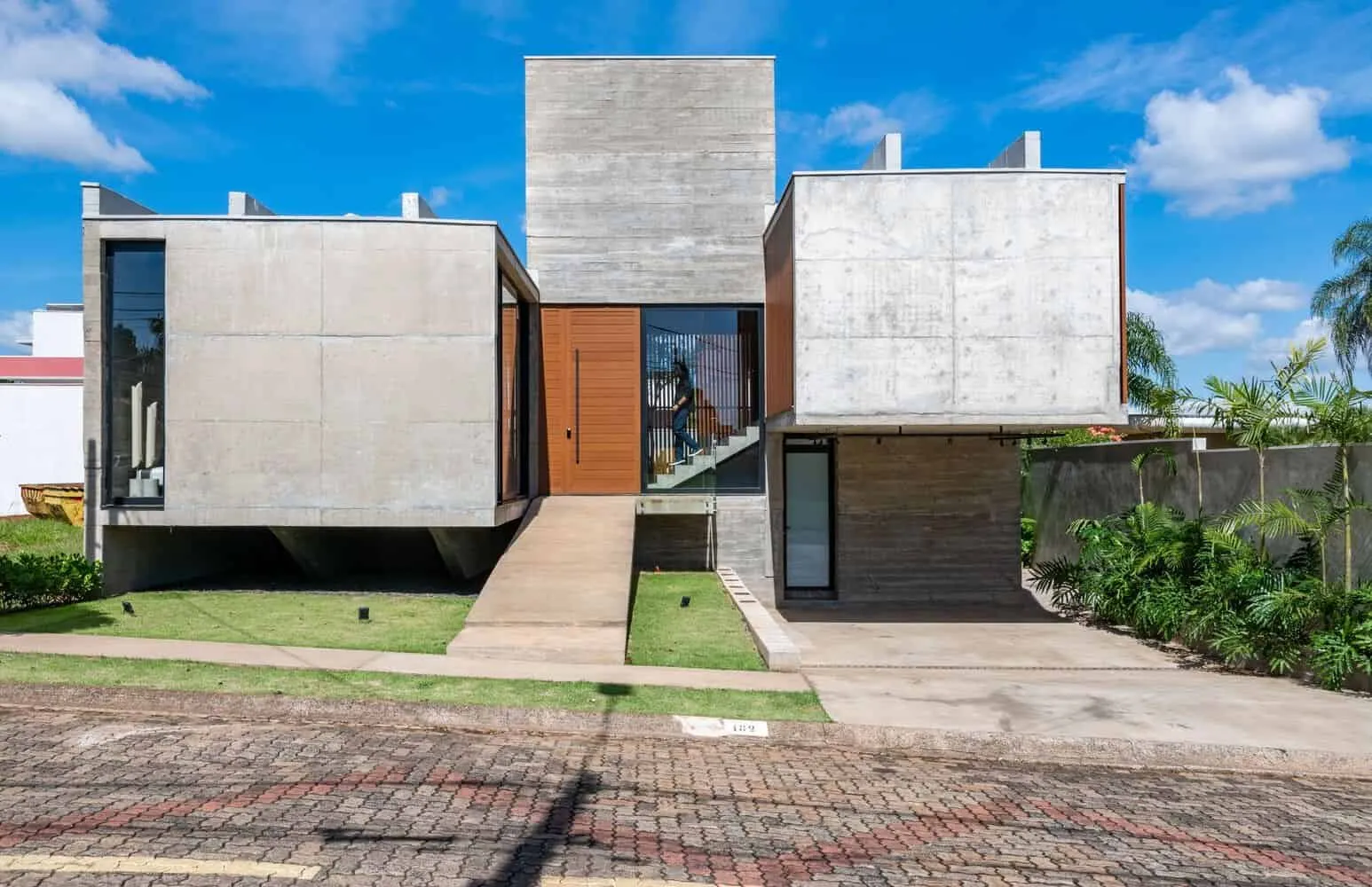
This exceptional home flawlessly combines innovative design with the natural environment. Unwavering trust and openness from the couple towards architectural exploration enabled the creation of a unique masterpiece. The site's topography became key, inspiring a multi-level structure that plays with the gentle slope of the landscape. Concrete, chosen for its texture and structural qualities, dominates the house.
Evidently, the use of breezeways in rooms provides both privacy and an open connection to the forested nature. In the public area, openness prevails, facilitating integration with the outside world. Dynamic movement creates a unique experience for inhabitants, evoking feelings and perceptions that enrich their understanding of this remarkable dwelling.
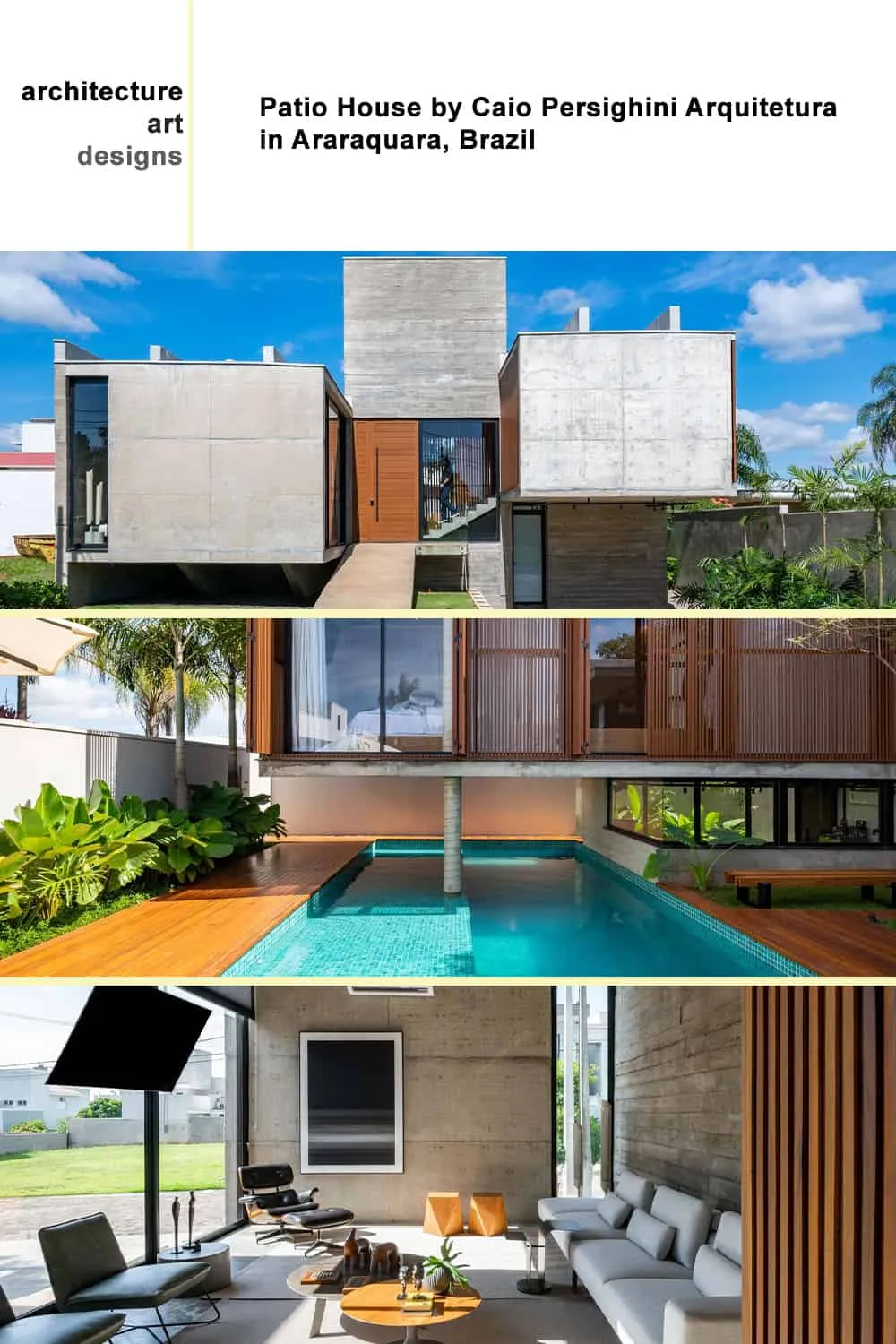
From the beginning, the possibility of constructing a two-story house for Casa Patio was discussed. However, there always existed care to preserve open space and free area. This concern has always been present and, in a sense, the concept of terrace was already implied from the start of the project.
The couple, generous and receptive, was always open to discussing the project, giving me freedom of thought, creation, and developing architecture in accordance with our concept. They allowed the project to flow, enabling architecture to express itself freely.
There were no limitations or constraints on what they wanted. The program of needs included a spacious living room, kitchen, integrated cooking area, three bedrooms, laundry room, and an unusual detail: a brewery in the house.
At first, we explored some ideas and studies that were not yet a project in themselves but served to address critical questions and allow them to fully express.
However, there was a decisive moment when I gained insight into the house. This highlights the importance of client trust and the freedom provided for creativity. The insight was to use the site's topography in favor of the project. The plot was wider than usual in the region and had a slight slope that could be effectively used. Given the condominium restrictions, it was possible to work with this terrain feature. Thus, the project used this slope by dividing the house into different levels: second floor, semi-basement, and public first floor. This was only possible due to the freedom of discussion with clients who had no prejudices or preconceived ideas. They were extremely open to discussing the house's architecture and generous in trusting our studio's potential.
The project evolved until we reached a concept that seemed ideal for the house. After this, we began detailing dimensions and room placements. Then we developed the interior design for the house.
A key moment was when we truly incorporated reading the terrain into project discussions. Initially, we had a superficial understanding of the topography, only considering its size. We didn’t stop to explore other perspectives of the site, regardless of the house. At this point, we abandoned the idea of simply building a floor above ground. The question arose: why not use the gentle slope and width of the plot? This was a pivotal moment when topography defined the house's architecture.
The use of concrete in the house was carefully considered, not only for the material but also for construction dynamics, architectural thinking, and structure. Concrete was poured on-site, bringing smoothness and naturalness to the project. The house is mainly composed of concrete slabs with external glass railings. Internal spatial distribution was defined according to the need to create rooms.
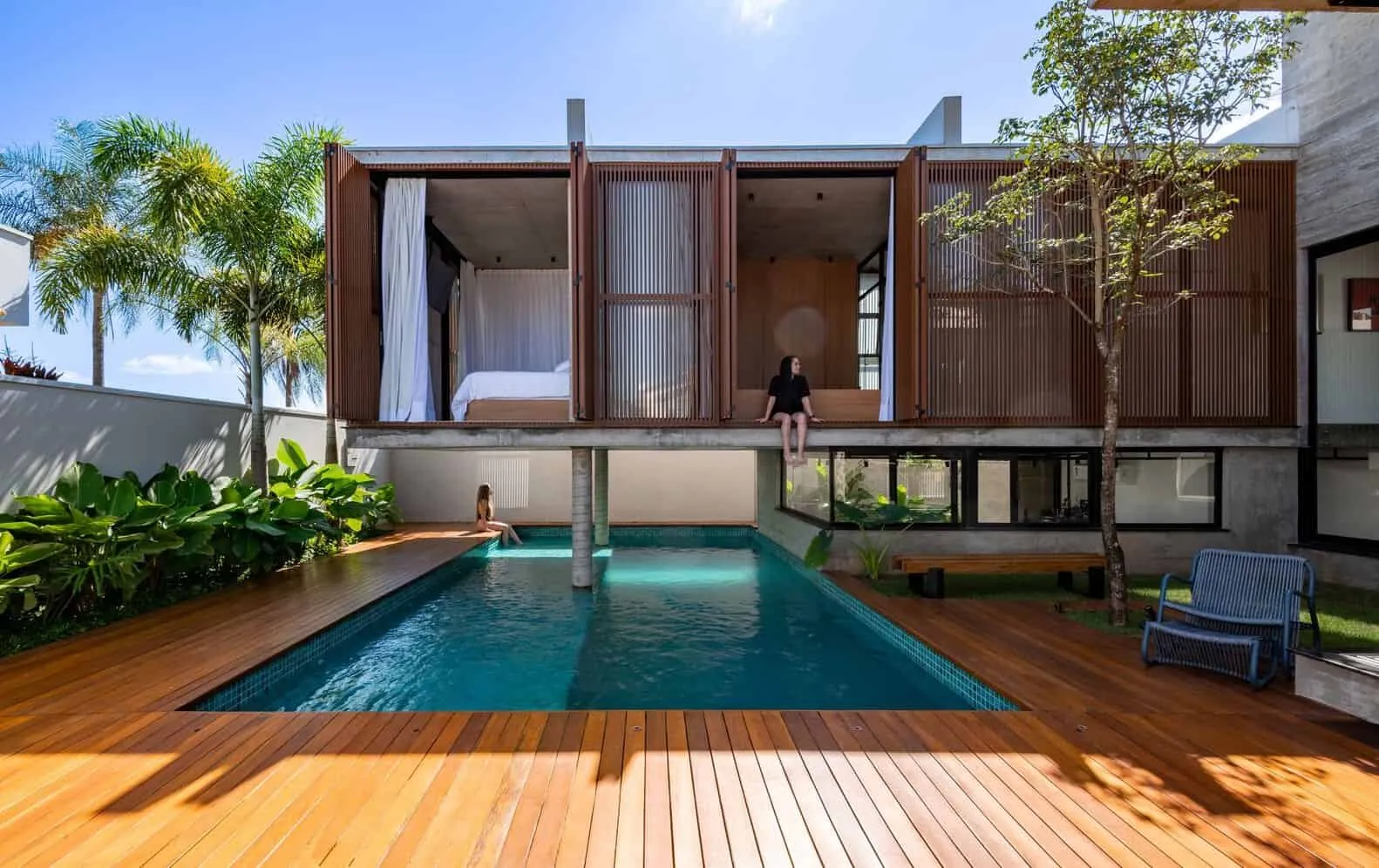
The idea of using breezeways in rooms arose with the intention to create a second atmosphere in these spaces. Since the house has no neighbors and is located in a forested area of the condominium, the 'muxarabi' principle was adopted. This allows inhabitants to enjoy the landscape by opening curtains and windows, while those outside have difficulty seeing inside due to the light exchange provided by the breezeways.
One of the advantages is a bedroom with nearly 180-degree panoramic views from the bed. This allows inhabitants to enjoy privacy while watching TV with open curtains, as they are less exposed than if there was only glass without a breeze. Therefore, it is in the rooms where this architectural reading is emphasized, and breezeways play a key role.
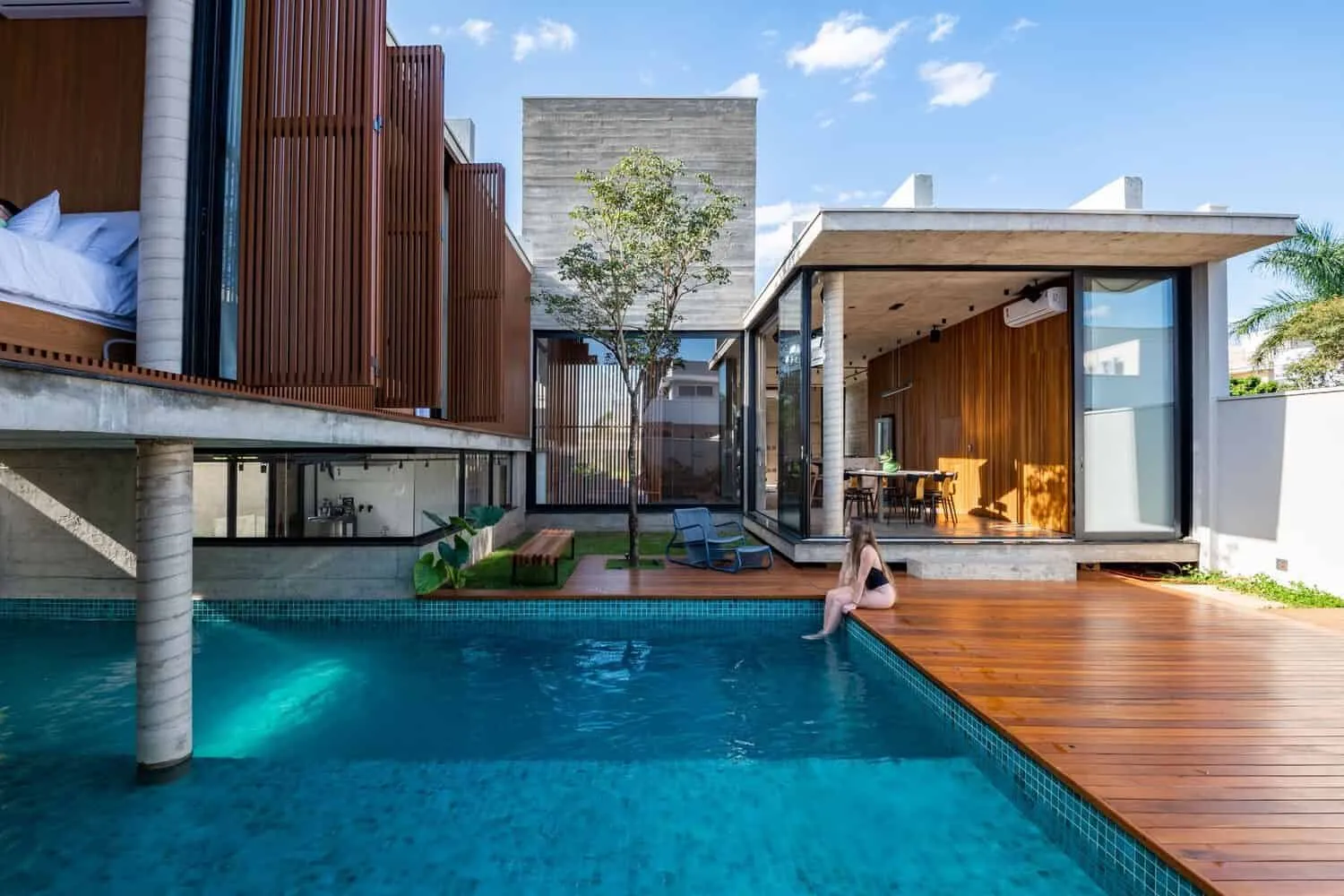
In the public area, the decision was made to keep the space open, allowing broad integration with the outside world. The entrance hall functions as a central distribution point for the house, connecting the basement, first floor, and second floor. Upon entering the dwelling, one encounters a terrace framed by parallelism of two house blocks and featuring white ipê wood, terrace, and pool integrated with the suspended block.
Movement within the house is extremely dynamic, providing various ways to move even on a traditional plot. The ability to go up, down, forward, and backward creates a unique experience for inhabitants.
It is interesting to note that upon entering the hall, one moves toward the center of the house. When exiting the bedroom into the public area, a view of the terrace can be seen. The privileged view provided by the slightly elevated position of the bedroom and hall creates a pleasant feeling when looking at the spaces. The main focus in building the house was to create an environment that evokes feelings, perceptions, and sensations, encouraging space usage. Playing with sensory experiences is one of the most important aspects that enhances inhabitants' appreciation of the house.
When you are in the elevated bedroom, you can admire the house uniquely and specifically. In the entrance hall, which serves as a point of entry for guests, the house also offers an interesting perspective. In the living room with open curtains, a view of the street, suspended block, garage, and hall can be seen. The smoothness of the house and emphasis on perceiving surrounding spaces provide a sense of comfort, tranquility, coziness, and relaxation for those inside.
–Caio Persighini Arquitetura