House NINE X NINE / Architects Sanjay Puri / India
Appearing Among Nine Trees
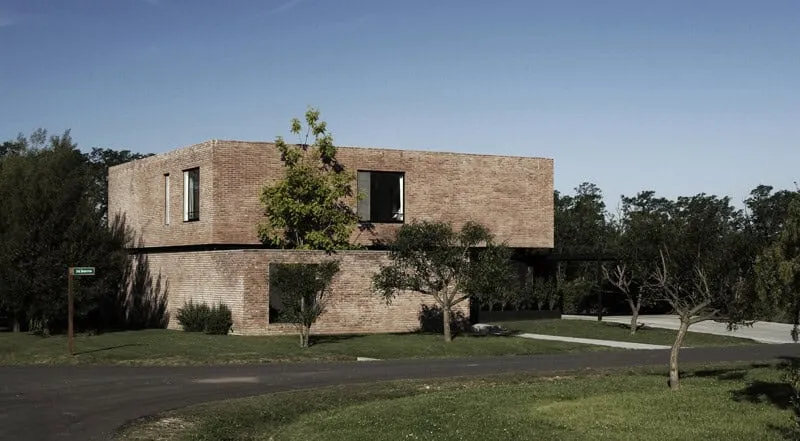
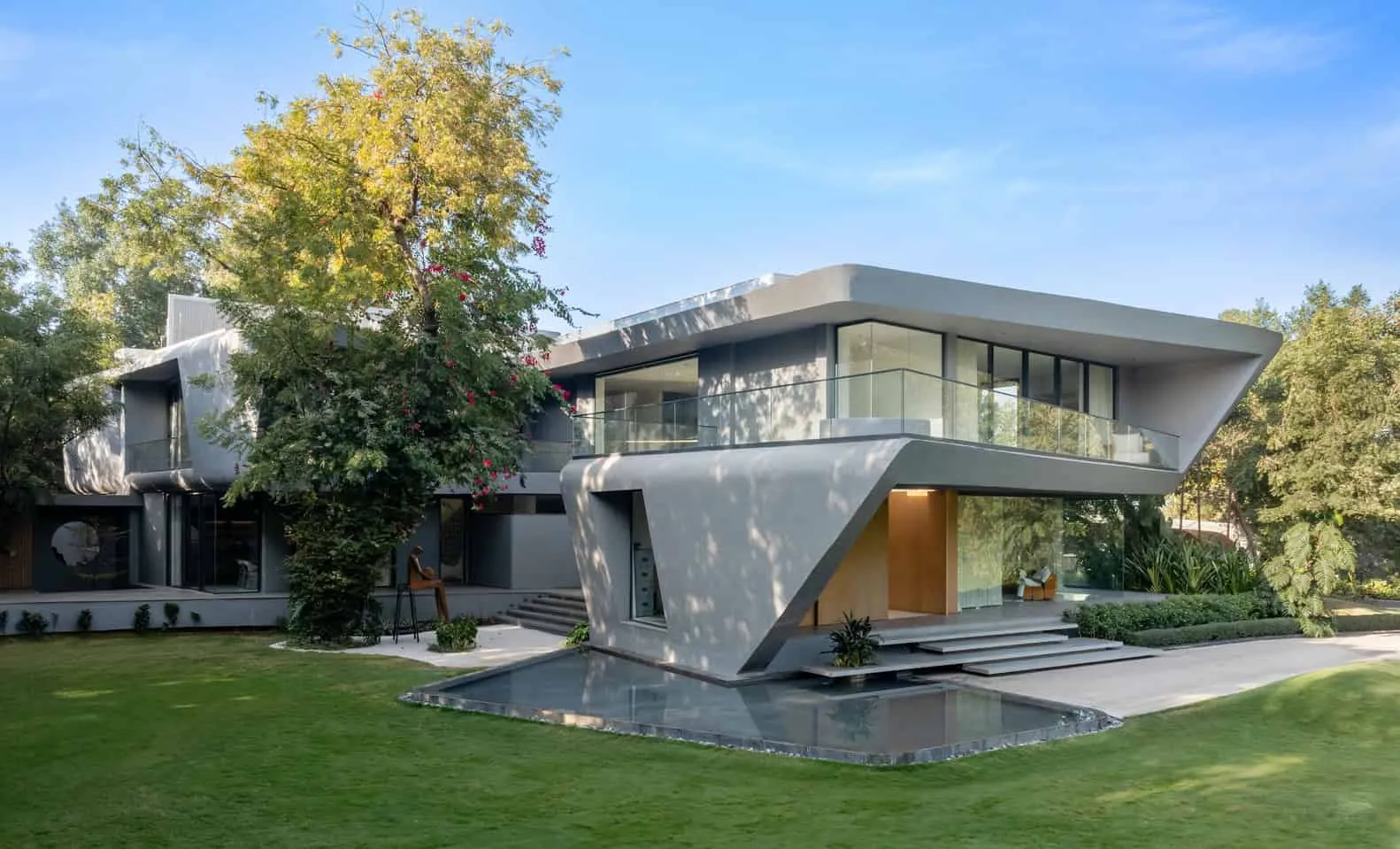
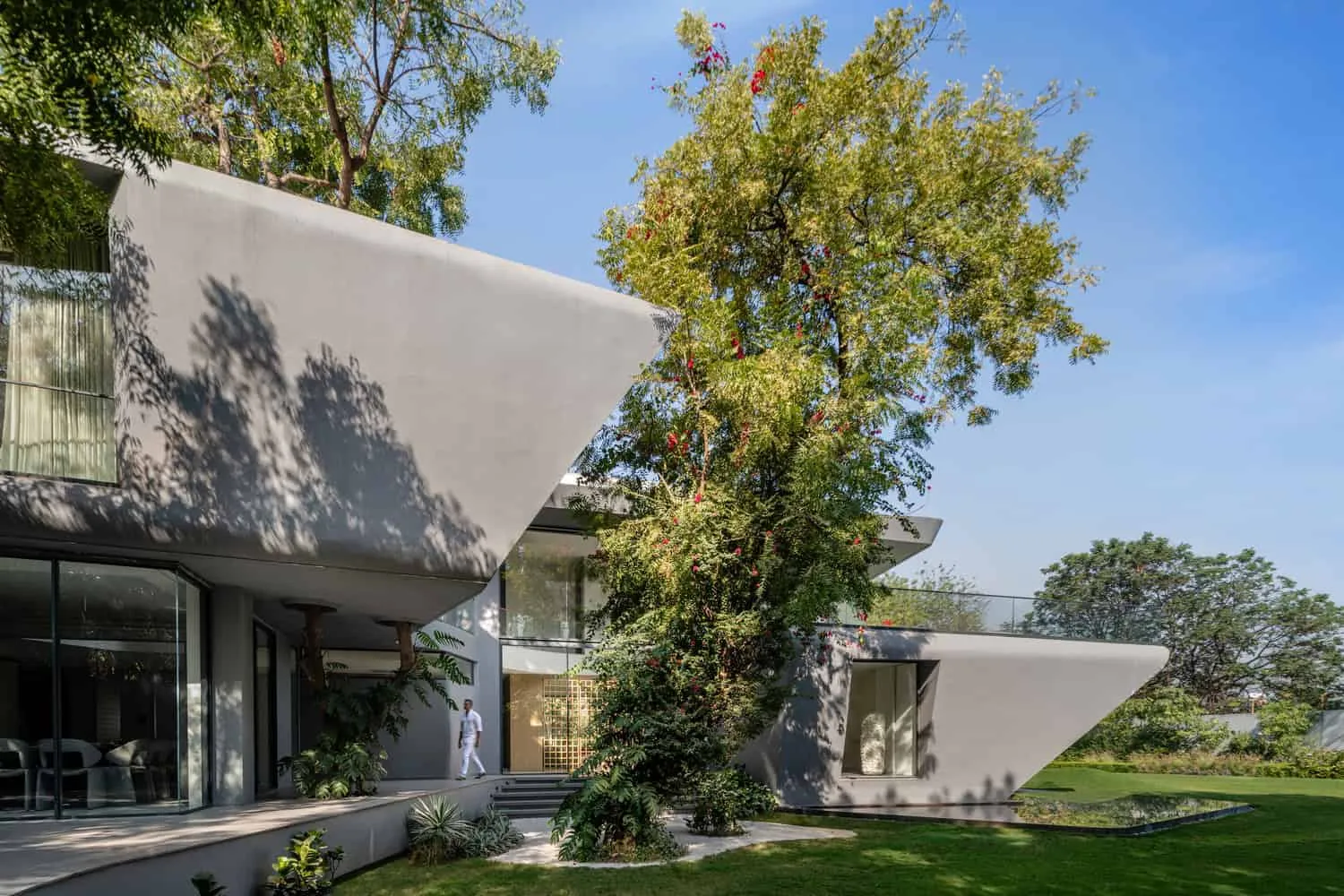
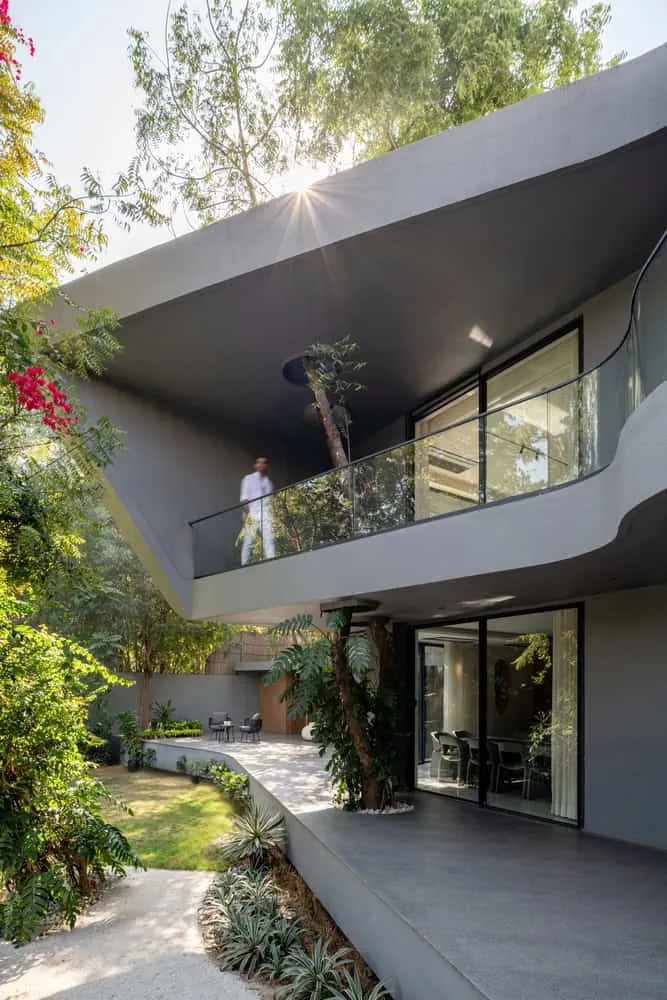
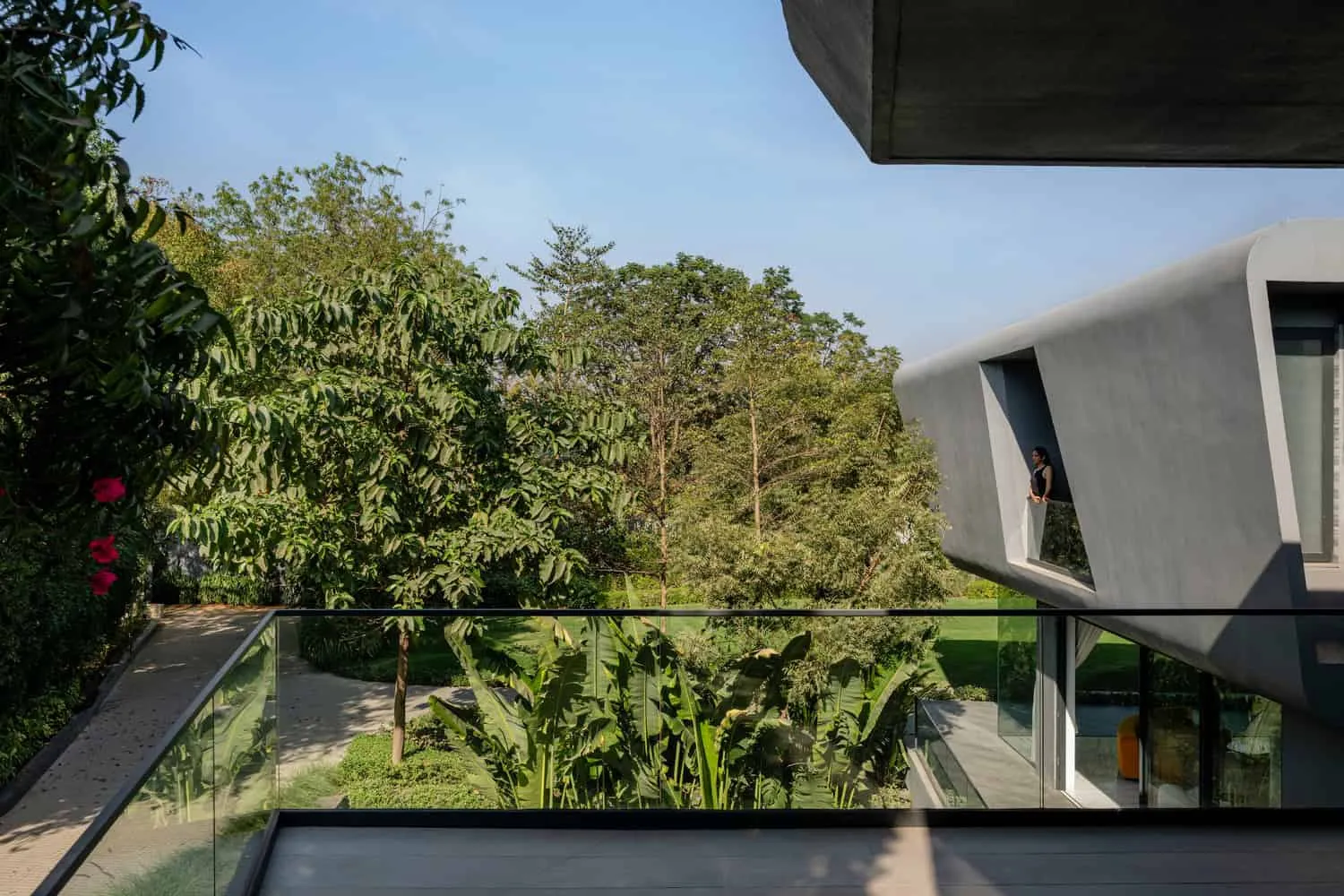
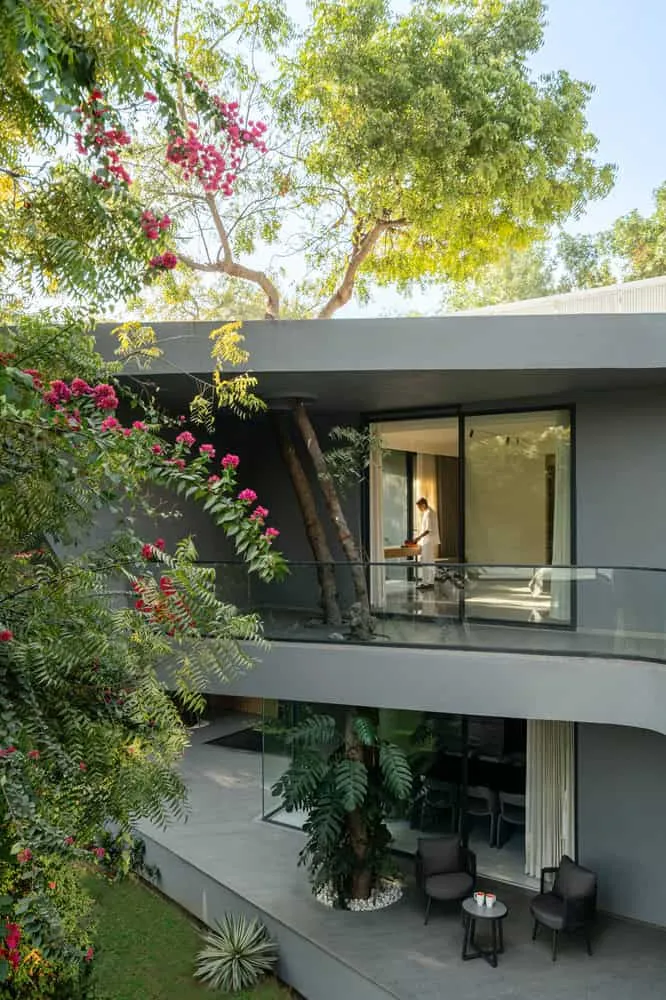
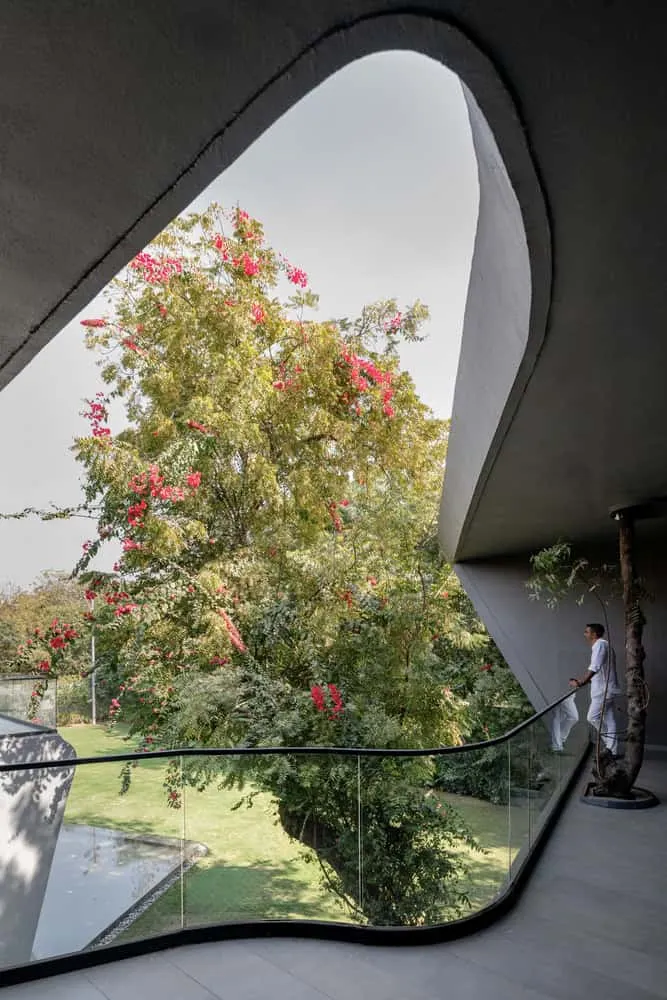
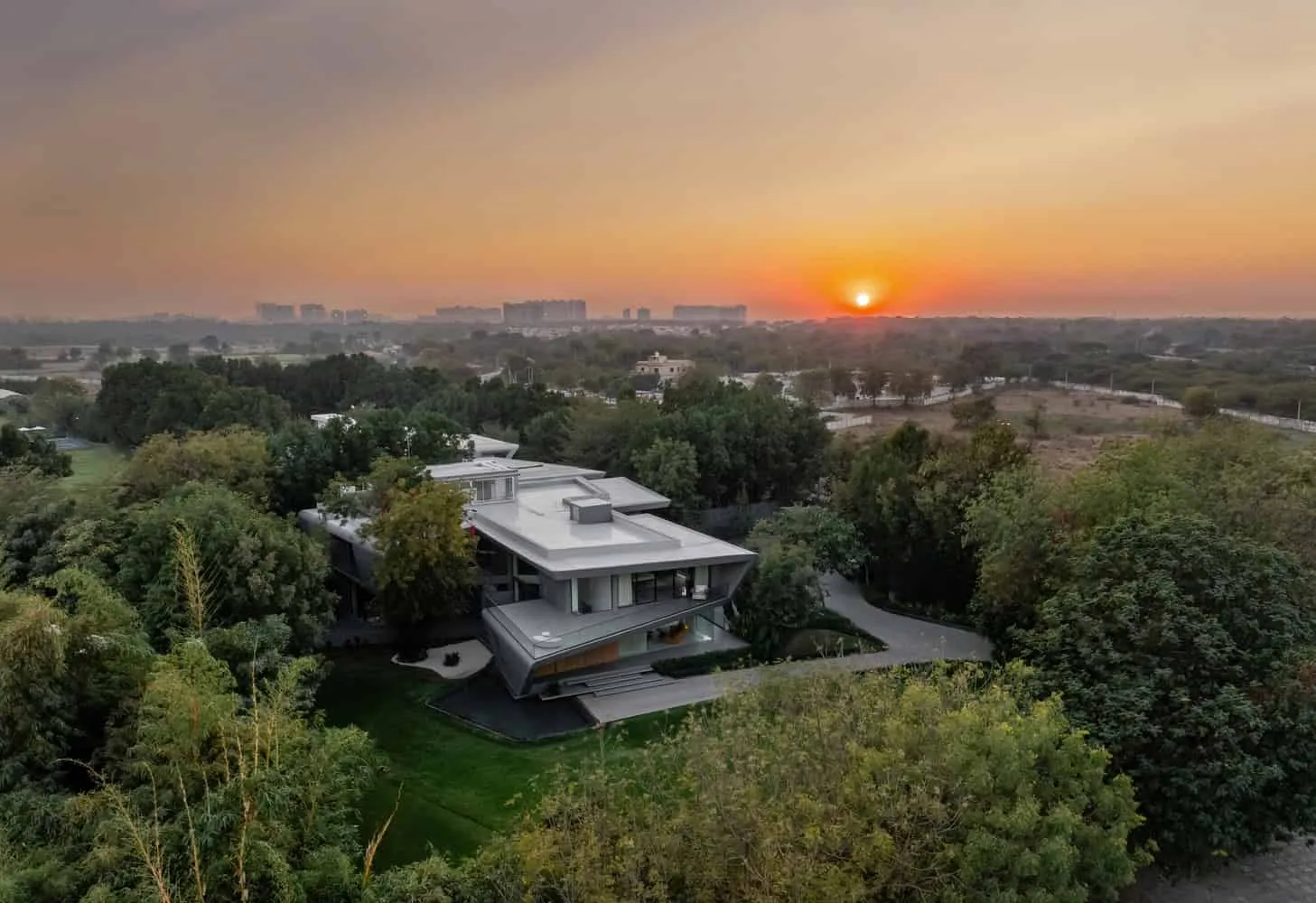
The House NINE X NINE is designed as a home interwoven with nine existing trees. The architecture flows around these wooden supports, integrating the built form and nature in an expressive spatial dance. Rather than imposing itself on the site, the project allows the forest to remain a co-author—rooms curve, terraces open up, internal courtyards are interrupted by volumes—all in relation to these living trunks.
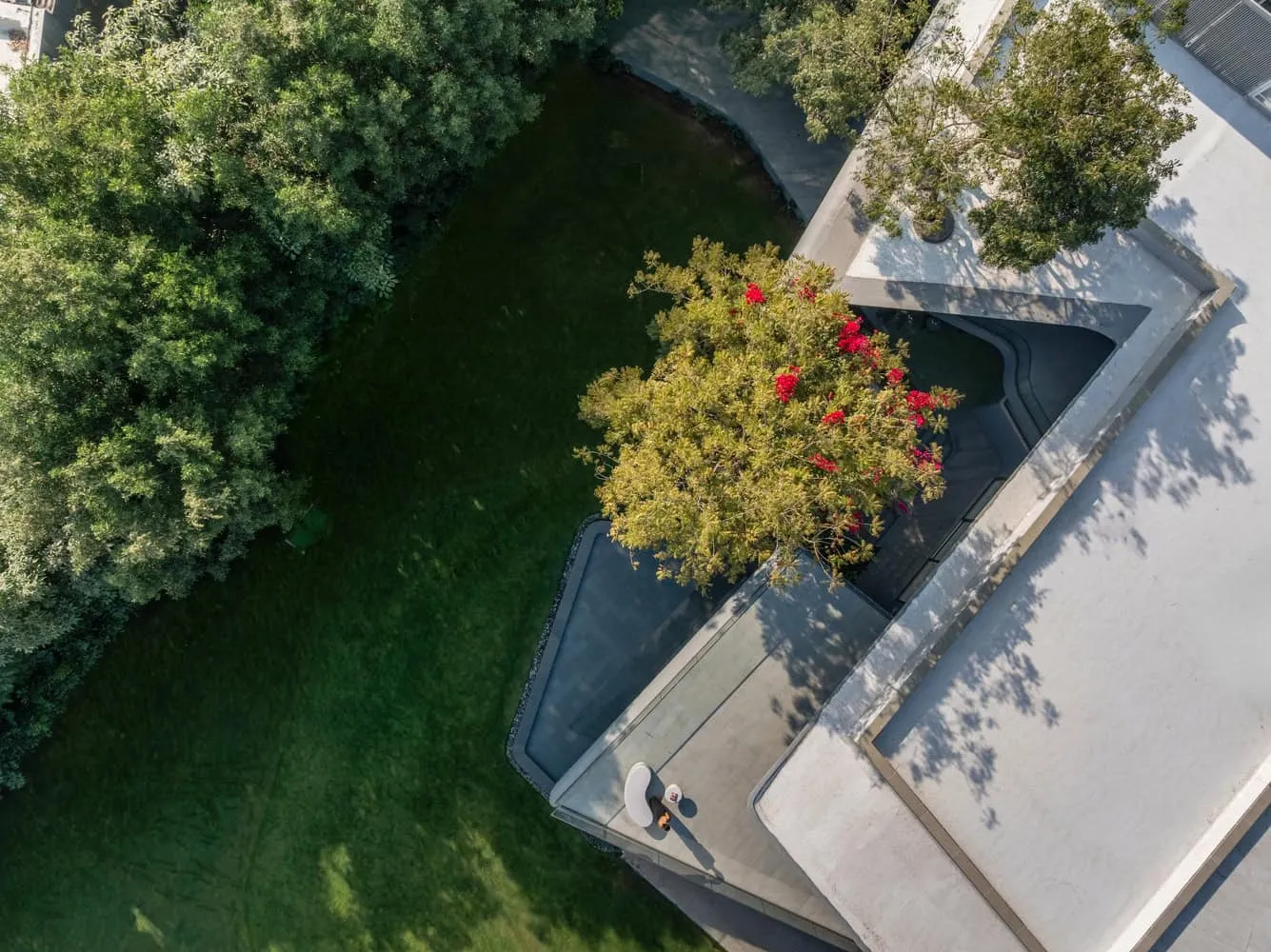
The approach is modest: gates on the northwest lift the tree canopies, and the house slowly unfolds gradually. The constructed mass is deliberately shifted to the southern side of the plot, leaving a generous north garden space as a buffer and green axis.
Photos © Vinai Panyani, Ishita Sitvala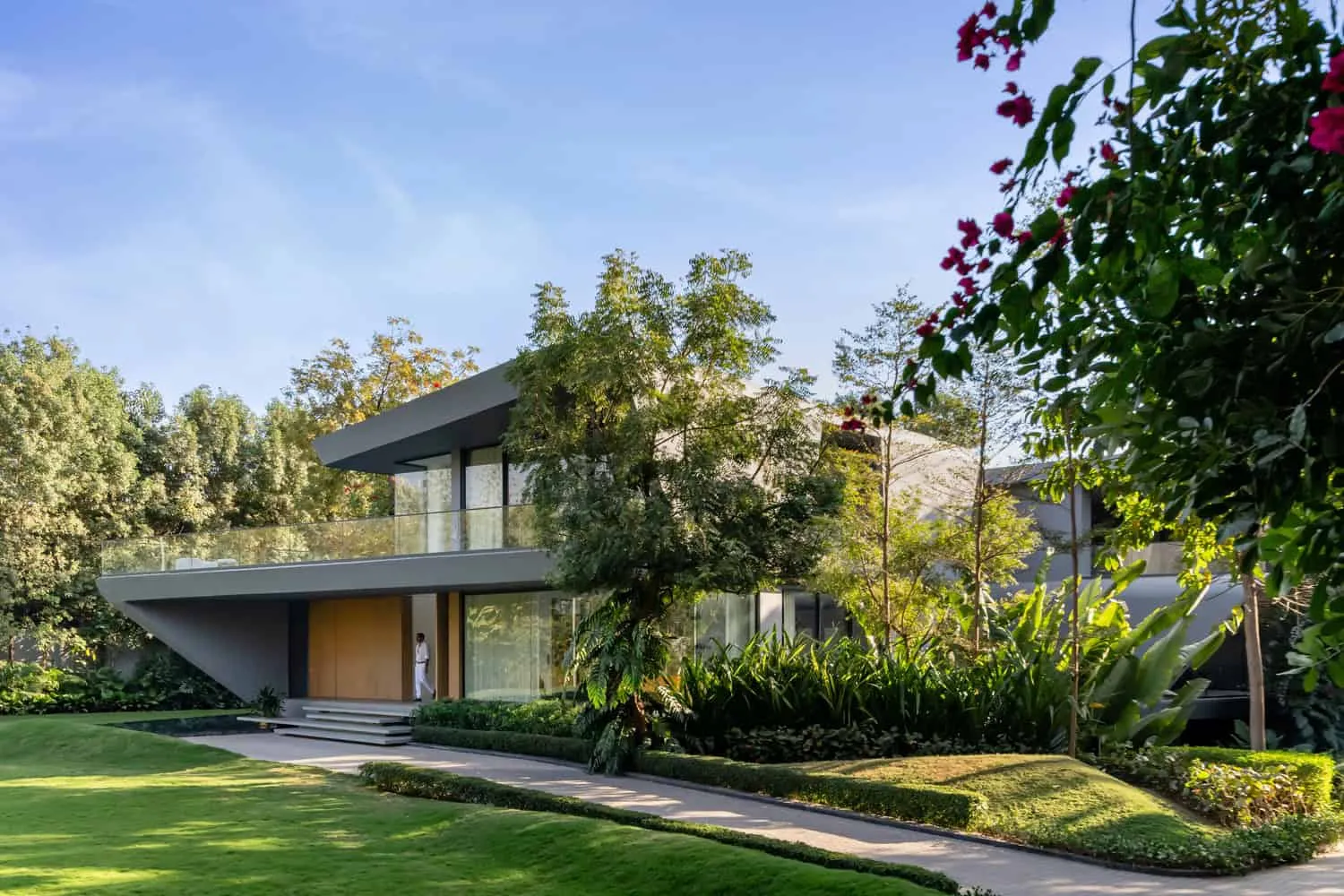 Photos © Vinai Panyani, Ishita Sitvala
Letter-T Plan and Vertical Drama
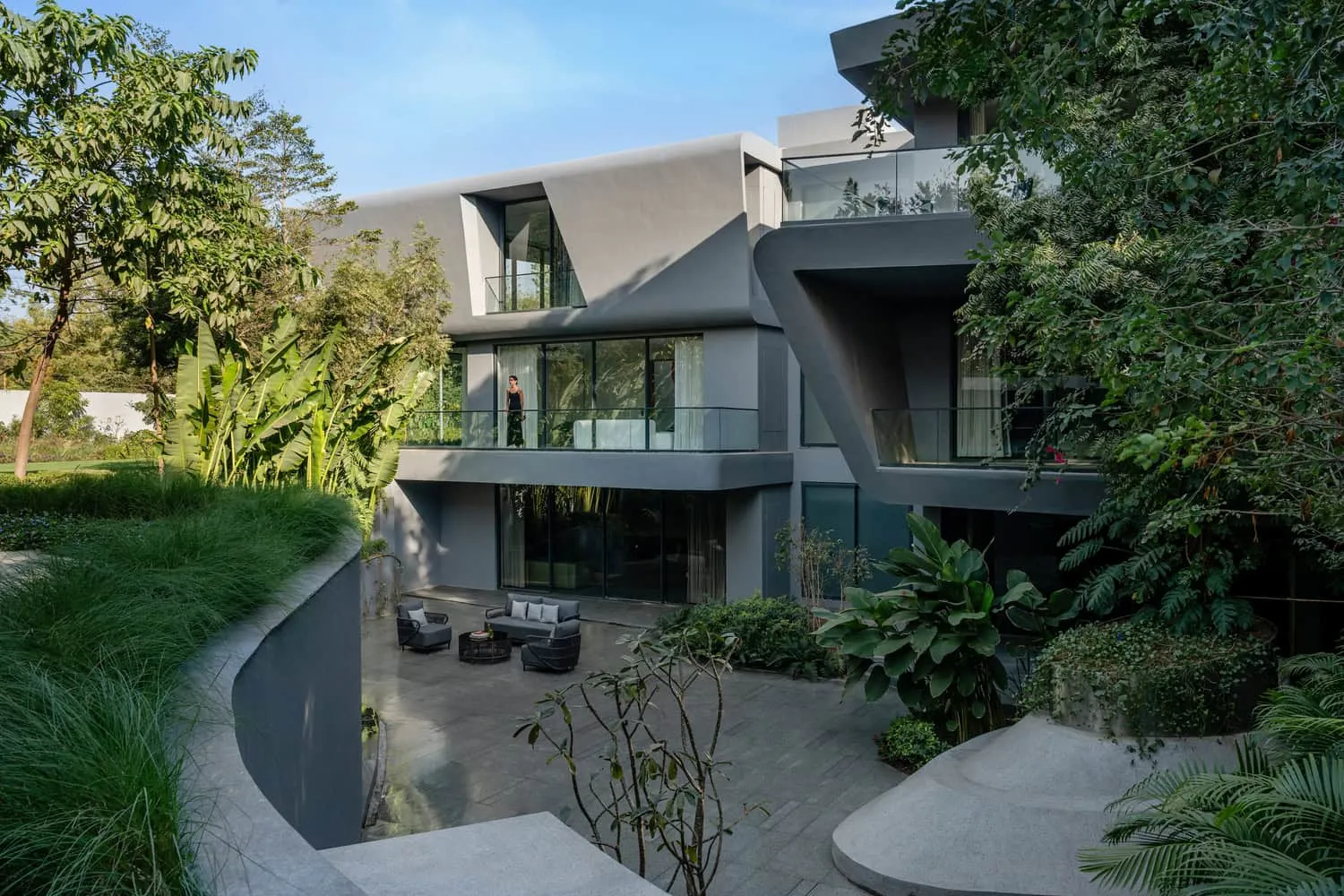
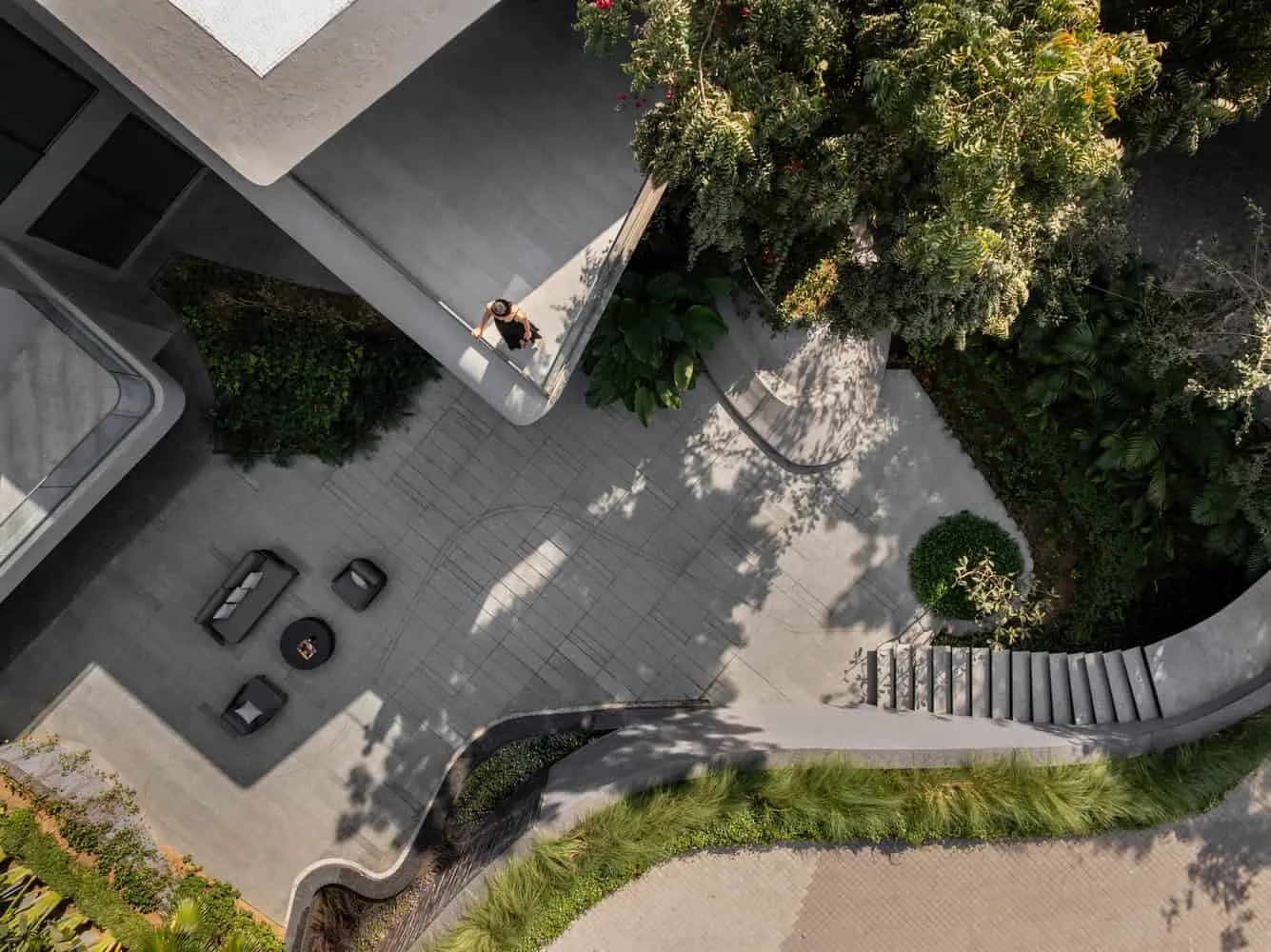
The plan and section use T-shaped geometry—the central axis divides the space into east and west. The ground floor includes public zones: living room, dining area, kitchen, and guest bedroom, providing light flow and outward orientation. Above are three family bedrooms, each with dual orientation to gardens and trees. Below is a lowered courtyard, which opens the basement level to light and air, connecting with the garden through a curved staircase and sculptural fountain.
Key spatial solutions:
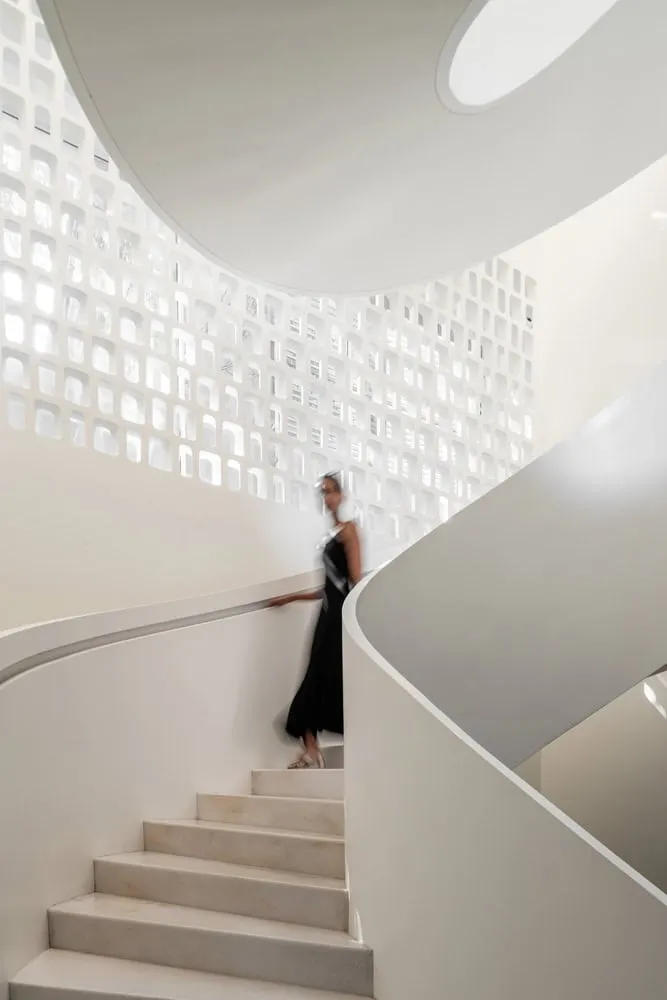
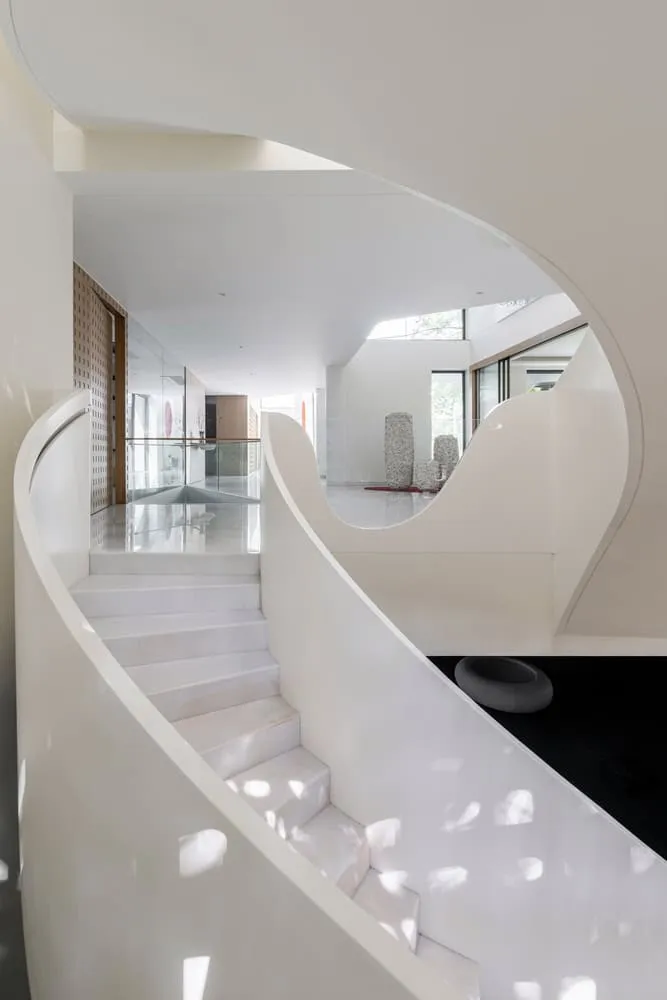
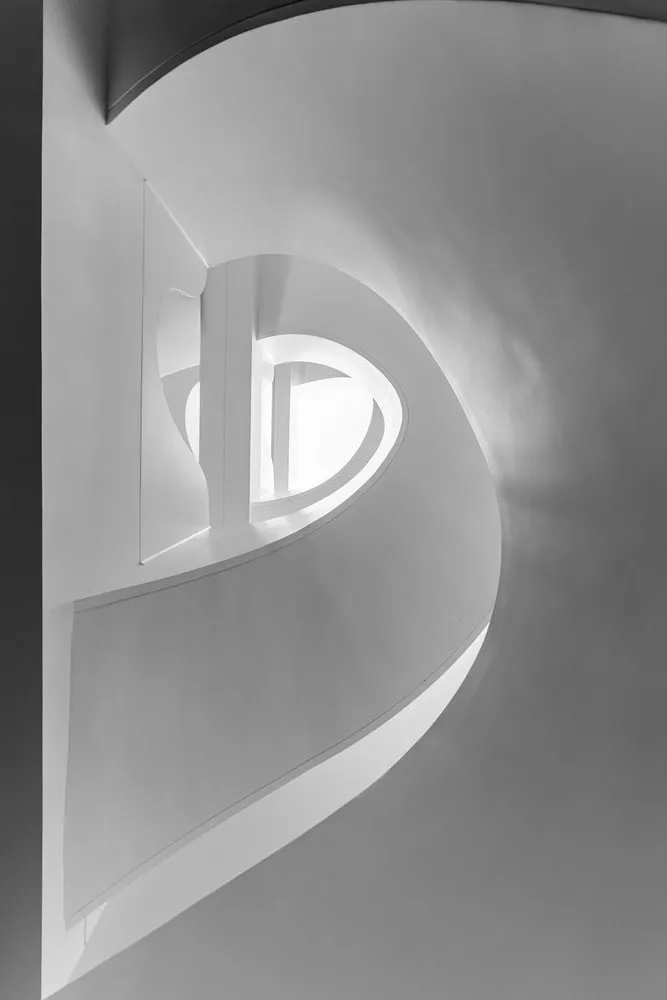
- Spiral staircase that strengthens the central node.
- Lowered courtyard on the western side directs light and ventilation to lower levels.
- Wavy wall near the staircase serves as a landscape element and screen, built into the fountain.
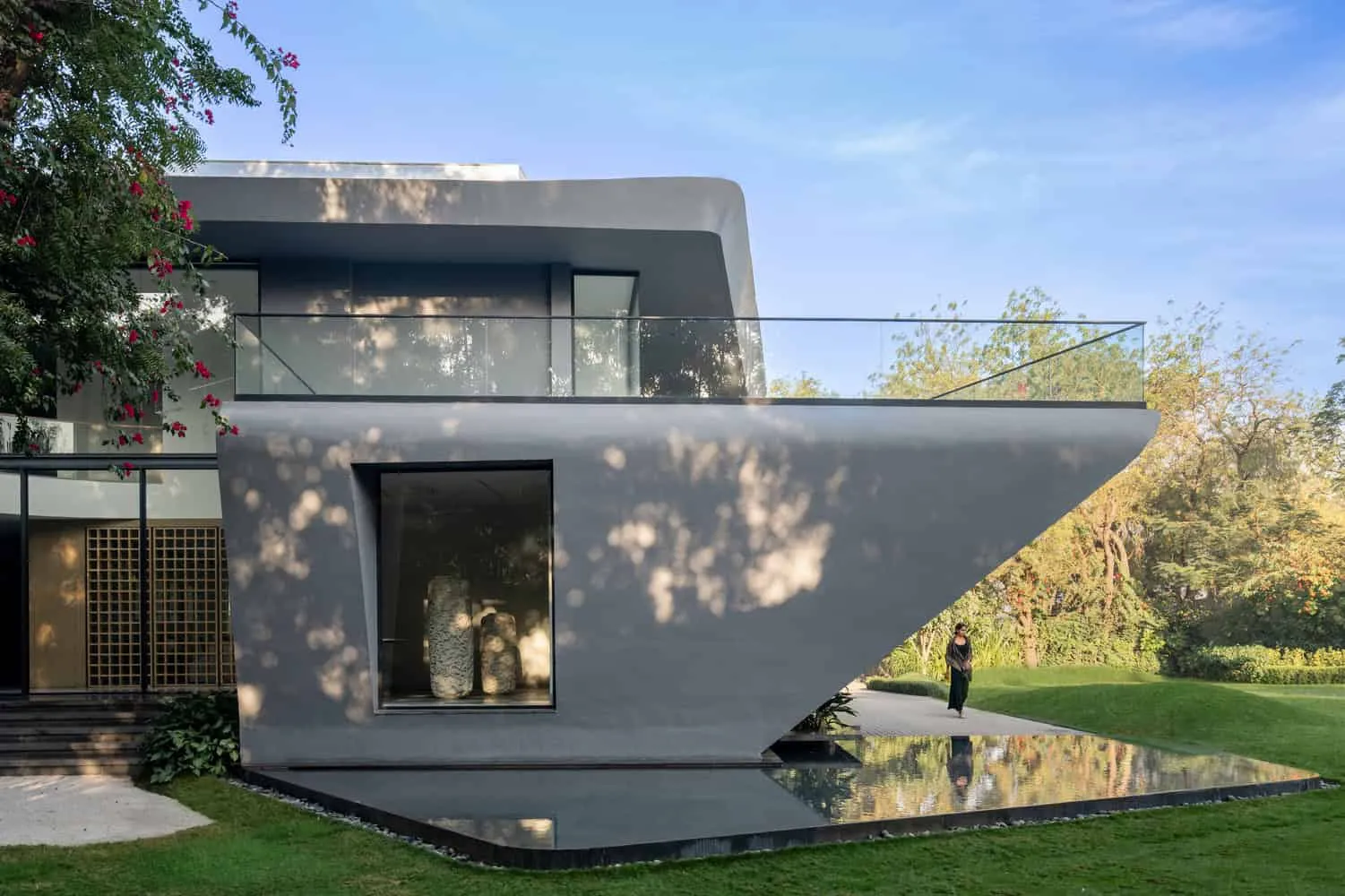
- Small reflecting pool in the northeast adds passive cooling.
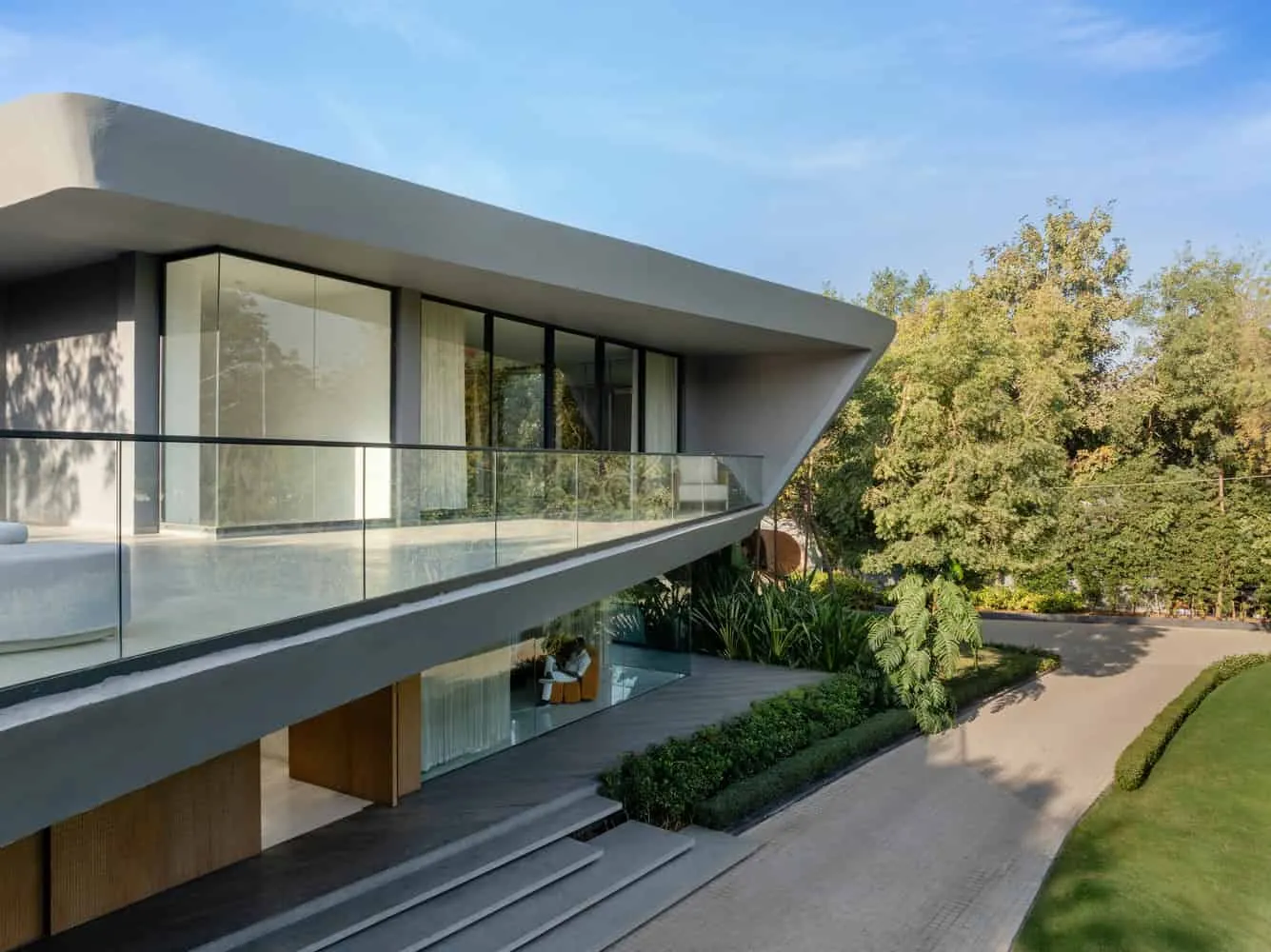
- Deep canopy terraces, framing relaxation areas, offer shaded intermediate spaces.
 Photos © Vinai Panyani, Ishita Sitvala
 Photos © Vinai Panyani, Ishita Sitvala
Passive Climate Strategy and Sustainable Development
Working in a hot, arid region (summer temperature range of 35–50°C), House NINE X NINE implements climate strategies at its core: deep overhangs prevent solar heating; the lowered courtyard and water features reduce air temperature; cross-ventilation and stack effects are encouraged; rooms open onto partially shaded terraces; the project aims to minimize air conditioning use, applying passive cooling, water reuse, and rainwater harvesting.
 Photos © Vinai Panyani, Ishita Sitvala
 Photos © Vinai Panyani, Ishita Sitvala
 Photos © Vinai Panyani, Ishita Sitvala
Material Color Palette and Interior Style
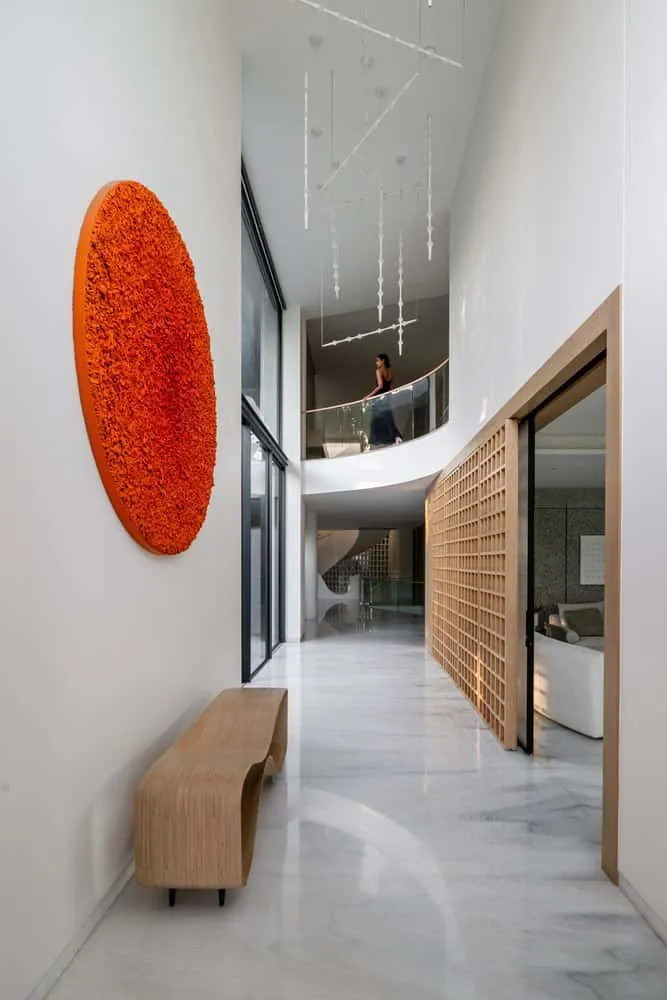
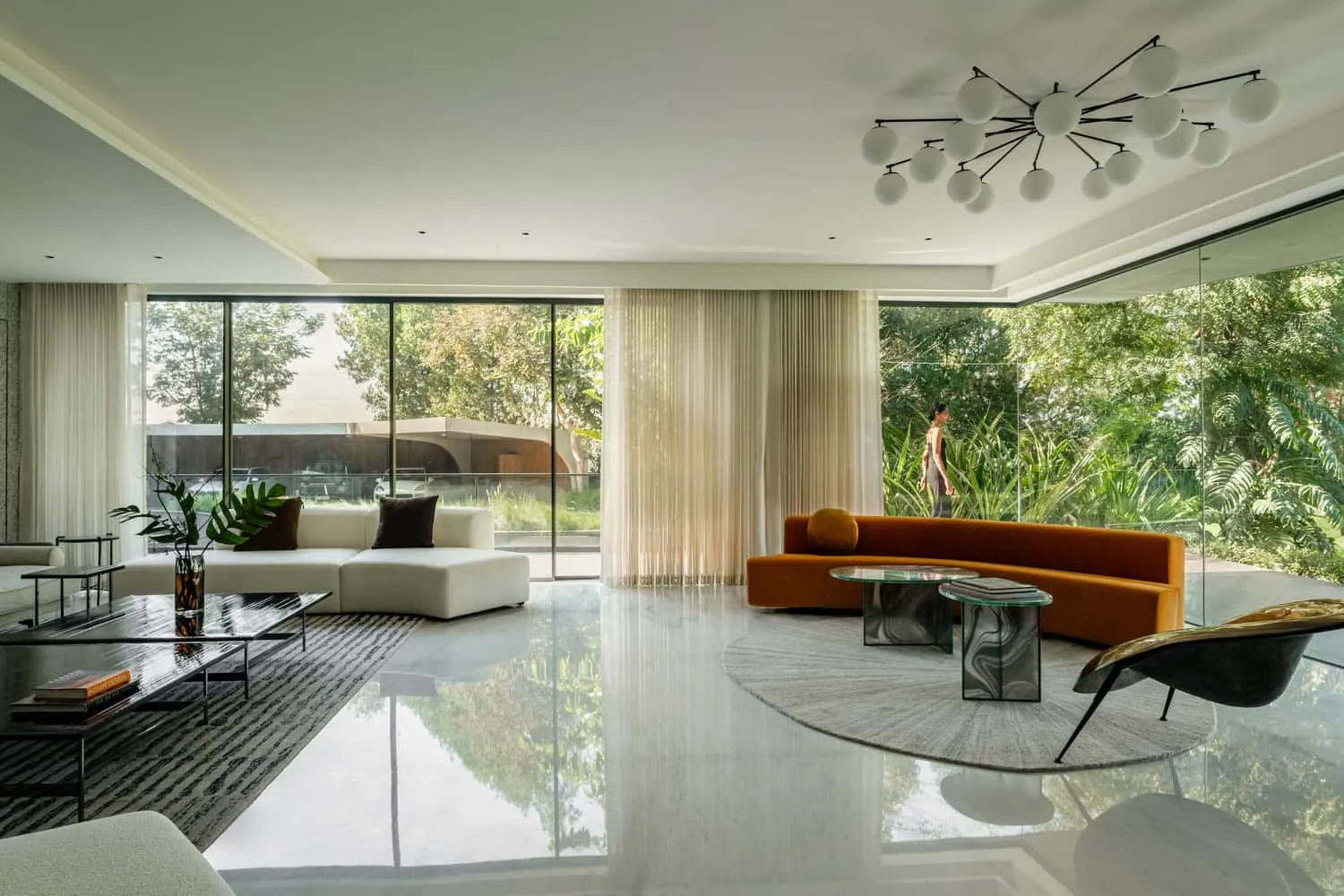
The interior palette remains minimalist yet refined, keeping context and structure in focus: white marble flooring refreshes light; wooden furniture and finishes add organic warmth; muted accents preserve calmness; structural surfaces are treated to show texture and lighting effects.
 Photos © Vinai Panyani, Ishita Sitvala
 Photos © Vinai Panyani, Ishita Sitvala
 Photos © Vinai Panyani, Ishita Sitvala
 Photos © Vinai Panyani, Ishita Sitvala
 Photos © Vinai Panyani, Ishita Sitvala
Spatial Experience and Interiors
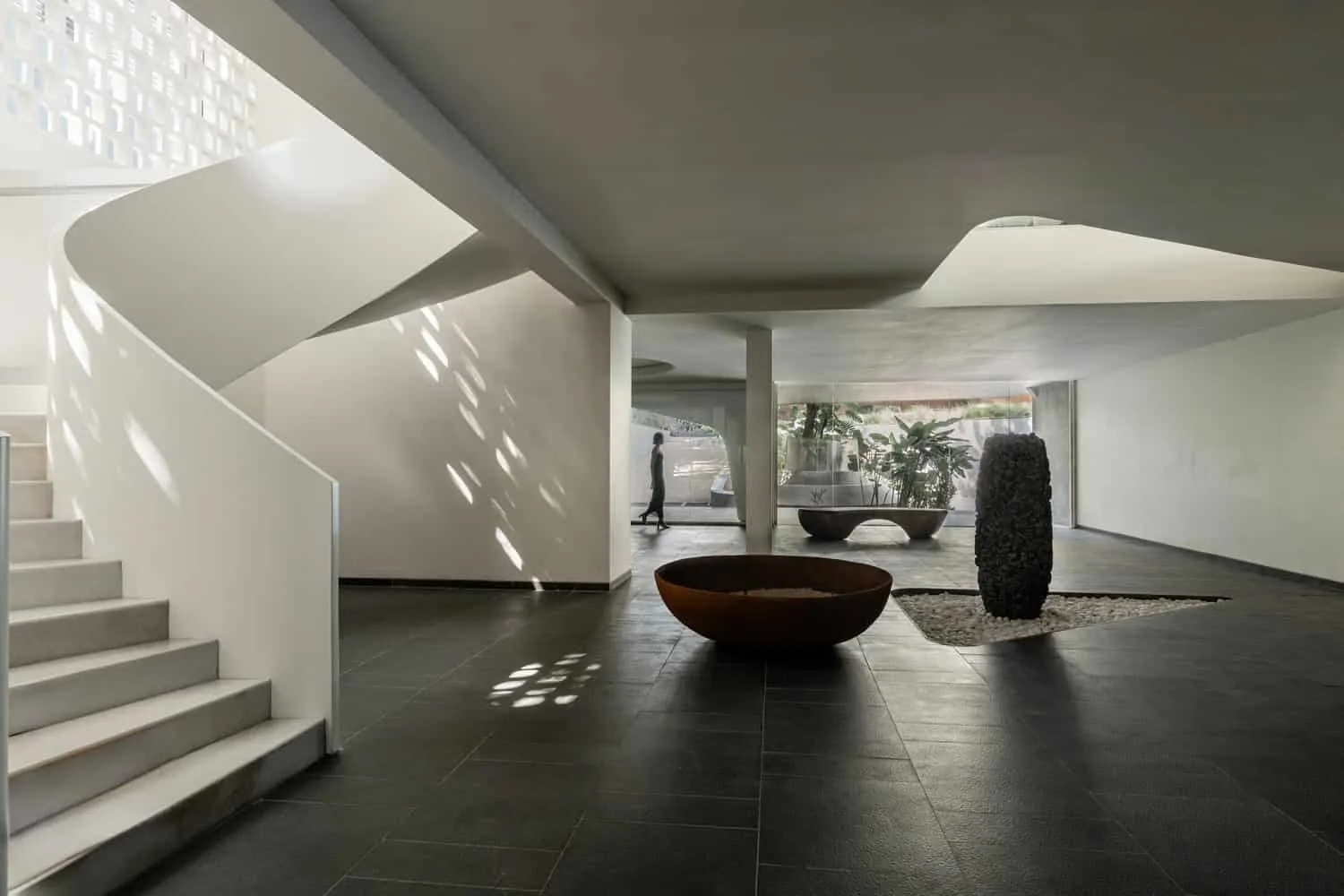
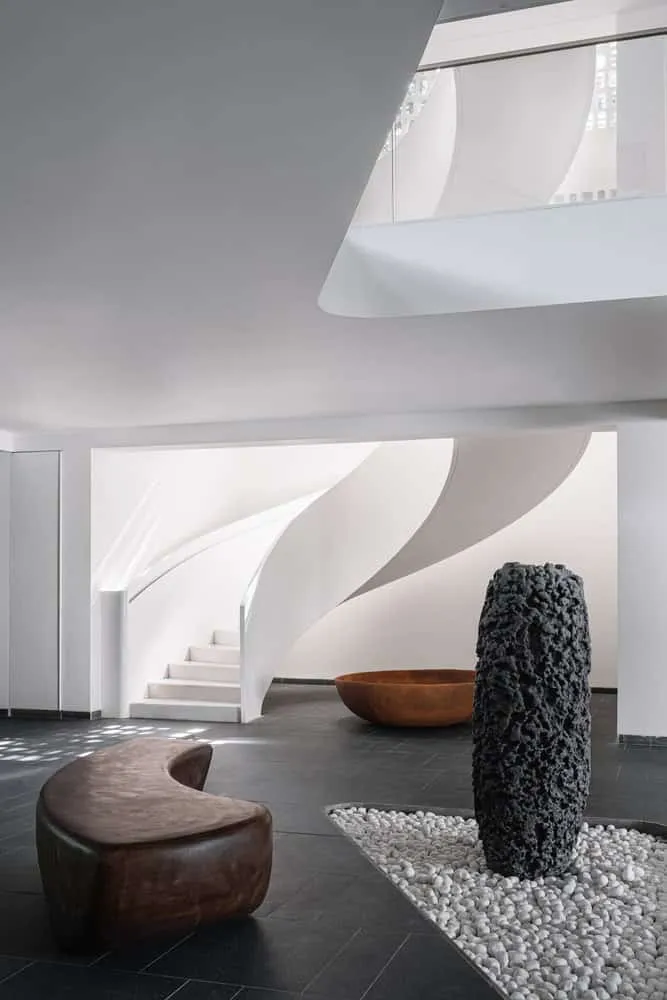
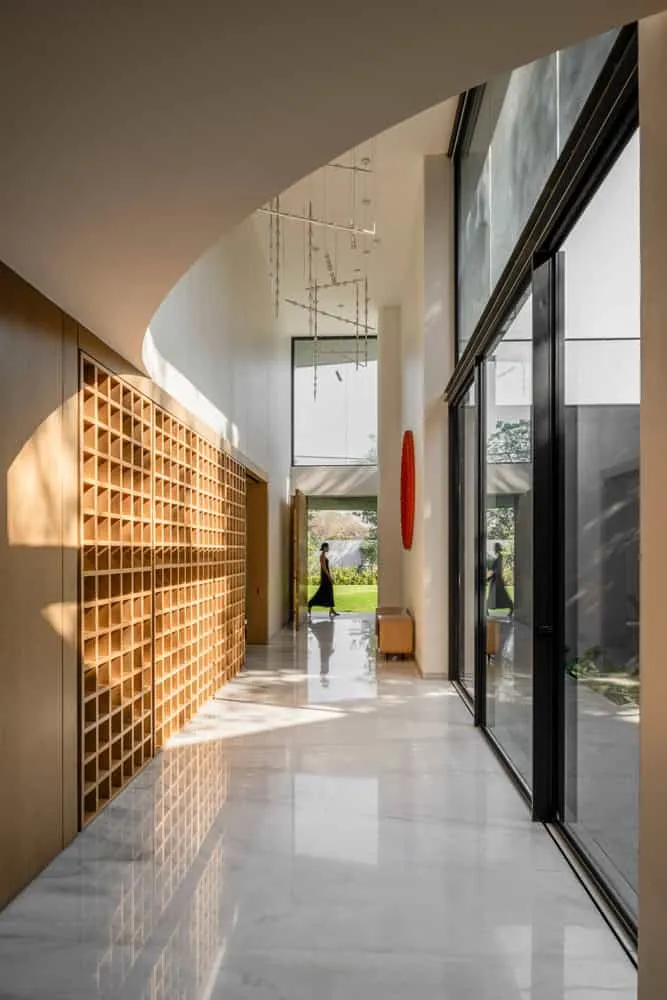
Architecture becomes a vessel: light, shadow, tree forms, and spatial flow take precedence over decorations. Two-story galleries enhance the sense of openness, while carefully crafted screens filter light and create privacy. The central spiral staircase choreographs movement and views.
 Photos © Vinai Panyani, Ishita Sitvala
 Photos © Vinai Panyani, Ishita Sitvala
 Photos © Vinai Panyani, Ishita Sitvala
 Photos © Vinai Panyani, Ishita Sitvala
 Photos © Vinai Panyani, Ishita Sitvala
 Photos © Vinai Panyani, Ishita Sitvala
 Photos © Vinai Panyani, Ishita Sitvala
Bedrooms and Private Spaces
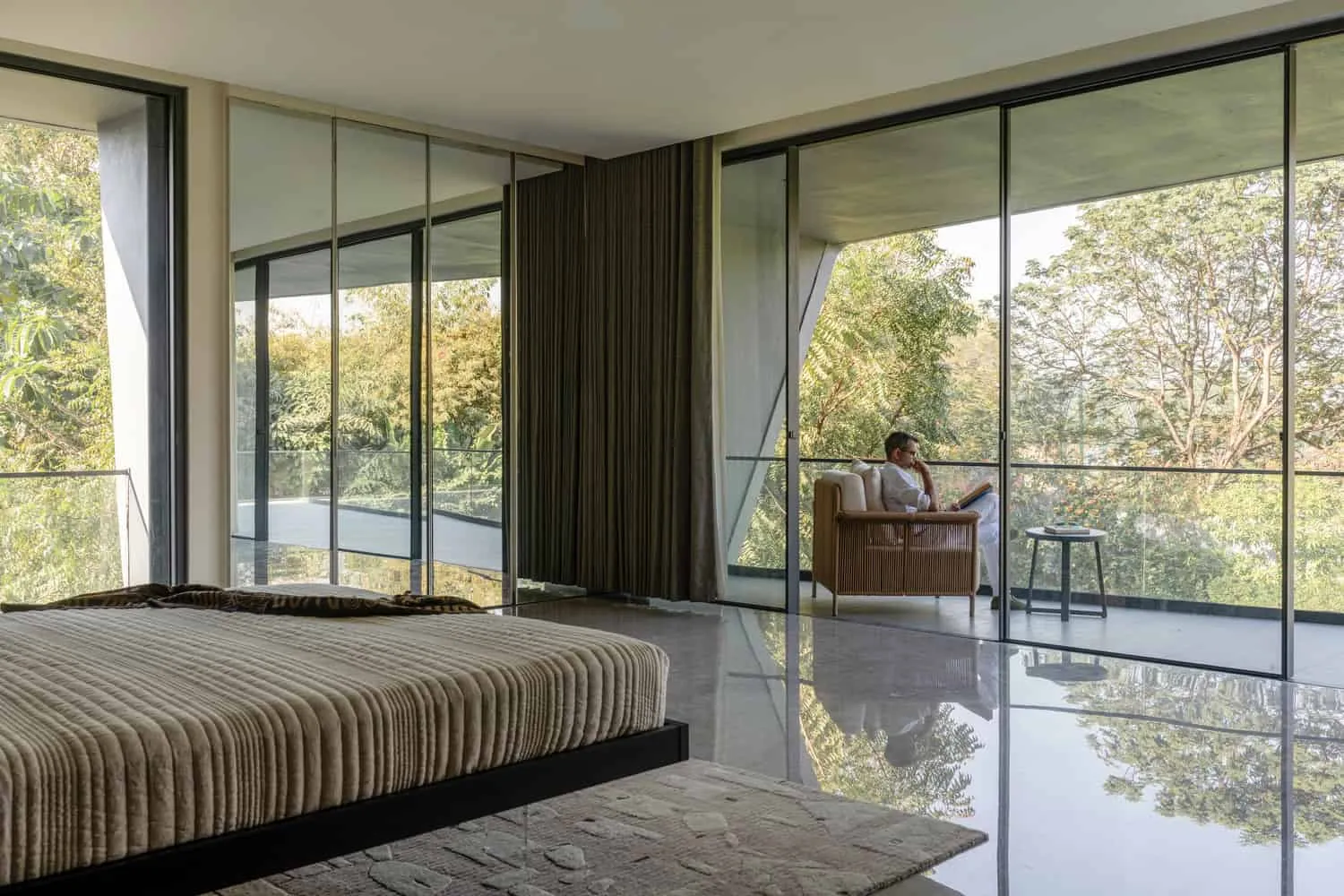
The bedrooms on the upper level open to tree canopies and private terraces. Corner glazing and minimal detailing keep focus on filtered light and garden views, enhancing the calm, nature-oriented atmosphere of the house.
 Photos © Vinai Panyani, Ishita Sitvala
Relaxation Zones and Artistic Details
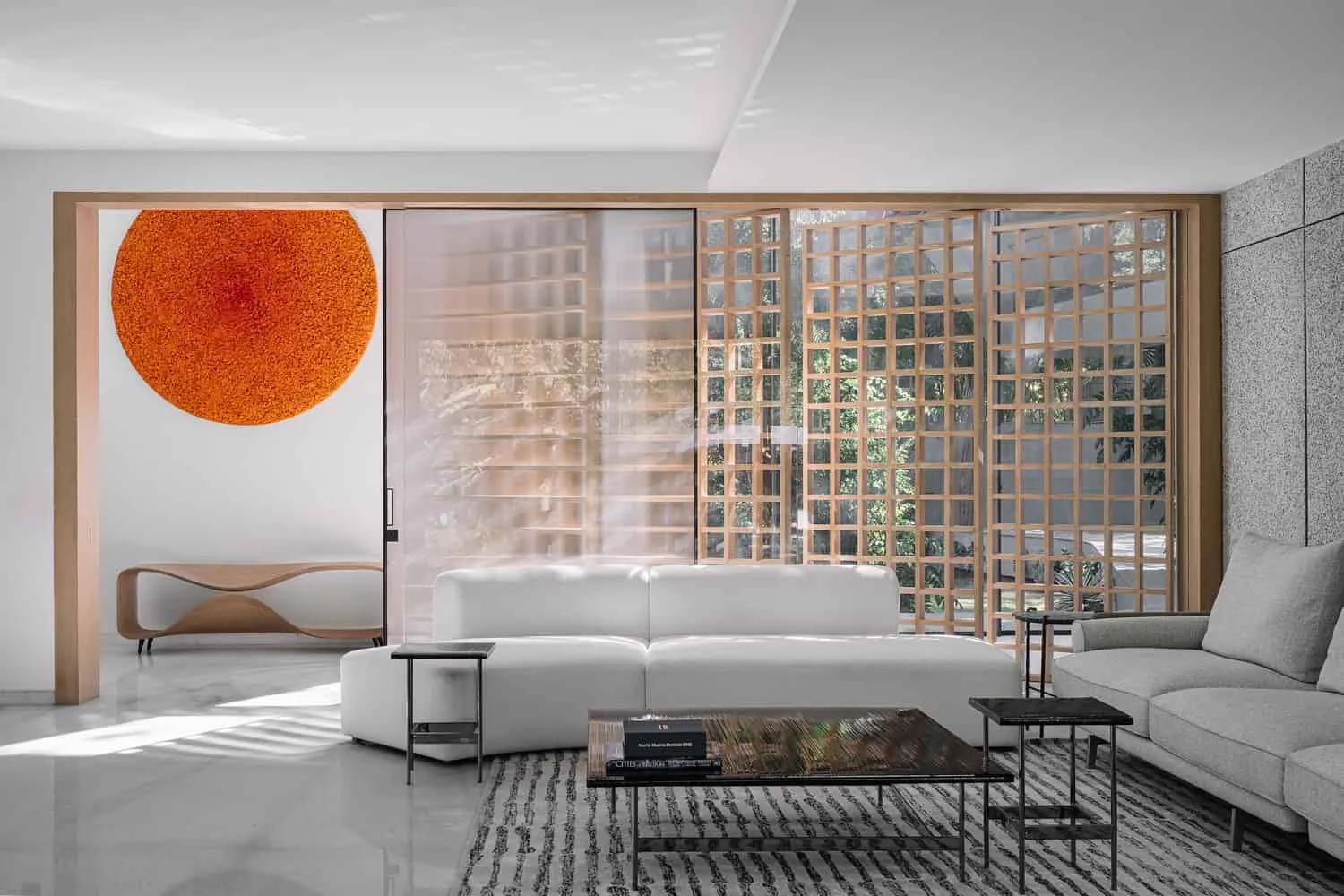
In main relaxation areas, panoramic glazing unites the interior space with the northern garden; artistic works and wooden screens add tactility and depth to the minimalist palette.
 Photos © Vinai Panyani, Ishita Sitvala
 Photos © Vinai Panyani, Ishita Sitvala
What Makes NINE X NINE Unique
- It embraces existing nature, interwoven with nine trees.
- It achieves spatial drama through folding volumes, lowered courtyard, and spiral movement.
- It is climate-sensitive, applying passive strategies and microclimates.
- It balances public and private life across vertical and horizontal levels.
House NINE X NINE / Architects Sanjay Puri / India is architecture that grows with nature, breathes climate, and lives in light. It's a house of bold gestures and quiet rhythms—a monument to integration rather than certainty.
 Photos © Vinai Panyani, Ishita Sitvala