Bedroom Makeover on a Budget
You do not need a massive renovation budget to turn an uninspired bedroom into a restful, boutique-hotel retreat. While major interior projects like whole-home renovations or extensive remodeling projects require significant capital, bedrooms respond remarkably well to cosmetic updates and clever spatial adjustments. With the right combination of paint, updated textiles, layered lighting, and strategic furniture placement, you can dramatically elevate your bedroom without overspending.
This comprehensive guide walks you through realistic, designer-approved bedroom makeover ideas on a budget. You will discover how to plan your layout at zero cost, implement inexpensive bedroom decor tricks, tackle simple DIY updates, and choose where to spend versus where to save for maximum visual impact.
Quick Makeover Guide
- Center your bed along an open wall with at least 24 to 30 inches of walking clearance to establish an intentional layout for free.
- Refresh tired walls with low-sheen paint in soft neutrals or try half-wall color blocking for inexpensive architectural depth.
- Build a simple upholstered or slatted wood headboard and layer your bedding with an upsized duvet insert to mimic luxury hotels.
- Swap harsh overhead fixtures for warm 2700K LED bulbs and plug-in bedside sconces to create inviting, multi-level ambiance.
- Invest in items you touch directly like sheets and pillows, while saving on cabinet pulls, wall decor, and thrifted accent mirrors.
Bedroom Makeover on a Budget: Designer Ideas for an Affordable Refresh
Start with Zero-Cost Foundations: Layout, Decluttering, and Cable Management
Establish your bed as the primary focal point with at least 24 to 30 inches of walking clearance, and eliminate visual clutter before spending money on decor.
Before spending a single dollar on new decor, evaluate the current arrangement and physical clutter in the room. A thoughtful furniture rearrangement can completely transform how space, light, and movement flow through your sanctuary.
Begin by establishing your focal point, which should almost always be the bed. Center the bed along the most prominent unbroken wall, preferably facing the entryway or positioned opposite natural light without blocking window frames. Ensure there is at least 24 to 30 inches of walking clearance around the perimeter of the bed so the room feels open rather than cramped. Moving a bed away from an awkward corner instantly gives the space a more intentional, high-end architectural layout.
Next, tackle the visual noise that silently ruins bedroom aesthetics. Tangled charging cords, messy nightstand surfaces, and laundry hampers undermine even the most beautiful furnishings.
- Use adhesive cord clips or slim cable raceways along baseboards and nightstand legs to hide lamp wires and phone chargers.
- Clear nightstand tabletops down to three essential items: a light source, a functional tray or book, and a single decorative object.
- Relocate bulky storage bins or oversized dressers that crowd natural walkways to restore open sightlines across the room.
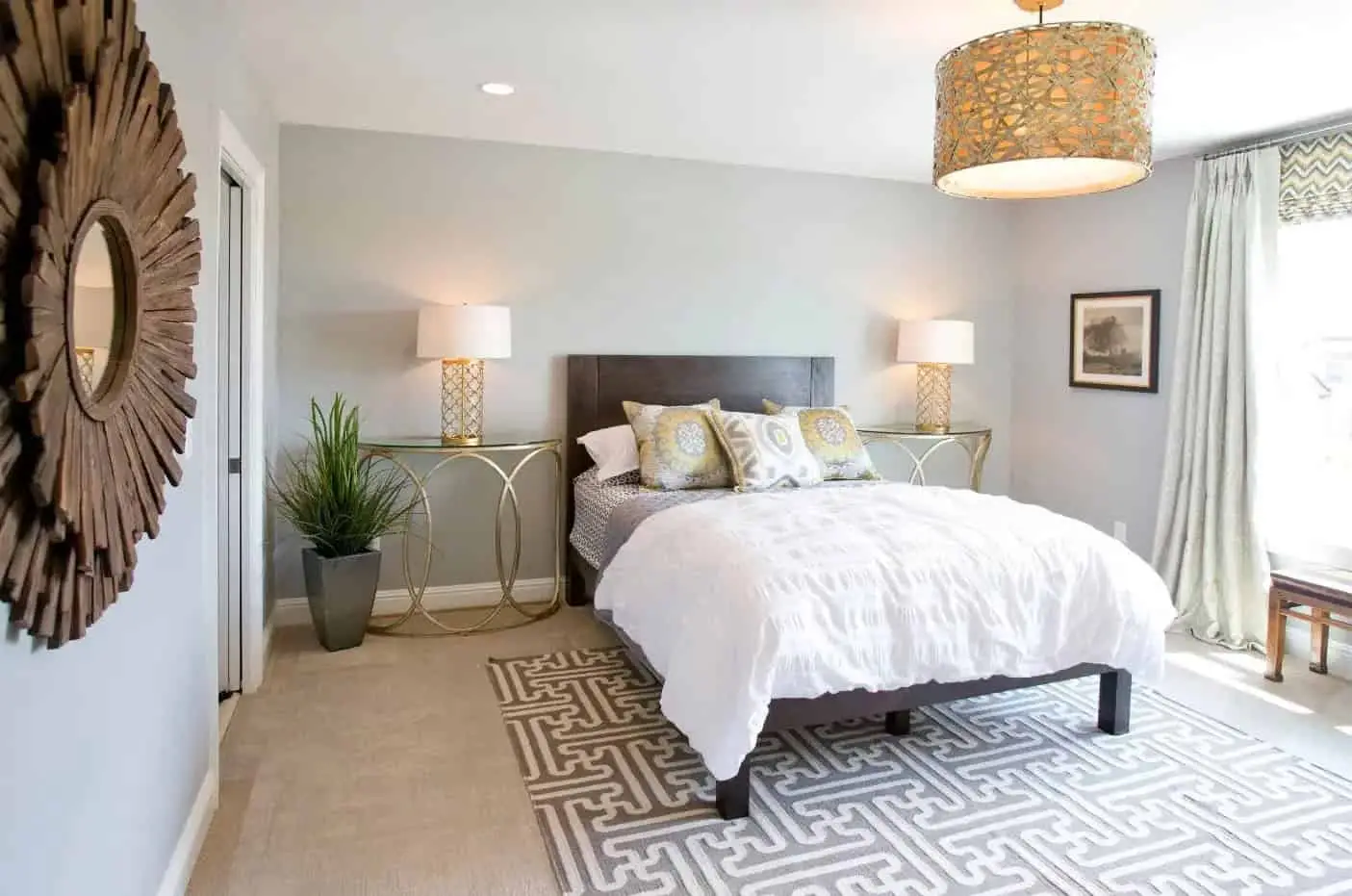
Establish a Cohesive Color Palette with Paint and Accent Walls
Repainting your walls remains the single most cost-effective technique to revive a tired bedroom. A standard gallon of paint costs very little compared to new furniture, yet it covers substantial surface area and alters the entire mood of the interior.
For bedrooms, opt for eggshell, satin, or matte sheens that absorb harsh glare and produce a serene, velvety backdrop. If you want a serene, expansive look, lean toward muted neutrals like warm alabaster, soft greige, or pale sage. If you prefer a cozy, cocooning atmosphere, consider color drenching: painting your walls, baseboards, and interior doors in a single deep shade like moody slate, forest green, or rich navy.
Renters or DIYers on a strict timeline can focus on targeted accent treatments instead of repainting the entire room:
- Painted architectural arches: Paint a soft arched silhouette behind your headboard or vanity table to create architectural depth without permanent structural changes.
- Half-wall paint blocking: Paint the lower 40 percent of the wall a darker tone and keep the top neutral to simulate classic chair-rail proportions and ground low furniture.
- Peel-and-stick wallpaper: Apply a single accent wall of removable wallpaper behind the bed to introduce sophisticated grasscloth textures or subtle geometric patterns without risking lease deposits.
Upgrade the Bed: DIY Headboards and Hotel-Quality Bedding
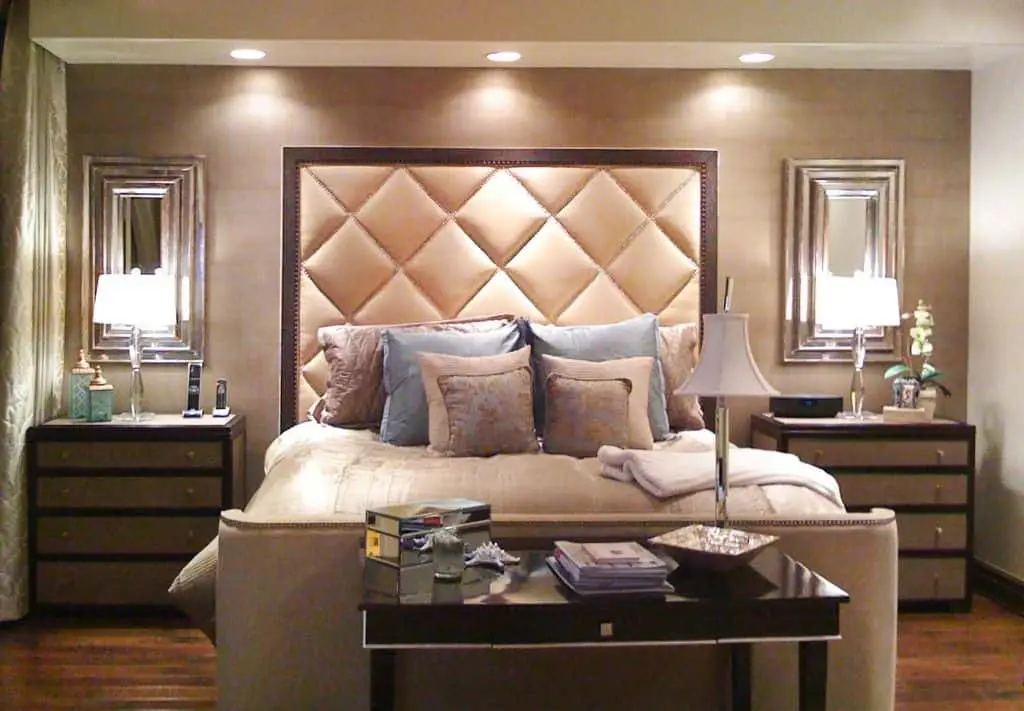
Elevate the room by building an affordable DIY headboard and upsizing your duvet insert inside your duvet cover for an instant boutique-hotel look.
Because the bed dominates the room visually, elevating its presentation provides the highest return on investment in any budget bedroom makeover. A well-dressed bed instantly makes an inexpensive room look curated and luxurious.
If you lack a headboard, you do not need to purchase an expensive designer bed frame. Headboards come in different shapes and sizes and can be customized to fit your bed, whether it is a regular frame or a sleeker adjustable bed base. High-impact, low-cost headboard ideas include:
- Wrapping a simple sheet of plywood with foam padding and inexpensive linen or velvet fabric, secured with a staple gun along the back.
- Mounting horizontal unfinished pine or fluted wood molding to create a custom slatted headboard that spans the width of the bed.
- Creating a faux headboard using wallpaper, painted stencils, or hanging a vintage textile from a slim brass curtain rod.
Once your headboard is resolved, revamp your bedding using the classic boutique hotel formula. Rather than buying expensive matching sets in synthetic bags, build tactile interest by layering affordable separate pieces. Start with clean, breathable cotton percale or washed microfiber sheets in crisp white or oatmeal. Add a fluffy duvet insert (size up to a king-size insert for a queen duvet cover to get that plump, tailored look). Fold a waffle-weave blanket or quilt horizontally across the bottom third of the bed, and finish with two standard pillows, two oversized Euro shams, and a single textured lumbar pillow.
Update Your Lighting Scheme for Warmth and Ambience
Relying on a single bright ceiling fixture, affectionately called the “big light,” washes out textures and makes any bedroom feel cold and flat. To achieve an inviting atmosphere, design a multi-layered lighting plan that distributes illumination at varying heights throughout the room.
Every successful bedroom lighting scheme combines three specific layers:
- Ambient lighting: Soft background illumination from a dimmable ceiling fixture, paper lantern pendant, or recessed cove.
- Task lighting: Focused, directional light for reading or working, such as adjustable bedside table lamps or wall sconces.
- Accent lighting: Low-wattage mood lighting placed near art, plants, or mirrors to highlight textures and add depth in the corners.
You can upgrade your lighting without hiring an electrician. Swap cold, blue-toned bulbs for warm 2700K LED bulbs, which cast an immediate flattering amber glow. Install plug-in wall sconces with cord covers on both sides of the headboard to clear valuable surface space on your nightstands. If your bedside tables lack electrical outlets, install wireless rechargeable LED puck lights or magnetic wall lights inside modern sconce shades for a clean, cordless aesthetic.
Refresh Tired Furniture with Hardware Upgrades and Paint
Replacing bedroom furniture suites is one of the biggest expenses homeowners face, yet old nightstands and dressers can often be saved with simple surface upgrades. Updating cabinet knobs and drawer pulls is one of the easiest cheap bedroom updates with dramatic visual payoff.
Swap dated plastic or generic silver knobs for heavy brushed brass, matte black, fluted ceramic, or leather pulls. Hardware is readily available at discount home stores, thrift shops, and online retailers for just a few dollars a piece. Always measure the distance between existing screw holes (center-to-center measurement) before ordering pulls to ensure you do not have to drill new holes or patch old ones.
If you have laminate or dark wood furniture that feels outdated, consider painting it. Lightly scuff-sand the surface with 120-grit sandpaper, apply an adhesion-promoting bonding primer (such as a shellac-based primer), and roll on two coats of high-durability cabinet enamel. Painting an old dresser in deep charcoal, warm olive, or creamy beige transforms flat, generic case goods into bespoke, modern furnishings.
Optimize Light and Space with Mirrors and Area Rugs
Small bedrooms, or rooms that lack substantial windows, often suffer from low light levels and visual heaviness. Thoughtful placement of mirrors and appropriately scaled area rugs will alter how large and balanced the room feels.
Mirrors will make any room look brighter and larger by reflecting light all around the room. Hang a large framed mirror directly opposite or adjacent to your largest window to catch incoming sunlight and bounce it deep into darker corners. In tight spaces where you lack floor room for a leaning mirror, mount a full-length mirror onto the back of your bedroom door or above a low dresser to amplify daylight and create the illusion of expanded square footage.
Flooring is another area where scale matters enormously. Even in a bedroom with wall-to-wall carpeting, layering a flat-weave or low-pile accent rug anchors the space and defines the sleeping zone. When selecting an accent rug, avoid the common mistake of choosing one that is too small:
- For Queen Beds: An 8×10 foot rug is ideal, placed perpendicular to the bed and pulled roughly two-thirds under the mattress, leaving 18 to 24 inches of soft rug on either side.
- For King Beds: A 9×12 foot rug offers proper proportions, extending past the sides and base of the frame.
- Budget Alternative: If a large area rug stretches your budget, place two matching 2.5×6 foot runner rugs along both sides of the bed to introduce pattern and soft footing at a fraction of the cost.
Introduce Organic Vitality with Houseplants and Accent Seating
Every polished interior requires natural, organic elements to balance geometric furniture lines and flat drywall. Houseplants introduce movement, fresh silhouette profiles, and rich color that artificial decor cannot replicate.
Select resilient, low-maintenance indoor plants that thrive in moderate bedroom lighting, such as pothos, spider plants, ZZ plants, or snake plants. While popular design claims once suggested that potted houseplants purify indoor air, scientific evaluations by environmental engineering researchers and the American Lung Association confirm that plants do not meaningfully clean or filter indoor air in residential settings. Instead, their true design value lies in biophilic comfort, natural texture, and lively contrast. Place trailing pothos on a high bookshelf, display a structural snake plant in a decorative ceramic planter on the floor, or hang spider plants in macrame hangers near window trim.
To give the room that finished, high-end hotel appearance, finish the perimeter with intentional accent seating. Placing an upholstered storage bench, a pair of matching ottomans, or a compact vintage armchair at the foot of your bed accomplishes two tasks: it establishes an elegant transitional boundary between the bed and the rest of the room, and it provides functional seating for putting on shoes or storing extra throw blankets.
Budget Breakdown: Where to Splurge vs. Where to Save
Direct your budget toward tactile essentials like sheets and mattress comfort, and save significantly on hardware, headboards, and thrifted mirrors.
When executing a budget bedroom makeover, successful design comes down to resource allocation. Spending your money on the items you touch daily and saving on purely visual elements yields the most comfortable, durable results.
| Bedroom Element | Strategy | Design Rationale |
|---|---|---|
| Mattress & Bed Sheets | Splurge | Tactile items directly impact sleep quality, skin comfort, and health; prioritize high-quality cotton or linen sheets over cheap synthetics. |
| Lighting Bulbs & Sconces | Save | Affordable plug-in sconces and warm 2700K LED bulbs produce the exact same ambiance as high-end custom electric fixtures. |
| Drawer Pulls & Knobs | Save | Budget hardware from discount retailers provides identical visual impact to luxury designer metalwork. |
| Headboard | Save | DIY upholstered panels, painted arches, and slatted wood alternatives offer high-end style for a tiny fraction of retailer prices. |
| Pillows & Duvet Insert | Splurge | Plump, durable feather or microfiber inserts maintain hotel-level loft and structure far longer than budget flat polyfills. |
| Wall Decor & Mirrors | Save | Thrift stores, vintage markets, and printable wall art framed in inexpensive frames look sophisticated without expensive gallery pricing. |
Step-by-Step Weekend Makeover Checklist
Transforming your bedroom does not have to turn into an open-ended project that drags on for months. By breaking your makeover into sequential, achievable tasks, you can complete the entire transformation over a single weekend.
- Friday Evening: Clean Slate and Layout: Clear surfaces completely, declutter drawers, bundle all electronic cables, and shift your bed and nightstands into their new positions.
- Saturday Morning: Painting and Wall Treatments: Tape off baseboards, roll your fresh paint color or accent wall, and install peel-and-stick wallpaper while daylight is strongest.
- Saturday Afternoon: Furniture and Hardware: Clean, sand, or prime any nightstand surfaces you plan to paint, and screw in your new decorative drawer pulls and knobs.
- Sunday Morning: Lighting and Mirrors: Mount plug-in wall sconces, hang your accent mirror opposite the window, and replace overhead light bulbs with warm, low-glare options.
- Sunday Afternoon: Textiles and Styling: Roll out your area rug, make the bed using the layered duvet and sham formula, position potted greenery, and place your end-of-bed seating.
Creating a Restful Space on Your Own Terms
A successful bedroom makeover on a budget is not about replicating expensive showroom trends piece by piece. It is about understanding the fundamental elements of interior architecture: balance, light, texture, and scale. By combining free layout adjustments with strategic paint choices, elevated bedding, and warm layered lighting, you can create a quiet, luxurious personal space that looks thoughtfully curated and supports restful living every day.