Modern Interior Design Tips For Your Home
Creating a sleek modern home often sounds simpler than it actually is. Many people assume modern design is merely about stripping away ornament, buying low-profile furniture, and painting every wall white, only to end up with a room that feels sterile, echoing, and uninviting. True modern interior design balances crisp architectural lines and generous negative space with tactile warmth, balanced proportions, and effortless day-to-day functionality.
Whether you are moving into a new build, redesigning an apartment, or gradually refreshing tired rooms, achieving a polished modern aesthetic requires an intentional plan. In this guide, we break down foundational styling rules, smart material selections, layered lighting, and furniture arrangements that help you build a stylish, cohesive home that still feels comfortable and lived in.
Key Design Takeaways
- Modern design emphasizes functional mid-century structural forms, whereas contemporary design reflects ever-evolving current trends.
- Use the 60-30-10 rule with earthy, warm minimalist neutrals to create depth without visual chaos.
- Maintain at least 30 to 36 inches of clear walkway space around modular furniture to protect natural room flow.
- Ground busy public areas with resilient wood-tone laminate flooring arranged in classic patterns like herringbone.
- Soften hard architectural edges in private zones using durable polyester velvet upholstery and sleek built-in sliding wardrobes.
- Replace harsh overhead grids with three layers of lighting calibrated to warm-white bulbs between 2700K and 3000K.
Essential Modern Interior Design Tips for a Warm, Functional Home
Modern vs Contemporary Interior Design: Understanding the Foundation
Before buying furniture or picking paint swatches, it helps to understand what modern style actually represents. People frequently use the terms “modern” and “contemporary” interchangeably, but in the architectural and design worlds, they refer to two distinct concepts.
Modern design refers to a specific design movement born in the early to mid-twentieth century, rooted in German Bauhaus principles, Scandinavian functionalism, and Mid-Century Modern architecture. It focuses on clean horizontal lines, honest construction materials such as steel, glass, and molded plywood, and the guiding philosophy that form follows function. In contrast, contemporary design does not belong to a single era; it simply reflects what is popular right now. Contemporary spaces often feature fluid curves, cutting-edge materials, and eclectic stylistic mixtures that shift from decade to decade.
When we apply modern interior design tips today, we often blend classic mid-century structural discipline with contemporary comfort. Understanding this distinction prevents you from creating a disjointed look. You can anchor a space with timeless modern silhouettes while introducing contemporary textures that keep the overall atmosphere fresh and adaptable.
Mastering the Modern Interior Design Color Palette
Anchor your color scheme using the 60-30-10 ratio with warm neutrals and organic textures to prevent minimalist rooms from feeling stark.
Color sets the emotional tone of any interior, and modern homes rely on a disciplined palette to establish visual order. Rather than chaotic patterns or high-contrast clashes, modern color palettes lean heavily on sophisticated neutrals that let room architecture and textural contrasts take center stage.
The 60-30-10 Rule for Balanced Tones
To avoid visual clutter while ensuring your rooms do not feel monotonous, we recommend following the classic 60-30-10 interior decorating rule:
- 60% Dominant Base: This covers your largest visual surfaces, primarily your walls, large-format area rugs, and primary architectural finishes. Soft off-whites, warm greys, taupes, or muted beiges provide a calm, unifying backdrop.
- 30% Secondary Color: This shade provides depth and contrast through large upholstery, cabinetry, drapery, and accent walls. Deeper charcoal, rich caramel leather, warm wood tones, or soft clay work beautifully here.
- 10% Accent Color: This is where you introduce deliberate personality through throw pillows, ceramic objects, lighting hardware, or artwork. Consider deep ochre, forest green, burnt terracotta, or matte black metal accents.
Applying the 60-30-10 rule gives your home an intentional rhythm that prevents neutral schemes from looking flat or unfinished. When your primary surfaces remain quiet and cohesive, individual statement pieces stand out naturally without competing for attention.
Warm Minimalist Interior Design and Organic Accents
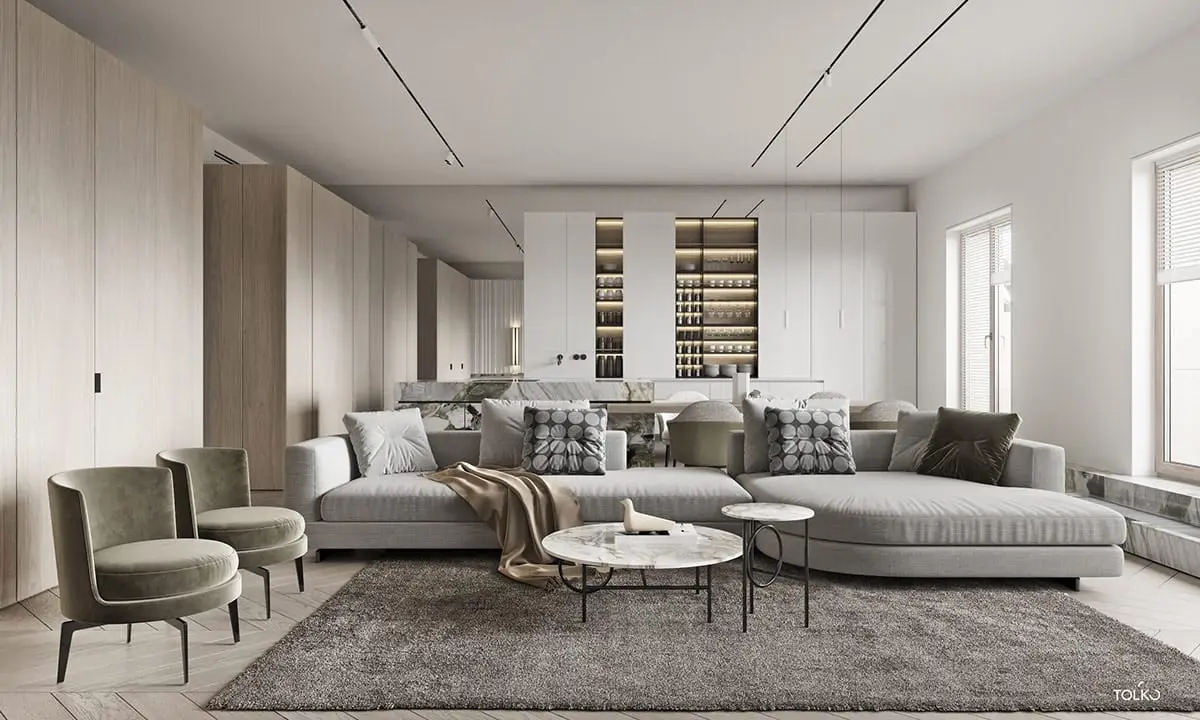
The biggest risk in modern decorating is drifting into a cold, catalog-like appearance. This is where warm minimalist interior design proves invaluable. Warm minimalism replaces stark clinical whites with earthy undertones such as chalk, oatmeal, and stone.
To warm up sleek architectural profiles, introduce natural textures and biophilic elements. Layer tactile linen curtains, nubby bouclé textiles, woven jute, and untreated or open-grain timbers. Incorporating healthy indoor greenery, such as an architectural fiddle-leaf fig or an olive tree in an unglazed ceramic pot, instantly breathes organic life into clean, geometric layouts.
Modern Living Room Styling Tips and Spatial Planning
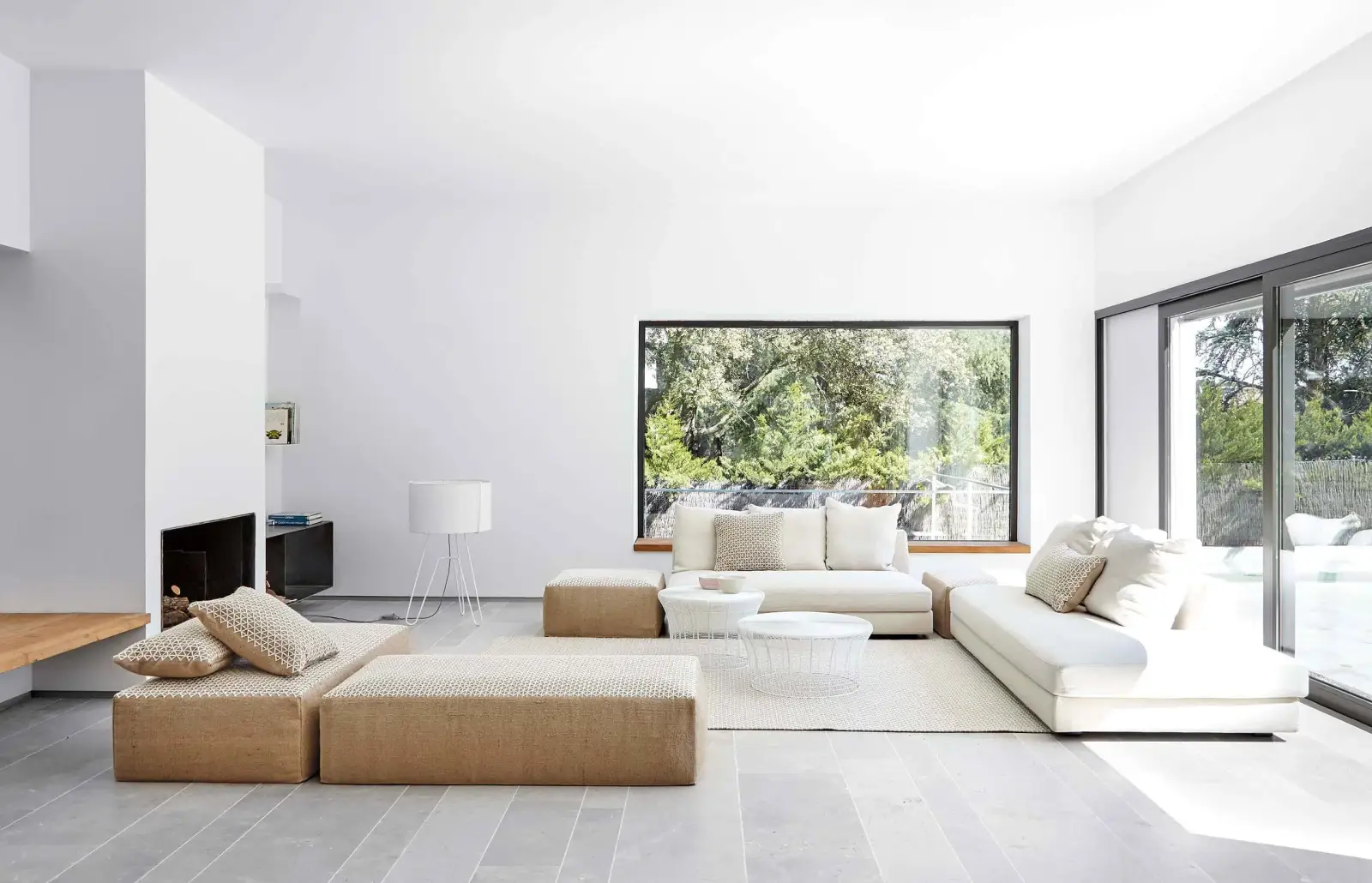
Maintain 30 to 36 inches of clear walkway clearance and choose modular seating to keep open floor plans fluid, functional, and visually balanced.
The living room is typically the central hub of social life and relaxation, making thoughtful spatial planning crucial. In modern living room styling, how you arrange empty space is just as important as the furniture you select.
Scale, Proportion, and Traffic Flow
A frequent decorating misstep is choosing pieces that fight the physical dimensions of the room. Oversized seating can choke pathways, while furniture that is too diminutive makes high ceilings feel cavernous and disconnected.
Always maintain clear primary walkways of at least 30 to 36 inches between major furniture pieces so household members can move through the room unhindered. Leave breathing room around your focal points; negative space allows the eye to rest and highlights the sculptured lines of modern furniture. When hanging wall art, position the center of the canvas roughly 57 to 60 inches from the finished floor to maintain an organic, gallery-standard eye level.
Modular Sofas for Adaptable Layouts
Seating represents the largest functional investment in your living space, and modular sofas offer unmatched versatility for modern lifestyles. Corner sectional units and modular configurations maximize floor space efficiently, especially in compact apartments where standard sofa pairs feel cramped.
Modular seating allows you to tailor your layout to room proportions and shift configurations whenever your entertaining needs change. Look for low-slung profiles with deep seats and clean seams. If you frequently host overnight guests, multi-functional modular sofa beds provide practical utility without compromising crisp aesthetics. To round out an open-plan lounge, pair your seating with a dining setup that features sleek luxury dining tables, creating a smooth visual transition between living and dining zones.
Cinema TV Cabinets and Media Consoles
Large screens dominate contemporary entertainment, but leaving cables exposed or mounting a television without adequate visual anchoring undermines a modern aesthetic. A dedicated media console grounds the room and conceals media hardware cleanly.
Entertainment storage is available in diverse materials, from tempered glass designs to wooden entertainment units crafted with durable timber frames and attractive veneers. When opting for glass media furniture, ensure the glass thickness supports your display equipment safely, taking television weight and shelf load ratings into account. If you prefer the organic warmth of wood, select premium finishes such as white oak, warm Sahara tones, or dark smoked oak, matching the wood temperature to your surrounding tables and architectural trims.
Grounding the Space with Resilient, Modern Flooring
Flooring acts as the visual canvas for your entire home. While wall-to-wall carpeting was once commonplace, it tends to trap dust, stains readily, and wears down quickly under heavy foot traffic. Modern homes favor hard-surface flooring that delivers seamless visual flow from room to room.
Laminate Flooring and Herringbone Patterns
Quality laminate flooring provides a resilient, design-forward solution that delivers the authentic warmth of natural hardwood at a practical cost. It resists scratches, withstands active family life, and requires minimal everyday maintenance beyond regular sweeping and damp mopping.
Light grey oak effect laminate flooring remains a popular selection in contemporary and modern spaces because it serves as an ultra-neutral canvas. You can effortlessly pair it with pure whites, metallic brass accents, charcoal tones, or bold primary splashes. When sourcing materials, explore suppliers like Floors Direct laminate flooring, where you will find over 300 options to choose from ranging across all budgets and styles.
If you want to add architectural sophistication to an entryway, dining space, or open living zone, consider patterned layouts such as herringbone laminate. Contemporary boards feature engineered click systems where planks join together precisely without messy adhesives. This glueless interlocking design simplifies installation, whether you are tackling a weekend renovation yourself or coordinating with an interior contractor.
Introducing Softness and Texture to Modern Bedrooms
Bedrooms demand a gentler, more cocooning ambiance than public entertaining areas. Here, modern design focuses on quiet lines, clutter-free surfaces, and rich tactile fabrics that promote deep relaxation.
Velvet Beds and Upholstered Comfort
To break up hard drywall lines and timber floors, an upholstered bed serves as an inviting centerpiece. Velvet bed frames bring rich tactile depth to modern sleeping quarters, turning the bed into a sculptural focal point.
While historically associated with delicate vintage luxury, modern velvet is remarkably practical. Many of the most durable bed frames utilize high-grade polyester velvet, which resists fading, crushing, and premature wear during daily use. This durability makes them an exceptional choice when creating a stylish and modern bedroom for adults, teenagers, or guest suites.
Caring for polyester velvet is straightforward. For routine upkeep, vacuum the fabric using a soft brush attachment. To clean spot spills, use a soft cloth dipped in warm, soapy water, gently blotting rather than scrubbing the pile. If the nap becomes flattened over time, a handheld garment steamer quickly revives its soft, even sheen.
Sliding Wardrobes and Built-In Storage
Clutter is the primary enemy of modern calm. Built-in wardrobes with sliding doors preserve clean visual planes and avoid wasting the floor clearance that traditional hinged doors require. Choose matte lacquer, fluted timber, or smoked mirror door panels to reflect soft natural light back into the room while keeping clothing, accessories, and seasonal items neatly hidden.
Layered Lighting Strategies Beyond Recessed Fixtures
Avoid flat ceiling grids by layering ambient, task, and accent fixtures fitted with dimmable, warm-white LED bulbs between 2700K and 3000K.
One of the most frequent mistakes in modern renovations is installing an unvaried grid of ceiling downlights and calling it a day. Flat overhead lighting casts harsh vertical shadows, flattens architectural textures, and creates an uninviting, clinical environment.
Ambient, Task, and Accent Lighting
A sophisticated modern interior relies on a three-tier lighting plan that you can adjust throughout the day to suit different activities:
| Lighting Layer | Primary Purpose | Ideal Fixture Types |
|---|---|---|
| Ambient Lighting | Provides general overall illumination for safety and basic visibility. | Dimmable recessed downlights, flush-mount architectural fittings, cove LED strips. |
| Task Lighting | Delivers focused, glare-free light for specific functional tasks. | Adjustable reading sconces, under-cabinet kitchen LED channels, directional desk lamps. |
| Accent Lighting | Adds drama, highlights artwork, and emphasizes architectural depth. | Sculptural pendant lights over tables or islands, picture lights, floor-grazing uplights. |
Always install dimmers on every circuit and select warm-white LED bulbs in the 2700K to 3000K range. This color temperature produces a golden, welcoming glow that highlights natural wood grains and soft upholstery while preserving the crisp integrity of your modern decor.
Glass Furnishings and Reflective Accents
Transparency is a signature tool of modern spatial design. Glass furnishings provide functional surfaces while preserving open sightlines, making rooms feel significantly larger and brighter than solid opaque furniture would allow.
From custom floating glass wall shelves to tempered glass coffee tables and console tops, glass brings a clean, luminous lightness to living areas. When choosing glass furniture, always insist on toughened safety glass with polished edges. Pair glass surfaces with matte black metal bases, brushed brass brackets, or natural stone pedestals to introduce a pleasing contrast between transparency and solid structural weight.
Bringing Modern Home Decor Ideas Together
Executing modern interior design successfully is not about following rigid minimalism or stripping your home of warmth. It is about curation, balance, and intentionality. By anchoring your home with hard-wearing floors, introducing flexible seating, balancing neutral hues with tactile organic accents, and layering your lighting, you create spaces that feel both elevated and genuinely comfortable.
Start your decorating project with one room at a time. Assess how you use the space, remove items that do not serve an aesthetic or practical purpose, and invest in foundational pieces that stand the test of time. With these principles guiding your decisions, your home will deliver enduring modern beauty for years to come.