Types of Gypsum Board. How to Choose Correctly
Gypsum board can be used in interior design for both technical purposes (leveling wall curvature, building false walls, partitions, floor covering) and decorative ones (organizing suspended ceiling systems, multi-level wall structures, decorative volumetric elements).
Gypsum Board: Types, Technical Characteristics and Prices
Gypsum board can be used in interior design for both technical purposes (leveling wall curvature, building false walls, partitions, floor covering) and decorative ones (organizing suspended ceiling systems, multi-level wall structures, decorative volumetric elements).
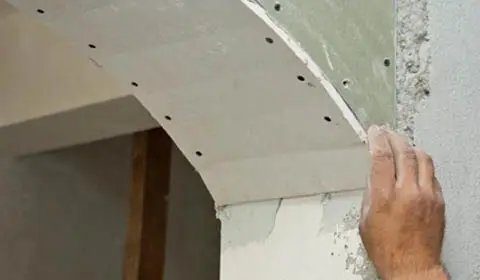
Photo 1 — Installation of a gypsum board arch is one of the easiest and most common types of work
Gypsum board itself is a fire-resistant material. The only element of gypsum board that is susceptible to flame influence is the cardboard facing of the sheet. However, due to the fact that the flammable cardboard and fire-resistant core are joined together, i.e., there is no air gap between them, the cardboard will not burn either – only the surface of this material layer may char.
IMPORTANT! Any type of gypsum board does not ignite, however, it should not be confused with regular heat-resistant gypsum board and fire-resistant GKL – a material reinforced with special additives for use in rooms with a high risk of fire. Regular gypsum board sheets will begin to deteriorate once the water contained in the gypsum (approximately 17%) fully evaporates under prolonged exposure to high temperatures. Fire-resistant gypsum board resists flame longer.
How to Choose Gypsum Board
The selection of gypsum board should be based on its intended use: each type of work in a room will correspond to a specific type of gypsum board.
Selection of the grade and size of the sheet is a secondary task.
Therefore, the criteria for choosing gypsum board should be
- the type of work you are performing;
- thickness and length of the sheet;
- weight of the sheet;
- edge type of the sheet;
- trade brand/manufacturer;
- material price.
Now let's go through everything in order.
Types of Gypsum Board According to GOST 6266-97
IMPORTANT! Each type of gypsum board according to internationally accepted standards has its own color. Pay attention to the color coding of the material when purchasing.
Standard Gypsum Board
Contains no additives, intended for use in rooms where humidity levels do not exceed 70%: suitable for work on inter-room partitions, decorative and sound-absorbing structures, suspended ceilings (a special type of gypsum board is distinguished for ceiling use). The material color is gray (less frequently – blue).
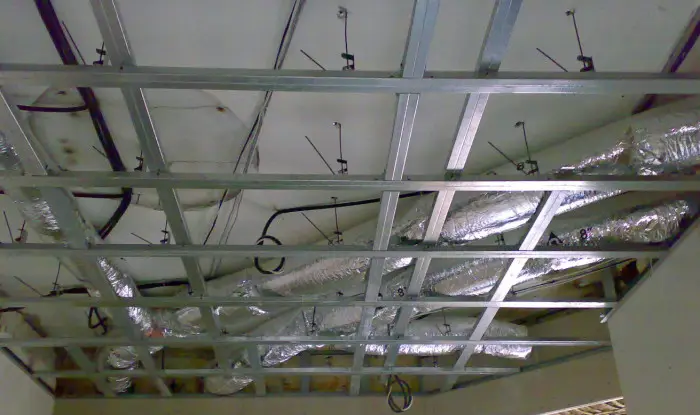
Photo 2 — A ceiling frame for mounting gypsum board can hide any type of utilities
Marking: GKL
Moisture-resistant gypsum board containing hydrophobic and fungicidal additives is suitable for use in humid environments. Water-resistant gypsum board can be used to cover walls, as well as ceilings in kitchens, bathrooms, toilets, and can also be used as a base for floors (a special type – floor gypsum board) and to cover window sills. The material color is green.
IMPORTANT! The water-repellent properties of this type of gypsum board are enhanced by a special impregnated cardboard; GKLV must be isolated from moisture in any case – for example, painted or tiled gypsum board in a humid environment will feel much better.
Marking: GKLV
IMPORTANT! Floor gypsum board is more often used in the "dry floor" technology: floor gypsum board is laid on a prepared base – a frame with filler and secured with self-tapping screws. Not every manufacturer produces this type of material. High-quality products of this kind are offered by the German company Knauf. An example of floor gypsum board under a trade brand is the extremely strong Knauf Bodenplatte boards.
Fire-resistant gypsum board contains a special reinforcing additive – glass fiber, which increases the resistance of gypsum board to fire and prevents ignition and destruction of this material under high temperatures, thus making fire-resistant gypsum board suitable for use as passive fire protection. Fire-resistant gypsum board is used in objects with strict fire safety requirements and in places with a large number of people (stadiums, shopping and entertainment centers, train stations). The color is red.
Marking: GKL
Moisture-resistant gypsum board with increased resistance to open flames. Today, only a few manufacturers produce this type of material (e.g., Knauf).
Marking: GKLVO
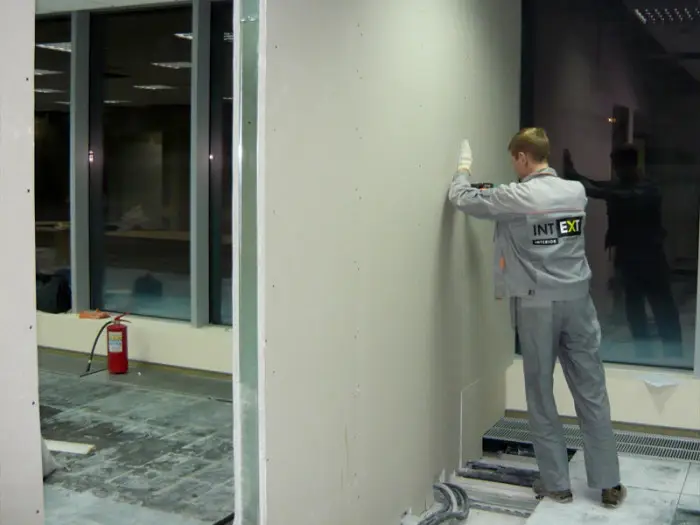
Photo 3 — A wall gypsum board can be used to make a false wall or partition of any type up to 10 meters in height
In addition to the main types of gypsum board, several variations are also distinguished. These include:
- restoration gypsum board – a thinner type of gypsum board for cladding old gypsum board structures and wood, easily bendable due to its flexibility, which makes it suitable for creating curved elements;
- laminated (vinyl) gypsum board – a regular gypsum board sheet of any type, industrially coated with a PVC film, making the sheets immediately ready for finishing works (however, such coating breathes poorly due to the film covering);
- reinforced gypsum board – gypsum board with glass fiber additives;
- perforated acoustic gypsum board – a special sound-insulating material for finishing lecture halls, cinema halls, recording studios and similar rooms requiring additional sound insulation;
- arched gypsum board – a thin-layered gypsum sheet, often no more than 6.5 mm thick, making the material quite flexible and easy to form curved elements like circular arches, curved ceiling elements, etc.;
IMPORTANT! The gypsum board also bends well with a perforated side using a special needle roller.
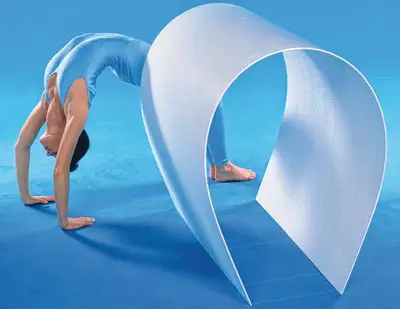
Photo 4 — Arched Gypsum Board – a material that is easy to bend
- gypsum fiber board or GVL – the same as gypsum board but without cardboard facing, the gypsum is reinforced using shredded cellulose waste and special technological additives, making GVL a stronger material than GKL (for building floor slabs and partitions it is better to use this material instead of gypsum board);
- groove-and-rib boards – the gypsum used for manufacturing this material is additionally fired, which gives the material additional strength (from these boards one can construct inter-room partitions and proceed directly to finishing work without preparation).
Sheet Size of Gypsum Board
A standard gypsum board sheet should be rectangular and have the following dimensions:
- sheet length – from 2,000 to 4,000 mm;
- sheet width – from 600 to 1,200 mm;
- sheet thickness – from 6.0 to 12.5 mm.
Each area of application has its own sheet standards: for example, thin arched gypsum board is often produced in sizes 1,200/2,500/6 mm or 1,200/3,000/6 mm. Moisture-resistant sheets usually have parameters 1,200/2,500/12.5 mm (less frequently – with a thickness of 9 mm).
Regarding sheet length, the step in size changes is 500 mm: 2,000 mm, 2,500 mm, 3,000 mm, etc. A 3-meter-long sheet is one of the most in-demand sizes, as per technical recommendations, walls should be covered with gypsum board up to full length (ceiling heights in typical apartments are 2.5–2.85 m).
The sheet width by standard is 1,200 mm. Small-format sheets of gypsum board can also be found in the market, but their production volume is significantly lower.

Photo 5 — Gypsum board cladding on a frame made of CW and UW profile – single-layer scheme for work execution and material consumption
Thickness of Gypsum Board
The thickness of gypsum board used in residential construction, as stated above, ranges from 6.5 mm to 12.5 mm. The sheet thickness varies depending on the intended purpose of the material.
For example, a minimum thickness of 6 mm is used only in arched gypsum board sheets to improve the ability to bend the sheet.
Wall gypsum board has a thickness of 12.5 mm, ceiling gypsum board – 9.5 mm (sometimes 12.5 mm with mandatory increased frequency of profile installation), moisture-resistant gypsum board and GKL-O – 12.5 mm each.
Weight of Gypsum Board
When working with the material, it is important to consider its weight: based on this, elements of the frame should be attached in a particular way, and the appropriate fastening tools should also be selected.
According to generally accepted standards:
- the weight of 1 m² of gypsum board with a thickness of 6.5 mm is approximately 5 kg;
- the weight of 1 m² of gypsum board with a thickness of 9.5 mm is approximately 7.5 kg;
- the weight of 1 m² of gypsum board with a thickness of 12.5 mm is approximately 9.5 kg.
Edge Type of the Sheet
There are several types of longitudinal edges on a sheet of gypsum board (the scheme is provided below).
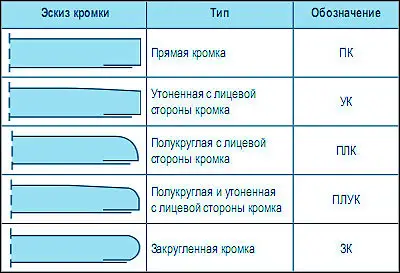
Photo 6 — Types of longitudinal edges on gypsum board
In the market, you can find gypsum board with edge types PK (VR, KR), PRO, UK (AK), PLK (HRK), KS (BA), ZK (RK), PLUK (HRAK), VARIO, KPOS (gypsum fiber boards are produced with edges PK and FK).
PK (VR, KR) – a rectangular longitudinal edge. This type of gypsum board is used for "dry" installation, i.e., the joints of sheets will not be embedded after installation. This type of edge is often used in floor boards and standard GVL sheets. Such a sheet is suitable for internal layers when performing multi-layer cladding or forming packages of gypsum board sheets when filling internal cavities of partitions (double gypsum board).
UK (Latin – AK) – a slanted longitudinal edge. These edges require spackling with reinforcing tape for surface sealing. Sealing joints of such sheets requires at least three stages – a process that is quite time-consuming.
PRO – a modified slanted longitudinal edge slightly flattened in shape (found only on sheets of gypsum board from the company Rigips). Joints are connected only with reinforcing tape.
KS (BA) – an alternative to PRO edge from companies Lafarge Gips (Lafarge Gypsum) and its Polish branch – Lafarge Nida Gips. Joints are also connected only with reinforcing tape.
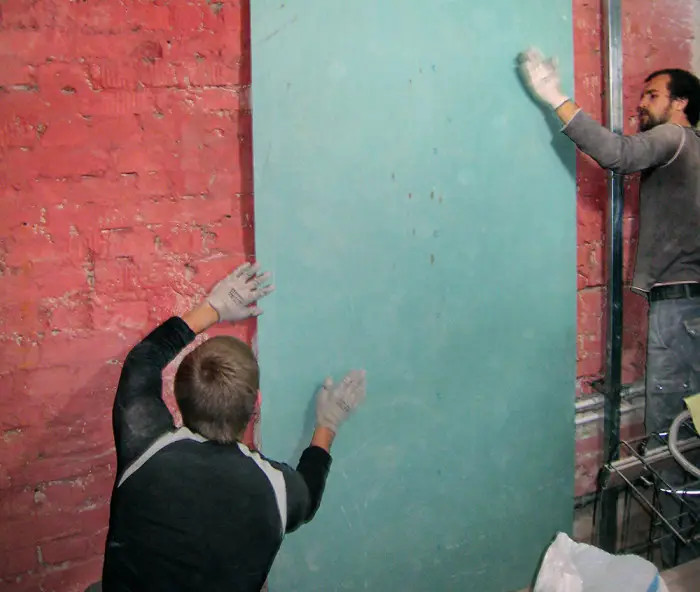
Photo 7 — Proper Installation of a Gypsum Board Sheet – laying a solid sheet throughout the wall height
3K (RK) – a slightly rounded longitudinal edge. This type of gypsum board joint can be spackled without additional adhesion of reinforcing tape.
PLK (HRK) – a semicircular longitudinal edge. Reduces the labor intensity of the joint sealing process. For this type of sheet, using reinforcing tape is also not necessary. Sealing joints with high-strength spackle is done in two layers.
PLUK (HRAK) – a semicircular slightly slanted edge (alternative to HRK edge). For sealing joints, the sheet is glued with reinforcing tape and spackled. This type of edge allows using the joint sealing technology for AK edges, as well as filling joints according to HRK edge technology. The versatility of this type of gypsum board largely determines its success in the construction and finishing materials market.
VARIO – one of the variants of a semicircular slanted edge flattened shape, produced only on sheets of gypsum board from Rigips. Sheets can be joined with spackling mass with or without reinforcing tape.
FK – a ribbed longitudinal edge. This type of edge is mainly found only on fiber gypsum boards. Reinforcement of FK edges for plastering is done with paper tape (serpentine).
In home repairs, sheets of gypsum board with slanted edges on the front side are most commonly used – these are types UK and STUK.
IMPORTANT! When cutting sheets, a cut edge inevitably appears, and on the cut edge there is no protective cardboard layer. Therefore, before processing the joints of such sheets, a bevel is made on the cut edge with a rasp or knife for gypsum board. Then spackling mass is used, gluing the joint with reinforcing tape.
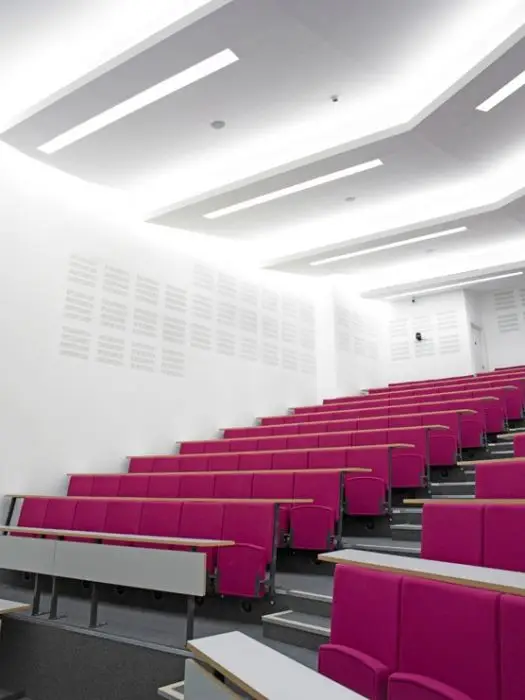
Photo 8 — Example of Using Acoustic Gypsum Board
Trade Brand and Manufacturer
By the combination of price and quality, the German company Knauf remains an unbeatable leader, holding up to 70% of the gypsum board and accessories market.
Among foreign manufacturers, one can also highlight the French company Compagnie de Saint-Gobain SA (which owns the trade brands Rigips (Rigips), Giproc (Giproc) and Nida Gips (Nida Gypsum) and the Scandinavian manufacturer GYPROC (Giproc), the Polish brand NORGIPS and the Belarusian one – Belgips.
Gypsum board VOlMA, produced by the Volgograd Gypsum Plant OJSC «Gips» is slightly cheaper but does not lag behind the market leader in technical characteristics.
Among domestic manufacturers, one can also highlight OJSC «Sverdlovsk Gypsum Products Plant» (the GIFAS industrial group). The most popular product is GKLV in standard sizes (2,500/1,200/9.5 mm or 2,500/1,200/12.5 mm).
$ Approximate Price of Gypsum Board
arched gypsum board
- KNAUF (1,200/3,000/6 mm) – $15 per sheet;
GKL
- KNAUF (1,200/2,500/8 mm) – $7.4 per sheet;
- VOlMA (1,200/2,000/9.5 mm) – $5.5 per sheet;
- Lafarge (1,200/3,000/12.5 mm) – $8.2 per sheet;
ceiling
- Rigips (1,200/2,000/9.5 mm) – $5.2 per sheet;
- KNAUF (1,200/2,500/9.5 mm) – $7 per sheet;
GKLV
- Lafarge (1,200/2,500/9.5 mm) – $8.3 per sheet;
- MAGMA (1,200/2,500/9.5 mm) – $8.3 per sheet;
- KNAUF (1,200/2,000/12.5 mm) – $7.8 per sheet;
- Rigips (1,200/2,500/12.5 mm) – $9.1 per sheet;
- MAESTRO (1,200/2,500/12.5 mm) – $9.25 per sheet;
- VOlMA (1,200/2,500/12.5 mm) – $9.6 per sheet;
GKL-O;
- KNAUF (1,200/2,500/12.5 mm) – $8.3 per sheet.
Which Gypsum Board Is Better?
Make your own judgment based on the mandatory parameters provided at the beginning of the article. In terms of production volume, wide offer, price, and material quality, the leader remains Knauf. Although other mentioned manufacturers are also responsible in producing such products.
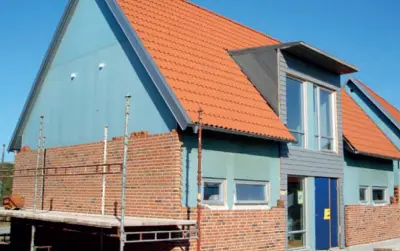
Photo 9 — Facade Gypsum Board for Rough Cladding
What to choose – gypsum board or OSB (OSB, MDF), which is better for flooring – a sheet of gypsum board or plywood, or for cladding – GKL and its variants or paneling, should be decided based on the situation. For facade work, gypsum board without facing is not used due to the fear of material moisture. There is special facade gypsum board for rough cladding (this material is also