Gypsum Board Decoration. Giving Different Shapes to Gypsum Board
Design using gypsum board
Photo 1 — Decorative partition and bookcase ("one in two")
Very often people, having created in their imagination a new image of their living space, do not start implementing the idea for a long time. Mostly because they find the task to be complex and labor-intensive (and also expensive).
Design using gypsum board
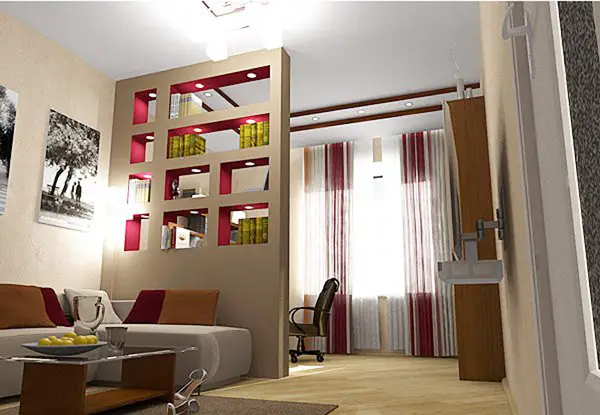
Photo 1 — Decorative partition and bookcase ("one in two")
Very often people, having created in their imagination a new image of their living space, do not start implementing the idea for a long time. Mostly because they find the task to be complex and labor-intensive (and also expensive).
We will try to dispel this myth, and for that we will use the material for finishing like gypsum board "Decorator". This is exactly what will allow you to create an interior masterpiece by yourself, the photo of which will be a subject of your pride.
The most popular way to diversify your interior is creating arches, columns, niches, and multi-level ceilings. For all of this, gypsum board is ideal. Let's look closer at this type of gypsum board – "Decorator". Reviews from the manufacturer allow us to understand that the product they provide has several advantages.
Among them:
- fastness and ease of achieving smooth surfaces during quality interior finishing;
- simplicity of use;
- ecological safety;
- fire resistance;
- thermal insulation of living spaces;
- acoustic isolation of rooms and... of course, affordable price.
Since we mentioned the simplicity of using this material, let's consider two main ways to create elements that perfectly fit the definition of "decorating".
IMPORTANT! A gypsum board sheet consists of a soft cardboard top layer and a hard core made of gypsum. Because of this, creating one decorative element by yourself will not be particularly difficult for you. If you have Napoleonian plans, it's better to call a team of "gypsum workers" for help or simplify your task and order complex curved elements of the future structure from a factory.
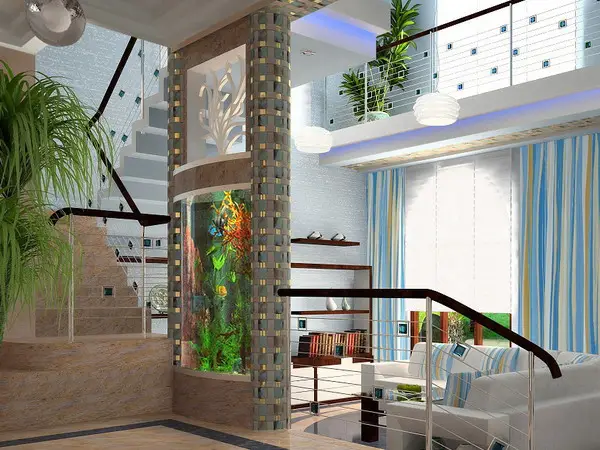
Photo 2 — Aquarium in decorative partition
On Ways to Give Required Bent Shape to Gypsum Board Sheet
So, the simplest way to make curved decorative elements from gypsum board is using dry gypsum board.
Useful: Gypsum Board Ceiling Design
You will need special drywall (gypsum board sheet), thinner than usual (the sheet for bending must not exceed 6 mm in thickness). This kind of drywall is thin, and therefore not strong enough. When bending it dry, you need to secure it immediately with screws. The role of the frame for mounting usually plays a metal bent profile, cut and shaped into the desired form. A disadvantage of this method for creating decorative elements is the relatively high cost of thin drywall (the price difference can reach up to $1.5).
Besides the "dry" method, there is also a "wet" one. The essence of this process is that one side of the sheet is soaked in warm water, which makes the cardboard moist and gives an opportunity to give the required shape to the drywall.
It is important to remember that for fixing the obtained result, the bent sheet must dry in the secured state (for convenience when bending the sheet, templates can be used).
There are some variations of this method of deforming drywall.
For example, the ends of the gypsum board sheet can be placed on supports, and a load applied to the center of the sheet. This option suits when the radius of the bend in the gypsum board does not exceed 500 mm. If you have planned to make more curved forms for the future decorative element, use a special roller – needle-type, to perforate the sheet. You need to treat both sides of the gypsum board with this roller, then thoroughly moisten them with water. Due to multiple small-diameter holes, the water penetrates deeper into the sheet, which allows bending it at a larger radius.
Thanks to the simplicity of use, relative "non-dustiness", speed and low cost of using gypsum board, more and more often in apartments and houses you can see decorative walls made from gypsum board or other decorative elements: for example, arches, columns, boxes, shelves, ceilings, doorways. All these elements created with drywall gain a finished look after finishing work is completed.
Various materials are used for finishing: from textured and structured plaster, to faux stone, wallpapers, paint, and various eco-friendly finishing materials (such as cork, wood shavings or paper).
However, despite the variety of finishing materials, gypsum board with decorative coating is often used. The last option is recommended for office or non-residential spaces, to save time and budget.
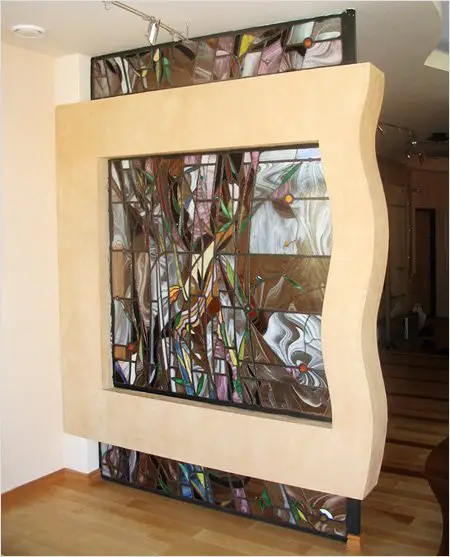
Photo 3 — Use of stained glass in decorative partition
Due to the acute housing situation for most residents of CIS countries, a practical designer element like a room partition is gaining more and more popularity. Often it serves two functions: decorating the space and zoning it.
The most popular locations for partitions in apartments are areas between the hallway and living room, living room and kitchen, i.e., inter-room partitions. Such a partition can become the highlight of your apartment, for example, with an integrated aquarium with colorful fish, or it can appear in the form of a non-standard bookcase, transforming into a backdrop for your home cinema where you can watch your favorite movies or exciting sports battles.
For decorating partitions, you can also use glass inserts or even stained glass, and lighting accompaniment will help set the right accents and truly complete your designer project.
Based on everything said above, if you want to give a new life to your apartment or room, it's better to do it using decorative partitions made from gypsum board. Find photos of such designer solutions online easily. Some of them were presented in this article.
Cost of Installing an Arch in an Inter-Room Span
- in Moscow: installation of arches and partitions – from 300 rub./m².
- in Kiev: installation of arches and partitions – from 80 UAH/m².