Parquet Installation – Traditions and Modern Technologies
Today, parquet installation under one roof is only available to companies and individuals who do this professionally. In other cases, it is either limited service offerings or simple execution of work based on one of many technologies. In the latter case, parquet installation, which has been covered in articles on the internet for a long time now, is done without using the most modern technologies.
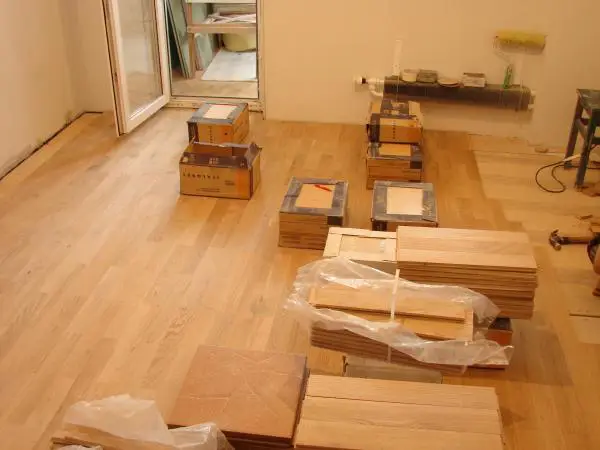
Photo 1 — Choosing Parquet
Today, parquet installation under one roof is only available to companies and individuals who do this professionally. In other cases, it is either limited service offerings or simple execution of work based on one of many technologies. In the latter case, parquet installation, which has been covered in articles on the internet for a long time now, is done without using the most modern technologies.
Methods of Parquet Installation
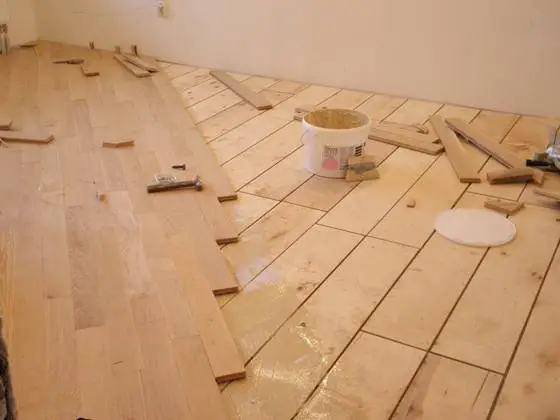
Photo 2 — Parquet Installation Process
Types of parquet installation are quite traditional, but this in no way indicates equal complexity in installation.
The normal procedure for selecting a method of parquet installation begins with creating an installation plan. In the vast majority of cases, the installation process starts from the center of the room or along the longest and straightest wall. Regardless of the chosen pattern, it is necessary to have guide strings that will orientate the main lines of the parquet design.
The cost of the pattern also plays an important role in choosing the design. For example, symmetrical parquet installation is more economical than the same symmetrical layout but diagonally aligned according to the direction of the walls. For better clarity, we provide basic and undifferentiated samples of parquet installation:
- Symmetrical Rows — shift between boards of the same size.
- Nonsymmetrical Rows — shift between boards of different sizes.
- Square Rows — classical installation.
- Bordered Squares — regular squares with borders.
- Squares with Accents — variations of installation using normal and shortened boards.
- Weaved Rows — similar to a mat pattern.
- Rhombus Rows — patterns resembling a three-dimensional cube.
- Verisailles — square pattern using double-length boards alongside regular ones.
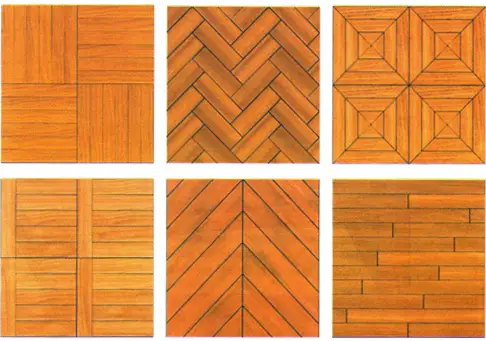
Figure 1 — Parquet Installation Samples
Material consumption also affects the cost of work: when using nonsymmetrical, diagonal, shaped, and combined installations, parquet board usage can increase by 5 to 15%. When adding markup for the complexity of the work itself, the price can rise by half to twice. Practicality and justification in choosing the method of parquet installation should always be the top priority.
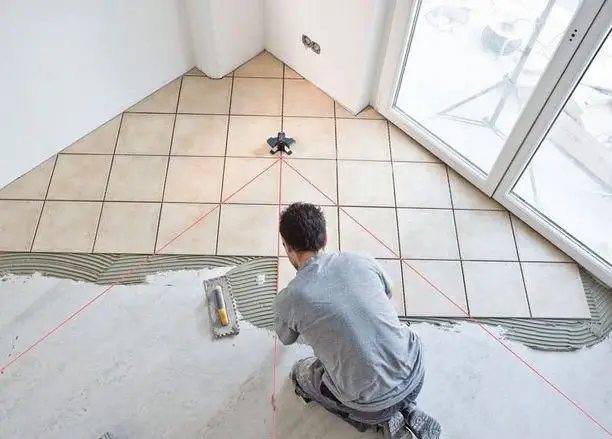
Photo 3 — Parquet Installation on Concrete
Parquet Installation Technology
In the vast majority of cases, the technology for installing floor boards made of any material is similar to the traditional process of parquet installation. Even for sports parquet, the same technology is used, but with higher strength indicators.
The tradition of installing parquet on plywood has existed for a long time and is even used when laying on joists, as it simplifies floor leveling issues; although there may be cases where ceilings are very low. A telling example in this regard is the installation of engineered boards — a relatively new material capable of replacing parquet in some cases, but not reaching the capabilities of solid parquet boards. With engineered boards, no planing or additional surface treatment is required as is needed for regular parquet.
The possibilities of modular parquet and bamboo parquet, which matches its capabilities, represent technological expansions in artistic and strength aspects respectively.
Any instruction outlines the conditions for installation, both for old parquet and new, approximately with similar conditions depending on what it is installed on:
- on concrete: in this case, a soft underlayment is rolled out under the parquet, which usually serves as a hydro-, sound- and thermal insulator;
- on joists: in this case, water-resistant plywood is used;
- on wooden floors: the simplest and most economical option; in this case, plywood is also recommended as an insulating material;
- on heated floors: in this case, one must remember to protect the parquet from heat on one side and ensure sufficient thermal conductivity of the parquet itself, which should not be too thick.
The above installation rules apply to both piece-by-piece and artistic parquet, which require the same flat, clean, and dry base.
When there are no special requirements for installation, the equipment for parquet installation is always of the same type:
- hammer and a hammer with a slanted head for driving precisely into the slots of the boards;
- blocker — the name of the tool speaks for itself, i.e., for finishing nails;
- spoon with teeth — for applying glue and others;
- plane — a sharp plate used for planing (leveling) the surface of parquet boards; circular sanders can also be used;
- chisel — for cutting grooves, small cuts, etc.;
- measuring tools — ruler, square, tape measure.
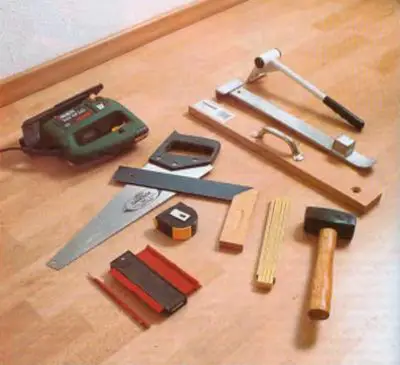
Photo 4 — Equipment for Parquet Installation
As seen from the list above, tools for parquet installation are not significantly different from those used by carpenters and cabinetmakers. The work is always with wood — whether it's deck planks or piece-by-piece parquet. The order of parquet installation does not depend on the type of parquet, but may have its own specificities depending on the pattern:
Before installing plywood on the floor slab, a primer is applied and, if necessary, a waterproof layer is laid.
Plywood sheets are cut so that the resulting sheets are also square. This prevents excessive internal stress in this layer under constant load. The prepared plywood sheets are laid on parquet adhesive and gaps of several millimeters are left between them; a gap of half to one and a half centimeters is left between the plywood sheets and walls.
The plywood sheets are secured with dowels in holes that were previously prepared in the floor base.
Then, adhesive for parquet fixing is applied to the plywood. The adhesive must consider the wood species and contain no more than 7% water.
After installing the parquet strip or board, the parquet clasp must be nailed.
A technological gap of half to two centimeters must be maintained between the wall and the parquet for compensation of temperature and humidity effects.
Already installed parquet, which any parquet installation expert will confirm, should be left to settle for a week or two.
After the parquet has dried and settled, it can be planed — to remove all surface roughnesses.
The finished parquet floor is first coated with a primer and then varnish.
Naturally, modular or panel parquet installation occurs approximately by the same technology, however, as in the case of artistic parquet, additional complications may arise due to customer preferences — centering or direction of the pattern.
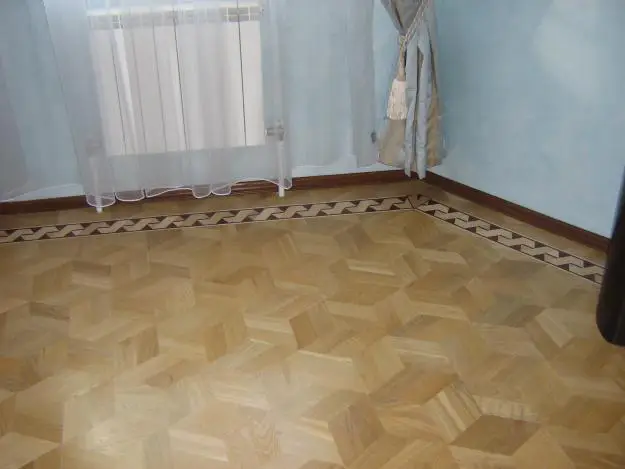
Photo 5 — Final Result of Parquet Installation
Parquet Installation: Cost Considerations
In the past, the cost of parquet installation was about the same as the cost of 1 square meter of the flooring itself. Today, the price of parquet installation is influenced not only by material costs but also by the volume of work performed and even global economic crises.
Prices for installing one square meter of parquet in two capitals are approximately as follows:
- Kyiv – 40-80 hryvnia;
- Moscow – 300-1500 rubles.
Of course, averaged pricing indicators cannot show all possible nuances that may be agreed upon between the client and the contractor, so studying additional video and photo materials, as well as examining offers on this market, is mandatory. This is particularly relevant now, as current technologies allow one to visually confirm what parquet installation by oneself looks like.
Still, for fairness, it should be said that many “narrow spots” cannot be shown or described on paper because the conditions for implementing such activities vary from person to person. And if you add a lack of experience, it becomes clear why parquet installation is always a special case.