Ceiling Armstrong: Features and Installation
Technical specifications and functional features
The manufacturer positions its products mainly as acoustic ceilings. This means that ceiling material has optimal sound absorption and sound dampening, which allows improving audibility in the room and at the same time preventing sound from spreading beyond its boundaries. Improved acoustic properties also mean noise absorption and reduced noise levels in the room.
Armstrong ceilings have good light reflectivity. This allows improving lighting, making it more uniform and saving energy at the same time.
All Armstrong products are fire-resistant, which is confirmed by the appropriate certificate. Also, moisture resistance - one of Armstrong's advantages over other types of ceiling finishes.
Installation and maintenance of the ceiling are very simple. Ceiling coverings have good hygienic properties and help maintain cleanliness in the room.
All ceiling elements have high strength and resistance to damage. The Armstrong ceiling assembled from components has a warranty. Regarding Armstrong tiles, the official website states that products with 95% moisture resistance guarantee no sagging for up to 15 years.
The entire ceiling structure is lightweight: the suspension frame of the suspended ceiling consists of a light metal profile, and panels, whose thickness can reach 20 mm or more, are also not heavy.
By choosing the appropriate installation level of Armstrong, you can hide all that is unattractive on the rough ceiling and nearby: wiring, ventilation, and other communication nodes, various leaks, rust stains, etc.
At the same time, the convenience of the ceiling lies in its cellular structure: any segment of the ceiling can be easily disassembled and returned to place, which is especially important for troubleshooting electrical wiring. Lights, exhaust hoods, and sound equipment can be built into the tiles or installed in place of them.
Among the advantages of Armstrong suspended ceilings, one can mention the excellent reputation of the company and product quality, the possibility to purchase everything needed for the ceiling at once, completeness - no additional finishing is required, ease of installation, simple design, wide selection of accessories, decorative appearance, compliance with world standards, and excellent technical and functional characteristics.
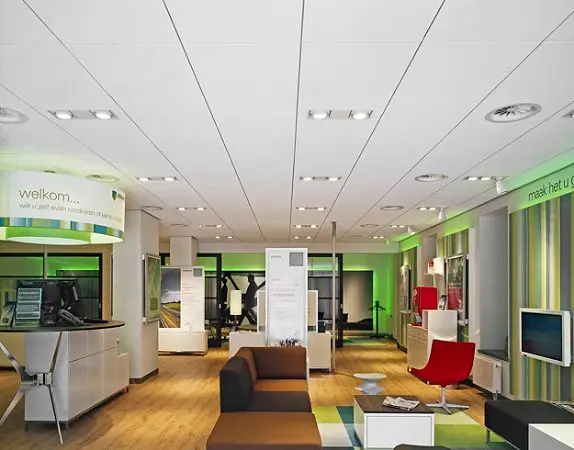
Photo 1 — Armstrong acoustic ceiling made of mineral fiber
Technical specifications and functional features
The manufacturer positions its products mainly as acoustic ceilings. This means that ceiling material has optimal sound absorption and sound dampening, which allows improving audibility in the room and at the same time preventing sound from spreading beyond its boundaries. Improved acoustic properties also mean noise absorption and reduced noise levels in the room.
Armstrong ceilings have good light reflectivity. This allows improving lighting, making it more uniform and saving energy at the same time.
All Armstrong products are fire-resistant, which is confirmed by the appropriate certificate. Also, moisture resistance - one of Armstrong's advantages over other types of ceiling finishes.
Installation and maintenance of the ceiling are very simple. Ceiling coverings have good hygienic properties and help maintain cleanliness in the room.
All ceiling elements have high strength and resistance to damage. The Armstrong ceiling assembled from components has a warranty. Regarding Armstrong tiles, the official website states that products with 95% moisture resistance guarantee no sagging for up to 15 years.
The entire ceiling structure is lightweight: the suspension frame of the suspended ceiling consists of a light metal profile, and panels, whose thickness can reach 20 mm or more, are also not heavy.
By choosing the appropriate installation level of Armstrong, you can hide all that is unattractive on the rough ceiling and nearby: wiring, ventilation, and other communication nodes, various leaks, rust stains, etc.
At the same time, the convenience of the ceiling lies in its cellular structure: any segment of the ceiling can be easily disassembled and returned to place, which is especially important for troubleshooting electrical wiring. Lights, exhaust hoods, and sound equipment can be built into the tiles or installed in place of them.
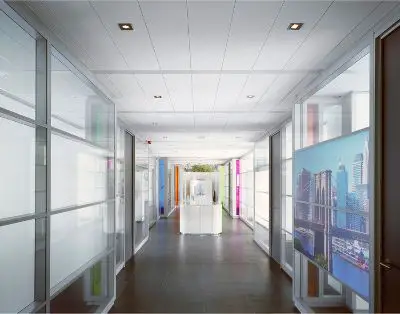
Photo 2 — Armstrong Trulok family suspension system
Types of Armstrong Ceilings
Armstrong ceilings are mainly installed in offices, various institutions, and public places. Depending on the purpose, the company produces products for such market segments as healthcare, education, trade and leisure, industry, and transport.
Ceiling panels are made from different materials (wood, metal, plastic), but for suspended systems, panels made of mineral fiber are most commonly used.
Sheets differ in color, shape, edge type, perforation, content of secondary raw material, moisture resistance, sound insulation and absorption quality, required suspension system type, and size. Among various sizes, 600*600 mm and 1200*600 mm panels are the most popular.
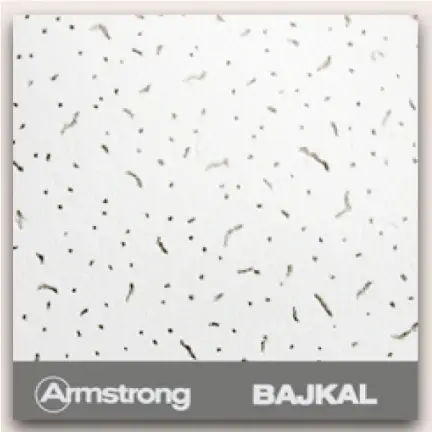
Photo 3 — Economy-class Armstrong Baykal ceiling panel
Armstrong is not only acoustic but also functional, design-oriented, hygienic, and budget-friendly ceilings.
Armstrong Baykal is one of the most frequently used types of economy-class panels. This type is relatively inexpensive but not moisture-resistant and lacks special acoustic properties. The standard Baykal panel has dimensions of 600*600*12 mm and features a distinctive pattern (as if worms sharpened it).
Suspension systems consist of a set of profiles and fasteners. These include wall-mounted L-shaped profiles, load-bearing rails of various lengths, suspensions, fixing clips, anchors, and other accessories for profiles. The system is assembled so that the cells match the size of ceiling tiles.
Profiles come in various colors: most commonly white, but mirror finish (gold and silver) is also popular.
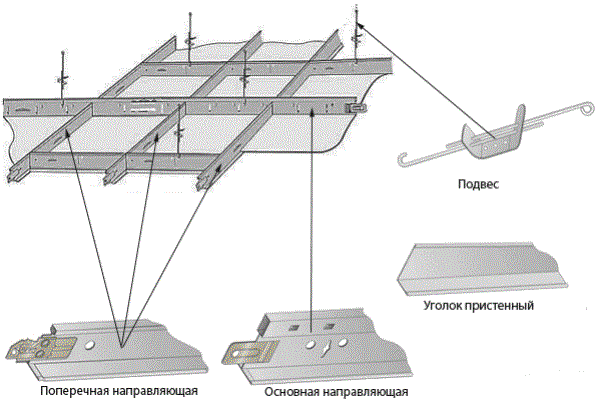
Figure 1 — Profile guides and suspensions of Armstrong system
Installation of Armstrong Suspended Ceilings
How to install Armstrong was briefly mentioned above, but to install the ceiling system yourself, you may need instructions or at least learn the steps involved in installation.
Installation of Armstrong suspended ceilings begins with measurements and marking: a mark is placed on one wall, which will align the ceiling, using a level it is transferred to other walls, and the resulting points are connected with a straight line. The distance from the ceiling to the suspended ceiling plane should be at least 12 mm.
The L-shaped wall profile is installed along the obtained line around the perimeter of the room. It is secured using suitable anchors at least every 0.5 meters.
Suspension elements with cables are attached to the ceiling using anchors. To avoid excessive load on the system, suspensions should be installed no more than every 1.2 meters, and to reduce the load on the wall profile, the outermost suspensions should be no more than 0.6 meters away from it.
Main load-bearing guide profiles, longitudinal and transverse, are installed and aligned. They connect to each other through holes and locks in the profiles themselves, and they are attached to the ceiling using previously installed suspensions and cables.
Once the frame is assembled, its levelness is checked using a level, and the system is filled with tiles. The ceiling needs to be re-aligned after several days.
During installation, tile trimming, laying of insulating materials (if necessary), and installation of ceiling equipment such as lights, exhaust hoods, columns, etc. are performed.
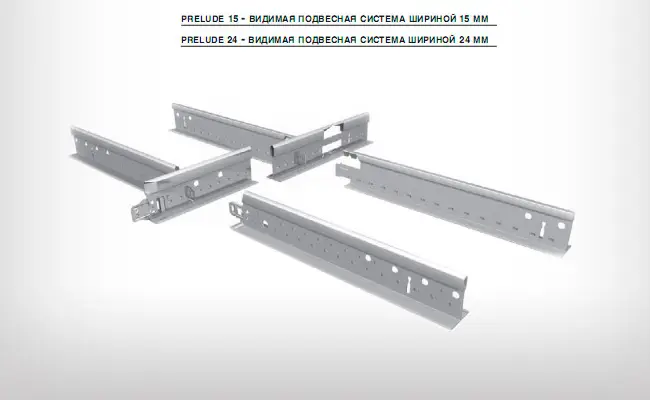
Figure 2 — Visible profile guides of Armstrong Prelude suspension systems
To ensure the installation is as high-quality as possible, the ceiling looks aesthetically pleasing, and material consumption is as economical as possible, it's necessary to calculate the Armstrong suspended ceiling.
A rough estimate can be provided by a calculator for such ceilings available on many websites of companies selling Armstrong. The calculator is a form where you enter dimensions - the perimeter and area of the ceiling. Corresponding fields will automatically display the calculated quantity of all suspended ceiling components, including ceiling tiles, suspensions, three types of profiles, and corner angles around the perimeter.
However, a more accurate calculation can only be done by those who will install the ceiling. For this purpose, a plan must be made before purchasing Armstrong ceiling and its installation. The drawing will allow accurate calculation of the required components and selection of the most economical layout.
Additionally, the drawing will help plan the installation so that the ceiling looks most attractive, with equal edge trimming on side tiles. For this, the entire system should begin from the center - from two mutually perpendicular axes of the ceiling.
For project development and material calculation, Armstrong has developed special software called Ceiling Estimate, which can be downloaded from the official Armstrong website in Russia.
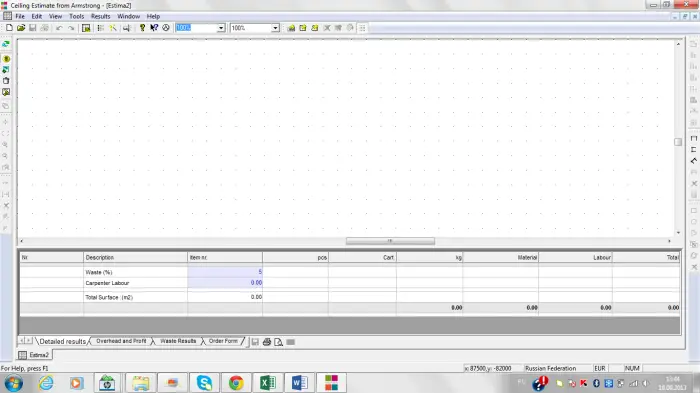
Photo 4 — Armstrong ceiling estimation software window
Armstrong Suspended Ceiling: PRICING
It is impossible to say exactly how much Armstrong ceiling costs: the price depends on its type, and the price range is quite wide.
For example, Armstrong Baykal economy-class ceilings can be purchased in large wholesale orders for 144 rubles, in small wholesale orders (50-100 m) for 172 rubles per square meter. The price of Armstrong hygiene ceiling tiles will be 305 and 366 rubles respectively, and Armstrong acoustic sound-insulating tiles will cost 372-985 rubles for wholesale purchase or 446-1182 rubles for a small order volume.

Photo 5 — Perforated Armstrong suspended ceiling in a shopping center
Armstrong suspended ceilings are attractive due to their variety, affordability for different budgets, ease of installation and maintenance, and high quality. Armstrong is mainly used in public building construction, but this type of ceiling finishing can also be applied in individual construction.