Installation of PVC Panels on Ceiling: Instructions
When the ceiling has significant curvature, excessive height, frequent flooding, roof leaks, communication lines under the ceiling, or just a desire to change its appearance, ordinary plastering can be replaced with ceiling panels.
A panel ceiling consists of a frame and panels themselves, or it may be made solely from panels glued to the base. Both the frame for the ceiling and its cladding come in various types, having significant differences that should be considered when choosing.
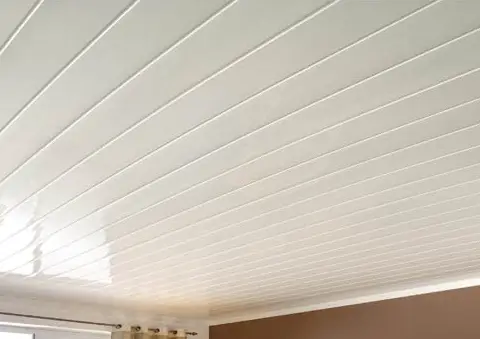
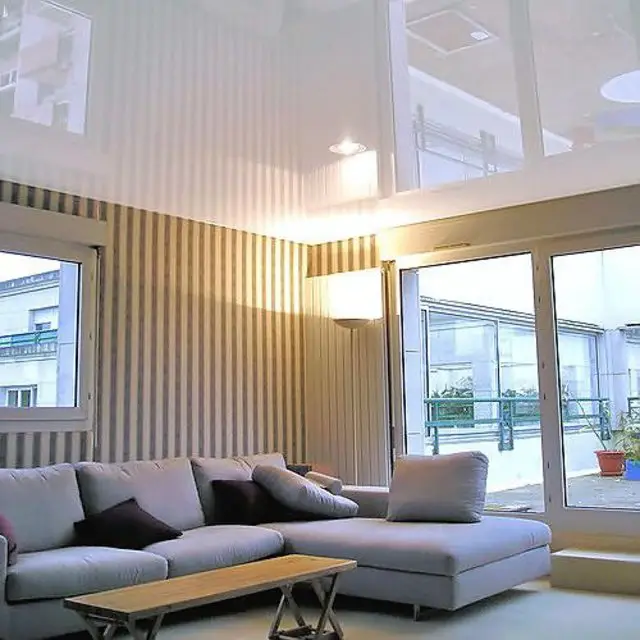
Photo 1 — External view of a ceiling made from PVC panels
PVC Panels for Ceiling
If the renovation budget allocates minimal funds for «beautifying» the ceiling and the room is humid, then PVC panels for ceilings are an ideal solution.
However, cladding the ceiling with polyvinyl chloride plates is not suitable for all rooms: it is mostly used in corridors, bathrooms, toilets, kitchens, and utility buildings.
Besides moisture resistance and low cost, installing PVC panels is good because it can be easily done by oneself. Moreover, PVC panels can imitate various materials in appearance; for example, they can be used to finish a balcony to look like wood.
Also, plastic is easy to maintain – it washes well but may fade or yellow over time and is not resistant to mechanical damage, which can easily occur.
The main drawback of such a ceiling is the controversial question about its harmfulness, yet more and more people choose to install their ceilings precisely with PVC panels.
The installation of a plastic ceiling, like any other panel ceiling, starts with the frame. The installation of the frame is the main stage in creating the ceiling, from which the final result depends the most.
The framework can be made of wood or metal profiles. A wooden frame is lighter, but in a bathroom it is better to install a profile frame to avoid unnecessary problems caused by moisture. The installation of these two types of frames differs slightly.
Wooden strips are arranged perpendicular to the direction in which the PVC panel will lie and are screwed to the ceiling using reliable dowels and bolts. To achieve a flat surface, the frame is checked with a level and pieces of wood are placed in necessary places.
Profile frames are usually installed lower: the required ceiling height is chosen, and markings are made on walls and ceiling. Along the marked lines on the walls, which are in the same plane, a wall-mounted guide profile is screwed to the ceiling using dowels and screws. Then, hangers are attached to the ceiling at a distance of about 0.5 meters, which fix the vertical profiles. The edges of the vertical profiles are inserted into the guide profiles and joined to them using self-tapping screws for metal.
Installing PVC panels on the ceiling also includes installing a starter plastic profile under the frame. It is mounted along all edges except one side, where the last plastic panel will abut, or it is installed only on one side from which the panel installation begins.
Installing the first panel is done by inserting its edges into the plastic profile and screwing it to the metal frame using self-tapping screws. For a wooden framework, plastic can be attached using a furniture stapler. The next panel is also inserted into the guide profile, and its edge protrusion is pushed into the groove of the previous panel, followed by again securing it to the frame and so on.
Panels are easily cut and bent, which allows cutting a panel to the required length and inserting it into the guide profiles. Standard sizes of PVC panels are about 3 meters in length and 20-30 cm in width.
Ceiling panels from PVC panels, VIDEO:Besides the above-mentioned PVC products for ceiling cladding, sandwich panels designed for window sills are sometimes used. However, this approach makes sense only in a small room: from a sandwich panel of maximum size (3*1.5 m) one can cut out an entire ceiling, glue it to the frame with liquid nails, fasten the edges with self-tapping screws, and cover the edges with a trim.
Regarding the decorative aspect, PVC panels come in various colors and, as mentioned earlier, can imitate the coloration of other materials.
A well-installed plastic ceiling made from PVC panels looks no worse than a stretched ceiling. Additionally, considering that the frame made of profiles can take any shape and plastic can be cut as desired, a beautiful two-level ceiling can be made from PVC panels.
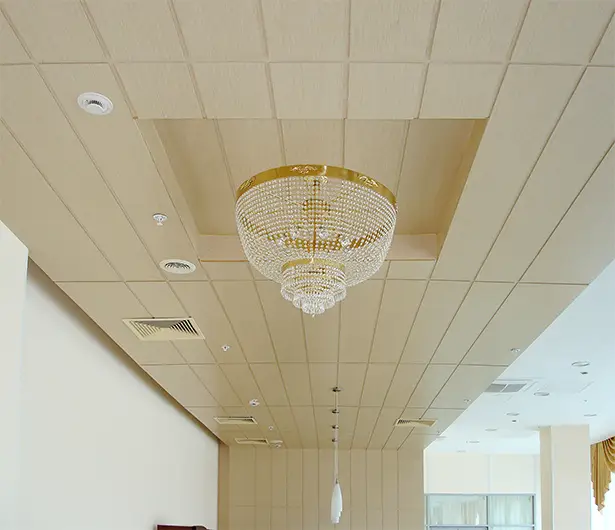
Photo 2 — Smooth veneered panels TRENDY
MDF Panels for Ceiling
The next equally convenient option for cladding is MDF panels for ceiling.
Just like PVC panels, MDF panels have grooves and protrusions that allow them to fit tightly together when assembled. However, in humid rooms, MDF should not be used unlike PVC.
The frame for MDF can be wooden or metal, and some people use both profiles and wooden strips. The installation of the frame and cladding with panels is done almost the same as with plastic, but a directing plastic profile is not used: the panels are simply fixed to the frame. For this purpose, special metal brackets called clamps are used. These brackets are inserted into the panel grooves and screwed to the frame with self-tapping screws.
The remaining steps of installing MDF panels are similar to installing plastic. Installing MDF panels has an advantage over plastic in terms of compatibility with interior design: due to the wood component and wood-like coloring, veneered MDF panels look «warmer» than plastic.
For additional decorative effect, a relatively new product is used – 3D MDF panels. They come in various colors and textures, with a deep embossed relief that makes them look very unusual.
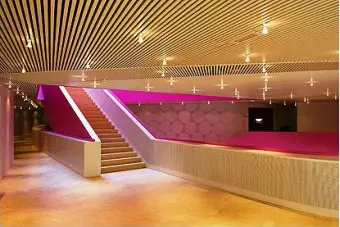
Photo 3 — Dutch aluminum ceiling Luxalon
Metal Panels
Aluminum panels are probably the most durable and safe way to finish a ceiling. An aluminum ceiling can be made either in a ribbed or cassette style.
It is installed on a frame made of aluminum profiles, which in the first case represents an Armstrong-type system, and in the second case is a completely different type. Both frames include a wall-mounted profile and adjustable hangers, but the base of the cassette ceiling frame consists of T-shaped profiles of different lengths forming cells into which aluminum cassettes are placed.
Another type of cassette ceiling frame uses only longitudinal profiles secured directly to the slab at a spacing equal to the width of the cassette. This method is convenient when there is little ceiling height, as it takes up much less space. The base of the ribbed ceiling is made of load-bearing beams – profiles of a different type with a toothed edge that snap into the holes of aluminum ribs.
Aluminum ceilings are quite expensive, but their moisture resistance, fire safety, eco-friendliness, and ease of installation and operation make them one of the best choices.
Especially popular are glossy mirror ceilings, whose reflection and shine make the room appear higher, more airy, and brighter.
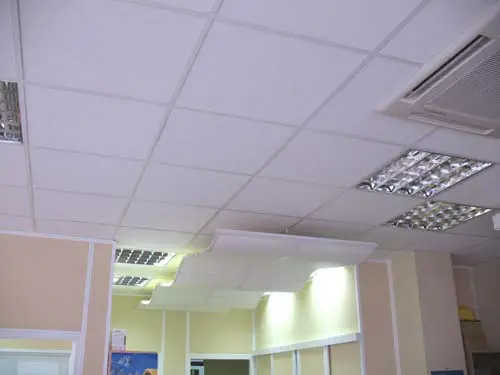
Photo 4 — Acoustic ceiling Ecofon
Acoustic Ceilings
If the main requirement for ceiling finishing is sound insulation, then when choosing panels made of mineral wool, attention should not be overlooked.
Such internationally recognized manufacturers as Armstrong and Ecofon specialize in their production. The products of these companies have excellent sound insulation and sound-absorbing properties.
An acoustic ceiling is installed the same way as any Armstrong system.
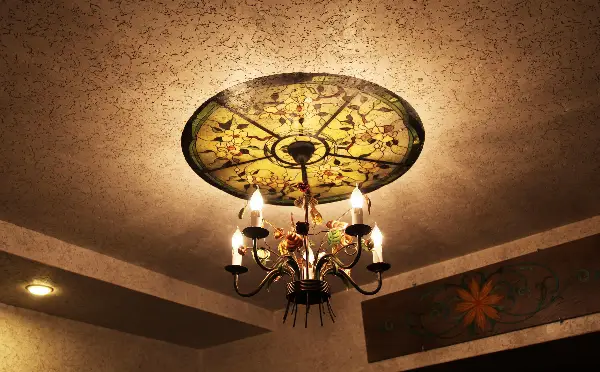
Photo 5 — Cork in ceiling finishing
The Most Eco-Friendly Ceiling Panels
For those who want complete unity with nature or maximum naturalness in finishing, materials made from cork or bamboo would be suitable.
Decorative cork panels perfectly regulate the microclimate in a room: they control humidity, have excellent thermal and sound insulation properties.
Bamboo panels are durable, moisture-resistant, do not fade, and due to their natural coloring can fit into virtually any interior.
Both cork and bamboo coverings are glued to a flat prepared ceiling using special adhesives for these materials.
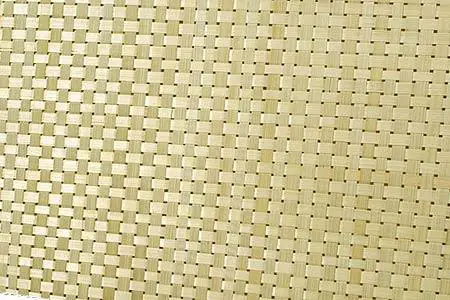
Photo 6 — Bamboo panel
Glass Panels for Ceiling
Ceiling panels made from frosted and transparent glass, stained glass, and mirrors – a luxurious ceiling finishing. It is not only visually impressive but also expensive, so glass panels are mostly used as decoration for part of the ceiling in combination with other types of finishing.
Additionally, real glass is quite heavy, so the frame for such a ceiling must not only be solid but also additionally reinforced.
Due to these two reasons, instead of glass and mirrors, ceilings are often decorated with lighter and cheaper acrylic glass that looks just as impressive.
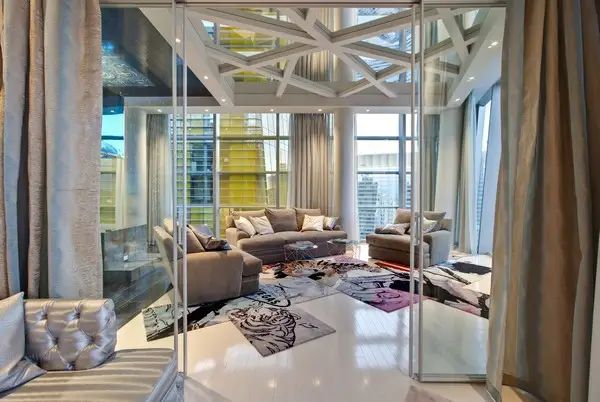
Photo 7 — Mirror panels in interior design
Ceiling Panels – Price
PVC panels for ceiling can be bought for as little as 150 rubles per piece (3m*200 mm), the price of MDF panels (2.6 m*25 cm) is approximately the same.
Aluminum rail costs about 100 rubles per piece, Ecofon acoustic ceiling costs from 700 rubles per square meter.
Exotic bamboo panels cost from 450 rubles per piece, cork coating – from 500 rubles per square meter. Glass panels – an expensive luxury – from 4000 rubles per square meter.
The cost of installing ceiling panels depends on the system and volume of installation and in the most budget-friendly variant can be as low as 200 rubles per square meter.