Ceiling Leveling by Yourself
The long-awaited renovation begins, including ceiling leveling and painting, and a question arises: should you hire professionals or do everything yourself.
Ceiling leveling by yourself requires certain construction skills.
If you have no experience at all but want to save money by leveling the ceiling yourself, it is unlikely that either savings or a flat ceiling will be achieved. It is better to leave ceiling leveling to a professional.
If you choose the path of doing it yourself, it may be helpful to familiarize yourself with information about how this can be done. To achieve a high-quality result – a flat ceiling ready for painting, and to ensure the result does not flake off soon, the work process must be followed correctly.
Methods of ceiling leveling: "dry" and "wet". The first involves the popular use of gypsum board, plastic, Armstrong, suspended ceilings and others, while the second is older and uses construction mixtures. Ceiling leveling and insulation with polystyrene foam is also used. The choice of ceiling leveling method depends on the degree of curvature and ceiling height.
Ceilings Finished with Various Materials, PHOTOS
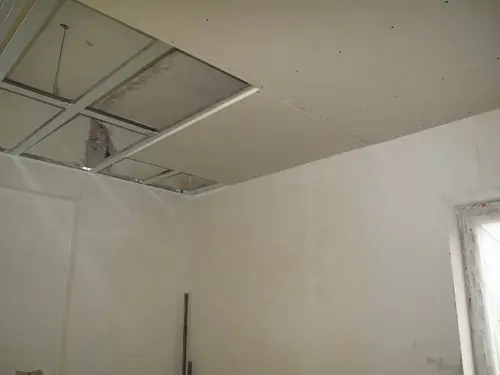
Photo 1 — Ceiling Leveling with Gypsum Board
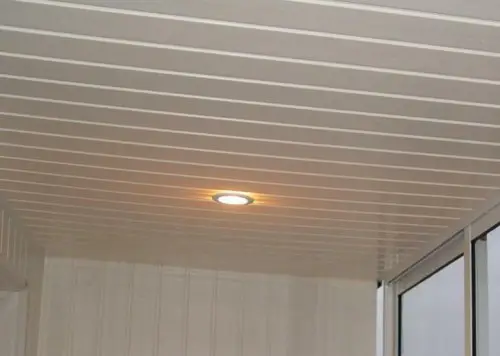
Photo 2 — Plastic Suspended Ceiling
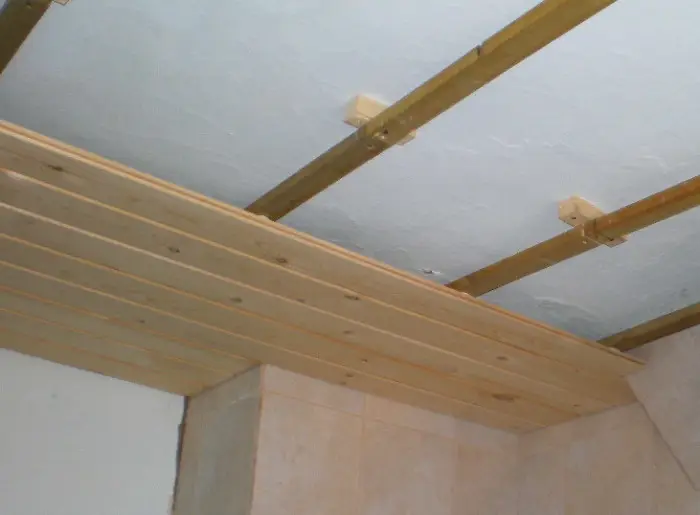
Photo 3 — Ceiling from Wooden Vagonka
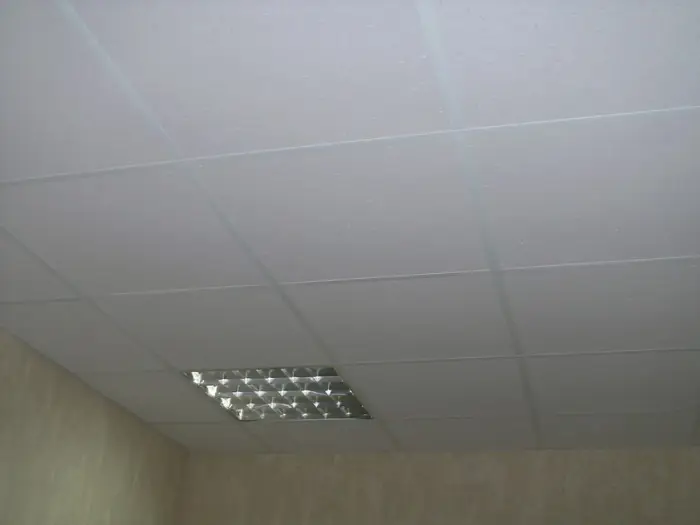
Photo 4 — Armstrong Suspended Ceiling
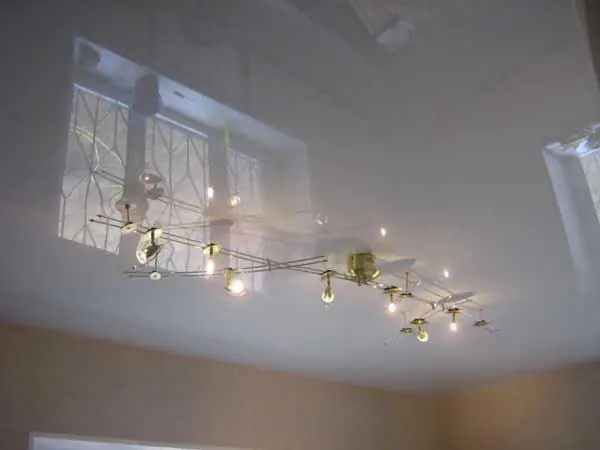
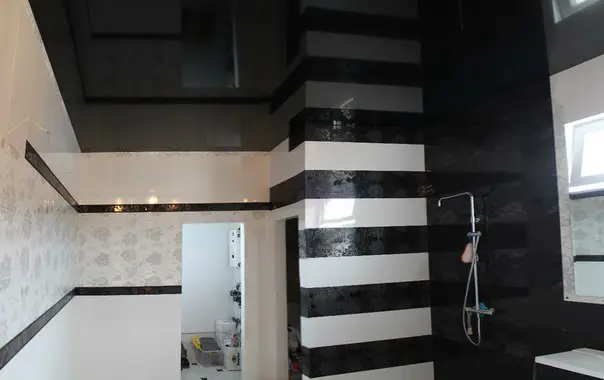
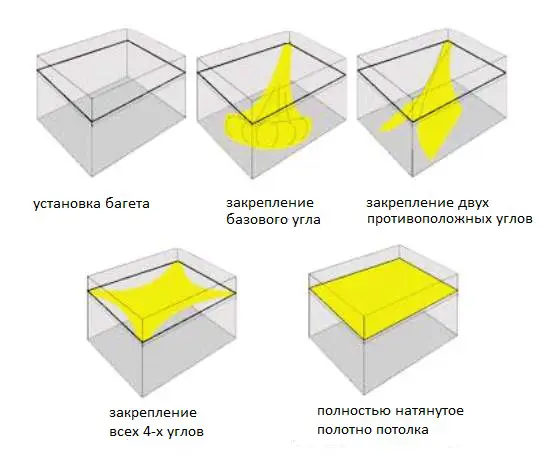
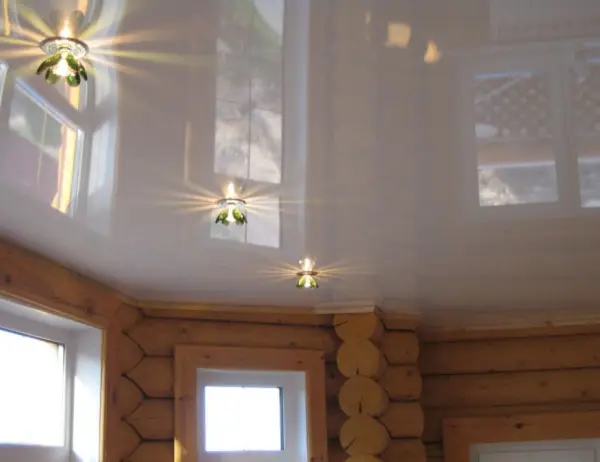
Photo 5 — Stretch Ceiling
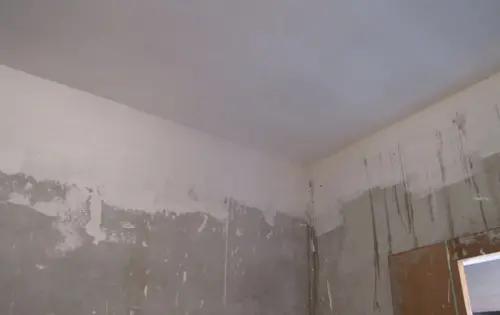
Photo 6 — Ceiling Spackle
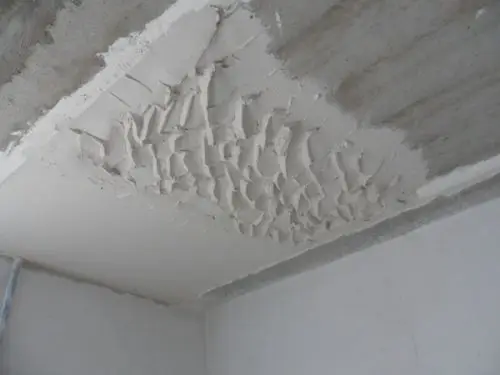
Photo 7 — Ceiling Plastering
Ceiling Leveling with Gypsum Board
To do wall and ceiling finishing with gypsum board by yourself, you will need: metal profiles, sheets of gypsum board, fastening elements (dowels, screws).
Ceiling leveling with gypsum board compared to "wet" leveling is a lighter, faster, and cleaner method. If the ceiling curvature is too great, using plastering is simply unprofitable, and gypsum board in such cases is an excellent solution.
The advantages of this method include the fact that the material is breathable, all utilities can be hidden behind a suspended ceiling, it's easy to install, nearly perfectly flat, and relatively inexpensive.
Disadvantages of this type of leveling include that ceiling height is reduced, gypsum board can be damaged by leaks, and replacing a single sheet and restoring a flat surface is not easy.
Steps for ceiling leveling with gypsum board:
The installation of the ceiling begins, of course, with surface preparation and measurements. The ceiling and top of walls are cleaned of old paint, spackle, and crumbling plaster.
Then, to properly align the ceiling frame, markings are made according to a laser or water level. Marks are made with a pencil, and lines can be marked with a chalk line.
The frame system is installed according to the lines – this is the main stage, which determines whether the ceiling will be flat. First, guide profiles are securely fastened around the perimeter of the room. Then special adjustable or non-adjustable hangers are attached to the ceiling and ceiling profiles are inserted into the guide profiles parallel to each other at some distance and secured with hangers. Then, using profile connectors, cross profiles are fixed, the spacing between which should not exceed 0.5 meters.
Now you can start installing the gypsum board sheets using screws.
IMPORTANT! The joints of the sheets must necessarily fall on the profiles to prevent cracks from appearing on the ceiling over time.
The final stage is taping the joints of the boards with masking tape and filling the seams with spackle. After that, you can proceed to finishing work – ceiling painting.
Ceiling leveling with gypsum board, VIDEO:
Ceiling Leveling with Plaster
The "wet" leveling can be done with spackle. However, leveling with spackle is only suitable for ceilings with minor irregularities and relatively flat concrete slabs (differences up to 2 cm). Ceilings with micro-cracks can be immediately covered with finishing spackle.
For leveling larger cracks and filling seams between concrete slabs, other materials are needed. For example, for filling gaps between concrete slabs and leveling the ceiling, Sheetrock spackle is better suited.
For leveling more significant irregularities (up to 5 cm), plastering mixes are required. Good reviews of ceiling plastering with Rotband from Knauf – this is a universal plaster mix based on gypsum, which is excellent for concrete substrates (and even recommended).
Ceiling leveling with plaster, steps:
The process of plastering always begins with preparing the ceiling – removing old finishing, cutting seams.
The clean surface must be well primed with primer recommended by the plastering manufacturer.
If perfect horizontal alignment or significant height differences are needed, ceiling leveling is done using screeds. If the differences are small and it's easy to level the ceiling, you can not install screeds and rely on the most protruding slab.
If the irregularities are more than 2 cm, plastering and mesh must be used. If the plaster layer is 2-3 cm thick, use masking mesh; if thicker – metal mesh.
Ceiling plastering can be done in one or several layers depending on the degree of irregularity and required thickness. Gypsum plasters are applied in one layer. To make the surface smoother, it can be covered with finishing spackle, for example, Vetonit.
Ceiling leveling with plaster, VIDEO:
Cost of Work
Leveling ceilings – price:
- in Moscow from 350 rubles/m²
- in Kiev from 70 hryvnia/m²