Types of Suspended Ceilings
Wooden suspended ceilings, made truly from wood, are usually installed in wooden houses. In a country-style house, such as a Russian izba, wooden suspended ceilings painted with lacquer will fit perfectly.
Below we consider suspended ceilings made from different materials.
Wooden Suspended Ceilings
Wooden suspended ceilings, made truly from wood, are usually installed in wooden houses.
In a country-style house, such as a Russian izba, wooden suspended ceilings painted with lacquer will fit perfectly.
Wood can be used not only for cladding – ceilings made of wood, gypsum board and other materials are often mounted on a wooden frame.
In small rooms, ceilings made of plywood and wood-containing materials are installed.
Also popular is wood-like finishing, such as laminated or veneered panels for suspended systems (e.g., Armstrong produces such panels), plastic imitating wood grain and others. These options are convenient because they do not require additional processing.
IMPORTANT!!! When it comes to wooden suspended ceilings, one must remember that they are afraid of moisture, so their installation in humid rooms is not advisable.
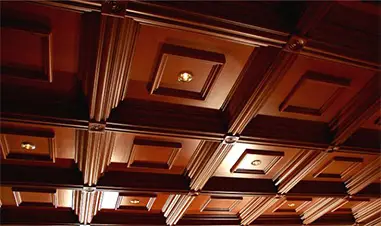
Photo 1 — Wooden Cassetted Ceiling
Aluminum Suspended Ceilings
Aluminum suspended ceilings are popular in both residential and non-residential construction. The main elements of the ceiling are aluminum profiles or cassettes, which are mounted on an aluminum suspended system attached to the ceiling.
Based on the size provided by the customer, manufacturers offering such ceilings provide ready-made sets of suspended systems and aluminum panels.
Aluminum suspended ceilings, which start at around 500 rubles per square meter, are an excellent choice for decorating humid and damp rooms such as bathrooms and pools.
Beautiful suspended ceilings made of aluminum are also significantly more durable than other types of suspended ceilings. Ceilings made of metal profiles can take on curved shapes. Metal ceilings are attractive due to their moisture and fire resistance, ease of installation, strength, safety, and hygiene.
Aluminum suspended ceilings are also modern honeycomb suspended systems called grillato.
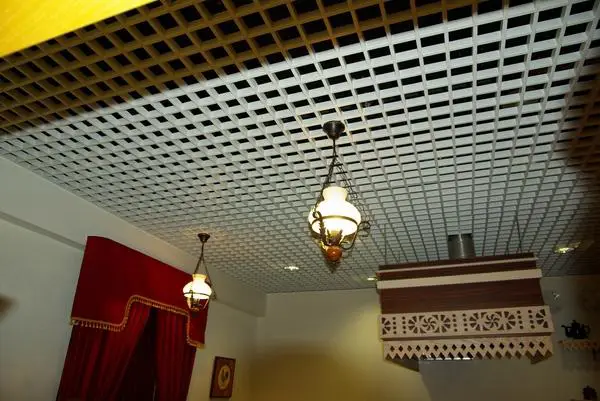
Photo 2 — Grid Ceiling of Grillato Production by Albes
Aluminum suspended ceilings, VIDEO:Mineral Modular Suspended Ceilings
These are suspended systems based on metal profiles filled with mineral fiber tiles. On the Russian market, tile-based German ceilings of good quality are mainly available.
They are most often used in offices, but excellent finishes from the Knauf or Armstrong systems can also be applied for decorating ceilings in homes and apartments. Moreover, one can choose mineral tiles with various properties, including antibacterial ones, and colored ceiling tiles make a good decoration.
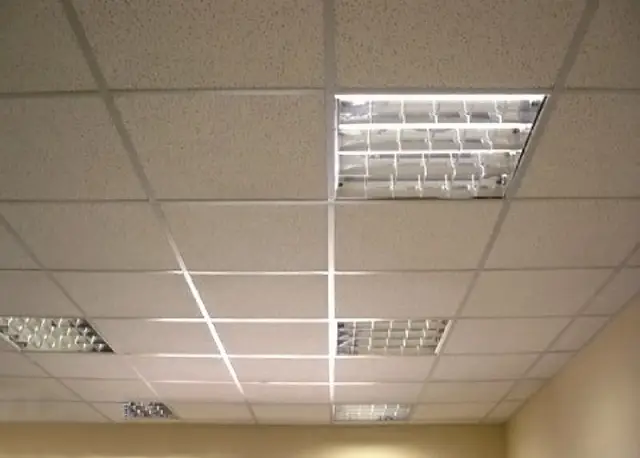
Photo 3 — Industrial Office Ceilings by Armstrong
Suspended Ceilings from Foam and Plastic
Decorative ceilings made of synthetic materials – a cheap way to level the ceiling, but among all finishing methods, this one is least eco-friendly.
Polystyrene ceiling – a glue alternative to suspended ceilings, allowing for leveling only minor irregularities.
More common is the suspended plastic ceiling. The advantage of a ceiling made from plastic panels is its lightness and water resistance. Plastic ceiling panels can be easily assembled by oneself and are relatively inexpensive. Ceilings made from siding or boards are used for both interior and exterior ceiling work.
WARNING!!! Sometimes plastic, especially Chinese plastic, may not be safe for health – it emits volatile substances above the established limits, is flammable, has a strong odor, and yellows over time.
Therefore, PVC panels, vinyl, and similar materials should only be purchased from verified companies offering certified products.
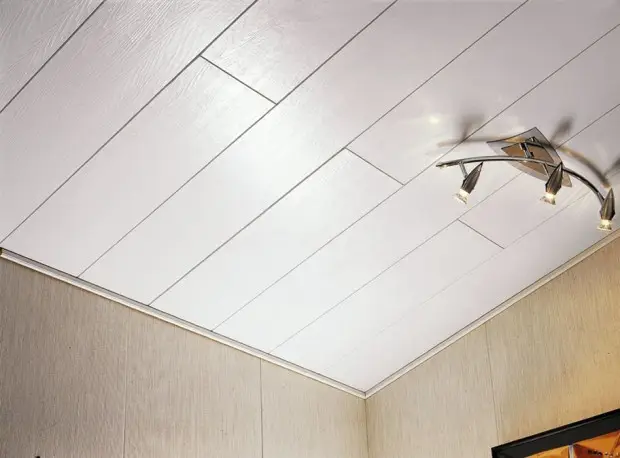
Photo 4 — Textured Plastic Ceiling
Suspended Ceilings from Gypsum Board
Gypsum board is a very popular finishing material for walls and ceilings. Suspended ceilings made from gypsum board sheets are mounted on a frame of metal profiles or wooden strips.
Flat or shaped, a gypsum board ceiling allows creating an unique design – one can make almost anything desired from it. Gypsum board structures also blend well with other types of suspended ceilings.
However, gypsum board is afraid of moisture and even moisture-resistant variants need additional treatment with special compounds. Also, it breaks easily and cannot handle heavy loads. As a more durable option, it is recommended to use ceilings made from GVL (gypsum fiber board).
Despite their wide application, it cannot be said that gypsum-based building materials are harmless to humans.
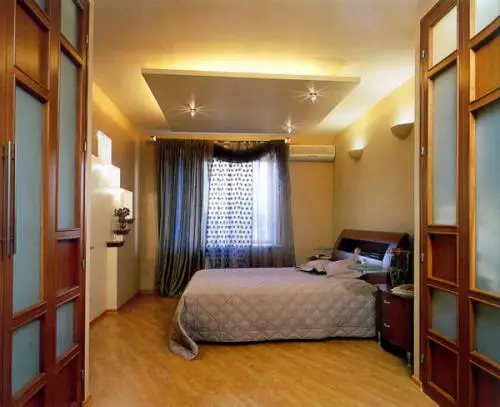
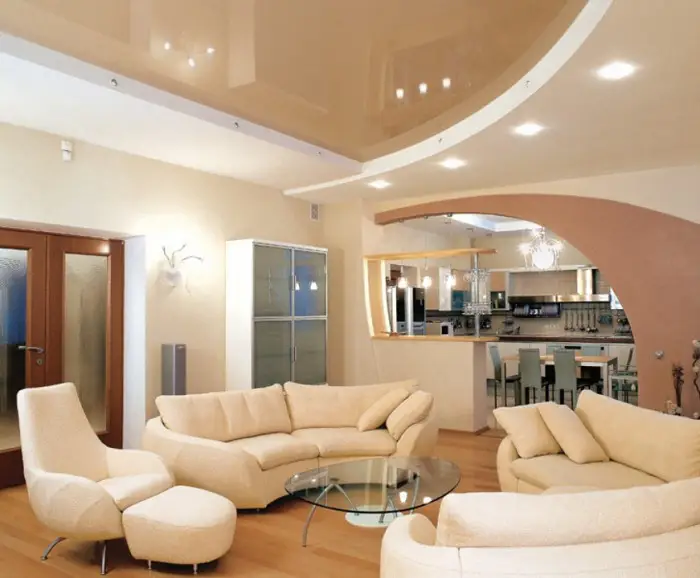
Photo 5 — Stylish Suspended Ceiling from Gypsum Board
Film and Fabric Suspended Ceilings
Stretch ceilings are one of the convenient options for ceiling finishing that do not require further finishing.
The film is waterproof and in an emergency can even save from flooding. Seamless fabric suspended ceilings absorb moisture but are considered more environmentally friendly.
The thin film and the pull effect mean that when touched with a sharp object, the ceiling will tear and the hole will expand, but it is easier to maintain than a film ceiling.
A good French ceiling, such as one from Clipso, offers guarantees of health safety and eco-friendliness. However, elite seamless ceilings are less decorative than film ones: they come in a smaller range and are mostly pastel colors, usually off-white.
Matte and glossy film suspended ceilings can be in various colors and even with patterns. A ceiling with photo printing becomes a work of art: designs, paintings, drawings, photos, and personal sketches can all be transferred onto the film.
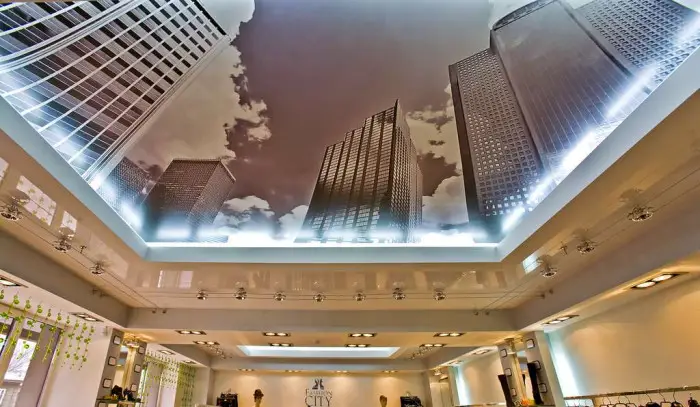
Photo 6 — Stretch Ceiling with Photo Printing
Suspended Ceilings – Special Types of Ceilings
It is worth mentioning some decorative and functional features of suspended ceilings.
Mirror and transparent ceilings are an excellent decoration for small rooms, making them visually larger, higher, and brighter. In mirror ceilings, the magical reflection of glass, crystal, metal, and other shiny lighting fixtures is particularly effective.
When choosing mirror ceilings, one should select the type that meets the requirements of the room. For example, a chrome-plated aluminum profile ceiling is suitable for a bathroom. Elegant suspended ceilings made from matte glass look great. For mounting mirror panels, the Armstrong-type system is used.
In large living rooms, small inserts made of mirror panels are usually installed because the cost of glass mirrors is quite high and a fully mirror ceiling would be very expensive. Slightly cheaper and lighter in weight are mirrors made from polycarbonate or acrylic glass.
Transparent vitreous ceilings are mounted in a similar way and, due to the cost of glass, are usually made from lightweight acrylic glass. Acrylic decorative vitreous panels with backlighting create a sense of airiness and add mystery to the interior.
Transparent and mirror ceilings make spaces endless, solemn, and full of light.
The cost of suspended ceilings made from acrylic glass starts at 350 rubles per panel, while a mirror cassette ceiling costs from 800 rubles per square meter.
Photo 7 — Beautiful Mirror Suspended System of Armstrong Type
It is worth mentioning a specific direction in suspended ceilings – acoustics. Sound-absorbing and noise-insulating suspended systems are produced by all global leaders in the suspended ceiling market.
Certainly, a sound-insulating suspended ceiling, even with sound absorption, will cost much more than regular recessed ceilings. The price per square meter of the Armstrong NEEVA suspended ceiling, which can be used even for creating a desired acoustic effect in cinemas and sound recording studios, starts at 600 rubles per square meter.
One of the key factors to consider when choosing a suspended ceiling is its safety, including fire resistance.
Non-flammable fire-resistant ceilings are, for example, metal ceilings. Fireproof suspended ceilings are generally most of the suspended ceilings produced by large manufacturers. The same mineral tiles can withstand high temperatures up to 2 hours. However, there are special fire-resistant ceilings that can withstand burning for even longer periods.