Cement Plaster: Overview of Types and Manufacturers
Cement Plaster: Composition, Types, and Mix Proportions
Based on composition and mix proportions for preparing the mixture, plaster can be of the following types:
Cement Plaster: Composition, Types, and Mix Proportions
Based on composition and mix proportions for preparing the mixture, plaster can be of the following types:
Cement-Lime Plaster
The main binding component is lime. The mixture for this type of plaster is prepared from the following materials: lime, sand, water, and cement. The cement mortar for plastering with lime added is prepared in the following proportions:
- lime – 21 kg,
- sand – 280 kg,
- water – 50 l,
- cement – 25 kg.
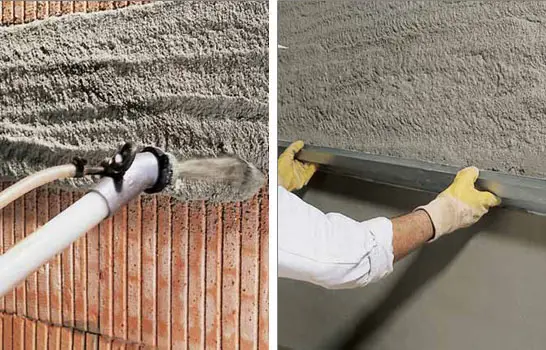
Photo 1 — Machine and manual methods of applying cement plaster
Application area: cement-sand plaster is allowed in rooms with high humidity levels, as under the effect of moisture the plaster does not crumble and does not lose its properties (perfectly suitable for treating surfaces in garages, basements, kitchens, and bathrooms).
IMPORTANT! Cement-lime plaster is one of the few materials that can be used on wood.
Manufacturers and Materials:
Cement-lime leveling plaster OSNOVIT STARTWELL-21 is used for facade finishing, wall and partition leveling in rooms of any humidity level (including bathrooms, kitchens, and toilets).
Technical Characteristics of the Plaster:
- maximum layer thickness – from 5 to 20 mm;
- material consumption – 1.8 kg/m² (at a 1 mm layer);
- compressive strength – more than 10 MPa;
- vapor permeability – more than 0.1 mg/m²hPa;
- packaging – in 25 kg bags.
Price: $5.9/25 kg.
Polimin SH 1 – leveling cement-lime plaster for use on mineral substrates indoors. Recommended to be applied only manually.
Technical Characteristics of the Plaster:
- maximum layer thickness – up to 20 mm;
- material consumption – 1.5 kg/m² (at a 1 mm layer);
- mixing proportions – 4–4.5 l water/kg of mix;
- packaging – in 25 kg bags.
Price: $3.65/25 kg.
Cement-Sand Plaster
Sand is used as the main binding agent. This type of plaster is suitable for leveling facades and other external surfaces, as well as internal walls.
IMPORTANT! This type of plaster is not recommended for use in rooms with high relative humidity.
Mixing the solution is done in a ratio of 1:5. The result is a relatively liquid consistency of the suspension.
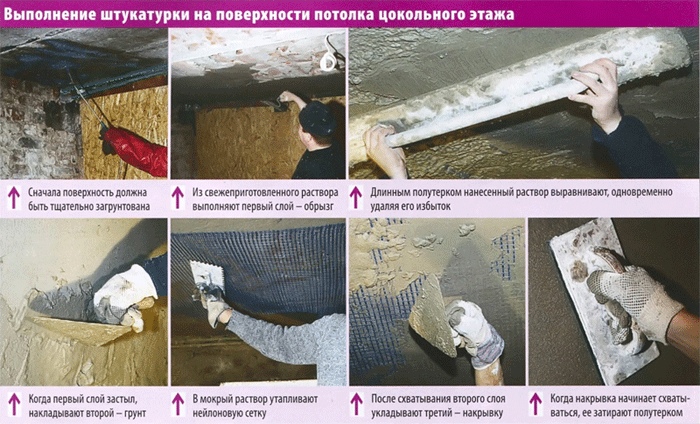
Photo 2 — Applying plaster on a ceiling surface
Manufacturers and Materials:
Weber Vettonit TT – cement moisture-resistant plaster for initial wall and ceiling leveling in indoor spaces and locally on external surfaces.
Technical Characteristics of the Plaster:
- maximum layer thickness – from 2 to 10 (30) mm;
- material consumption – 1.2 kg/m² (at a 1 mm layer);
- freeze resistance, cycles – up to 75;
- packaging – in 25 kg bags.
Price: $9.05/25 kg.
Gypsum Plaster
This material is similar to cement-sand plaster. The significant difference is the drying time: gypsum plaster dries much faster. Gypsum is often used where surface drying speed is important, such as ceiling work.
IMPORTANT! For long-term projects, it's not advisable to prepare the mixture in advance: gypsum plaster sets within 30 minutes of preparation!
Manufacturers and Materials:
One of the most popular mixes of this type is Knauf Rotband universal-type gypsum plaster (no need to skim). This type of plaster is used for ceiling and wall finishing on solid substrates: it can be applied to concrete, brick, cement plaster, polystyrene, and particle board.
Technical Characteristics of the Plaster:
- maximum layer thickness – from 5 to 50 mm;
- material consumption – 8.5 kg/m² (at a 10 mm layer);
- full drying – 6–7 days;
- packaging – in 5, 10, and 30 kg bags.
Price: $9.2/30 kg.
WOLMA-Sloy – manually applied gypsum-based plaster, can be applied to concrete, brick, gypsum blocks, cellular concrete, GKL, cement-lime plaster, etc.
Technical Characteristics of the Plaster:
- maximum layer thickness – from 5 to 60 mm;
- material consumption – 8–9 kg/m² (at a 10 mm layer);
- full drying – 5–7 days;
- packaging – in 30 kg bags.
Price: $9.1/30 kg.
Another quality plaster of this type is the “Strateli” plaster, designed for finishing walls and ceilings on brick, concrete, foam, and gas concrete substrates in rooms with normal humidity levels.
Technical Characteristics of the Plaster:
- maximum layer thickness – from 5 to 50 mm;
- material consumption – 9–10 kg/m² (at a 10 mm layer);
- drying time – 5–7 days;
- packaging – in 15 and 30 kg bags.
Price: $9.3/30 kg.
Other Materials Based on Cement:
Among other cement-based materials, we can highlight decorative plasters, cement-perlite mixes, and leveling compounds.
Bergauf Zement (Bergauf Cement) leveling compound is used for base preparation and applying a finish layer for all types of coatings. It can be applied using traditional manual methods or mechanized techniques.
Technical Characteristics of the Plaster:
- maximum layer thickness – from 6 to 50 mm;
- material consumption – 18 kg/m² (at a 10 mm layer);
- touch-dry time – 12 hours;
- maximum strength gain – 28 days;
- packaging – in 25 kg bags.
Price: $8.05/30 kg.
Cerexit ST-35 “beetle” decorative plaster (grain size 2.5 and 3.5 mm) provides impact-resistant surface finish for facades and interior walls, allowing to achieve a textured surface resembling wood that has been eaten by beetle larvae.
Technical Characteristics of the Plaster:
- maximum layer thickness – from 5 to 40 mm;
- material consumption – 2.5 kg/m² (at a 10 mm layer, grain size 2.5 mm) or 3.5 kg/m² (at a 10 mm layer, grain size 3.5 mm);
- application temperature – from 5 to 30°C;
- packaging – in 25 kg bags.
Price: $19.8/25 kg (grain size 3.5 mm).
Sarmat SH-24 – another cement plaster from the decorative group. Like Cerexit ST-35, Sarmat mix is mostly used for external work on mineral substrates.
Technical Characteristics of the Plaster:
- maximum layer thickness – from 3 to 10 mm;
- material consumption – 4–5 kg/m²;
- freeze resistance – 75 cycles;
- packaging – in 25 kg bags.
Price: $16.8/25 kg (grain size 2.5 mm).
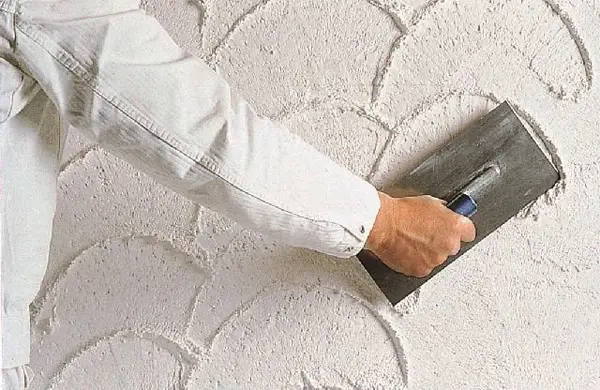
Photo 3 — Textured decorative plasters not only look great in facade finishing but also provide reliable thermal insulation
Cement-perlite plaster is a frost-resistant, non-flammable, eco-friendly, and plastic material capable of preventing rodent infestations and providing reliable sound insulation (plus excellent thermal insulation in any room).
Technical Characteristics of the Plaster:
- maximum layer thickness – from 10 to 30 mm;
- mixture ratio – 0.8 l water/kg of mix;
- consumption – 3.2 kg/m²;
- thermal conductivity – not more than 0.07 W/m°C;
- packaging – in 25 kg bags.
Price: $0.8/kg.
Plastering Walls with Cement Mortar: What Determines the Quality of Plaster?
Different quality requirements are set for different cement plaster compositions: for example, sand plaster must have minimal graininess, and surface bubbles in the mixture are acceptable. As for the substrate on which this plaster will be applied, there should not be visible relief variations.
Factors affecting the properties of cement plaster:
- weather conditions;
It is undesirable to work with cement plaster in high air humidity or at negative temperatures. Strong winds or drafts can cause uneven setting and, as a result, cracking.
IMPORTANT! If you have no choice in what weather to plaster external walls, add shampoo or oil additives at a rate of 5–10 g per every 10 liters of prepared mixture.
- significant thickness variation in plaster;
When plastering walls with cement mortar, the maximum thickness variation that can be covered without harming the finish coating is 50 mm. Uniformity in application is preferred, as a thinner layer will set faster and differences between layers can result in large cracks in the material mass.
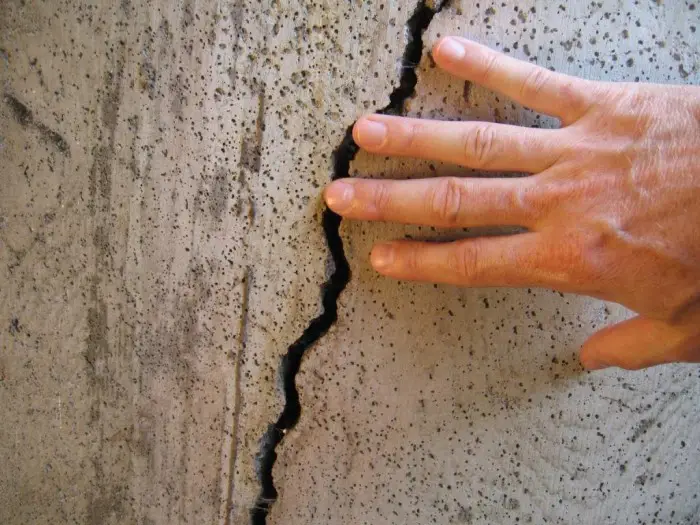
Photo 4 — To avoid cracking of the cement surface, maintain temperature conditions and ingredient proportions when preparing the mixture
- material quality;
The plaster composition must be homogeneous, and when preparing additional material for coating one wall, the proportions of the first mixture must be preserved. Otherwise, the plaster may crack and visible joints between two mixtures will appear.
IMPORTANT! It is not recommended to quickly smooth out irregularities on plaster. Cement mortar needs time to set properly, during which air will exit from the composition and bubbles won’t form in the mass. Therefore, wait about 15–20 minutes after application.
Acid Etching of Cement Plaster with Neutralizing Solution
Plaster will last longer, and the surface of the mixture will not develop mold, while physical and mechanical properties of the coating will be better if acid etching is applied.
Neutralizing acid solutions are used for etching cement plaster.
During this type of work, the following is mandatory:
- use protective gear such as gloves, apron, mask, and respirator;
- etching must be done only in a well-ventilated room;
- in case of contact with clothing or skin, immediately rinse the affected area with a large amount of cold tap water.
Etching Cement Plaster: Work Procedure
Remove paint layer, old wallpaper, dust, and any type of dirt from the wall.
Mix components of the neutralizing solution in proportions and order as specified by the manufacturer.
Apply the suspension to the wall using a brush or spray gun.
Wait for the mixture to dry (approximately 15–18 minutes) and then rinse thoroughly with water.
After that, you can proceed to plastering.