Facade Decorative Stucco: External Renovation
For facade stucco, as a protective and decorative material, the following properties are characteristic: it is moisture-proof finishing, i.e. the material will not change under the influence of moisture;
Facade decorative stucco: technical characteristics
For facade stucco, as a protective and decorative material, the following properties are characteristic:
- it is moisture-proof finishing, i.e. the material will not change under the influence of moisture;
- it is vapor-permeable finishing, which allows walls of a house and internal rooms to 'breathe', i.e. moisture will not accumulate in the house or between layers of finishing materials, and mold or mildew will not form;
- it is frost-resistant, resistant to environmental conditions finishing, which does not lose its color and physical properties over time;
- it is durable finishing, able to withstand strong mechanical loads while maintaining its integrity;
- it is sound and heat-insulating finishing, with minimal thermal conductivity allowing more heat to be retained in the house and reducing noise levels entering internal rooms;
- it is structured finishing, allowing for textured surfaces of any kind to be created on the facade (e.g., pebble stucco creates a textured surface on walls).
This type of finishing can be painted in any color due to a wide selection of colorants.
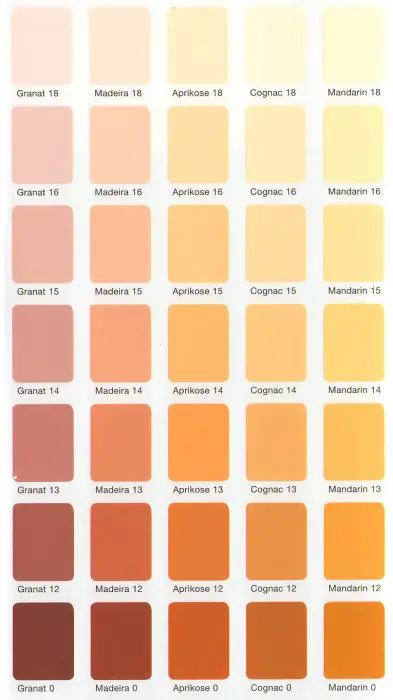
Figure 1 — Color chart from Caparol (Kaparol) for facade painting
Types of facade stucco
Facade stuccos can be classified using two principles of division: by structural differences and by composition variations.
Types of facade stucco by structure:
- corroded;
- fleece;
- ram;
- stucco paint.
Types of facade stucco by composition:
- mineral;
- acrylic (polymeric);
- silicone;
- silicate.
In terms of which type looks better—smooth or textured, corroded or ram—no one can be your advisor, but the composition that best adheres to wall surfaces is silicone structured stucco—this is a ready-to-use elastic mixture that is not only easy to apply but also simple to paint.
IMPORTANT! Among the listed types of stucco, mineral is a dry mixture that requires water dilution for use, while the other types are ready-made stuccos. We recommend using the latter due to their simplicity of use and minimal additional costs.
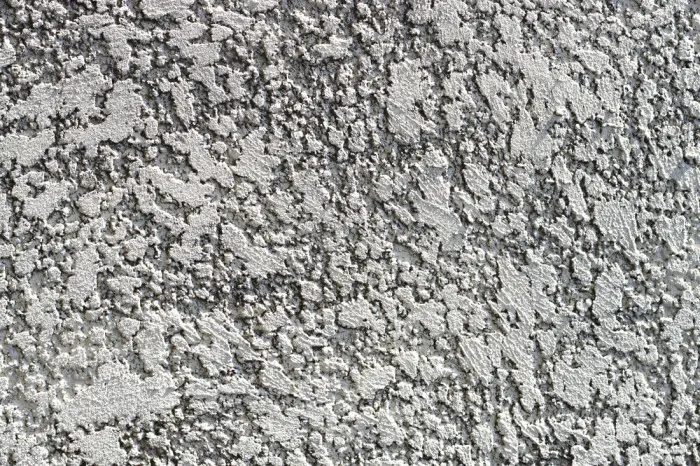
Photo 1 — Facade stucco under stone
Unlike mineral stucco, which is often sold only in white and less frequently in pastel shades, ready-made stucco is not only white but also colored (i.e., already painted, which simplifies working with the material).
IMPORTANT! Facade stucco, like any other type of textured stucco, is painted with special colorants. Dry mixes are applied to walls, while ready-made ones are painted before application.
In addition, facade stucco can be divided into three types:
- hand-applied stucco;
- mechanized stucco application;
- universal stucco.
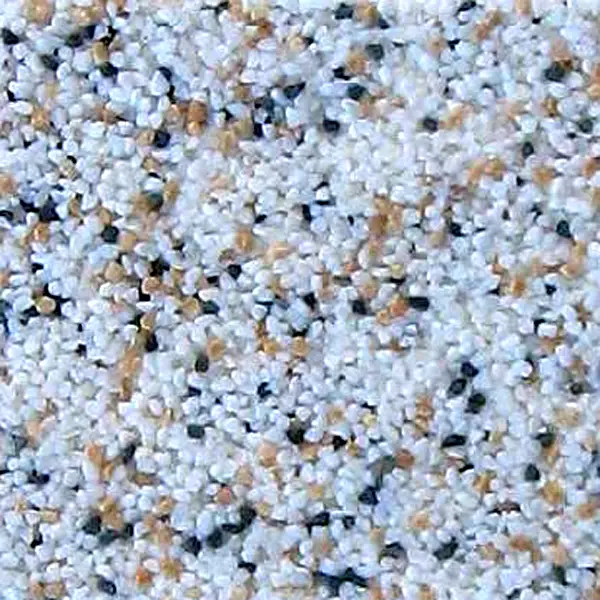
Photo 2 — Facade stucco with marble chips from Drewa is used on facades over rough stucco, concrete, any new mineral surfaces, and sand concrete (excellent facade stucco, consumption is 5 kg per sq m)
Price of facade stucco
If we're talking about textured stucco, we insist that beginners doing the work themselves use only ready-made mixes. Here's why:
- they are more convenient to transport and store;
- they are less labor-intensive (dry mix must often be mixed in small batches, allowed to settle, and the mixture must be applied before it hardens, whereas acrylic stucco only requires opening and closing a convenient plastic packaging);
- they are more economical in terms of consumption per square meter;
- they are cheaper (yes, the initial cost of the material might seem inflated, but when working with dry mixes, you will pay extra for primers, special protective paints, and other expensive auxiliary materials).
IMPORTANT! Do not be discouraged by the fact that ready-made stucco costs more despite a smaller package weight. What matters is not this figure but the specific weight of the material itself.
Based on the above classification, we get the following price list:
- Hercules – cement-based stucco – $5.9/25 kg;
- Strategos – cement-sand stucco for manual and machine application – $6.4/25 kg;
- Knauf Unterputz – cement facade stucco – $6.4/30 kg;
- VOLMA-Aquasloy – cement facade stucco in dry form – $6.7/30 kg;
- ATLAS (VIST) – facade stucco – $6.8/25 kg;
- Bolars – cement-sand based stucco – $8.9/25 kg;
- Knauf-Diamond – cement decorative stucco – $10.9/25 kg;
- Baeramiks – mosaic decorative facade stucco – $46.5/25 kg;
- Bergauf DIADEMA PASTA (Bergauf Diadema Pasta) – white ready-made water-resistant elastic facade stucco – $50.8/25 kg;
- VETONIT – ready-made decorative acrylic stucco – $60/25 kg;
- LAEZ Fine Fix – warm finishing for stuccoed (with cement mortar), stone, concrete facades, OSB, CSP – $73.2/25 kg.
Additionally, there are stone, terrazzo stucco for facades and graphite stucco.
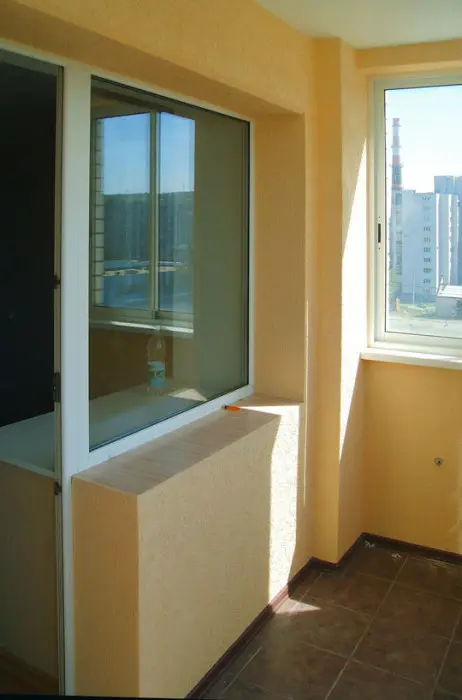
Photo 3 — Textured finishing on a balcony
Applying facade stucco to different surface types: materials
- on OSB, apply special elastic stucco from Rupan with a stainless steel spatula, brush, or spray (material consumption is 2.5 kg/sq m);
- on wood, use Rustika stucco from Clavel (cost is $74.6/25 kg), pre-primer the surface;
- on brick, apply decorative stucco of the 'corroded' type Ceresit (Ceresit) ST 35 (consumption at a grain size of 3.5 mm is up to 4 kg/sq m);
- on aerated concrete – facade stucco TM Terraco type 'fleece' (adhesion for aerated concrete is 0.3 MPa);
- for work on insulation, suitable products from TM Glims, previously mentioned TM VOLMA products, materials from Senegry (among which is quality American product) and other companies;
- for external work on most other materials (on polystyrene, ceramic coatings, gas silicate blocks, foam blocks, etc.), you can buy silicone stucco BauMIT SiliconeTop.
For applying some types of materials, you may need reinforcing fiberglass mesh for stucco if the layer thickness exceeds 50 mm.
IMPORTANT! When purchasing products, pay attention to the packaging: it should include not only the material application technology (how to apply, in what proportions to dilute, what tools are best for work), but also the manufacturer's recommendations regarding the use of auxiliary materials (primers, base surfaces, additives that improve adhesion).
Facade stucco: VIDEO
Facade stucco: price of work
- in Moscow – 220 rubles/sq m;
- in Kiev – from 65 UAH/sq m.