Warm Stucco — Winter Won't Get Through
What is insulating stucco? It is a construction mixture with insulating properties, which it acquires due to materials with low thermal conductivity in its composition:
• Polymer additives (hydrophobic, plasticizers, etc.).
• Porous filler (polystyrene granules, perlite sand, foam glass).
• Lime, gypsum, cement and their mixtures as a binding agent.
The porous filler with numerous air bubbles protects the room from heat loss.
Warm stucco does not belong to finishing coating. Usually, decorative stucco or other decorative finishing materials are applied on top of it.
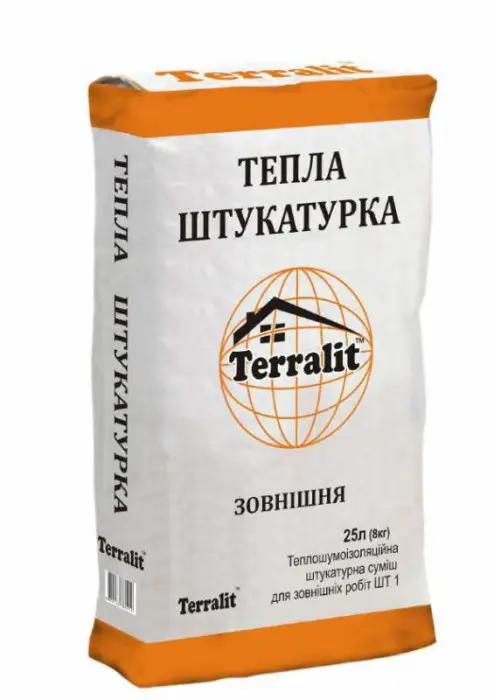
Photo 1 — Warm Terralit Stucco
Insulating Stucco: Essence and Composition
What is insulating stucco? It is a construction mixture with insulating properties, which it acquires due to materials with low thermal conductivity in its composition:
- Polymer additives (hydrophobic, plasticizers, etc.).
- Porous filler (polystyrene granules, perlite sand, foam glass).
- Lime, gypsum, cement and their mixtures as a binding agent.
The porous filler with numerous air bubbles protects the room from heat loss.
Warm stucco does not belong to finishing coating. Usually, decorative stucco or other decorative finishing materials are applied on top of it.
Thermal Conductivity of Stucco
The thermal conductivity of stucco can be called its weak point. Although the stucco is insulating, the thermal conductivity coefficient of warm stucco with polystyrene granules in its composition will, on average, be 1.5–2 times higher than that of polystyrene foam, extruded polystyrene or mineral wool.
We conclude that with such a thermal conductivity coefficient, the layer of warm stucco must be 1.5–2 times thicker. At the same time, we remind you that the thickness of the warm stucco layer should not exceed 0.5 centimeters. Therefore, wall insulation must be done both from the inside and outside. Moreover, as we already mentioned, a layer of decorative stucco will still have to be applied on top.
However, despite these drawbacks, warm stucco has undeniable advantages.
- Fast application
- No need for reinforcement mesh (except at corners and cracks).
- Surface does not require leveling.
- Has good adhesion (stickiness).
- No thermal bridges, as there are no metallic connections.
- Vermin cannot settle in walls insulated with warm stucco.
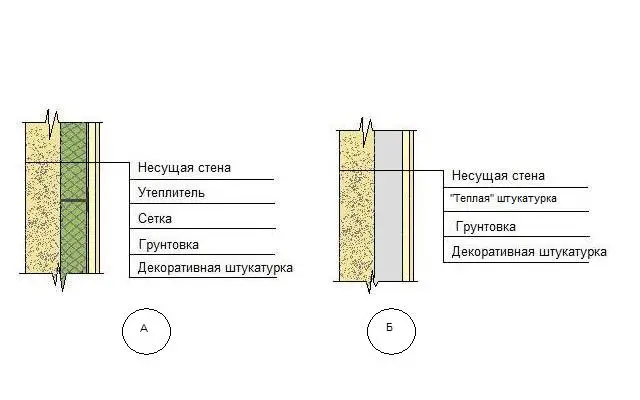
Figure 1 — Finishing with warm stucco compared to regular insulation
Warm Stucco. Insulation Under Stucco
If you have regular, not warm stucco, insulation is simply necessary. Thin-layer decorative stucco will not protect your house from the cold, even if it gives it an aesthetically pleasing appearance.
Thus, two types of materials are usually used:
- Mineral wool
- Polystyrene foam
The second material, although significantly cheaper and easier to install, is very toxic, has low fire resistance, and poor vapor permeability.
Mineral wool, in its turn, is an excellent insulator under stucco. The material is non-flammable, environmentally safe, and vapor-permeable. However, it is not as popular due to numerous installation nuances and higher cost.
Today, basalt insulation under stucco is also used in construction (e.g., Rockwool, Termolife, Knauf insulation). Basalt insulation has serious advantages over regular mineral wool, although it belongs to the same class.
- Basalt insulation is more durable.
- Installation is more convenient. Easy to cut.
- Not afraid of vibrations and ultraviolet light.
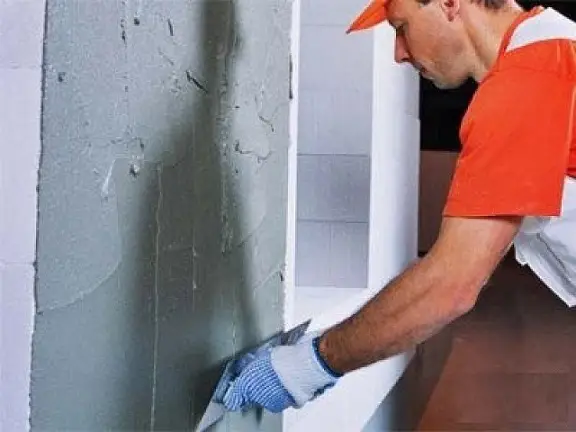
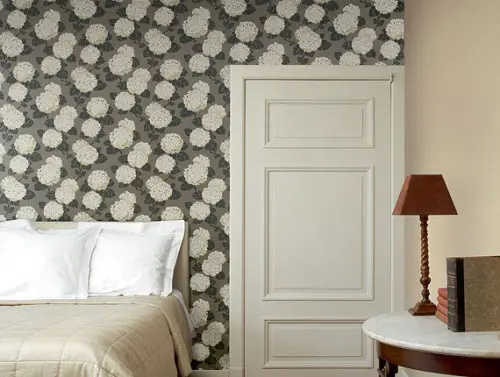
Photo 2 — Interior finishing
Facade Insulation and Stucco
Facade insulation and stucco — processes that determine how long heat will remain in your home and how long it will maintain its appearance. Therefore, such matters should be approached according to all the rules.
Insulating stucco, despite its advantages, has additional drawbacks besides the previously listed ones. Therefore, reviews of using warm stucco are mixed. Some call it a successful alternative to regular insulators (mineral wool, polystyrene foam, and expanded polystyrene), others — an unprofitable investment.
Warm stucco lags behind other insulators in some technical characteristics: in thermal conductivity, it is much denser, heavier, more expensive, and takes much longer to pay off.
Based on this, warm stucco is recommended for use in isolated or complex conditions:
- Where it's inconvenient to use regular insulators (complex elements, joints, seams)
- On small areas (corners, foundations)
- For interior work (wall finishing)
- For ceiling insulation
Today, there is a wide selection of warm stucco products on the construction market. Among them are popular stucco mixes such as insulating stucco “Umka” (Umka), warm stucco “Mishka”, stucco “Thermofix”, Haunklif (HAUNKLIF), WarmMix (WarmMix), Terralit (Terralit), Thermover (Thermover), ThermoUM (ThermoUM), and Heatver.
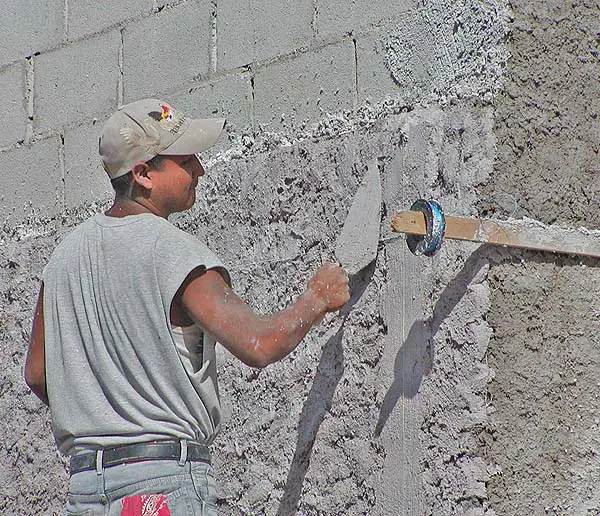
Photo 3 — Facade finishing
Warm Stucco, Price
Warm stucco is available in any construction store or on a construction website. The price depends on volume and manufacturer.
- Kiev, stucco “Umka” — price 140 UAH (can be purchased in 7 kg packaging).
- Moscow, “Umka” — depends on the number of bags, from 525 to 710 rubles.
- Kiev, “Terralit” — 72 UAH for 25 kg.