Fibreglass Vs Concrete - Everything You Need to Know
When you decide to build a swimming pool, selecting the right construction material sets the foundation for your backyard layout, your ongoing leisure budget, and your property value. For decades, poured or shot concrete was the undisputed standard for residential swimming pools. Over the past few decades, engineered pre-formed composite shells have turned into a strong competitor, prompting many homeowners to evaluate fibreglass swimming pools against traditional concrete construction.
Both pool types offer distinct engineering qualities, aesthetic profiles, and ownership profiles. In this comprehensive comparison, we break down installation timelines, upfront and ongoing costs, site logistics, salt water compatibility, and surface care so you can choose the ideal build for your home architecture and lifestyle.
Key Takeaways
- Choose fibreglass if you want installation wrapped up in 2 to 4 weeks, whereas concrete projects require 3 to 6 months of construction and curing.
- Plan for custom shapes, vanishing edges, or deep diving zones with concrete, as fibreglass shells remain capped at roughly 16 feet wide by road transit limits.
- Save substantially on long-term upkeep by opting for fibreglass, which averages $2,500 to $4,500 in 10-year maintenance compared to $15,000 to over $25,000 for concrete.
- Pair salt water chlorination systems with fibreglass shells without hesitation, while concrete plaster requires upgraded pebble or tile finishes to resist salt damage.
- Budget for concrete resurfacing every 10 to 15 years at an estimated cost of $7,000 to $15,000, while quality fibreglass gelcoats last 15 to 30 years before refinishing.
Fibreglass vs Concrete Pool: Costs, Maintenance, and Design Comparison
When you decide to build a swimming pool, selecting the right construction material sets the foundation for your backyard layout, your ongoing leisure budget, and your property value. For decades, poured or shot concrete was the undisputed standard for residential swimming pools. Over the past few decades, engineered pre-formed composite shells have turned into a strong competitor, prompting many homeowners to evaluate fibreglass swimming pools against traditional concrete construction.
Both pool types offer distinct engineering qualities, aesthetic profiles, and ownership profiles. In this comprehensive comparison, we break down installation timelines, upfront and ongoing costs, site logistics, salt water compatibility, and surface care so you can choose the ideal build for your home architecture and lifestyle.
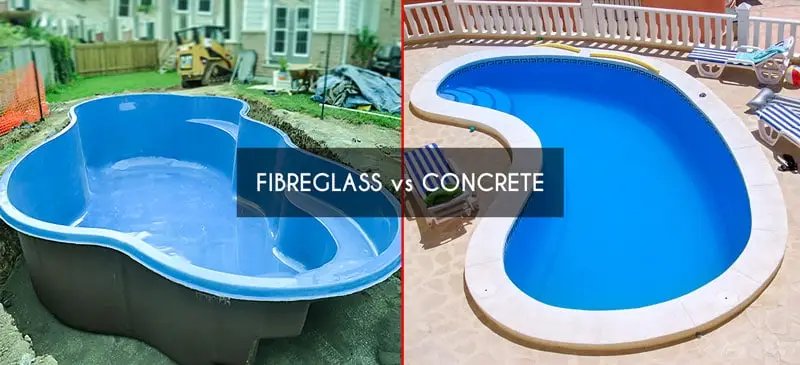
Head-to-Head Overview: Concrete vs Fibreglass Pool Pros and Cons
Understanding the fundamental architectural differences between concrete and fibreglass helps establish realistic expectations before breaking ground. Concrete provides custom masonry flexibility sculpted directly inside your excavation pit, whereas a fibreglass pool is an off-site manufactured composite structure lowered into position.
| Feature | Fibreglass Swimming Pools | Concrete (Gunite / Shotcrete) Pools |
|---|---|---|
| Installation Time | 2 to 4 weeks on site | 3 to 6 months on site |
| Design Flexibility | Pre-formed factory shapes and dimensions | Unlimited custom shapes, depths, and vanishing edges |
| Surface Texture | Smooth, non-porous gelcoat finish | Textured plaster, aggregate, or tiled finish |
| Chemical Demand | Low; inert surface resists algae anchoring | High; porous, alkaline surface alters water pH |
| Saltwater Suitability | Exceptional; completely inert to salt erosion | Moderate; requires resilient plaster or tile shielding |
| 10-Year Maintenance Cost | Low; routine balancing and filtration | High; periodic acid washing and replastering |
| Structural Warranty | Often extensive manufacturer warranties on shell | Builder-dependent structural warranties |
Installation Timelines and Weather Vulnerability
Prefabricated fibreglass pools install in just two to four weeks with minimal weather delays, whereas on-site concrete construction requires three to six months of curing and finishing.
The construction schedule affects not only your landscaping plans but also your daily privacy and comfort. Concrete pool construction is a months-long masonry operation that remains vulnerable to seasonal delays. Pouring concrete or spraying pneumatic shotcrete requires an extensive series of distinct stages: deep excavation, steel rebar grid tying, plumbing rough-in, concrete shooting, a mandatory 28-day water-curing period, waterline tiling, coping stone setting, and final interior plastering. Excessive rain, sub-freezing temperatures, or intense heatwaves can stall concrete curing and interior plaster applications, extending site disruption to between three and six months.
By contrast, composite shells from manufacturers like Fibreglass Pools Sydney arrive on site pre-cast, cured, and weather-tested straight from a quality-controlled factory floor. Because the structural manufacturing happens indoors, ground installation moves at a rapid pace:
- Excavation of the pool bed to the shell’s exact laser-levelled contour.
- Laying and compacting a level gravel or sand foundation base.
- Craning the prefabricated shell into the pit and checking elevation levels.
- Simultaneously filling the shell with water while backfilling the surrounding cavity with crushed aggregate to equalize internal and external pressure.
- Plumbing the filtration equipment and pouring the structural concrete bond beam for your coping pavers.
With fibreglass, the swimming shell is usually positioned, plumbed, and filled within days, while complete decking and fencing finish within two to four weeks. This rapid completion drastically reduces unpredictable labor expenses and shortens the disruption to your garden.
Site Access and Logistical Engineering Limits
Before committing to a specific design, evaluate your property’s topography, boundary access, and overhead infrastructure. Fibreglass pools face strict roadway shipping limitations that cap their physical dimensions. In most jurisdictions, state transport regulations restrict prefabricated freight to widths under 16 feet (approximately 5 meters) without extensive escort caravans and specialized routing. Transportable lengths rarely exceed 40 feet (12.19 meters), and maximum depths normally hover around 8.5 feet (2.6 meters). In tight urban settings with narrow side boundaries, dense tree canopies, or overhead utility wires, hoisting a bulky monocoque shell into place requires an industrial high-tonnage mobile crane, which adds significant logistical overhead.
Concrete pools, on the other hand, require no wide-load transport permits. Raw steel rebar, PVC pipework, and pumped shotcrete mix pass through standard pedestrian side gates, narrow urban alleyways, or steep hillside properties via standard delivery hoses. If your architectural vision demands extreme depths for diving boards, irregular geometric layouts wrapped around exterior foundation pilings, or zero-lot-line perimeter walls, concrete delivers structural adaptability that pre-formed factory shells cannot accommodate.
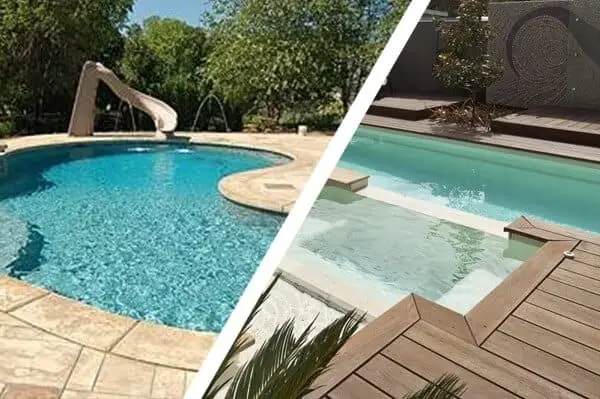
Maintenance, Surface Chemistry, and Algae Prevention
Fibreglass features a non-porous gelcoat that naturally resists algae and stabilizes water chemistry, cutting weekly scrubbing and chemical costs significantly compared to porous concrete plaster.
Daily maintenance and chemical balancing reveal the starkest functional differences between these two surfaces. Fibreglass pool maintenance requires noticeably fewer sanitizing chemicals and hands-on scrubbing hours than a concrete basin. The primary reason lies in the non-porous gelcoat finish applied during factory lamination. Because the gelcoat presents a slick, non-reactive barrier, microscopic algae spores cannot embed themselves into structural pores. When debris enters the pool, you can quickly sweep it away with a manual vacuum or soft bristle nylon brush without harsh abrasive scouring.
Concrete plaster, conversely, is a porous alkaline material composed of Portland cement, sand, and aggregate. This chemical composition actively impacts pool water chemistry and maintenance routines:
- pH Instability: The raw calcium hydroxide in cement continuously leaches into pool water, driving pH and total alkalinity upward. To counter this alkaline drift, concrete pool owners must add muriatic (hydrochloric) acid frequently to maintain safe water equilibrium.
- Deep Algae Infestation: Porous cement cavities shelter stubborn black algae colonies, which build protective waxy outer shells inside microscopic pinholes. Eradicating black algae requires sustained shock treatment, concentrated algaecides, and aggressive wire-brush scouring.
- Periodic Acid Washing: Every 3 to 5 years, concrete pools generally require complete drainage and professional acid washing to strip away calcium scale deposits and stubborn biological discoloration from the plaster layer.
Because fibreglass is chemically inert, it neither raises nor lowers your water pH. The filtration pump runs fewer daily turnover hours to keep water crystal clear, which prolongs filter media life and lowers seasonal electrical power bills.
Salt Water Compatibility: Corrosion vs Chemical Inertia
Saltwater chlorination systems have become exceptionally popular because they generate continuous free chlorine through electrolytic cells, yielding gentle, silky water without harsh chemical odors. However, the salinity required by these systems can interact aggressively with porous construction materials.
Fibreglass shells are impervious to the abrasive action of dissolved salt. The hardened gelcoat acts as a non-permeable membrane that experiences zero degradation from saline exposure. You can operate a salt chlorine generator at recommended levels year after year without eroding the pool walls, bleaching color tones, or pitting the steps.
In contrast, standard plaster finishes in concrete swimming pools degrade faster under regular salt exposure. Saltwater can seep into concrete micro-fractures, where evaporating water crystals expand and cause delicate plaster spalling or surface delamination. Homeowners opting for concrete with saltwater generators must upgrade their interior surfaces to premium quartz aggregates, pebble finishes, or fully vitreous glass tiles, while sealing porous coping stones to prevent efflorescence and premature breakdown.
Thermal Insulation and Energy Consumption
Heating expenses constitute a significant share of your operational pool budget, especially if you extend your swim season into autumn and early spring. The natural thermal properties of your structural pool shell influence your daily heating demands.
Composite fibreglass acts as a natural thermal insulator that reduces thermal loss into surrounding ground soil. Because the reinforced polymer barrier slows conductive heat dissipation, water warmed by heat pumps or solar systems reaches your target temperature faster and holds warmth longer overnight. In regions with cool soils or variable seasonal weather, this insulation helps lower your monthly heating expenses.
Concrete structures act as thermal conductors, readily absorbing warmth from the water and transferring it directly into the cooler surrounding ground. Consequently, heating a cold concrete pool takes longer and demands higher energy output from your heater. Coupled with the longer filtration pump runtimes needed to scrub concrete surfaces, energy consumption across heating and circulation remains distinctly higher with concrete builds.
Surface Texture, Ergonomics, and Swimmer Comfort
The tactile feeling of your pool shell plays an essential role in swimmer comfort, especially for children who spend hours splashing, diving, and playing on shallow shelves. The differences between finishes are immediately noticeable underfoot.
A standard concrete plaster or aggregate finish is inherently abrasive. Rough concrete textures can snag delicate swimwear, graze sensitive elbows, and cause foot abrasions during extended swimming sessions. While exposed pebble aggregates offer a luxurious organic appearance reminiscent of a natural riverbed, they can feel harsh under bare feet without specialized, rounded stones. Achieving a soft, silk-like tactile feel in a concrete vessel requires investing in polished pebble aggregates or high-end porcelain glass tile mosaics.
Fibreglass pools provide an ultra-smooth, glass-like interior across all main wall and floor surfaces. Modern moulds incorporate molded slip-resistant textures directly onto entry steps, tanning ledges, and bench seating. This tactile layout gives swimmers reliable traction when entering or leaving the water without creating sharp edges that cause skin scrapes or minor abrasions.
Long-Term Total Cost of Ownership: 10 to 20-Year Analysis
While upfront purchase prices can be similar, concrete pools require periodic acid washing and resurfacing every 10 to 15 years, leading to substantially higher 10-year ownership costs.
When budgeting for an inground pool, focusing solely on the initial construction invoice can be misleading. A true financial assessment evaluates the total cost of ownership over ten to twenty years, factoring in routine sanitizing chemicals, operating power, and recurring resurfacing outlays.
| Expense Category | Fibreglass Pool (10-Year Estimate) | Concrete Pool (10-Year Estimate) |
|---|---|---|
| Initial Build & Installation | Moderate to High ($50,000 – $85,000+) | High to Very High ($60,000 – $110,000+) |
| Water Treatment Chemicals | $1,500 – $2,500 total ($150 – $250/yr) | $4,500 – $7,500 total ($450 – $750/yr) |
| Filtration Electricity | Lower daily pump cycle runtimes | Higher pump runtimes to distribute chemicals |
| Acid Washing | Not required ($0) | Every 3 to 5 years ($600 – $1,200 per service) |
| Resurfacing & Replastering | None within first 10 years ($0) | Every 10 to 15 years ($7,000 – $15,000+) |
| 10-Year Maintenance Total | $2,500 – $4,500 | $15,000 – $25,000+ |
While fibreglass swimming pools can carry an initial installation investment comparable to an entry-level concrete shell, their lifetime ownership costs remain substantially lower. Concrete pool replastering costs often reach $7,000 to $15,000 or more every 10 to 15 years, along with recurring waterline tile repairs. Over twenty years of active enjoyment, maintenance savings on a composite shell can offset a substantial portion of the original purchase price.
Structural Lifespan, Guarantees, and Gelcoat Longevity
A properly poured, steel-reinforced concrete pool boasts an exceptional structural lifespan that can endure for fifty years or longer when engineered to withstand surrounding soil shifts. If surrounding soils contain expansive clays or high groundwater tables, structural mass prevents buoyancy issues, provided adequate hydrostatic relief valves are maintained. However, the cosmetic plaster interior remains a sacrificial layer that requires consistent restoration throughout the structure’s life.
Composite swimming pools demonstrate notable tensile strength and structural flexibility. Engineered lamination allows the shell to flex slightly under earth movement without cracking, making it a reliable solution for sites prone to mild seismic shifts or reactive soil swelling. High-grade models come equipped with lifetime structural warranties from reputable composite manufacturers. Homeowners must understand that manufacturer lifetime warranties typically cover structural integrity rather than the cosmetic gelcoat surface finish.
While fiberglass pools do not need routine scheduled replastering like concrete, they can require resurfacing after 15 to 30 years due to wear, minor chalking, or osmotic gelcoat blistering. When refinishing eventually becomes necessary after decades of service, certified technicians can apply specialized epoxy coatings, thermal polymers, or polyurea spray systems on site to restore the pool’s smooth, lustrous aesthetic.
Design Customization, Built-In Features, and Architectural Integration
Your swimming pool should complement your home’s exterior architecture, outdoor dining zones, and surrounding garden levels. The architectural flexibility of your material dictates how smoothly the final project integrates into your landscape plan.
If your project demands bespoke masonry lines, concrete provides boundless architectural freedom. An experienced landscape architect can adapt concrete to follow curved retaining walls, cantilevers over hillside slopes, custom sunken swim-up bars, perimeter vanishing overflow edges, or custom wading depths designed for lounging chairs. Concrete pools accommodate natural stone rockeries, integrated grottos, and custom spa spillways without factory-mould boundaries.
Fibreglass manufacturers have expanded their catalogs with refined contemporary designs to meet modern architectural trends. Most current models feature clean geometric rectangles, wide entry benches, integrated shallow splash decks, and dedicated spa combinations. Modern shells also incorporate shimmering mica-infused gelcoats in diverse hues, custom waterline accent tiles, and pre-moulded recessed LED lighting positions. While you select from set catalog shapes, these standardized models integrate seamlessly into modern clean-lined gardens with custom surround decking and stone coping.
Conclusion: Selecting the Right Pool for Your Property
Choosing between a concrete and a fibreglass pool ultimately balances your appetite for custom architectural shapes against your tolerance for ongoing maintenance outlays and construction timelines. If your backyard features unusual boundary dimensions, steep grade changes requiring integrated retaining structures, or a desire for deep diving ends, a concrete pool delivers custom engineering tailored to your site.
If you prefer a streamlined installation process, a silky surface gentle on bare skin, low weekly chemical maintenance, and seamless compatibility with saltwater chlorination, a fibreglass pool offers exceptional performance. By balancing initial site logistics against long-term operational costs, you can invest with complete confidence and create an outdoor living space your family will enjoy for decades to come.