Time Poor But Want A Brilliant Garden? Use Smart Tech
A thriving garden softens architectural lines, improves outdoor living spaces, and adds curb appeal to any home. Yet the traditional upkeep required to keep lawns manicured and flower beds lush often turns gardening into an exhausting weekend chore. If you love the look of a vibrant landscape but lack the hours needed to manage daily watering, mowing, and fertilizing, smart garden technology offers a practical solution.
Connected garden devices have evolved far beyond basic battery timers and manual sprinklers. Today, intelligent controllers, automated sensors, and robotic tools communicate over your home network to monitor soil health, react to weather patterns, and maintain turf with minimal manual intervention. In this comprehensive guide, we explore how smart garden systems work, how to plan your outdoor network, and which tools will give you the best return on your investment in both time and plant vigor.
Quick Takeaways
- Switch to an EPA WaterSense smart irrigation controller to eliminate overwatering and cut outdoor water waste by up to 50 percent.
- Install multi-metric soil sensors rated IP67 to track moisture, temperature, light, and nutrient levels directly around delicate root zones.
- Select wire-free robotic lawn mowers with RTK-GPS tracking to maintain manicured turf daily without burying perimeter boundary cables.
- Position an exterior-facing Wi-Fi mesh node to ensure signals penetrate brick, stucco, and low-E glass to reach all yard devices.
- Bring compact hydroponic planters indoors to grow fresh herbs and greens on automated light and feeding cycles with zero soil maintenance.
Smart Garden Technology: How to Automate Your Yard and Plant Care
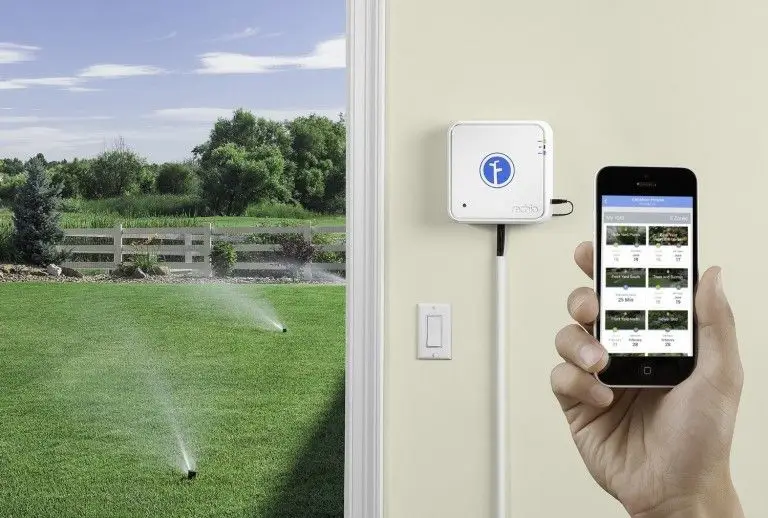
Smart Irrigation Controllers and Automated Garden Watering
Smart irrigation controllers cut landscape water waste by up to 50 percent by dynamically syncing watering cycles with hyper-local rainfall forecasts and soil evapotranspiration rates.
Upgrading to a smart irrigation controller is the single most effective way to eliminate landscape water waste while keeping plants healthy. Traditional mechanical sprinkler timers turn on regardless of conditions, frequently spraying lawns during heavy downpours or baking grass under waterlogged soil. Smart watering systems replace rigid schedules with dynamic, data-driven irrigation.
These devices connect directly to your local Wi-Fi network and tap into hyper-local weather forecasts through the Internet of Things. If rain is predicted within your area, the controller automatically delays your scheduled cycle. When prolonged heat or dry wind is detected, the system calculates the rate of evapotranspiration, which measures how quickly moisture evaporates from soil and plant leaves, and increases water output accordingly.
Zone-Based Watering and Flow Management
Modern landscapes consist of distinct microclimates and planting types that require tailored irrigation routines. A smart controller allows you to divide your property into independent zones, ensuring each receives the exact volume of water it requires:
- Turfgrass zones: Require deeper, less frequent watering cycles that encourage root growth rather than shallow daily misting.
- Shrub and perennial borders: Benefit from low-volume drip lines placed close to root balls to minimize foliage wetness and fungal disease.
- Raised vegetable beds: Need consistent, moderate moisture delivery adapted to rapid growth cycles and shallow root systems.
- Container displays: Rely on targeted micro-emitters because potting soil dries out significantly faster than native ground soil.
Many smart controllers carry EPA WaterSense certification, meaning they have met independent performance criteria for efficiency and water conservation. By coupling dynamic weather adjustments with flow meters that detect pipe leaks or broken sprinkler heads, these systems prevent catastrophic water bills while keeping your landscape in peak condition.
Soil Moisture Sensors and Real-Time Plant Health Monitors
Even with weather-based forecasting, ground conditions can vary substantially across different parts of your yard. Dense clay soil retains moisture for days, while sandy garden beds drain almost immediately, and areas beneath dense tree canopies stay dry during light showers. This is where dedicated soil moisture sensors and plant health monitors prove invaluable.
Soil sensors measure the physical environment around plant root zones and feed accurate telemetry back to your phone or irrigation hub. Instead of guessing whether an ornamental shrub or garden bed needs hydration, you simply place a probe into the ground. These compact monitors generally track four critical metrics:
- Moisture levels: Prevents overwatering, which rots delicate root systems, and underwatering, which causes heat stress.
- Sunlight exposure: Tracks daily photosynthetic active radiation (PAR) and light hours to verify whether a plant is receiving its required full-sun or partial-shade conditions.
- Soil temperature: Helps you time spring planting or fall seed sowing precisely when ground temperatures become optimal.
- Electrical conductivity (fertility): Gauges the concentration of dissolved mineral salts in the soil to tell you when it is time to feed your plants.
When paired with mobile apps, these sensors match readings against botanical databases with thousands of species profiles. You receive clear push notifications explaining whether your hydrangea needs water, your boxwood needs fertilizer, or a potted citrus tree is getting insufficient morning sun.
Next-Generation Robotic Lawn Mowers
Modern robotic mowers use wire-free RTK-GPS navigation to trim grass tips daily, recycling fine nitrogen-rich clippings back into your turf while completely eliminating petrol emissions.
Mowing the lawn is one of the most time-consuming aspects of property maintenance, and maintaining a manicured finish often requires cutting every three to five days during the peak growing season. Robotic lawn mowers solve this problem by continuously trimming grass blades on an automated schedule, creating a crisp, carpet-like lawn without your involvement.
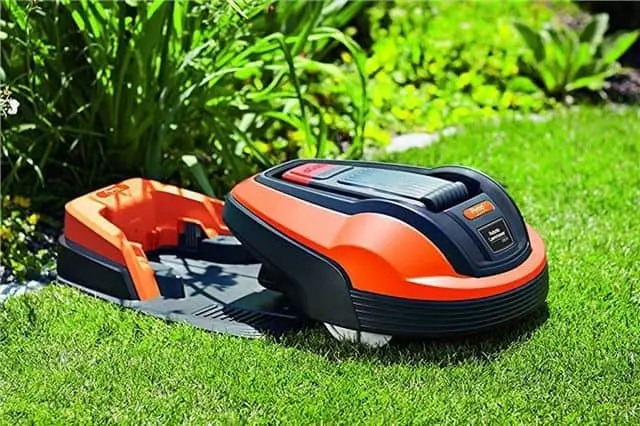
Modern robotic mowers operate autonomously by leaving their charging stations, cutting your lawn in programmed patterns, and returning before their batteries deplete. Because they trim tiny clippings off the grass tips daily rather than lopping off inches once a week, these clippings fall into the turf as fine mulch. This natural process returns valuable nitrogen and moisture to the soil, significantly reducing the need for chemical fertilizers.
Wire-Free Navigation and Environmental Benefits
Earlier robotic mowers required hours of tedious manual labor to bury perimeter guide wires around the boundaries of your lawn. The latest generation leverages advanced navigation technologies that remove this physical barrier entirely:
- RTK-GPS satellite tracking: Real-Time Kinematic positioning delivers centimeter-level accuracy, allowing the mower to navigate complex lawn boundaries and stay on straight, parallel stripes.
- AI vision and obstacle avoidance: Integrated cameras and optical sensors detect unexpected obstacles such as garden hoses, children’s toys, fallen branches, and backyard wildlife.
- Multi-zone transit: The mower can cross paved driveways or flagstone pathways to reach separate lawn segments automatically.
- Zero direct emissions: By swapping petrol engines for rechargeable lithium-ion battery packs, robotic units run quietly and eliminate fossil fuel exhaust from your yard.
Their whisper-quiet electric motors also mean you can schedule cuts in the early morning or evening without disturbing neighbors, keeping your yard pristine at all hours.
Adaptive Planters and Indoor Hydroponic Systems
Gardening technology is not limited to high-voltage equipment and sprawling yards. Container gardening and indoor growing have seen substantial technological leaps that make plant care easier in smaller spaces, patios, and modern kitchens.
Adaptive, expandable planters save extensive time and physical effort by reducing the frequency of repotting as root systems expand. While you can explore creative DIY options in our guide to genius cheap DIY garden pots, commercially engineered expanding containers offer unique mechanical benefits. Certain designs use an accordion-style structure that extends vertically as tall specimen plants mature, while star-shaped folding geometries expand radially outwards to accommodate growing root balls without disturbing delicate root hairs.
For fresh herbs, salad greens, and microgreens year-round, indoor hydroponic garden systems bring automation directly into your kitchen or living room. These self-contained units integrate full-spectrum LED grow lights, automated water circulating pumps, and liquid nutrient reservoirs. They provide optimal light spectrums and hydration schedules automatically, allowing you to grow fresh produce indoors without soil, pests, or seasonal temperature limitations.
Smart Outdoor Lighting and Architectural Ambience
Outdoor lighting transforms a landscape after dusk, highlighting specimen trees, illuminating pathways, and expanding your living footprint outdoors. Smart low-voltage landscape lighting brings programmatic control to this architectural feature without complex wiring or manual switch panels.
Connected lighting transformers and smart bulbs allow you to program custom zones and scenes based on sunset schedules and outdoor activity. Rather than running lights on fixed dusk-to-dawn timers that waste electricity overnight, smart lighting hubs link with your astronomical clock and motion detectors. You can configure your garden lights to illuminate pathways softly at sunset, brighten entertaining patios during dinner hours, and transition to a subtle security perimeter after midnight.
Color-tuning LED fixtures let you adjust color temperatures from warm white (2700K) to crisp architectural lighting, and even introduce gentle color palettes for seasonal entertaining. Because these fixtures link to your home automation platform, you can control the entire landscape with a single tap or voice command.
Comparing Smart Garden Technologies
Selecting the right smart tools depends on the size of your property, your personal gardening goals, and the systems you already use inside your home. The table below outlines how common automated garden devices compare across key parameters.
| Technology | Primary Function | Connectivity Type | Key Benefit |
|---|---|---|---|
| Smart Sprinkler Controller | Automated, weather-based watering | Wi-Fi / Ethernet | Reduces water waste by up to 50 percent |
| In-Ground Soil Sensors | Measures moisture, light, and nutrients | Bluetooth / Zigbee / LoRa | Prevents root rot and under-fertilization |
| Robotic Lawn Mower | Autonomous turf maintenance | GPS / 4G / Wi-Fi | Eliminates weekly manual mowing and fertilizes lawn |
| Smart Landscape Lighting | Architectural and pathway illumination | Wi-Fi / Zigbee / Thread | Enhances nighttime curb appeal and security |
| Indoor Hydroponic System | Year-round herb and vegetable growth | Wi-Fi / Bluetooth | Fresh produce with zero soil or weed maintenance |
Outdoor Connectivity and Infrastructure Planning
Deploy an outdoor-rated Wi-Fi mesh node to penetrate dense exterior siding, and confirm that all exterior sensors carry at least an IP65 or IP67 rating for water resistance.
Even the most advanced outdoor sensors and controllers cannot perform reliably if your home network ends at your patio door. Before deploying smart garden equipment, you must plan your exterior connectivity and electrical infrastructure carefully.
A strong Wi-Fi mesh node positioned near exterior walls or an outdoor-rated access point is essential for stable device communication. Exterior brick, stucco, stone veneer, and low-E glass windows significantly degrade wireless signal strength. If your smart sprinkler controller is mounted inside a garage or on a basement wall, consider running an Ethernet backhaul to an exterior access point or adding a weatherproof mesh extender.
You must also pay attention to device durability and ingress protection ratings. Any piece of equipment deployed outside should carry an appropriate IP rating:
- IP65 rating: Offers protection against dust ingress and low-pressure water jets, suitable for covered controllers and wall-mounted devices.
- IP67 rating: Protects against dust and temporary immersion in water, making it the minimum standard for soil probes and low-lying ground fixtures.
- UV-resistant polymers: Ensure outdoor plastics do not degrade, crack, or yellow under intense summer sunlight.
Additionally, prioritize devices that support universal smart home standards such as Matter, Apple Home, Google Home, and Amazon Alexa. A unified smart garden hub allows you to create cross-device automations, such as keeping outdoor motion-activated path lights on while pausing the robotic mower when someone enters the yard at night.
Seasonal Maintenance and Practical Limitations
While automated tools take the daily grind out of yard care, they are not completely maintenance-free. To protect your investment and keep your garden running smoothly, you must schedule seasonal maintenance checkups.
Calibrating soil sensors and winterizing automated equipment ensures long-term accuracy and prevents costly freeze damage. Mineral deposits and organic matter can accumulate around probe contacts over time, skewing moisture and nutrient readings. At least once per season, pull your soil monitors, clean the sensing pins with a soft cloth and mild vinegar solution, and test their readings against known moist soil.
When freezing temperatures arrive in colder climates, proper winterization is critical. Smart sprinkler lines must be blown out with compressed air to prevent cracked pipes, backflow preventers should be insulated, and the controllers placed in standby mode. Robotic mowers should be cleaned thoroughly, their cutting blades inspected or replaced, and their lithium-ion batteries stored in a temperature-controlled garage or basement. Keeping batteries away from freezing conditions prevents premature cell degradation and ensures your equipment is ready to perform when spring returns.
Building Your Connected Landscape
Transforming your yard with smart technology does not require buying every gadget on the market at once. We recommend starting with the pain point that costs you the most time or creates the most frustration. For most homeowners, replacing an outdated sprinkler timer with a weather-adaptive smart irrigation controller yields the fastest return in both water savings and landscape health.
Once your watering system is automated, you can layer in soil sensors, robotic turf management, and smart exterior lighting to complete your outdoor ecosystem. With the right foundation in place, smart garden technology lets you step back, relax, and enjoy a vibrant, lush landscape that takes care of itself.