This page is also available in the following languages:🇷🇺🇺🇦🇫🇷🇩🇪🇪🇸🇵🇱🇨🇳🇮🇳🇯🇵
Underfloor heating can heat a single room or replace radiators throughout a house. But simply choosing pipes or heating cables isn’t enough for this. Even before installation, it’s necessary to calculate heat loss, plan the placement of furniture, select appropriate controls, and decide what flooring will go over the system.
A mistake at any of these stages can lead to uneven heating, extra heating costs, and complicated repairs. Together with Stone Floor expert, we’ll explore the main types of underfloor heating and determine which flooring is suitable for continuous heating.
Choose the type of underfloor heating
Strictly speaking, infrared flooring also belongs to electrical systems. However, it is usually classified as a separate category due to its design and installation method.
Water-based underfloor heating
Heated fluid circulates through pipes laid inside the floor. Such a system often serves as the primary heating in residential homes and operates using a boiler or heat pump.
A water floor is easily installed in homes with a slab foundation and concrete finish: pipes are laid on the prepared base, the system is tested under pressure, and then the finish is applied. There are also dry installation methods, but they require a separate design.
The main advantages of a water system are the ability to heat large areas and relatively low operating costs over time. The disadvantages include complex installation, a noticeable thickness to the structure, and difficult access to the pipes in case of leaks.
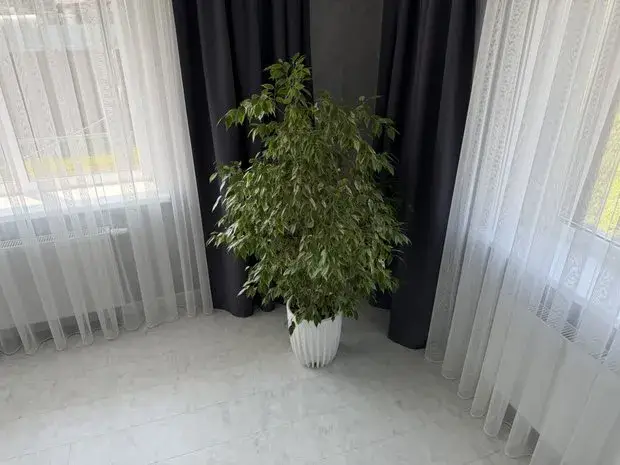
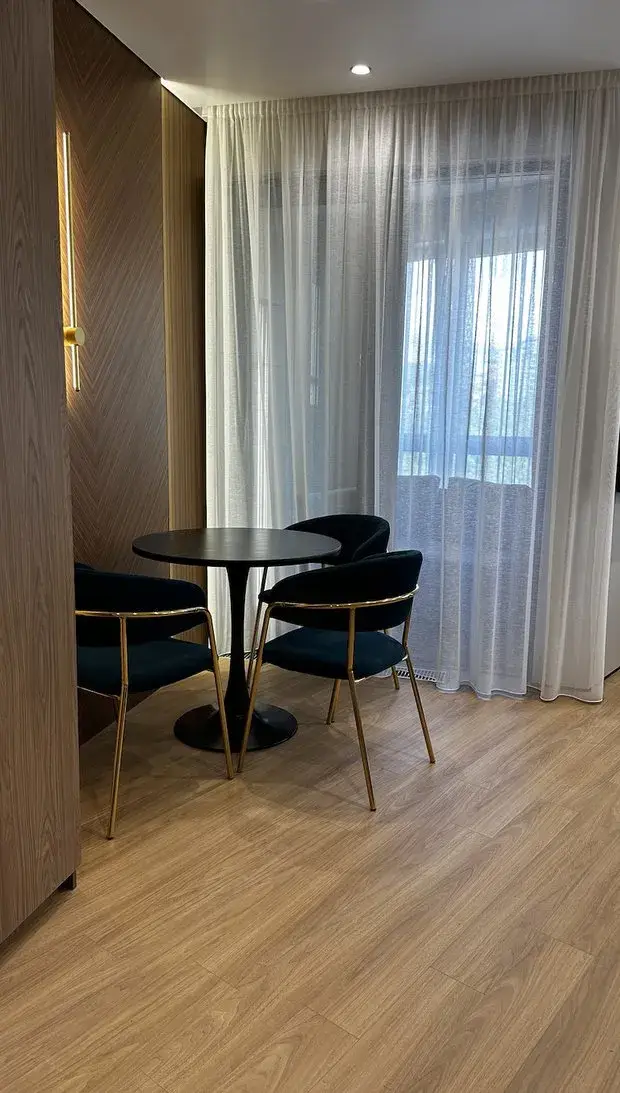
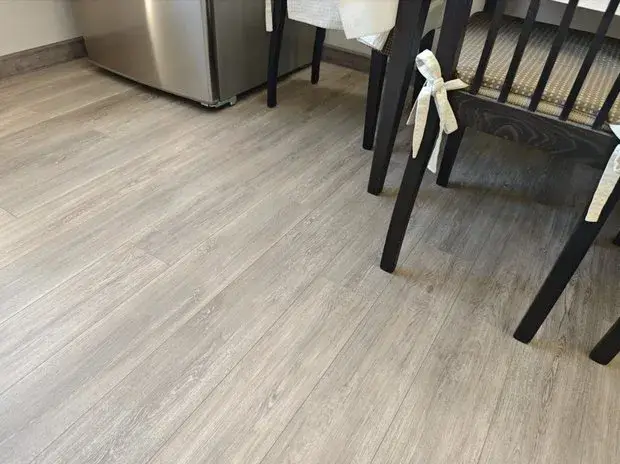
Photo: Stone Floor laminate with underfloor heating
Electric underfloor heating
The heating cable is laid in screed or tile adhesive. There are also ready-made mats with the cable already fixed at the desired spacing.
The electric system can be used throughout the entire house, but it is more often installed locally: in the bathroom, hallway, kitchen, or another room where a warm surface is desired. For operation, a separate electrical line, protective wiring devices, a thermostat, and a floor temperature sensor will be needed.
This option is suitable for houses with pile foundations or strip foundations as well. However, the specific installation method depends not on the foundation itself, but on the structure of the floor and substructure.
Infrared Heating Floor
The infrared film operates on electricity but is installed using a dry method—without screed or tile adhesive. It is often used in frame and wooden houses with foundations made of OSB, plywood, or other sheet materials.
A compatible locking floor covering can be laid on top. This type of floor responds quickly to changes in settings and hardly increases the structure’s height. However, the film should not be covered with fixed furniture, layers should not be stacked on top of each other, and it must be installed with an appropriate underlayment and thermostat.
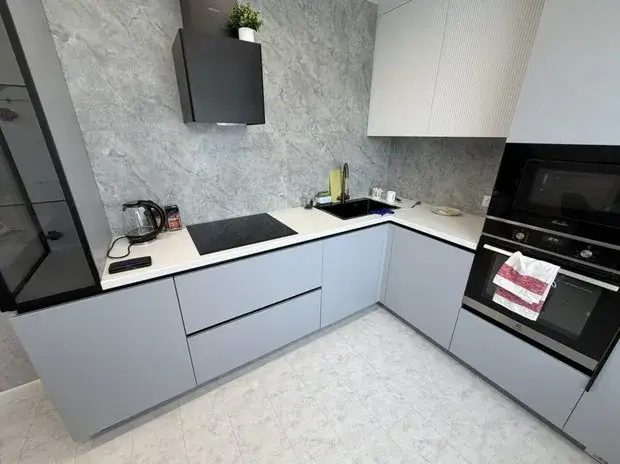
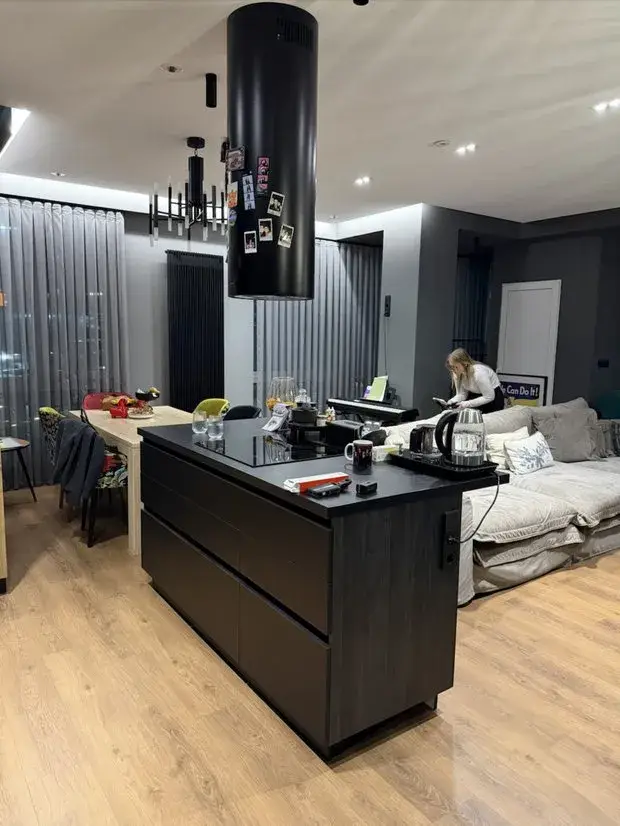
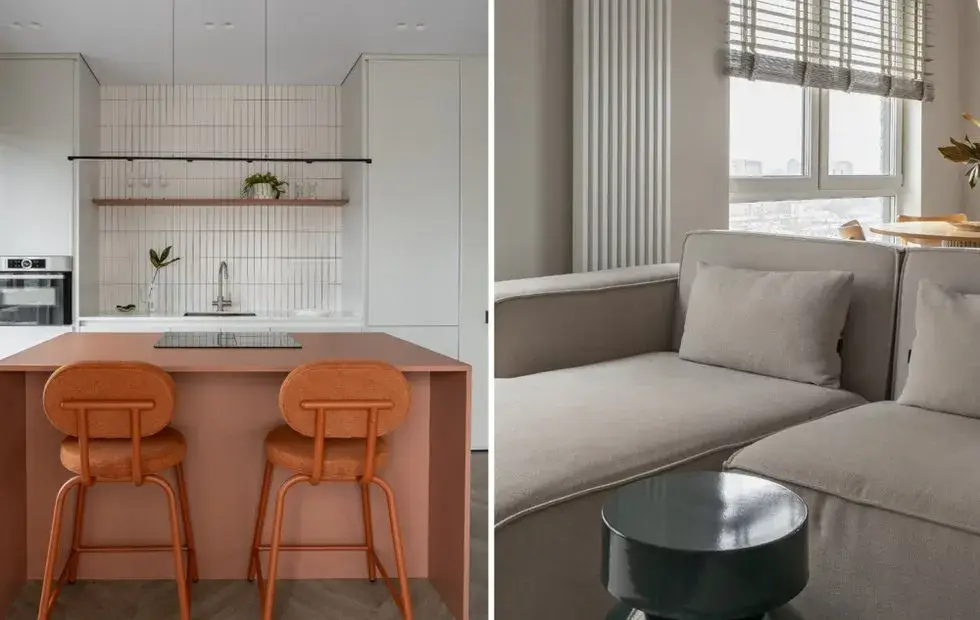
Photo: Stone Floor laminate with underfloor heating in the kitchen
Tip: It’s better to choose flooring at the same time as the heating system. Stone Floor Heat Hardy laminate can be used with water-based, electric, and infrared underfloor heating. The Heat Hardy technology is designed to handle both prolonged heating and sudden temperature changes typical of electric and infrared systems.
For infrared heating, the manufacturer recommends using Floor Fort PRO underlayment with a dielectric reflective layer. For water-based and electric underfloor heating, the underlayment is also selected based on its thermal resistance: overly insulating material will retain heat.
Decide whether underfloor heating will be the main heating system
A underfloor heating system can completely replace radiators, but only after a thermal calculation. The engineer must determine how much heat the house loses through walls, roof, windows, doors, and foundation, and then check whether the floor surface can compensate for these losses.
Such calculations are important in homes with panoramic windows, second lighting, high ceilings, or poorly insulated structures. If the floor’s capacity is insufficient, raising the thermostat temperature will not solve the problem: the surface will become too hot, yet the room may still feel cold.
According to SP 60.13330.2020, the average surface temperature of floors in areas where people stay continuously should not exceed 29 °C. Therefore, the heating area and heat loss must be balanced to prevent the flooring from overheating constantly. Sometimes it is more sensible to retain a combined system. For example, underfloor heating provides the main level of comfort, while radiators or in-floor convectors compensate for the cold near large windows during cold and windy weather.
Protect the system from common failures
Most problems are not related to the principle of underfloor heating itself but to errors in calculation, installation, and setup.
What Can Happen to an Electrical Field
The cable can be damaged during installation, when filling the base coat, or during subsequent work. For example, it may be accidentally touched by tools or drilled into while installing a door stop. Damaged insulation, oxidized contacts, and incorrect wiring can also cause malfunctions.
Another issue is localized overheating. This occurs when the cable or insulation is placed under furniture without legs, a thick carpet, or another object that prevents heat from escaping into the room.
The sensor’s position also affects the system’s operation. If it is installed too close to the cable, the thermostat will turn off heating prematurely. If it is too far away, the surface may overheat. Manufacturers recommend placing the sensor between the cable strands in a corrugated tube so it can be replaced without having to open the floor.
Before laying the flooring, it is necessary to measure the system’s resistance, keep a diagram, and photograph the location of the heating elements. These steps will help prevent damage during future repairs.
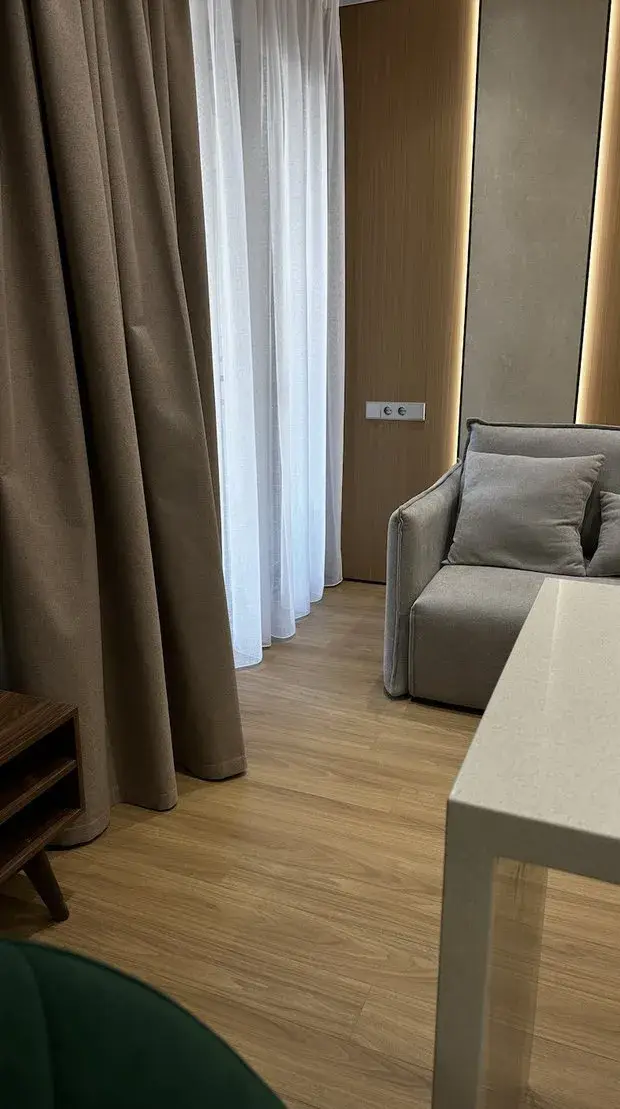
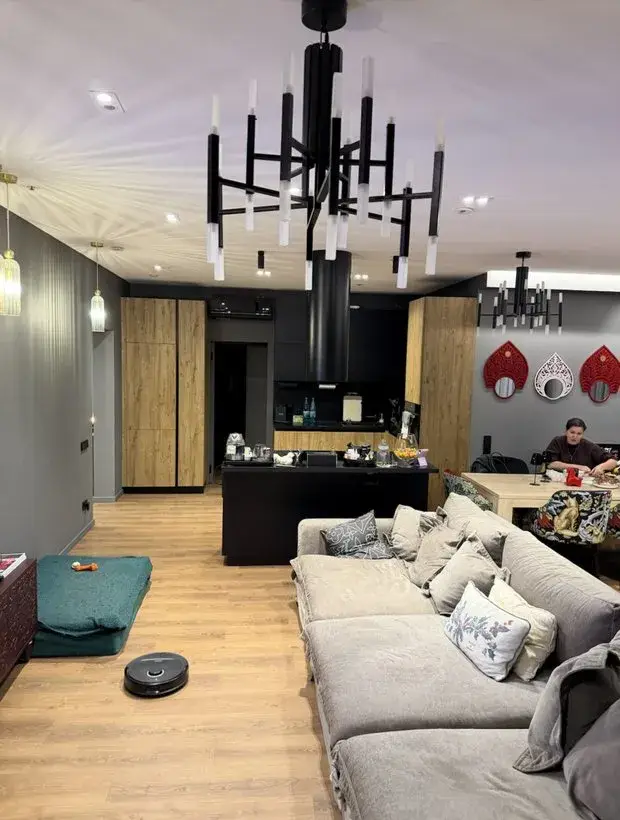
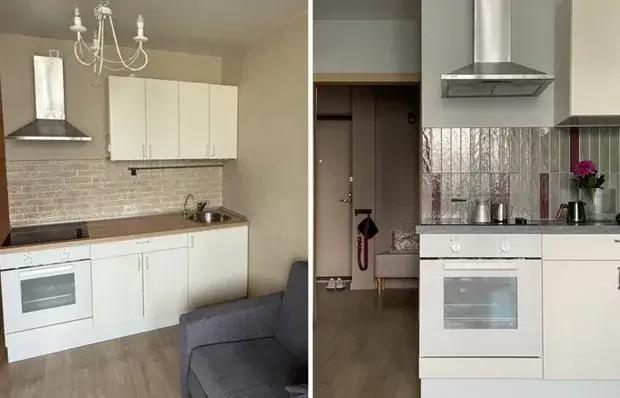
Photo: studios with Stone Floor infrared heating systems
What can happen to water-based flooring
Leaks are usually caused by damaged pipes or errors in the installation of connections and collectors. Before filling the concrete slab, the system must be pressure-tested. Skipping this step can result in minor leaks appearing even after repairs are completed. The edges inside the concrete slab are designed to be seamless, without any hidden connections. The collector and control equipment are placed in locations that ensure easy access to them.
Why Floors Overheat
Sometimes the cause lies in a faulty thermostat, sensor, bypass, or another component of the system. But often it’s the homeowners themselves who raise the temperature when it gets cold and windy outside. If the house loses too much heat, the floor is used beyond its capacity.
It’s better to first check the settings of the automation system, the operation of the boiler or electrical system, and whether the actual heat loss matches the initial calculations. Constant overheating should not become the normal operating condition.
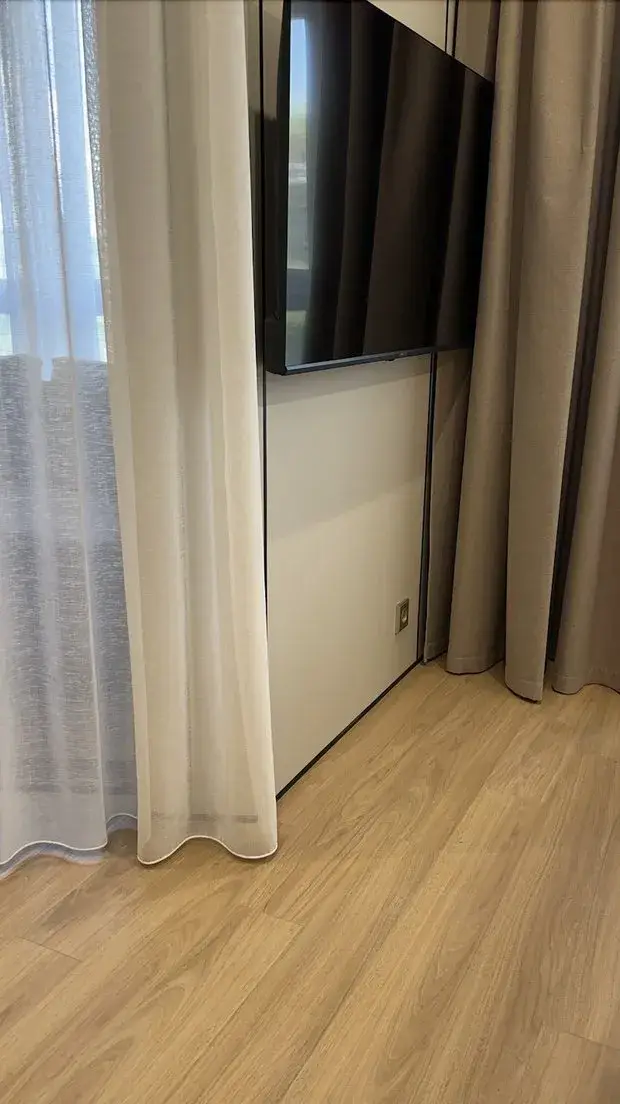
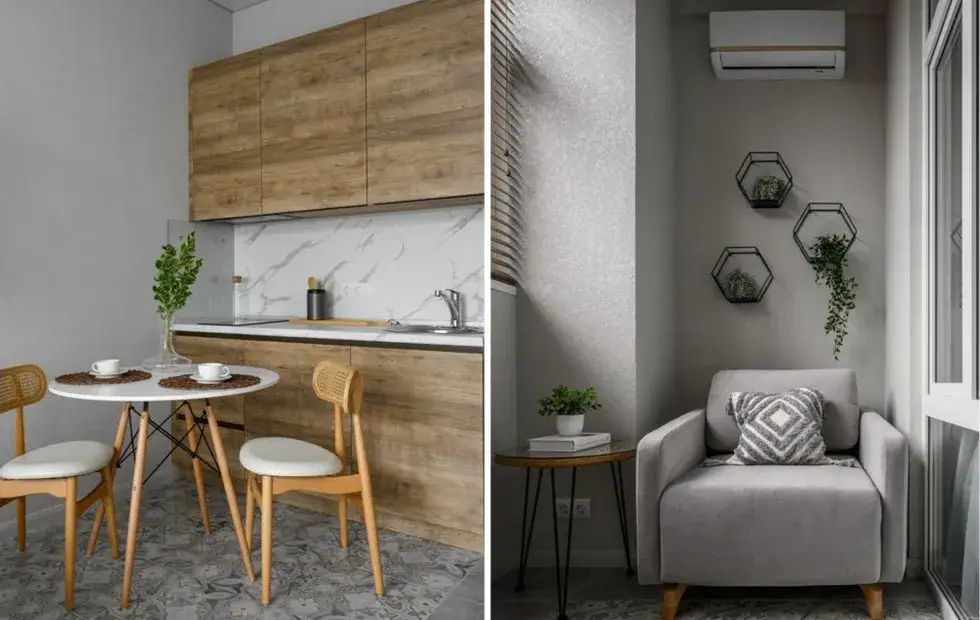
Photo: studios with Stone Floor infrared heating systems
Tip: The ability to remove the covering is especially important if there is an engineering system underneath. Stone Floor is installed in a floating manner and is not glued to the substrate. If necessary, the slats can be removed from the nearest wall to the area needing repair, and reinstalled after the issue is fixed.
If individual boards are damaged during removal, only those can be replaced rather than the entire floor. With ceramic tile, accessing the system is more difficult: the tiles and adhesive layer must be destroyed, after which the substrate needs to be repaired and the tiling redone.
Check if the flooring is suitable for continuous heating
The label “can be used with underfloor heating” is not sufficient. Several characteristics are important when choosing flooring.
The first is dimensional stability. The material should not expand significantly due to heat or moisture. Otherwise, gaps will appear between the tiles, or the flooring will press against the walls and start to deform.
The second is thermal resistance. The worse the flooring and underlayment are at conducting heat, the more energy will be required to heat the room.
Third is the allowable temperature and resistance to heating and cooling cycles. It matters not only the temperature the material can withstand once but also its behavior after multiple heating seasons.
Fourth is the coordinated functioning of all layers. This is especially important for multi-layer coating systems: the decorative layer, the base layer, and the underlying stabilizing layer must respond equally to heating and cooling.
Standard laminate on a wood substrate is sensitive to water and changes in humidity. Many collections can only be heated up to the limit specified by the manufacturer — often around 27-29 °C. Exceeding this temperature can cause the laminate sheets to deform and the seams to separate. Therefore, for underfloor heating, one must choose not just any laminate, but a flooring product with proven heat resistance.
Ceramic tile or mineral stone laminate
Ceramic tile conducts heat well, is virtually unaffected by water, and can withstand high temperatures. For this reason, it is often considered the preferred choice for underfloor heating. However, in residential buildings, not only technical specifications matter but also installation, daily comfort, and the ease of repair.
Photo: studios with Stone Floor infrared heating
The feeling of having no heating
When heating is turned off, ceramic tile remains cold to the touch. The mineral stonelaminated flooring Stone Floorhas a lower heat absorption rate and feels warmer. It is more comfortable to walk barefoot on it during the off-season and when heating is off. Once the heating system is turned on, the flooring quickly transfers heat into the room. Its pattern and texture can mimic natural wood, so the interior doesn’t look as though the entire house is covered in tiles.
House Installation and Settlement
Ceramic tile is fixed to the substructure using adhesive. If the substructure deforms due to the house settling, stress can be transmitted to the tile and the adhesive layer. Stone Floor is installed using a floating method. The surface is not bonded to the substructure, load-bearing walls, or columns with adhesive, so minor movements in the structure affect it differently. However, the floating installation does not correct serious defects in the substructure: it must remain solid, stable, and level. Locking installation eliminates the need for adhesive, grout, and prolonged wet processes. This reduces construction time and usually lowers the installation cost.
Maintenance
Stone Floor has no grout lines that require filling. The surface can be cleaned with a regular mop or a robot vacuum with a wet cleaning function. No dark stains accumulate in the joints, and there is no need to replace damaged grout. Ceramic tile also doesn’t require complicated maintenance, but the condition of the grout lines becomes a separate issue over time.
Heavy furniture and kitchen islands can be installed on the Stone Floor laminate.
Heating floor repair
To access the system beneath the ceramic tile, it is necessary to remove the tiles and adhesive. After repairs, the subflooring needs to be restored, and tiles of the same format and shade must be selected. The floating floor covering can be taken apart and reassembled. This does not eliminate the need to repair the pipe or cable itself, but it allows access without destroying the entire floor finish.
How Heat Hardy Works
The heat-resistant Stone Floor laminate for underfloor heating consists of three main layers: the upper working layer, the backing plate, and the lower stabilizing layer. The purpose of the Heat Hardy technology is to ensure that all these layers maintain consistent stability during heating and cooling.
This means the flooring should not develop stains, delaminate, become brittle, form cracks or gaps, or develop an uneven, leathery surface. The material is designed to withstand prolonged heat exposure, frequent switching on and off of the heating system, as well as temperature gradients (uneven heating).
Stone Floor is the only manufacturer that truly qualifies as heat-resistant laminate, as its products have successfully passed the mandatory thermocyclic test involving heating from +25 to +100 °C followed by cooling. The Heat Hardy technology used enables sustained exposure to temperatures up to +70 °C and temporary exposure up to +114 °C. These specifications indicate the high heat resistance of the laminate and its long service life in demanding conditions of constant, often uneven, heating.
Of course, this does not mean that a living room floor needs to be heated to such temperatures; proper use requires adherence to standards for a comfortable and safe surface temperature.
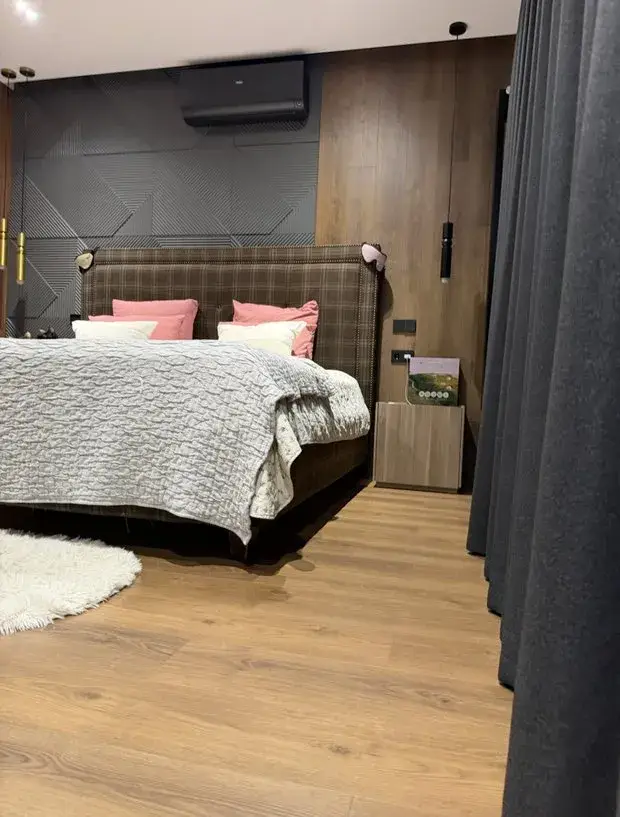
Photo: Stone Floor laminate in the bedroom
What the other Stone Floor technologies cover
Stone Floor – a high-tech laminate that utilizes a comprehensive set of modern engineering solutions during production to mitigate risks in various household scenarios, thereby ensuring a guaranteed long service life.
Heat Hardy provides thermal protection for the surface when heated, but the floor is also exposed to water, furniture, shoes, sunlight, and household chemicals. Therefore, the manufacturer employs three additional protective technologies.
Aqua Serenity
The technology provides absolute protection for the slab against water and moisture. The base contains no wood, and the material’s structure does not have any open pores through which water could penetrate. The coating is designed to withstand contact with water, hot steam, and even low temperatures. This allows it to be used in kitchens, hallways, and other areas where moisture regularly reaches the floor.
Photo: Stone Floor Oak Quiet Evening
AMS Power
The technology is responsible for the strength of the panel and the lock joints. The coating is designed to withstand the stress from heavy furniture, walking, and falling objects. For floating floors, the strength of the locks is particularly important: they are what hold the slats together and prevent the joints from separating during normal use.
EverNew
EverNew helps surfaces maintain their original appearance for longer and has an anti-ageing effect. This technology enhances resistance to stains, scratches, wear, loss of shine, and fading caused by sunlight. All four technologies work together:
Aqua Serenity protects against water, AMS Power against mechanical stress, Heat Hardy against temperature changes, and EverNew against everyday wear and tear. Detailed specifications and test results are available on the Stone Floor website.
What Happens in an Unheated House
If a country house remains unheated in winter, ceramic tile usually tolerates the cold well, but temperature-sensitive flooring surfaces may deform. Stone Floor has an frost resistance rating of F100. During testing, the material withstood 100 cycles of freezing to −20 °C and thawing in water at temperatures between +15 and +18 °C without developing any defects.
Therefore, Stone Floor heating can be used in unheated homes. After returning, there is no need for a special gradual startup mode specifically for Stone Floor, as the material can handle temperature fluctuations. But this applies only to the flooring. Starting the boiler, water circuits, or electrical system should be done according to the manufacturer’s instructions. If the subflooring or tile adhesive was applied recently, wait until it is completely dry and has gained strength first.
Photo: Stone Floor laminate in a country house with electric underfloor heating
Prepare the subfloor and backing
Even the most stable flooring cannot compensate for a poorly prepared subfloor. It must be level, solid, dry, and free of construction debris. The allowable slope for Stone Floor — according to SNiP standards — is no more than 2 mm per 2 metric meters. If bumps or depressions remain, the tiles will bend under foot traffic, increasing stress on the fasteners.
A vapor barrier or underlayment with vapor resistance properties must be placed beneath the flooring. Stone Floor recommends the Floor Fort underlayment, which is selected based on the thickness of the flooring and the type of heating system. The Floor Fort PRO version is designed for infrared flooring. A compensation gap should be left around the perimeter of the room. Its exact size and the need for technical gaps must be verified against the current instructions for the selected collection. Before installation, the moisture level of the base and the condition of all floor heating elements are also checked.
Key Points Before Starting Work
First, order a heat loss calculation to determine whether a underfloor heating system can serve as the primary heating method. Next, select a system based on the floor structure, prepare a layout for furniture placement, and include automation with temperature sensors.
After that, you can choose the flooring. For continuous heating, low thermal resistance, dimensional stability, and the ability to withstand repeated heating and cooling cycles—i.e., proven heat resistance—are essential.
Ceramic tile remains a reliable option, but it requires adhesive installation and stays cold without heating. The heat-resistant Stone Floor laminate combines resistance to heat and moisture with floating installation, a warm-to-the-touch surface, and a look similar to natural wood. And if the system needs repair, the covering can be removed without damaging the entire finish.
erid:2W5zFHgFPQN. Advertising. stone-floor.ru. RAMHAUS LLC. INN 7724614209
Need a renovation specialist?
Find verified professionals for any repair or construction job. Post your request and get offers from local experts.