We bought this apartment with the intention of renovating it and renting it out by the day. At the time of purchase, it had a brand-new renovation that needed to be completely updated. Right now, we are slowly carrying out the renovations and just visit the apartment as if it were a country house. Yes, it’s 800 km away from our home, but we love St. Petersburg so much that we’re willing to make such “efforts.”
The photo shows a hallway.
The photo shows the living room before renovation.
The photo shows the living room before renovation.
The photo shows the kitchen before renovation.
The photo shows the kitchen before renovation.
The photo shows the bathroom before renovation.
The photo shows the bathroom before renovation.
The photo shows the bathroom before renovation.
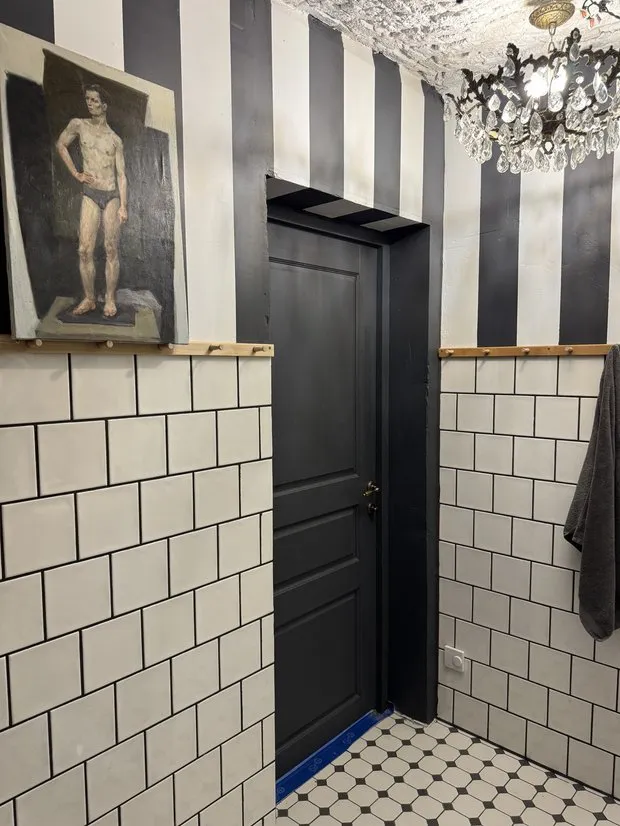
We started the renovation with the bathroom. Initially, the bathroom and toilet were separate: a tiny bathroom and an even smaller toilet. We combined them and placed everything needed in one space. It also has a sloped ceiling, with pipes running inside—it was necessary to keep access to them, and we took that into account.
When the entire bathroom was painted white, it became boring. I’m a fan of Tim Burton, and I wanted to add stripes. They “spread” to the walls and then throughout the whole apartment — now the entire interior is styled in the spirit of his movies, a kind of ironic gothic style.
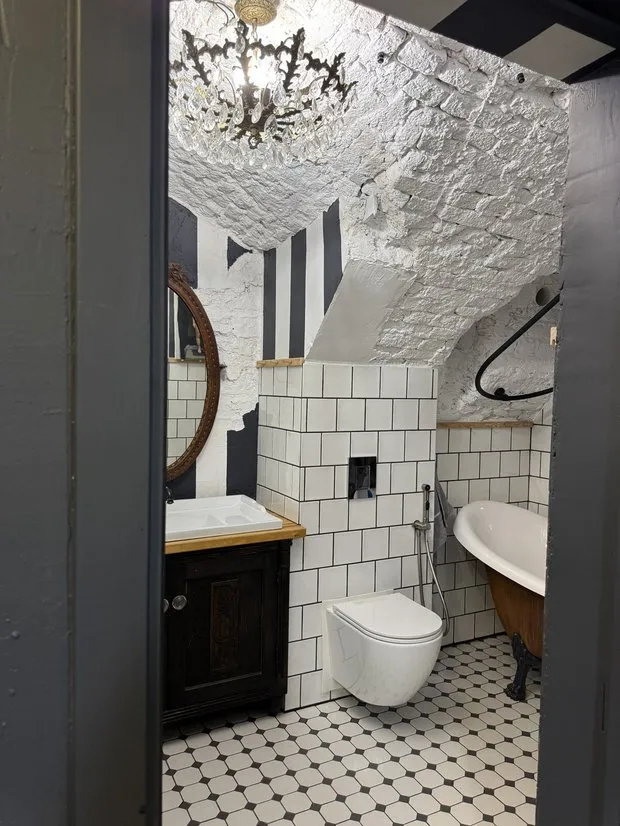
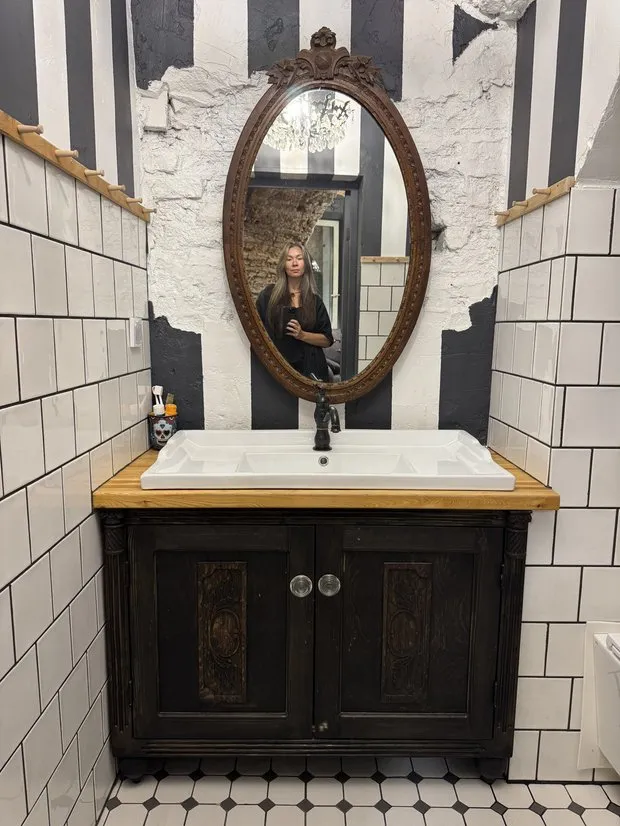
I built the sink cabinet myself: the countertop is fixed in place, while the cabinet beneath it can be pulled out — making it convenient to access the pipes. The mirror above the cabinet is a find from Avito, it’s antique and cost 9 thousand rubles. Along the perimeter of the bathroom, there’s a homemade shelf with hooks — perfect for hanging clothes or towels.
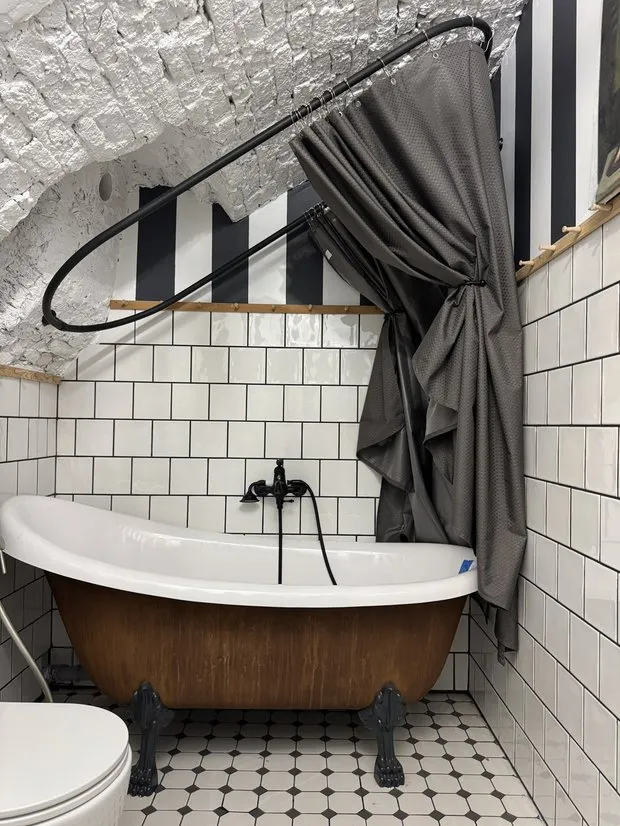
The bathtub was originally white, but when we installed it, it seemed to lack color. I painted it in a rust color using special metal paints — it turned out unusual yet fitting for the theme.
I also love painting very much, so we have many artworks; even in the bathroom, there’s a piece that I think fits perfectly there. The chandelier here is crystal — I bought it for 4000 rubles at a sale. The entire bathroom cost us 250 thousand from scratch.
The husband handles the main physical work, while I am responsible for the design and atmosphere. Plumbing, electrical work, and rough finishing — everything goes through our hands. The principle is simple: no plastic, only natural materials. The floor was made from larch planks (the material itself cost 60 thousand, plus underlayment and oil — another maximum of 20). We’ve been renovating for a long time now; we have our own house, and we’re used to high-quality materials.
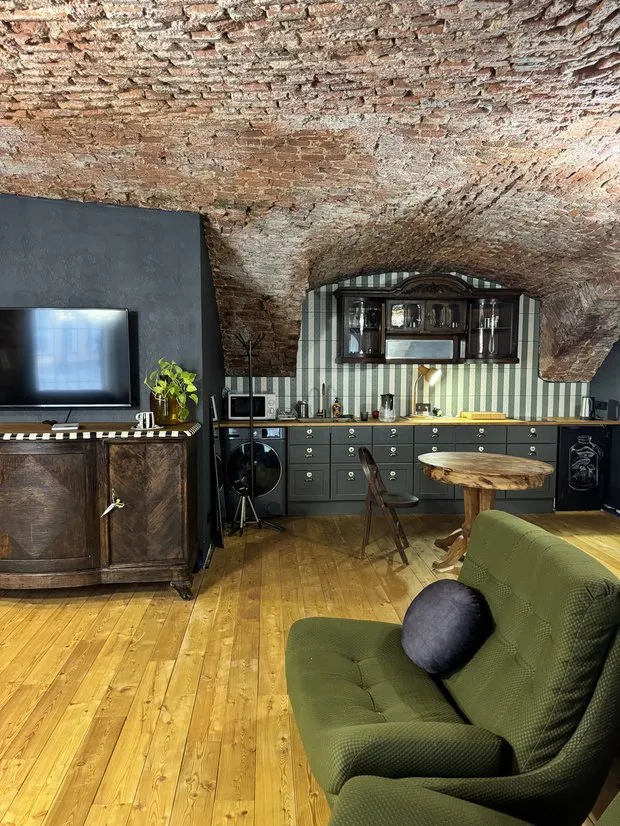
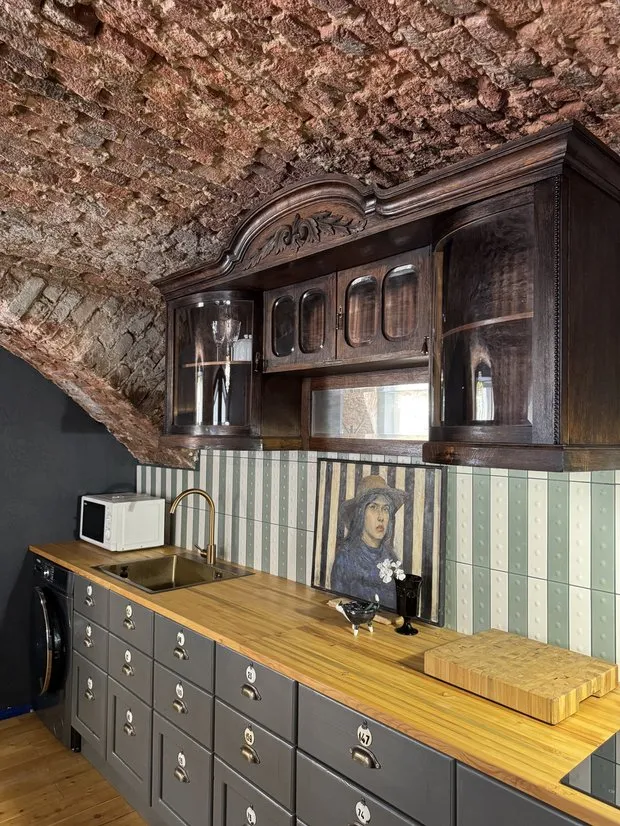
The kitchen is almost entirely homemade. We ordered the internal drawers and frames on Ozon, while we made the fronts ourselves and painted them with enamel. Above the handles are antique labels found on Avito, which refer to filing cabinets. The countertop is made of larch, which was also cut by hand.
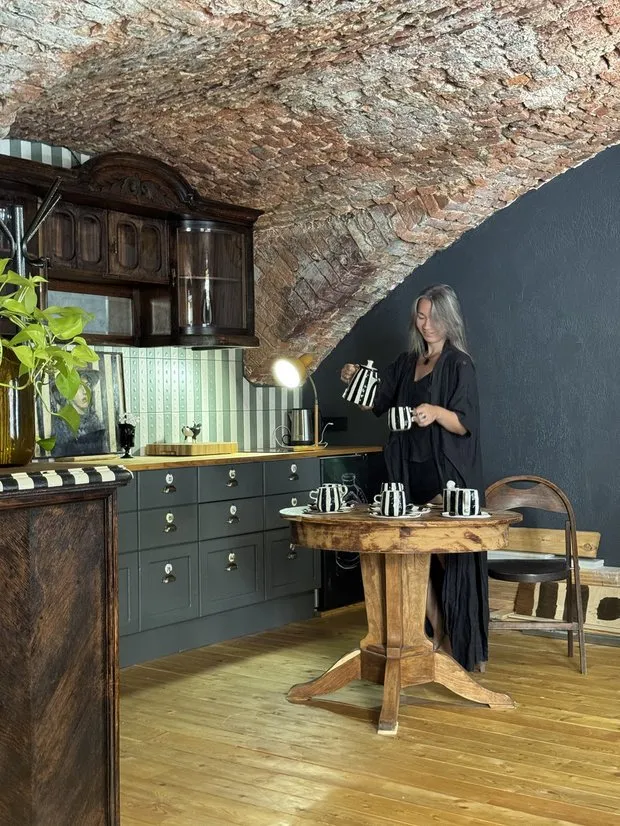
The most interesting part of the kitchen is the top section of an old cabinet. We found it in Moscow and brought it home on a trailer. We used the upper part as the kitchen’s upper cabinets, while the lower part of the cabinet became a TV stand. The striped tiles and utensils reflect Tim Burton’s film themes. The entire kitchen, including the cabinet, cost 115,000 rubles.
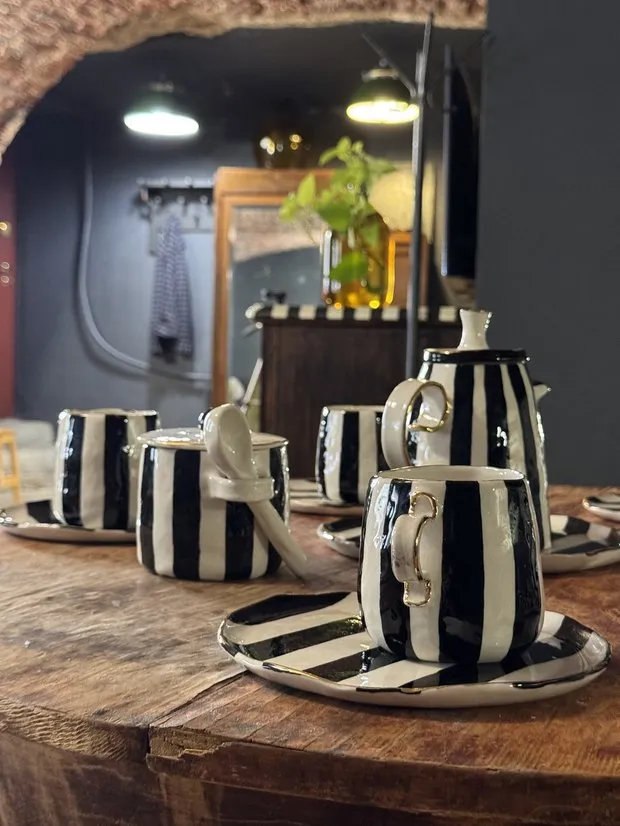
We also found the dining table on Avito for 5 thousand. It still needs some finishing work, and we’re currently looking for suitable chairs. I joke that the “gods of kitchenware” will just drop them off for us.
We’re not shy about getting used items and restoring them to fit our needs. For example, I bought a painting for 1000 rubles and redid the background—adding those stripes so it fits perfectly.
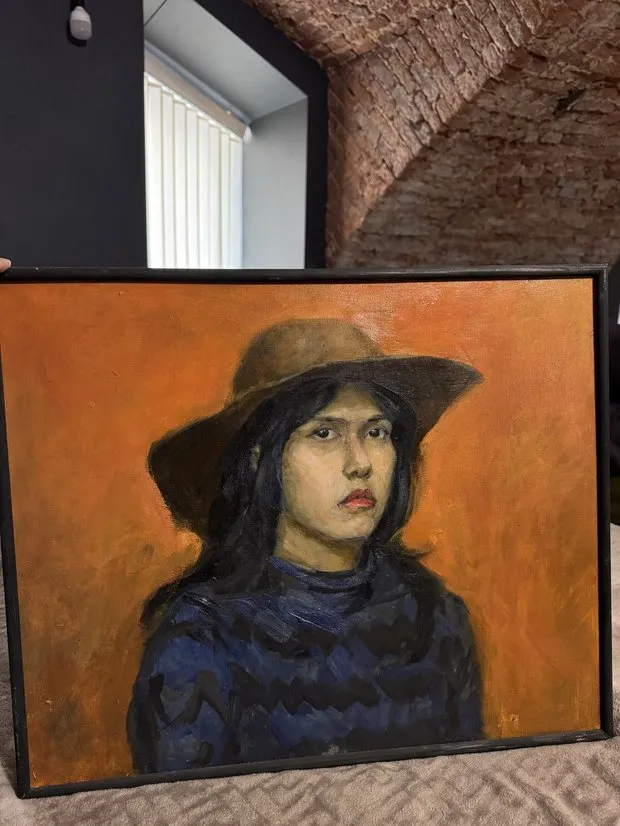
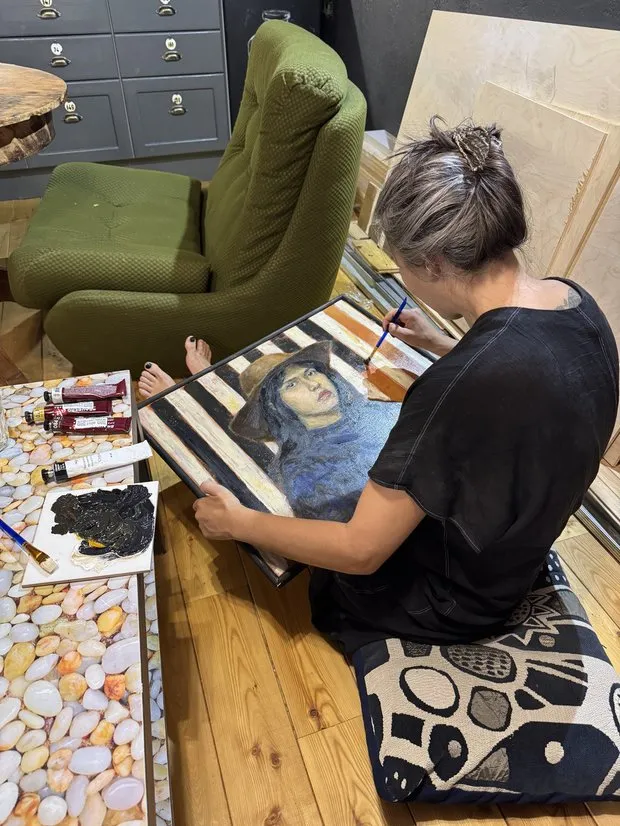
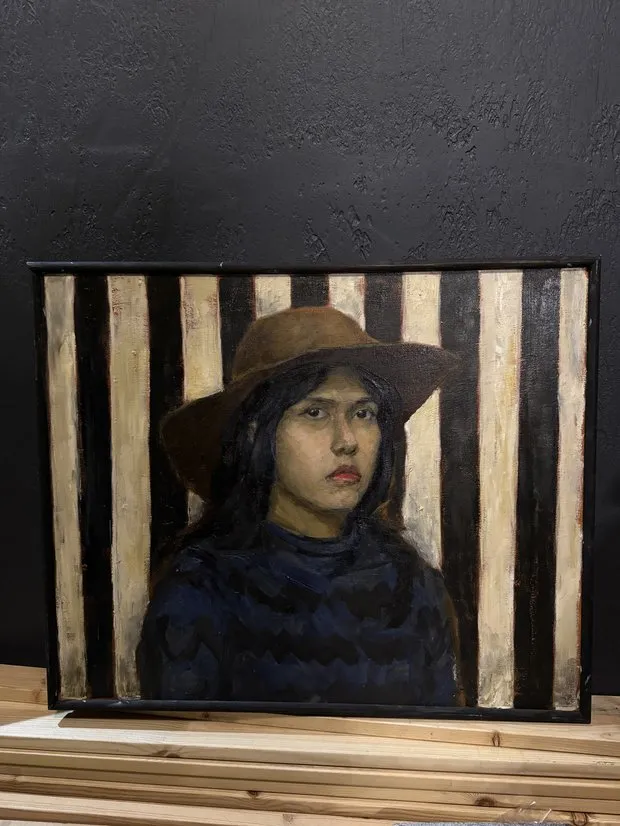
The only new item in the apartment is a sofa that cost 96 thousand. It’s foldable, dark in color, and in an ironic gothic style. Above it hangs a vintage chandelier bought at one of the sales in St. Petersburg. There are actually countless places in St. Petersburg where you can buy items with a history. We really love that.
I simply don’t understand why to buy plain, generic items like everyone else when you can find affordable ones that have already been used by someone and will serve well for a long time. The items in our interiors are unlikely to be found anywhere else.
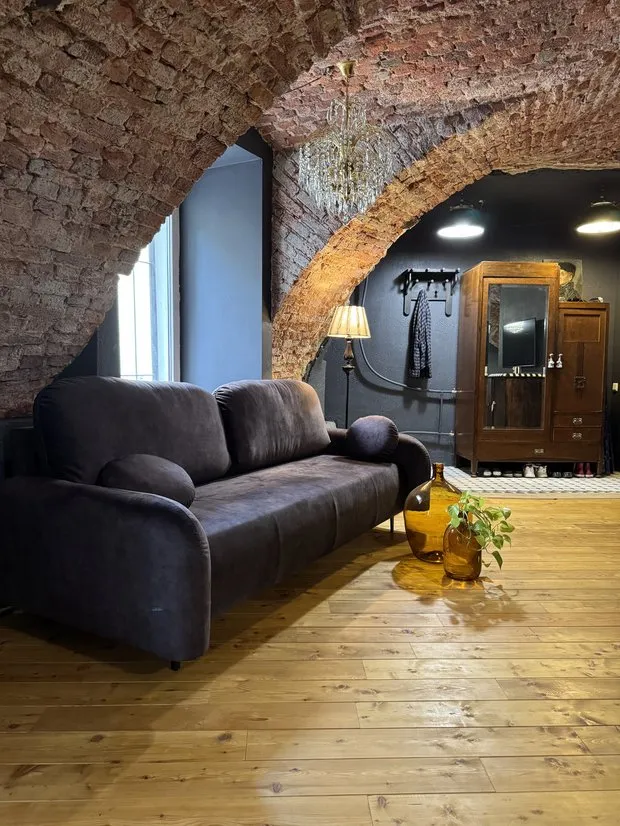
We got these chairs along with the apartment — they are of Soviet manufacture and incredibly comfortable. I plan to add a vintage carpet and pillows that will match both the sofa and the chairs. For now, they are just waiting for their turn.
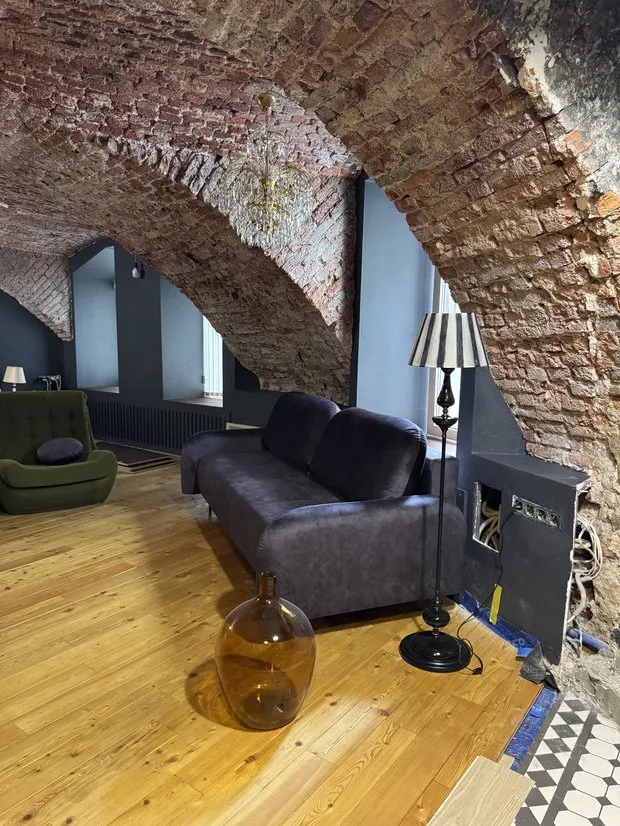
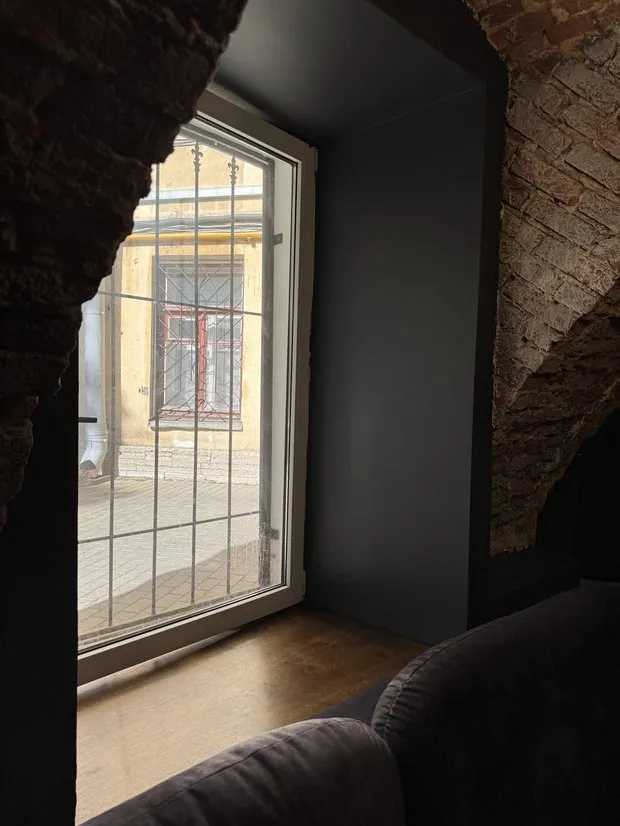
A separate story is about the window sills. They were plastic, and replacing them was problematic. We redesigned the entire area underneath them and installed large screens. We also glued plywood to the plastic sills and coated them with oil—the upgrade cost only 3 thousand rubles.
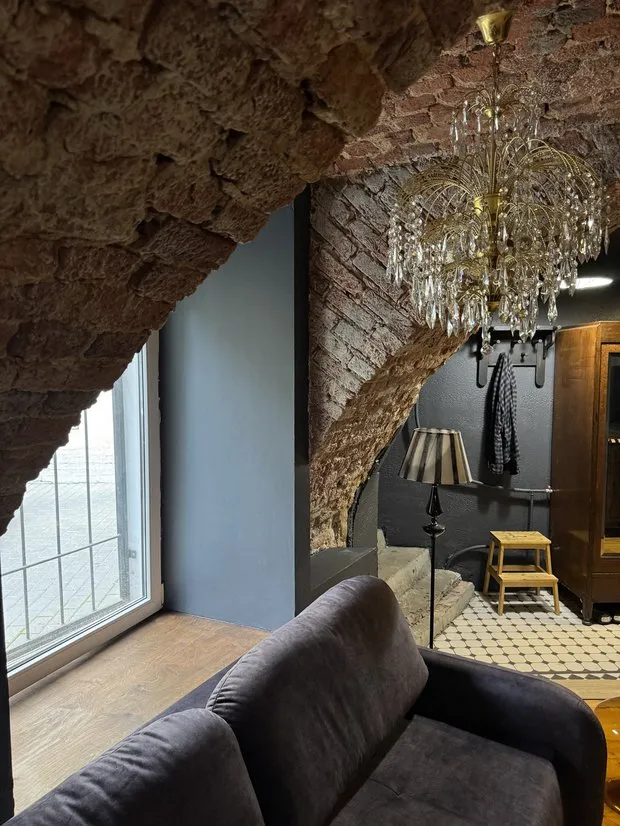
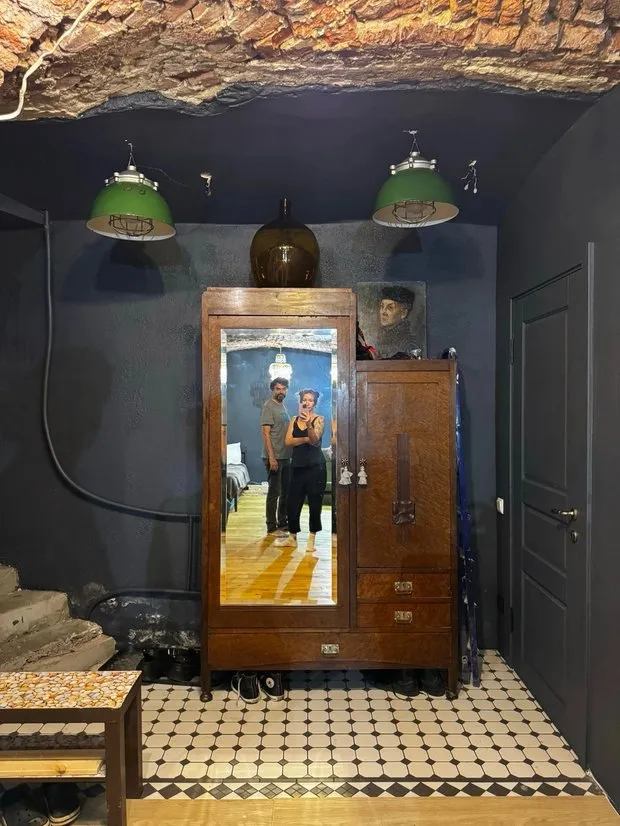
There’s a vintage wardrobe in the apartment when you enter, and we found the green lamps right in the trash and restored them. I said that if Peter wants to help design my apartment, I’ll never refuse him.
The next part planned is the sleeping area. It exists, but it’s not in the photos yet because we haven’t finished it.
In summary: working with an old building is complicated. If you lack experience, it’s better to trust professionals. We hired a builder, but he ran away — for every detail we held consultations to decide what could and couldn’t be changed. So we decided to do everything ourselves. As a result, the apartment is now exactly how we want it, with a personal touch and a unique atmosphere.