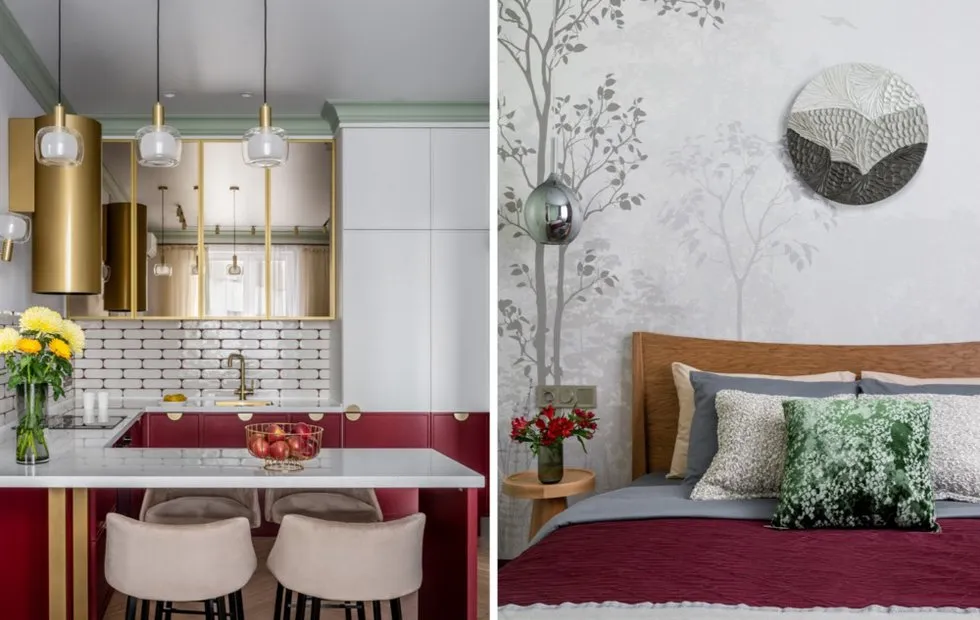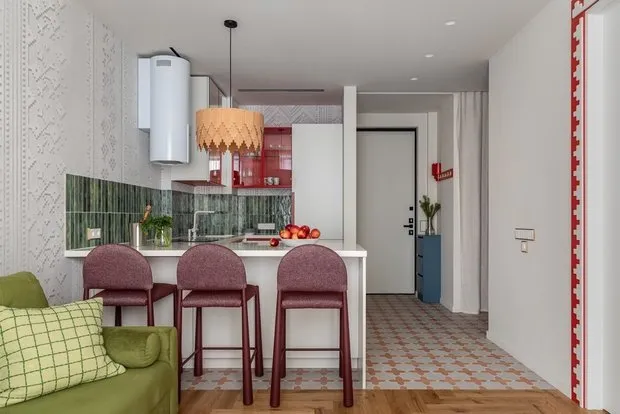
The kitchen is positioned along the wall and enhanced with an island unit that replaces the dining table, provides additional working surface, and helps separate the cooking area from the living room without using partitions. A oven and concealed storage are built into the unit on the kitchen side, while three semi-bar stools with rounded backs are placed on the room side.
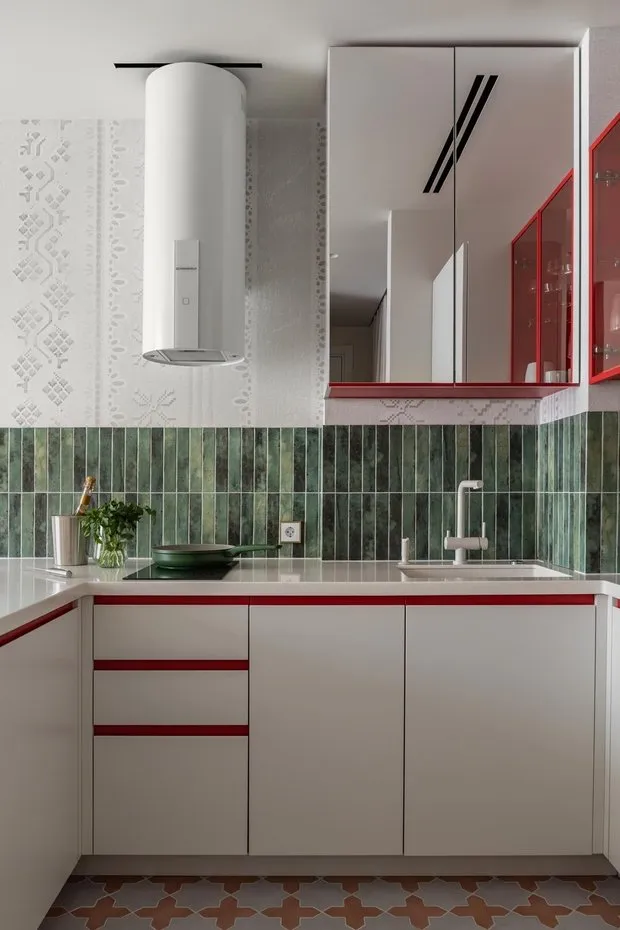
The base of the fixtures was kept light and almost neutral, but vivid red accents were added. A red line runs along the facades, frames the open display windows, and appears in details near the entrance, which prevents the kitchen from looking too calm, even though the larger surfaces remain white.
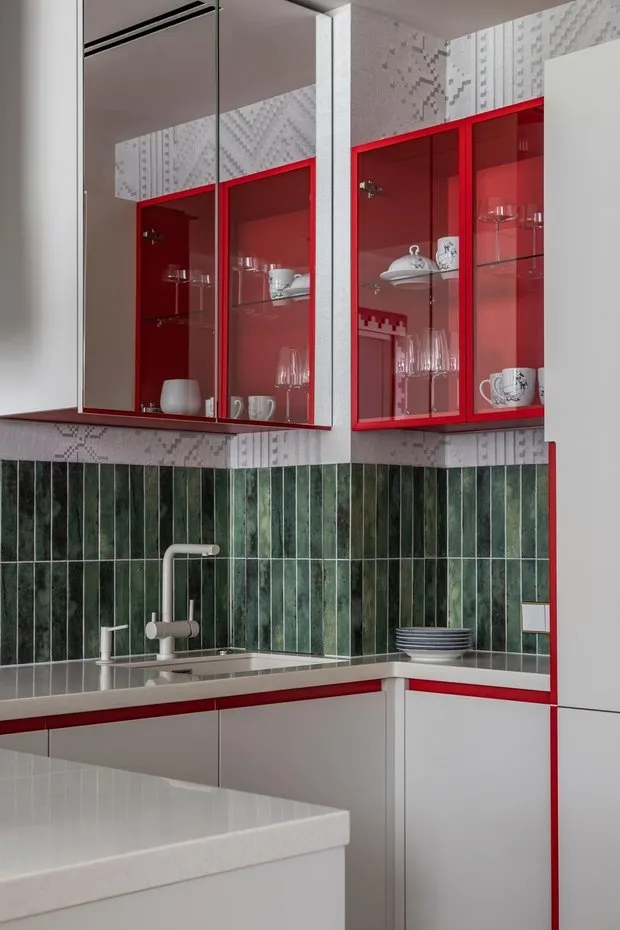
The apron is covered with vertical green tiles featuring a textured surface that complements the natural tones in the living room—such as the green sofa, carpet, and wooden lamp above the counter. The upper sections of the walls are adorned with wallpaper decorated with patterns that resemble embroidery and carved motifs, thus keeping the kitchen consistent with the overall interior design without directly imitating an antique style.
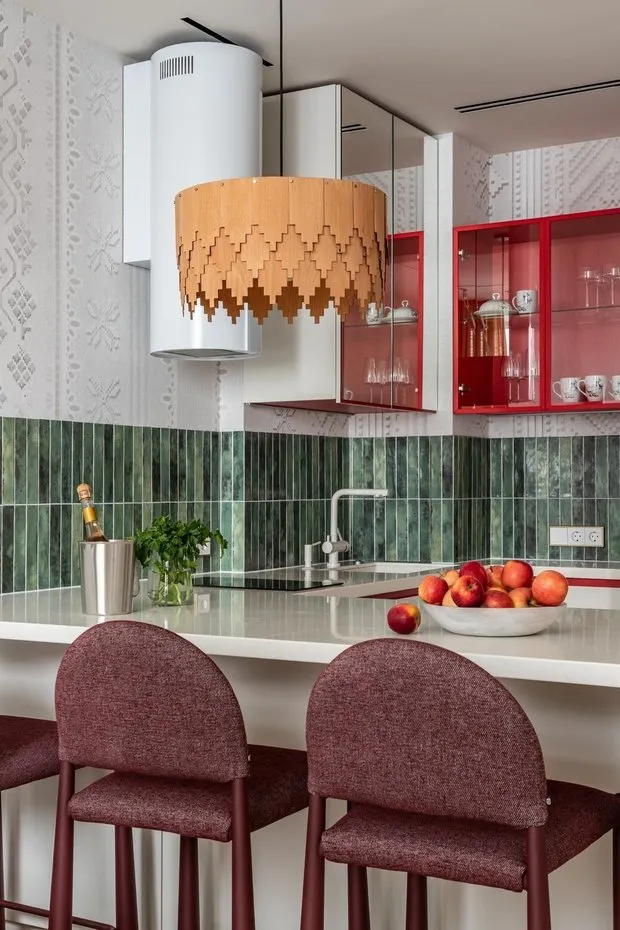
The red wall-mounted display cabinets draw special attention: dishes and glasses are placed behind the glass doors, turning storage into part of the decor. Mirror fronts have appeared next to them—they add depth and reflect light, which is useful for a compact kitchen without a separate window in the work area.
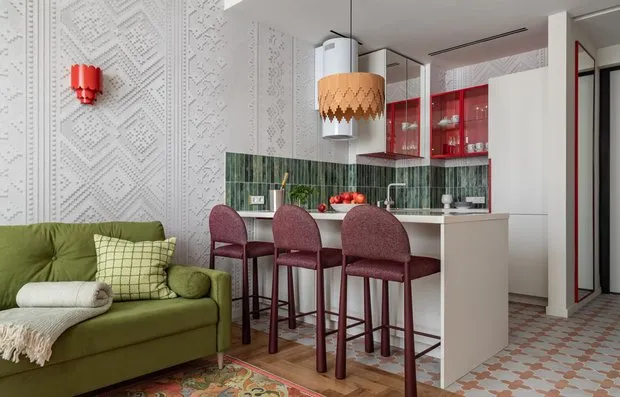
The bar counter light has become one of the most distinctive features. Its wooden design echoes the lemeh — the shaped slats used in traditional architecture. This element connects the modern kitchen area with the Russian-inspired theme of the project, creating a more intimate dining space.
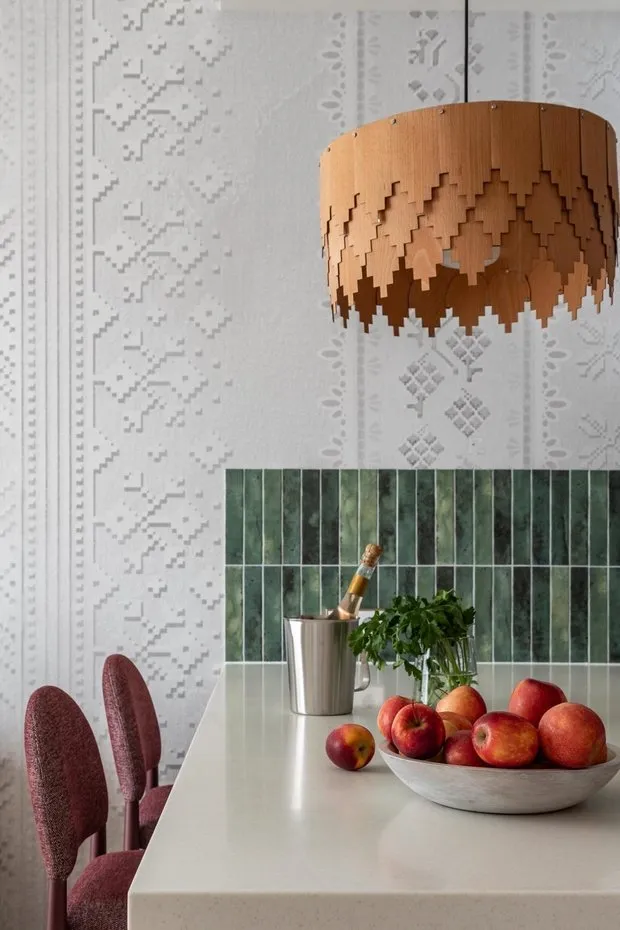
In the end, the kitchen-living room turned out to be functional without losing its decorative appeal. It provides space for cooking, storage, quick breakfasts, and socializing with guests, while green tiles, red display cases, ornamental walls, and custom lighting transform this compact area into part of that very “cabinet apartment” that one wants to examine in detail.