Voxel Quarantine Cabin by Valldaura Labs in Barcelona, Spain
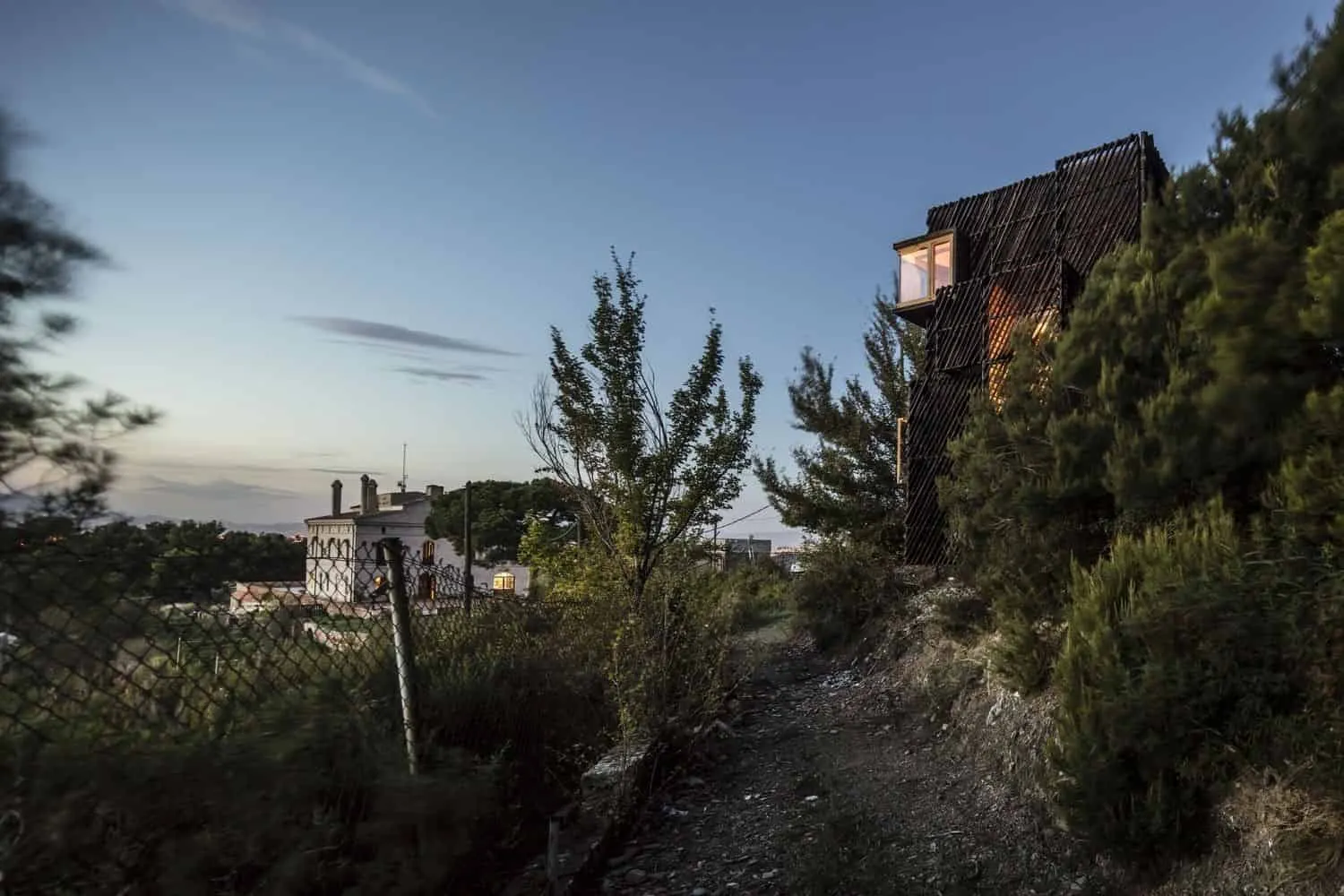
Project: Voxel Quarantine Cabin Architects: Valldaura Labs Location: Barcelona, Spain Photography: Adria Gula
Voxel Quarantine Cabin by Valldaura Labs
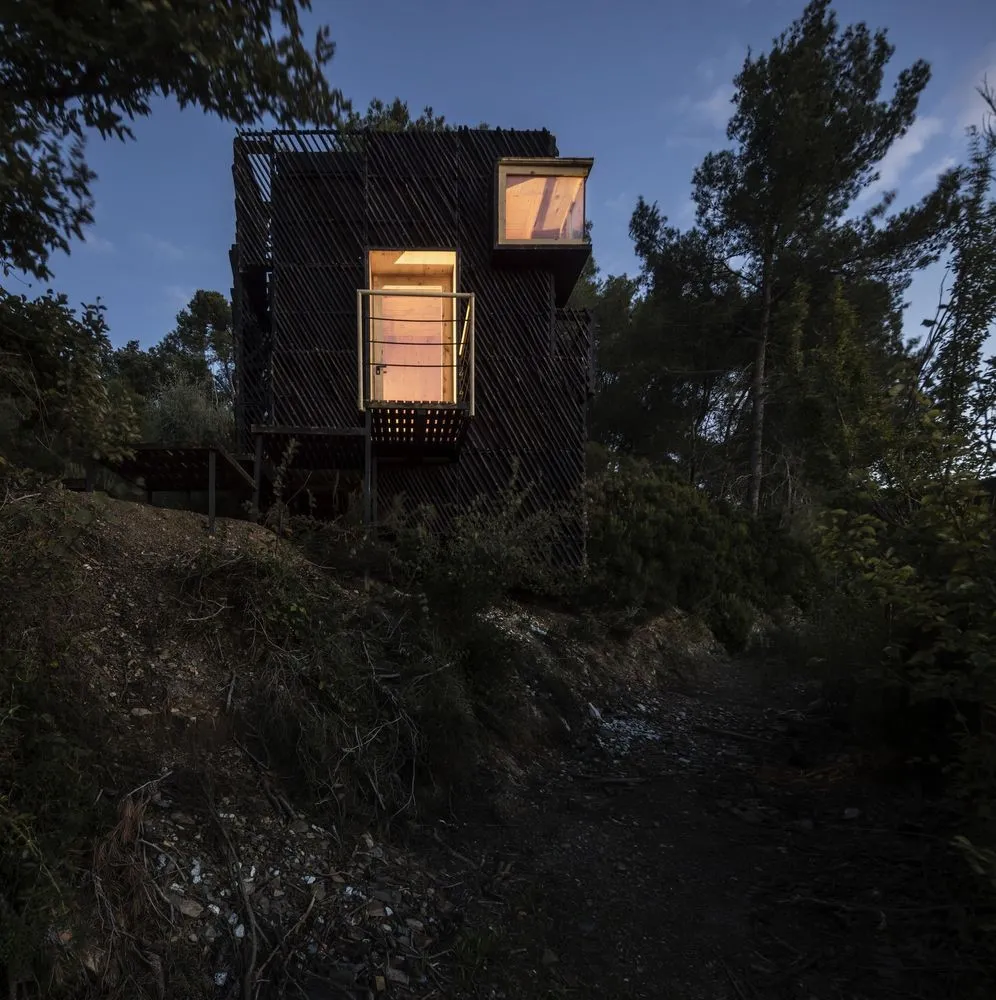
Valldaura Labs developed the Voxel project, consisting of a team of students, professionals and experts from the Master's program on Advanced Ecological Buildings and Bio-Cities in Catalonia. The Voxel Quarantine Cabin was designed for comfortable self-isolation, created as a response to the pandemic crisis.
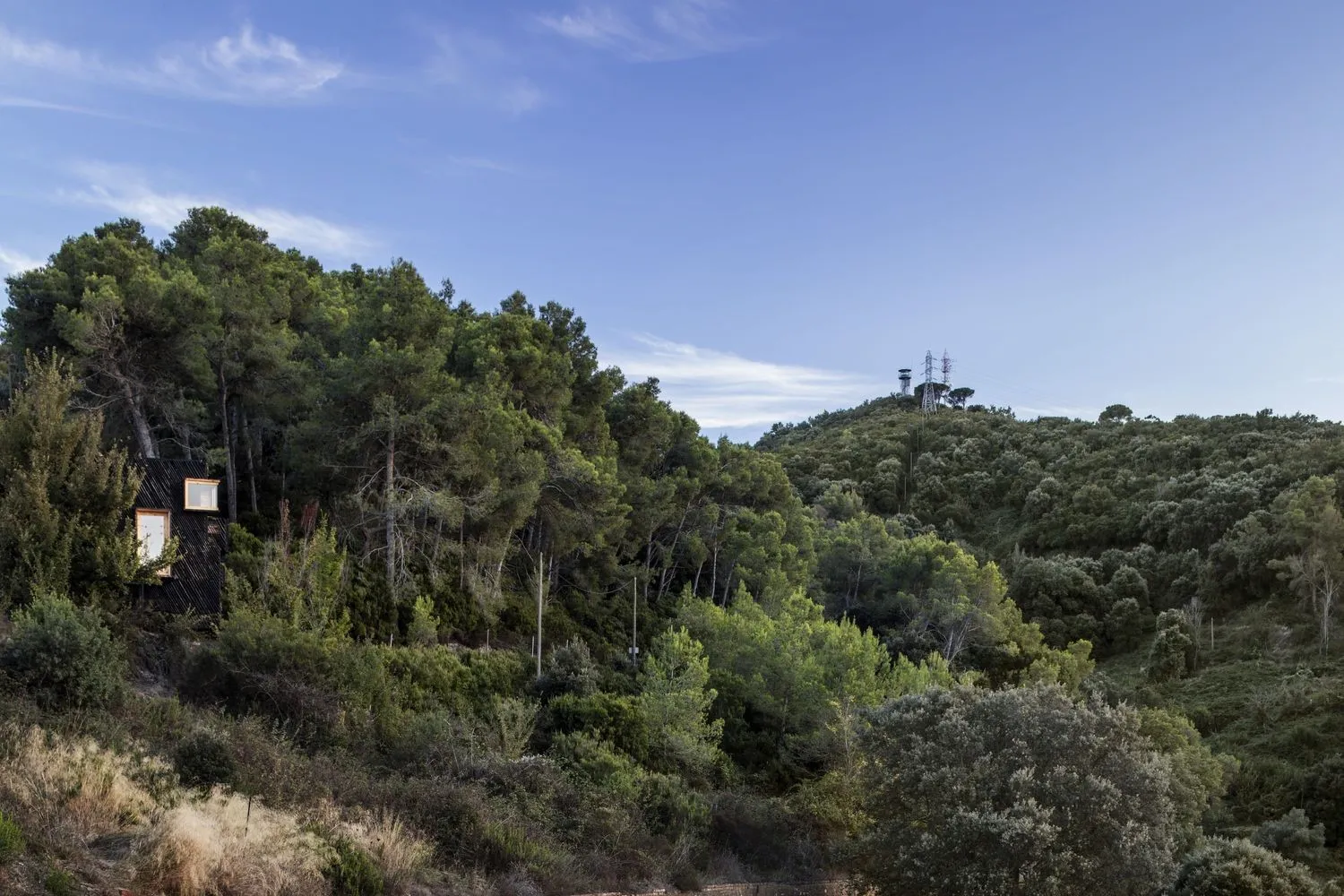
The Collserola Natural Park, located near Barcelona, became the site for the Voxel project developed by a team of students, professionals and experts from the Master's program on Advanced Ecological Buildings and Bio-Cities (MAEBB) at the Institute for Advanced Architecture of Catalonia (IAAC) Valldaura Labs. This is a quarantine cabin designed for one occupant. The project was entirely designed during the lockdown and represents an architectural response to the current crisis.
Voxel was designed and built during the MAEBB 2019-2020 Master's program, with consultation from a group of experts including the Master's Program Director Daniel Ibañez and Vicente Gual, energy expert Oscar Asensio, water specialist Johen Scherer, and architects Elena Orte and Guillermo Sevilla, among others. It was constructed in just 5 months, transforming the dense forest of Collserola into a home for an ambitious project in ecological architecture.
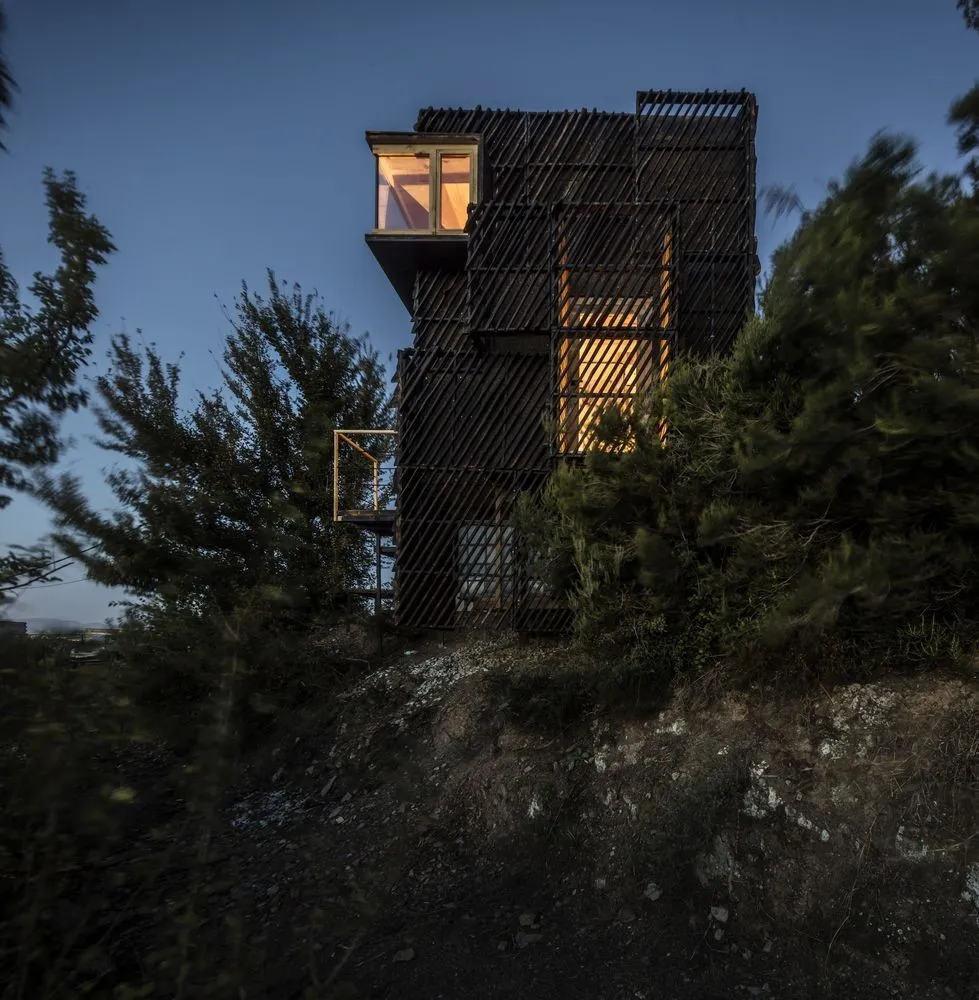
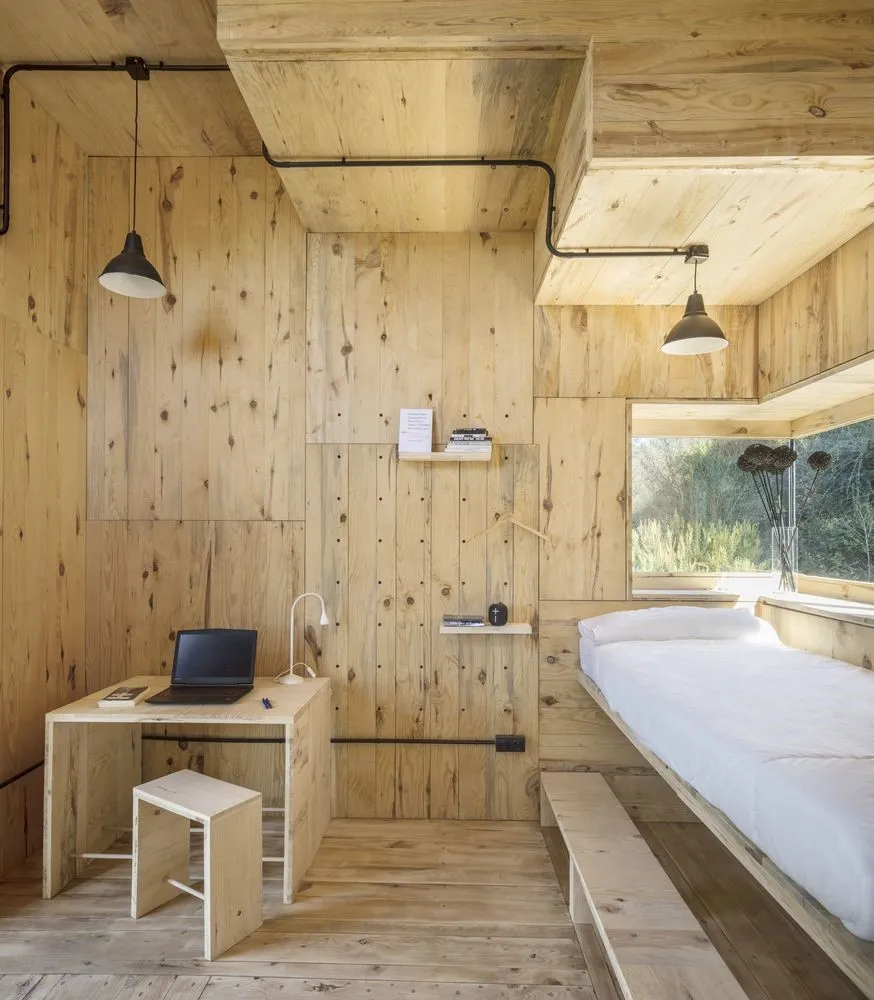
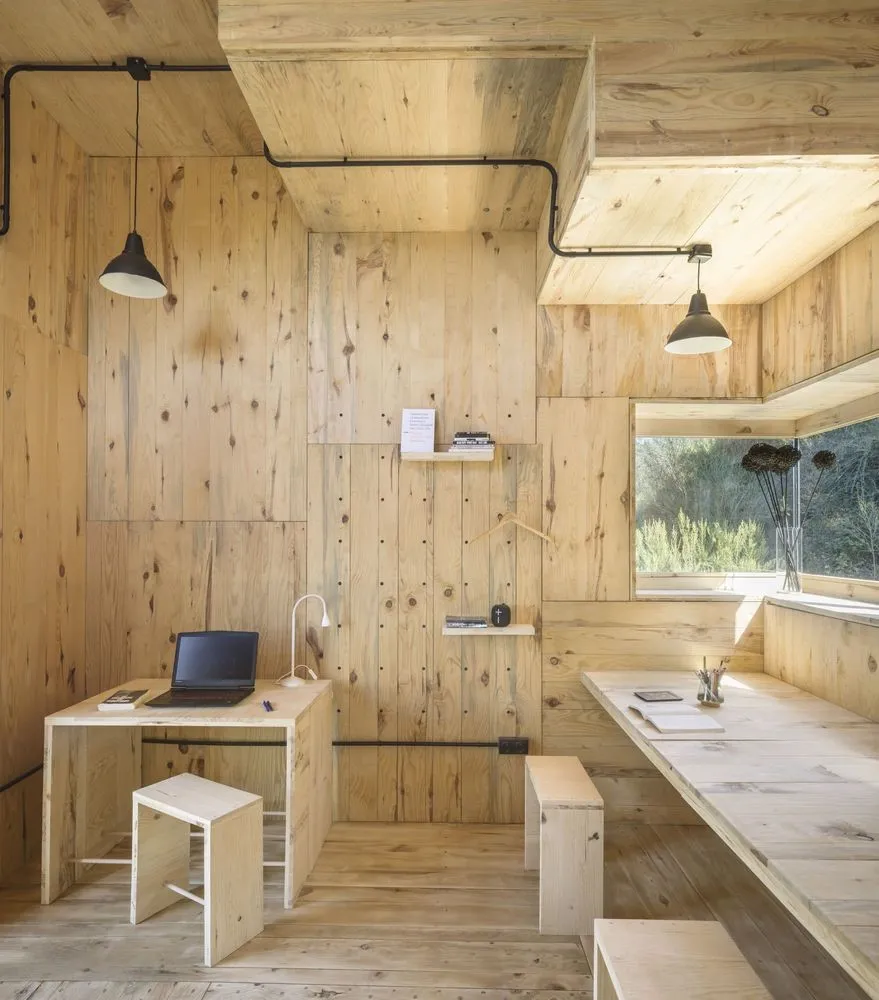
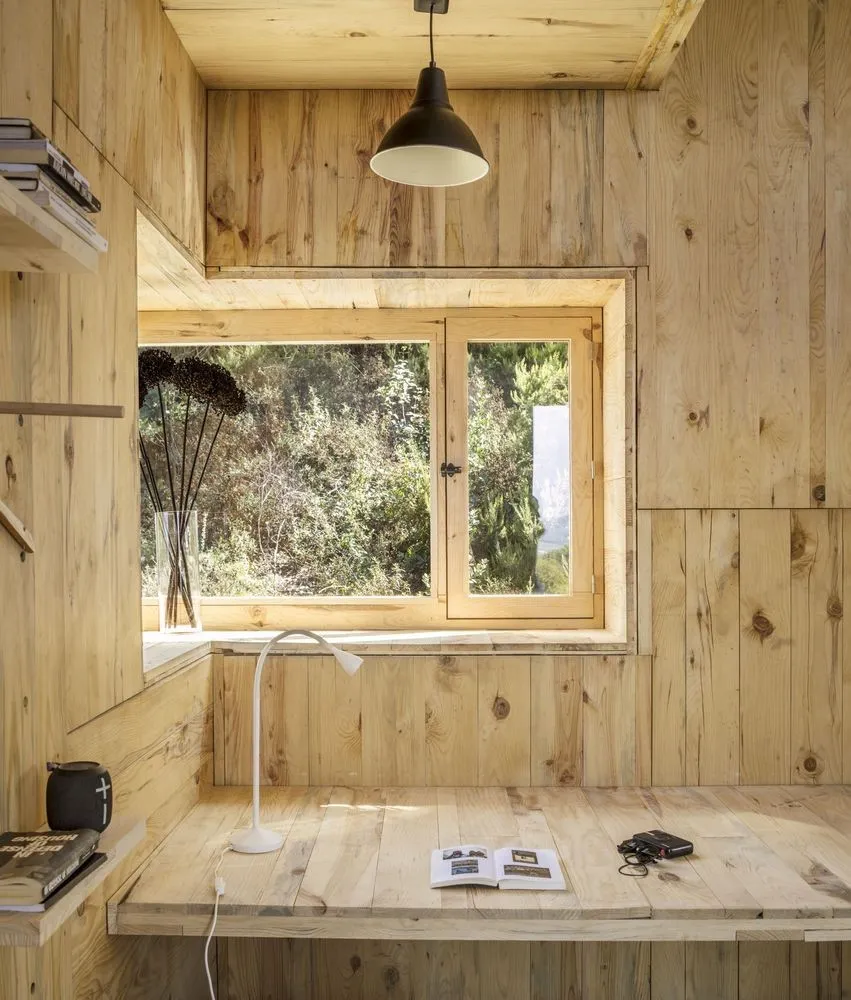
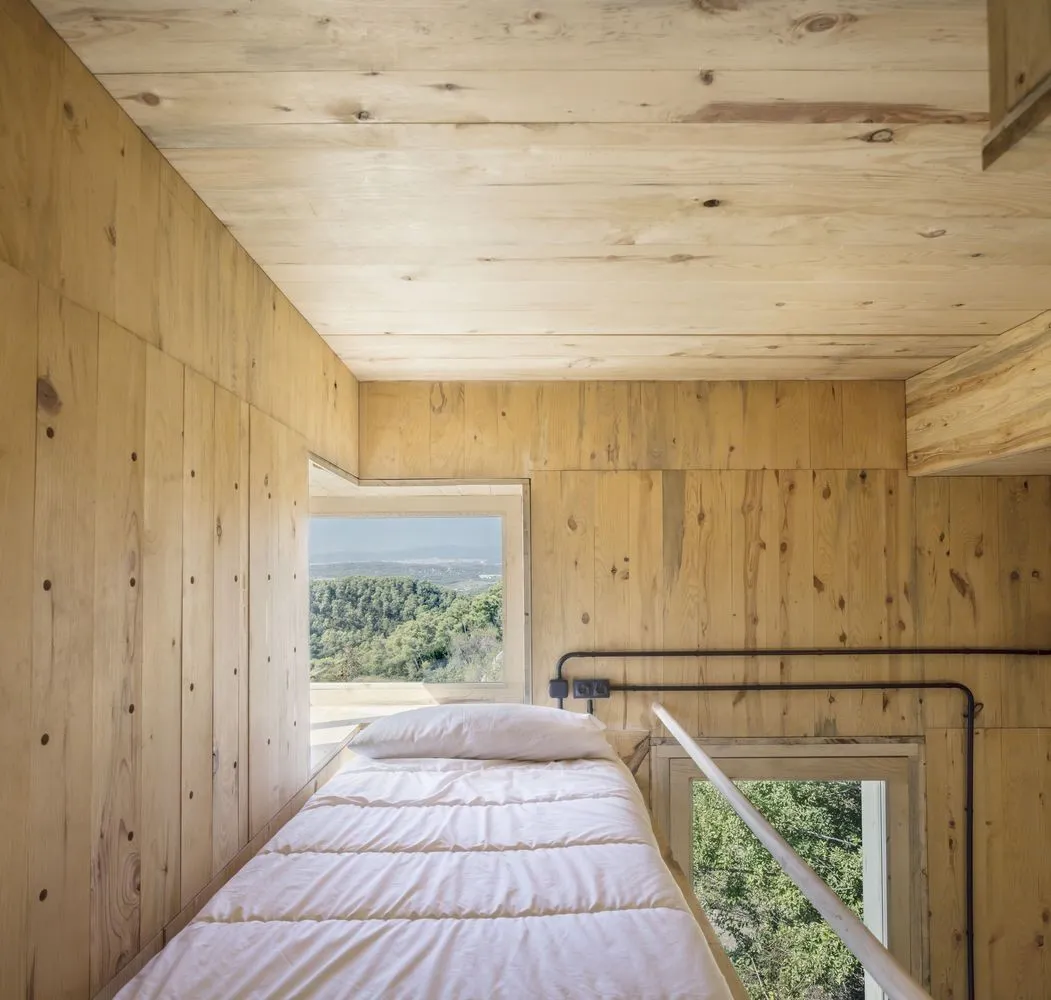
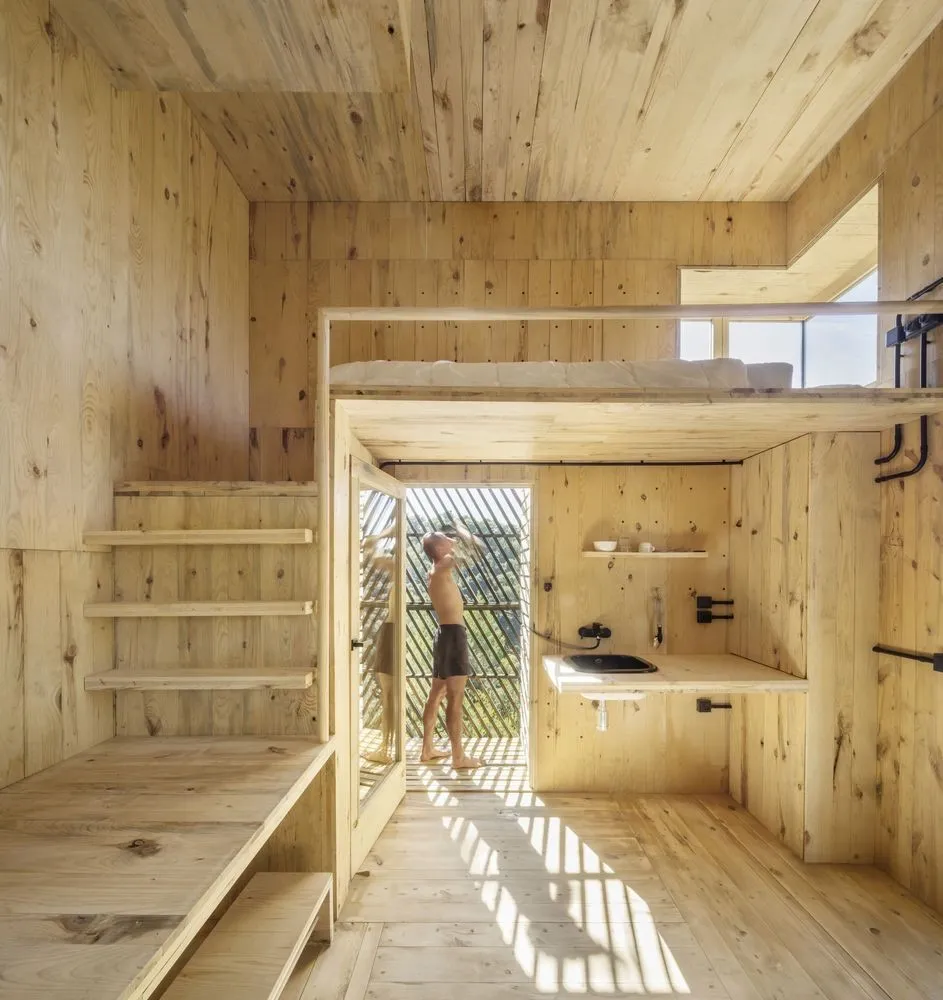
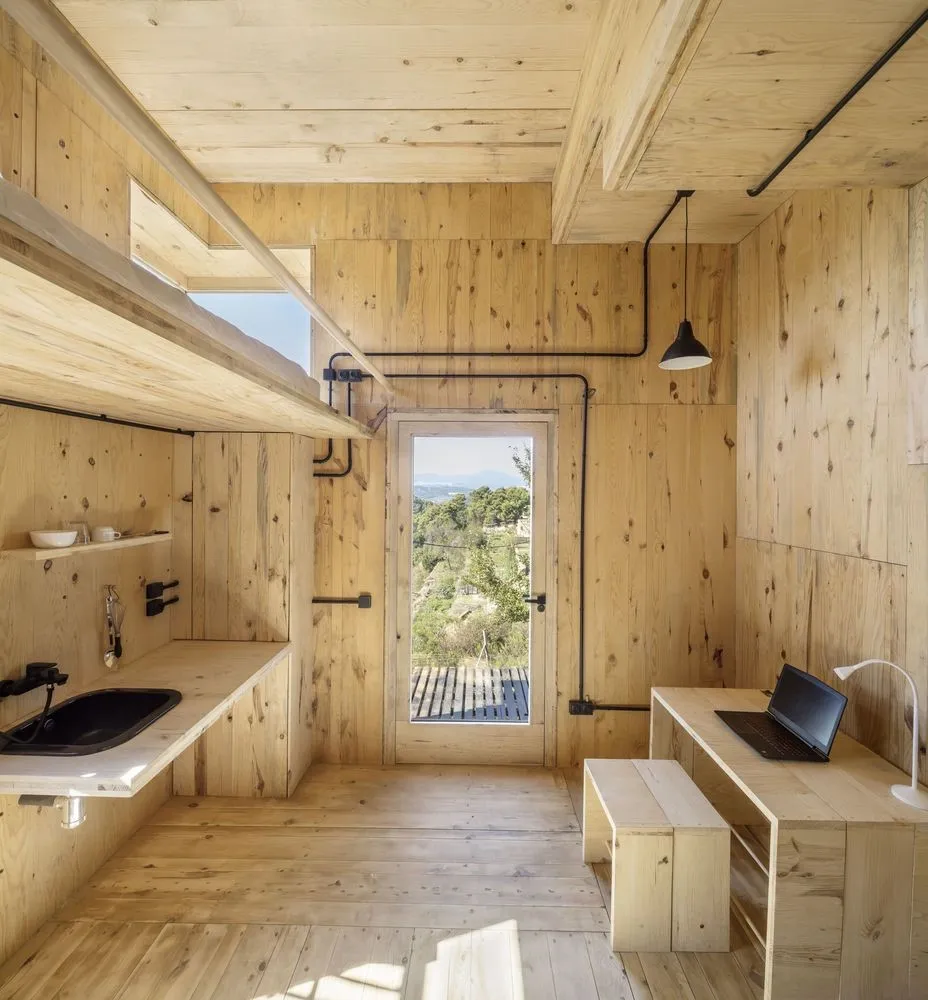
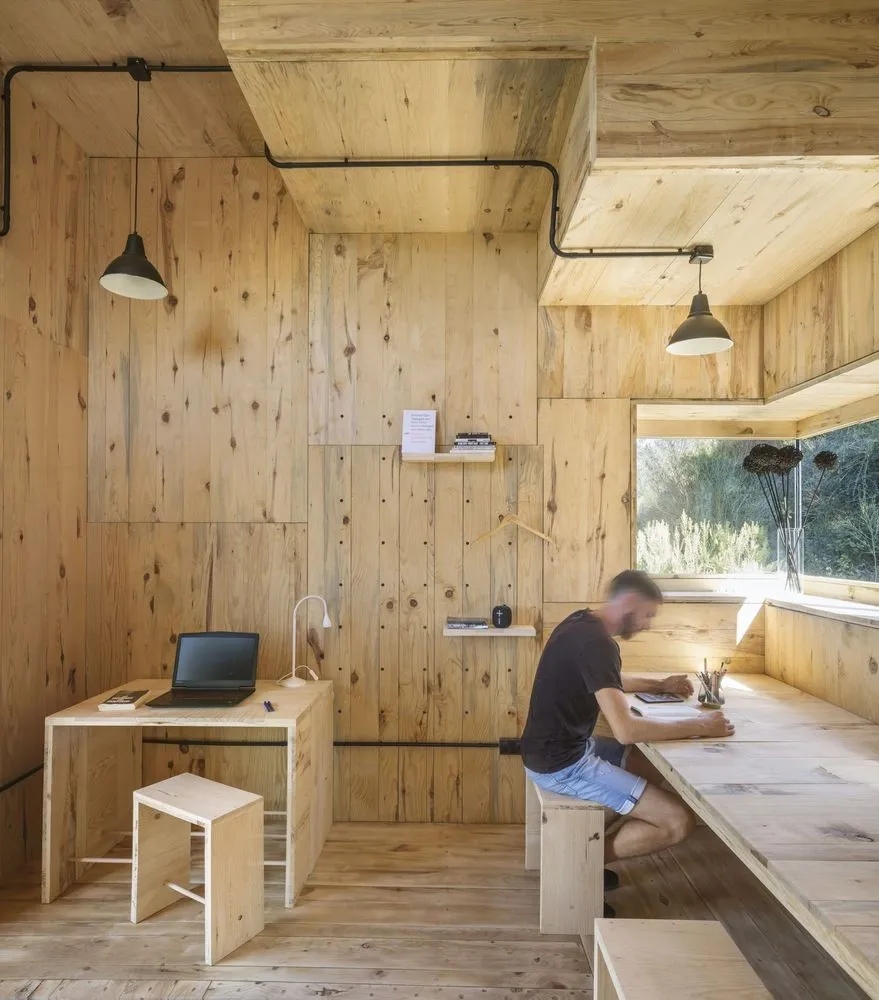
Zero-kilometer materials. Designed as a quarantine cabin, it can accommodate one occupant for 14 days, providing all material needs during self-isolation. Voxel or volumetric pixel is a 12 square meter structure made from cross-laminated timber (CLT), manufactured from Aleppo pine (Pinus halepensis). It was processed, dried, repurposed and assembled on-site at Valldaura. All timber used was harvested within a radius of less than one kilometer from the construction site.
Based on the sustainable forest policy approved in Collserola, a certain volume of timber can be harvested each year to stimulate the growth of smaller trees and biodiversity. Since forest biomass grows by 3% annually, younger trees absorb more CO2.
The project responds to the interest in promoting a new generation of green buildings using structural cross-laminated timber (CLT), which can become a key material for construction combating climate change.
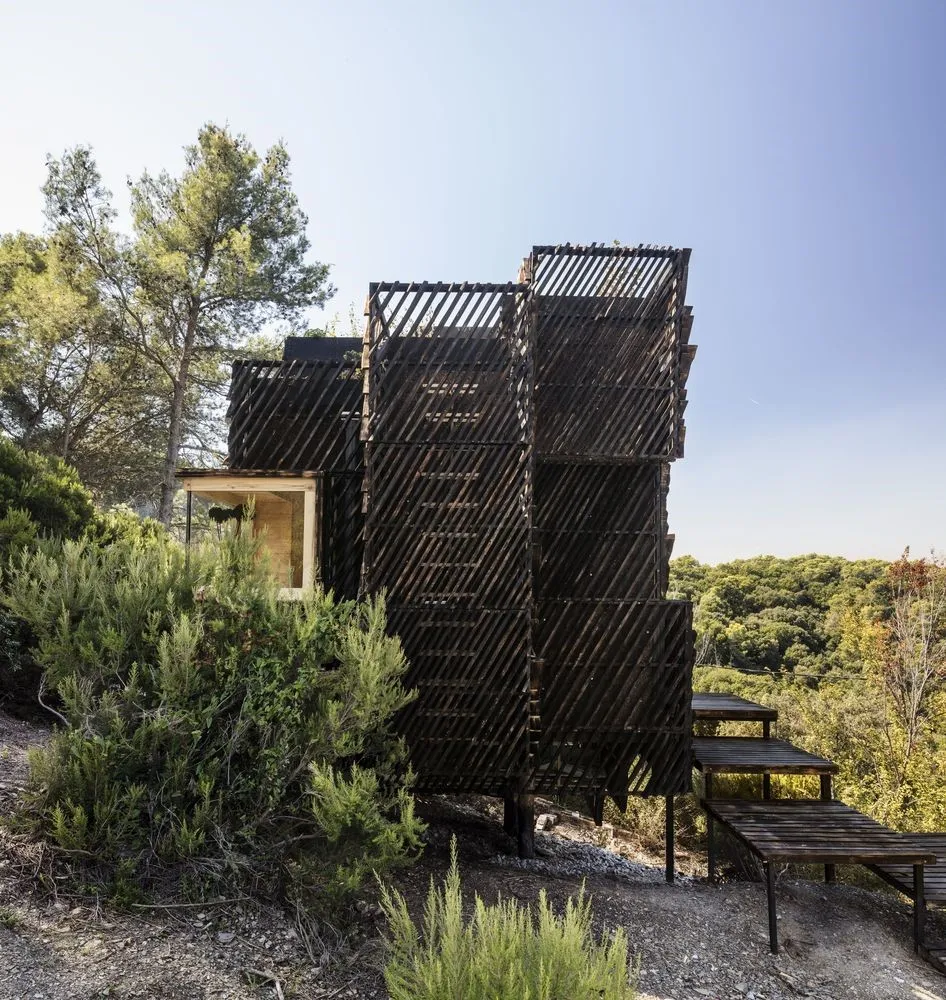
Cross-laminated timber (CLT) is the future of construction. To supply raw materials for the project, 40 pine trees were harvested and cut into boards of 3 cm thickness, which were then stacked for drying over three months. Once the desired moisture content was achieved, each board was sent to Valldaura Labs' carpentry workshop where it was processed into hundreds of pine planks. Each plank was then encoded in a specific sequence, labeled and assembled into more than 30 CLT structural panels that were assembled into a cube of 3.6×3.6 meters.
As a result of the passionate pursuit of locality and understanding material flows in architecture, each plank of every panel was tracked and traced, ensuring precise tracking of each wooden element from the house to its origin point.
The panels were connected without metal using braces and wooden dowels, inspired by the desire to use less carbon-intensive materials. The structure was covered with a layer of cork insulation and equipped with an innovative rainwater collection system made from waste material generated during CLT production.
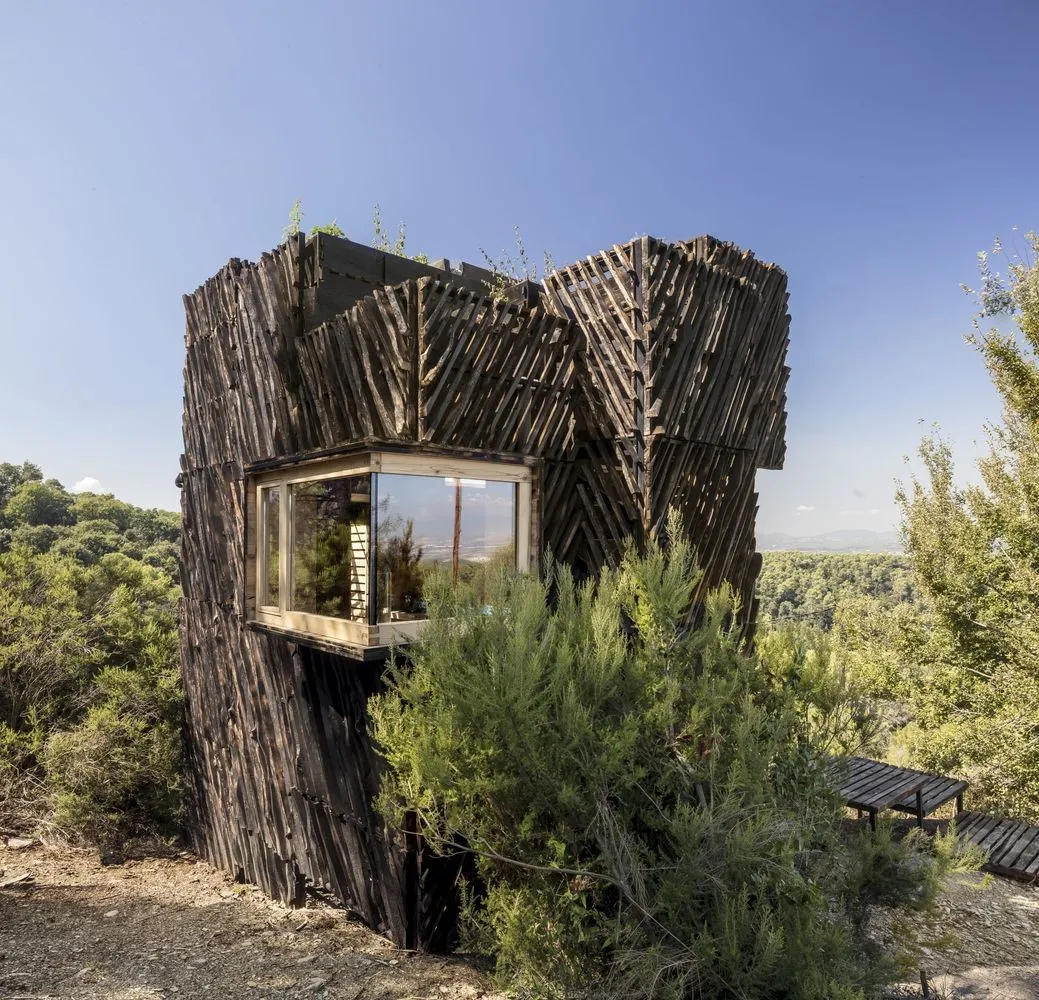
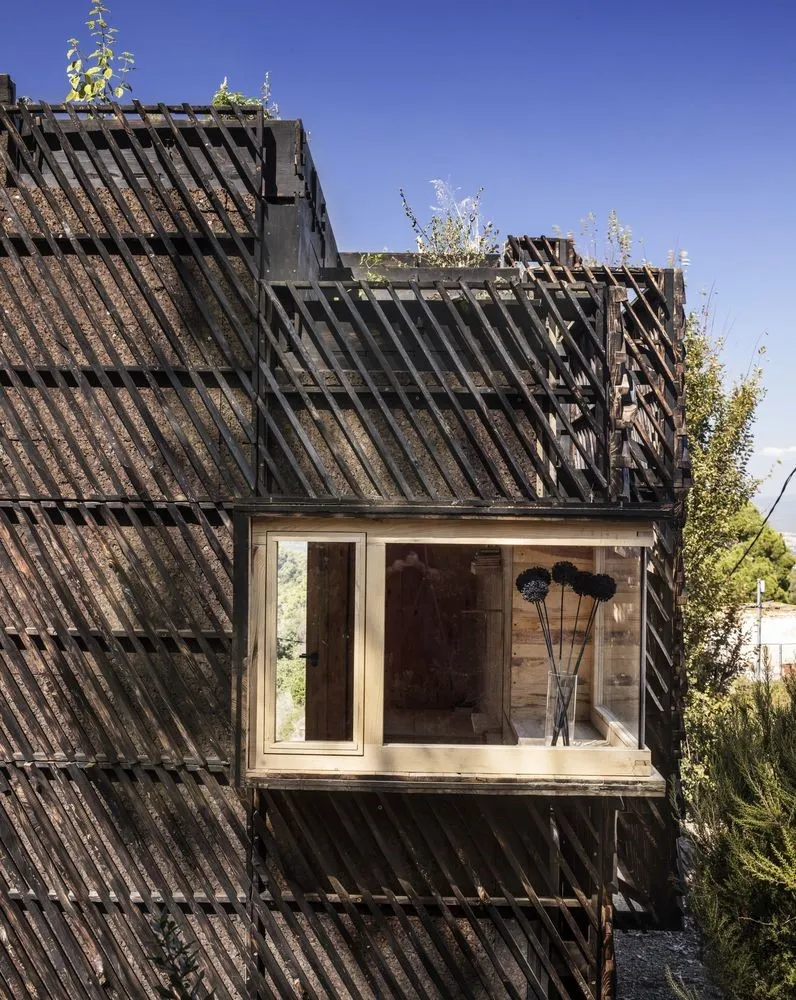
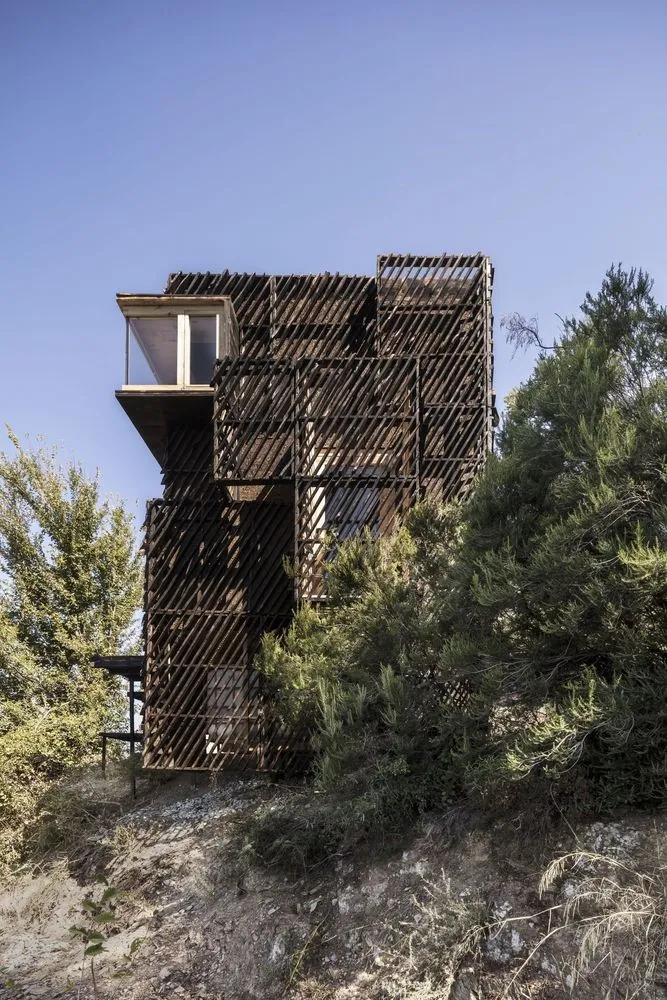
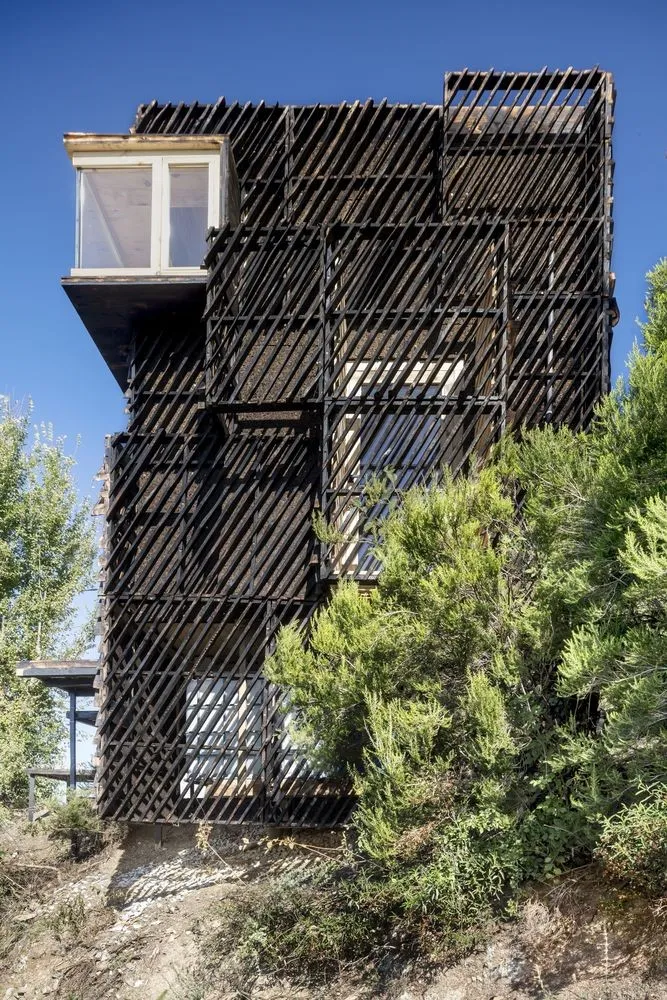
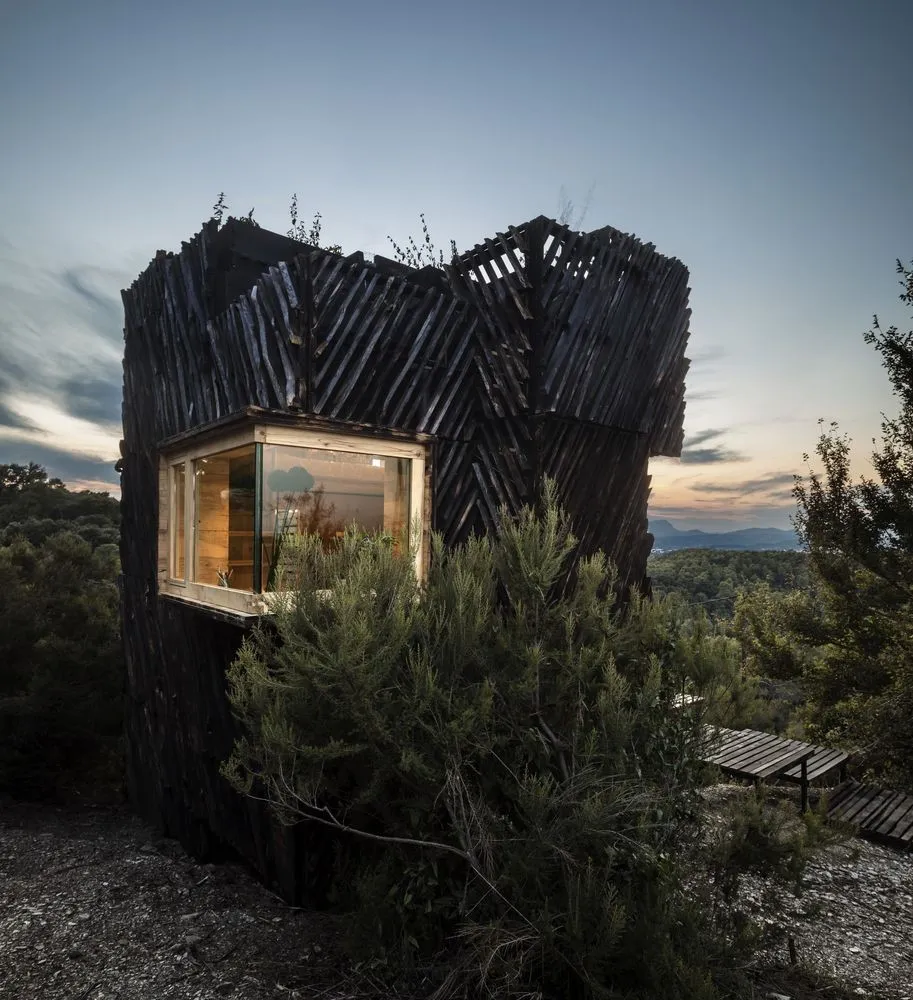
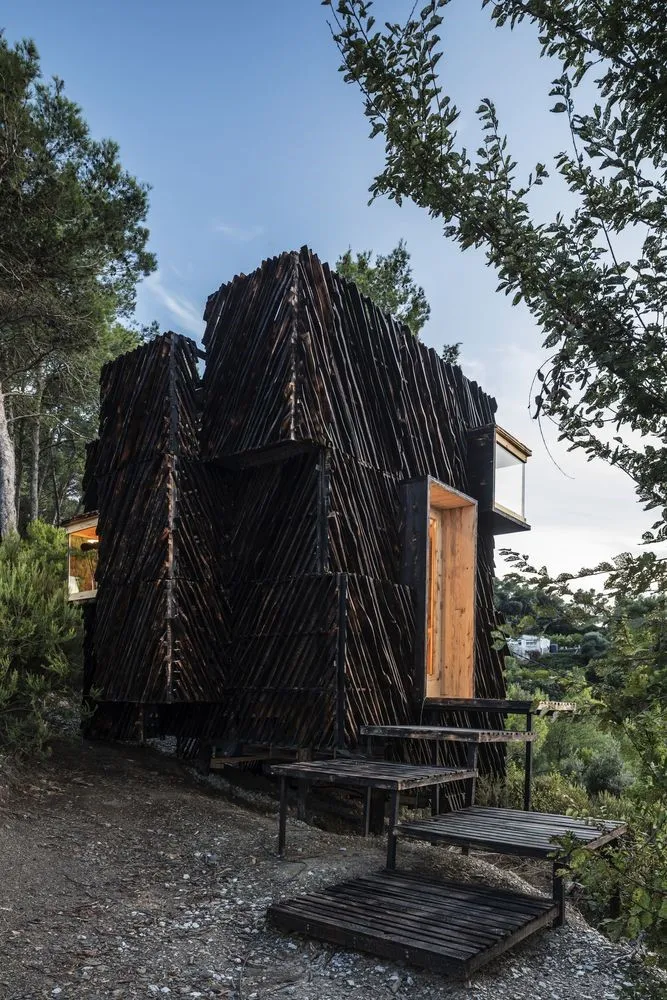
By processing raw pine boards into perfectly rectangular planks, the organic edges of the board usually end up as waste. By transforming this linear selection and disposal cycle into a more circular format, these offcuts were used to create the facade that demonstrates the organic complexity of wood usually hidden in most timber structures.
Advancing design further, each offcut was parametrically organized into a gradient corresponding to functions within the cabin. Some facade sections also protrude from the body, matching metabolic components such as water tanks and outdoor shower. The cabin roof features a series of garden boxes with complex connections, cut using computer numerical control (CNC) (without nails, without glue), which contain various local plants and direct rainwater into a tank below.
Cork insulation was placed over the wooden panels, and a charred wood shell was applied on top using the Japanese Shou Sugi Ban technique that protects the building from rain.
Master's program on Advanced Ecological Buildings and Bio-Cities (MAEBB). The Master's program on Advanced Ecological Buildings and Bio-Cities (MAEBB) is an immersive 11-month program where students learn to design ecological projects, parametric design methods and transformation of local materials. The program concludes with a collaborative and controlled design and construction of a small building to test all stages of the construction process and create future green buildings. Voxel was built with participation from 17 students and 5 volunteers from 15 countries between April and August 2020, right in the middle of the coronavirus pandemic.
Circular Metabolic System. Valldaura Labs is known for its interest in exploring the limits of self-sufficiency, aiming to meet all life needs without excessive dependence on imported goods or services. Voxel aspires to the same independence, realizing its program as a quarantine cabin through a carefully designed water-energy-waste system.
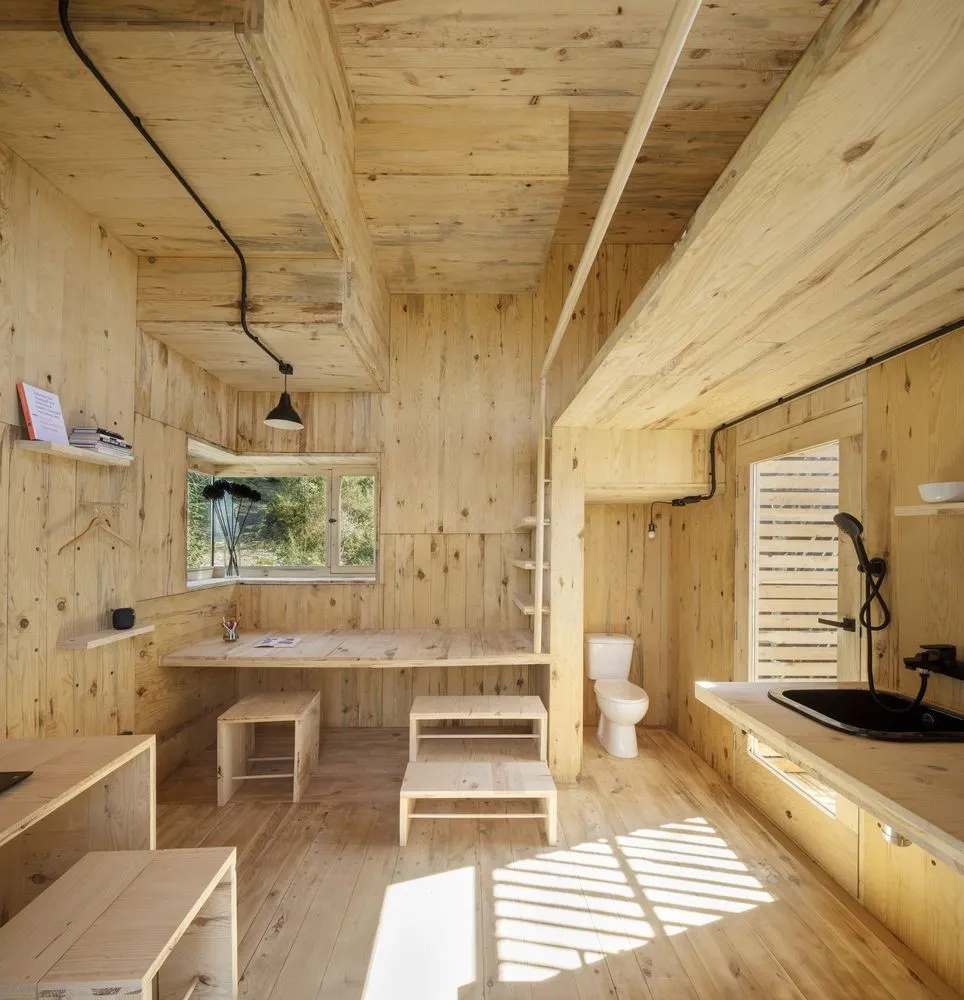
The cabin is equipped with three solar panels and independent battery storage specifically designed to power lighting and devices for one occupant. The water system includes rainwater harvesting and greywater reuse, as well as blackwater treatment in a self-sufficient biogas system that generates fuel suitable for cooking or heating and sanitary fertilizer as by-products.
Now that construction is complete, Voxel represents a living proof of the upcoming paradigm in advanced and ecological architecture using hyper-local materials and industrial methods.
Just as the natural park provides the city with vital amounts of oxygen from its trees, the Institute for Advanced Architecture of Catalonia (IAAC) Valldaura Labs and its Master's program on Advanced Ecological Buildings and Bio-Cities (MAEBB) dedicated knowledge transfer about forest urban environments through design. Having completed the construction of two full houses in two years, MAEBB fully embodied the spirit of learning through making, demonstrating the value of testing research work in real builds.
-Valldaura Labs