The Hovering House by Modo Designs: A Modern L-Shaped Home for Three Generations in Ahmedabad
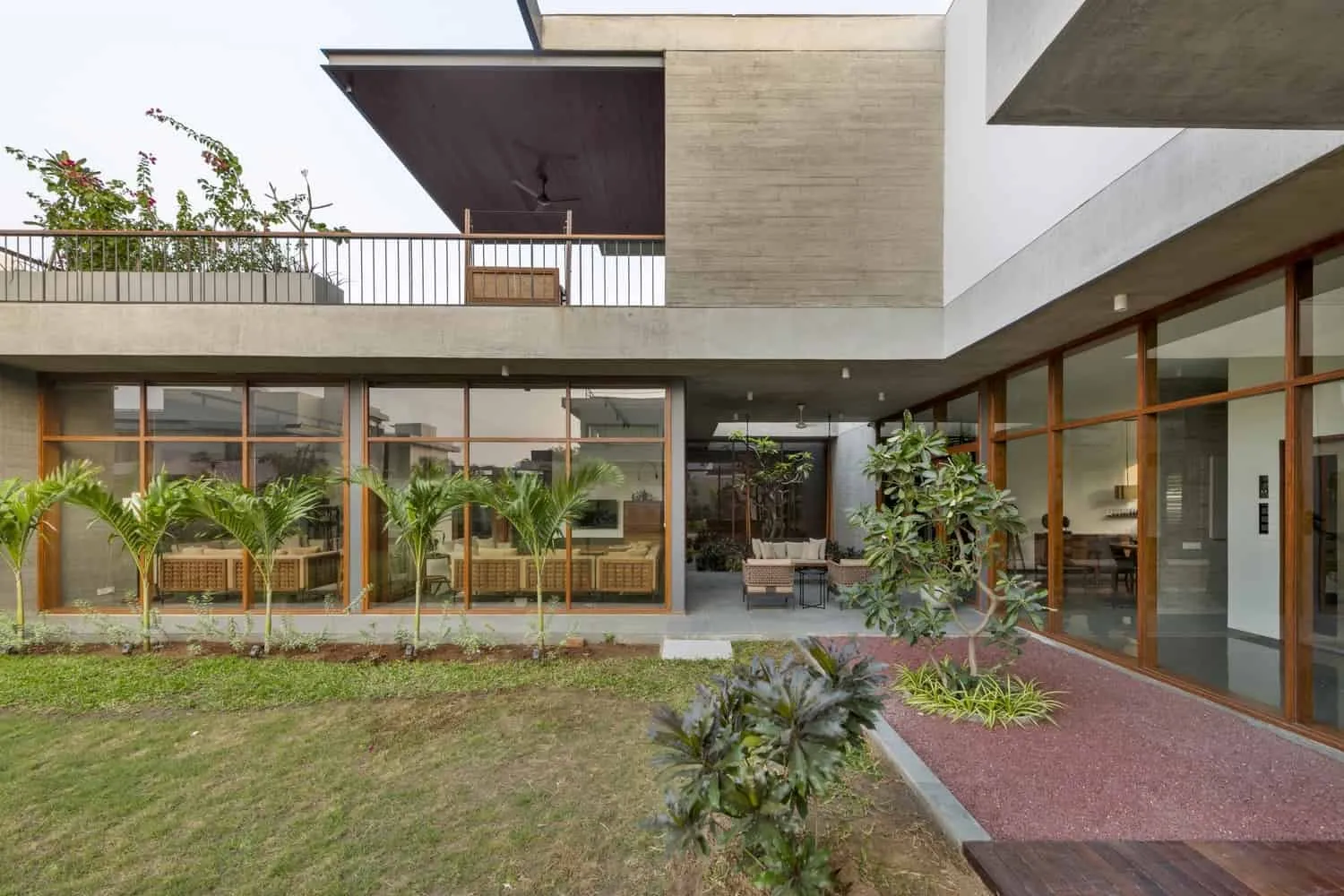
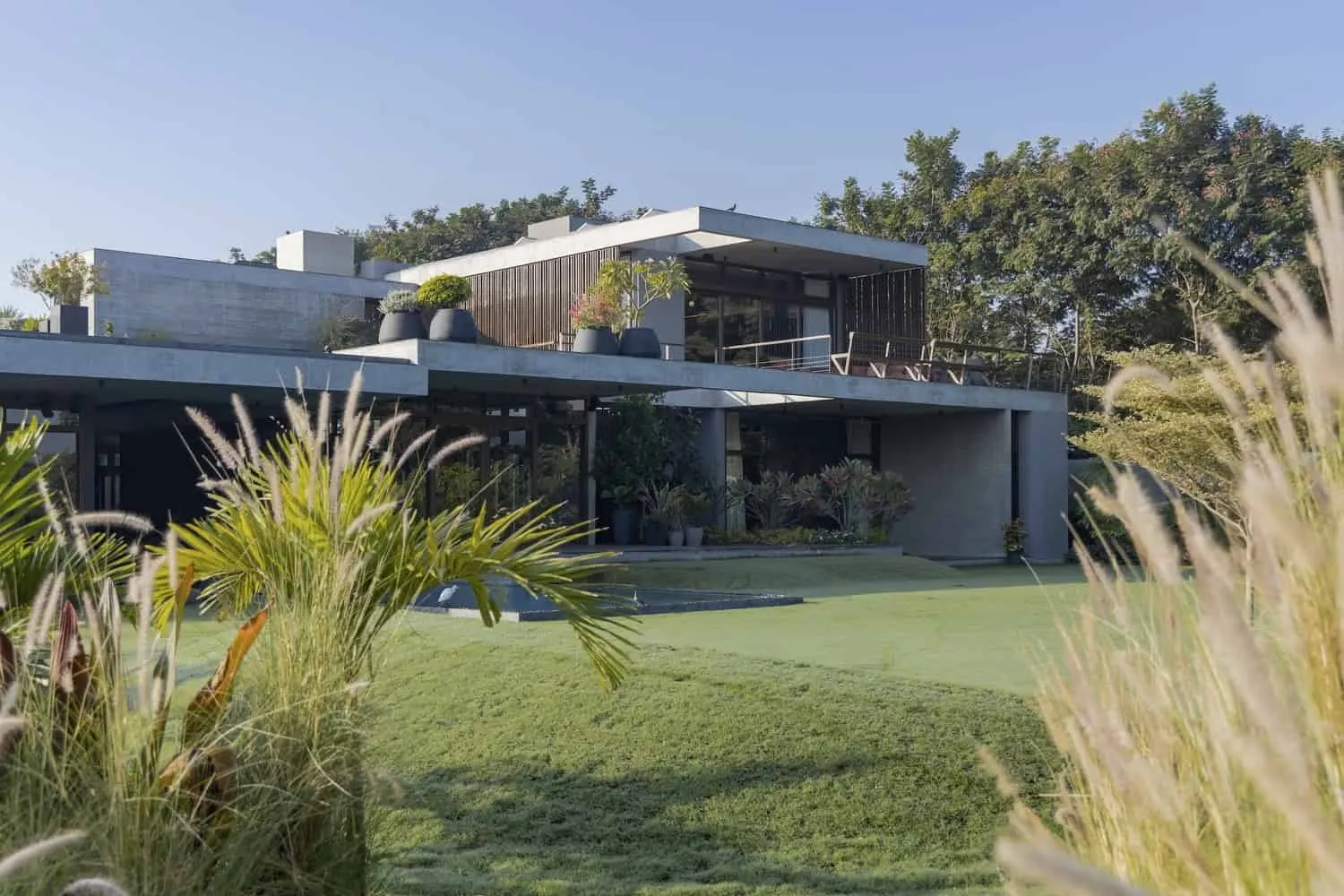
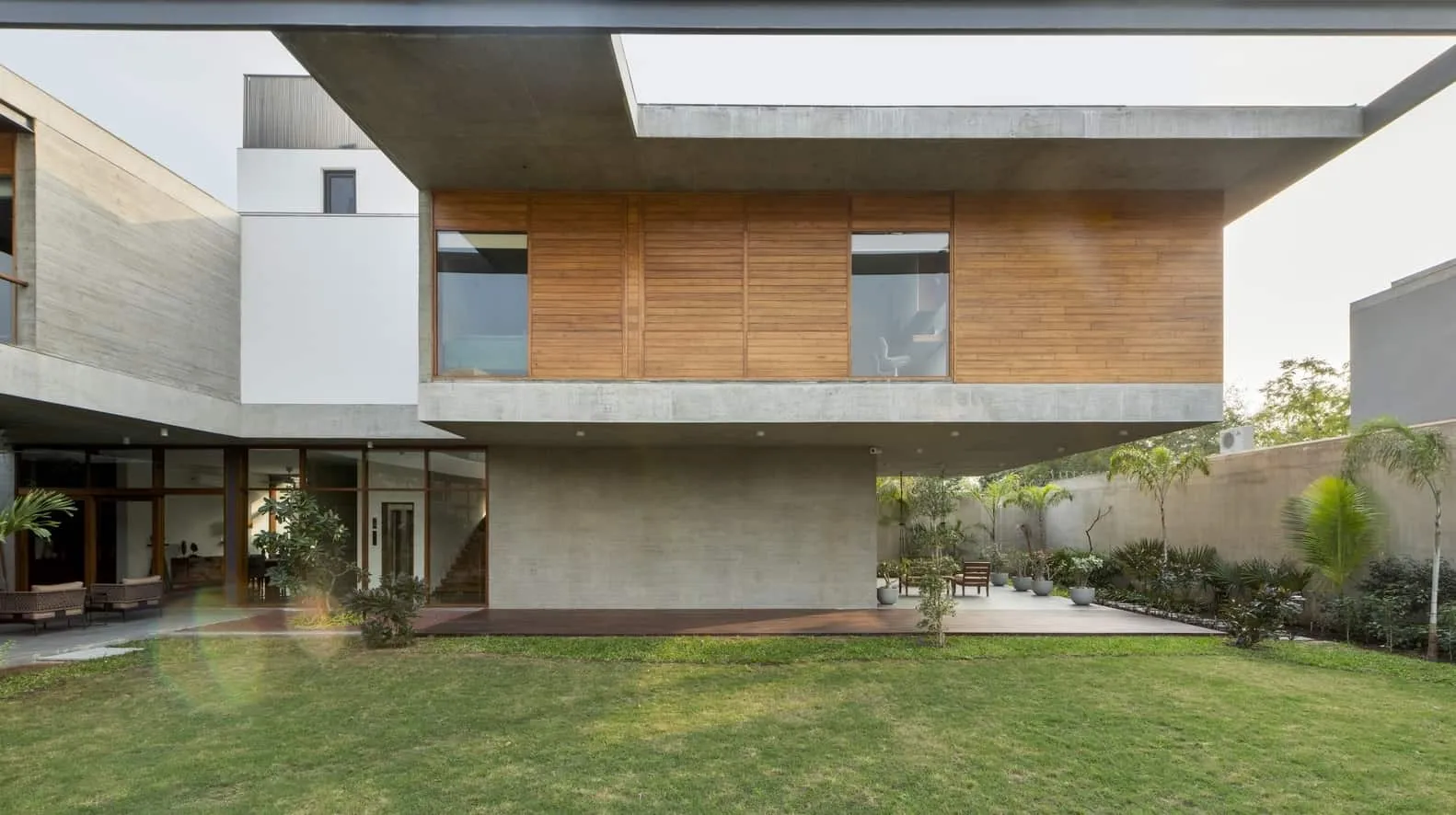
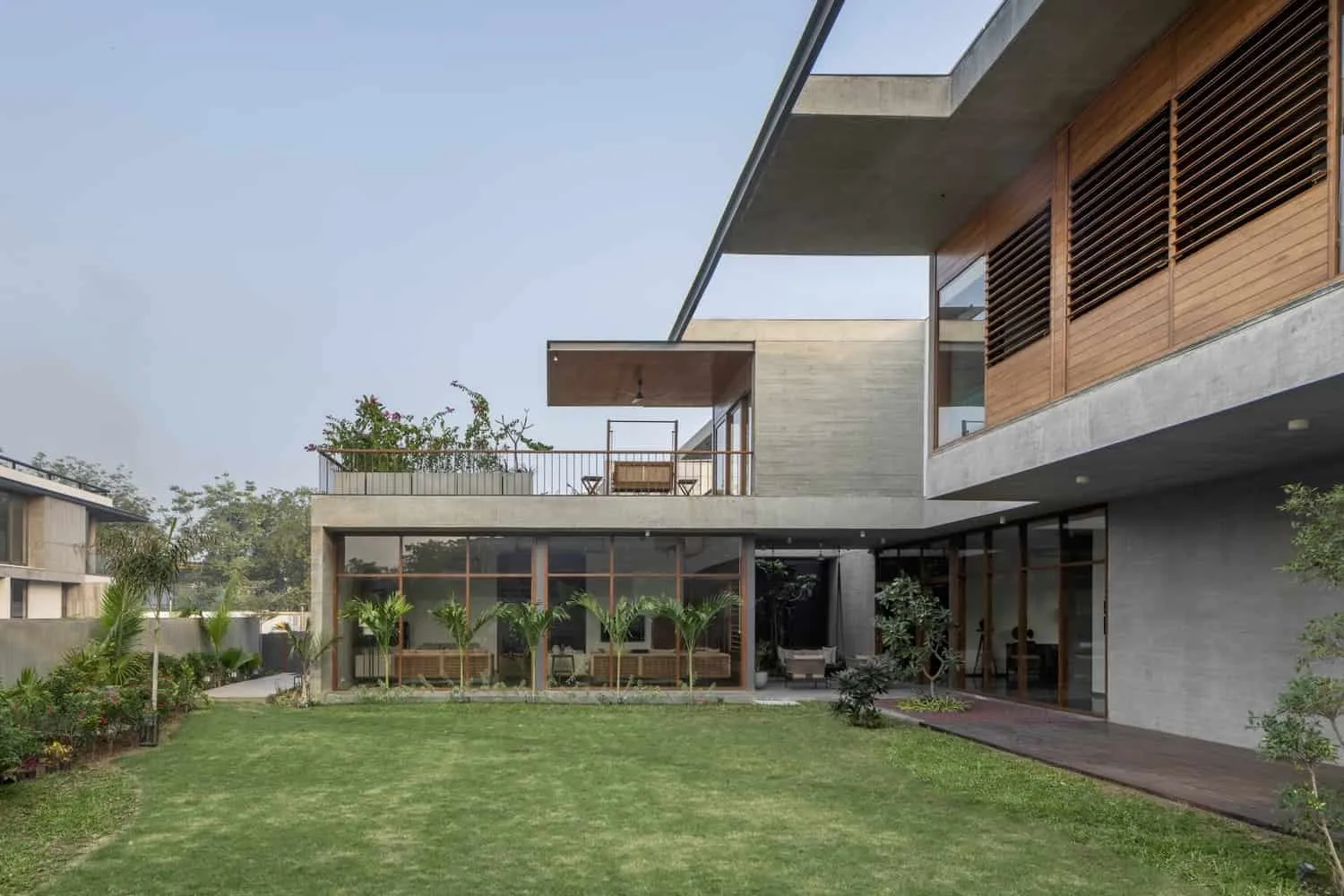
On the western suburbs of Ahmedabad, India, the The Hovering House by Modo Designs, in collaboration with interior designer Anarr Gunjaria, redefines the concept of multigenerational living. Designed for a family of six spanning three generations, the house balances privacy and togetherness through its L-shaped layout, central courtyard, and dramatic floating upper volume that gives the home its name.
The design maximizes openness and green zones on a 9,000 sq ft plot, creating a seamless transition between indoor and outdoor spaces while preserving large areas for gardens and social gatherings.
Location and Concept: Openness and Green Living
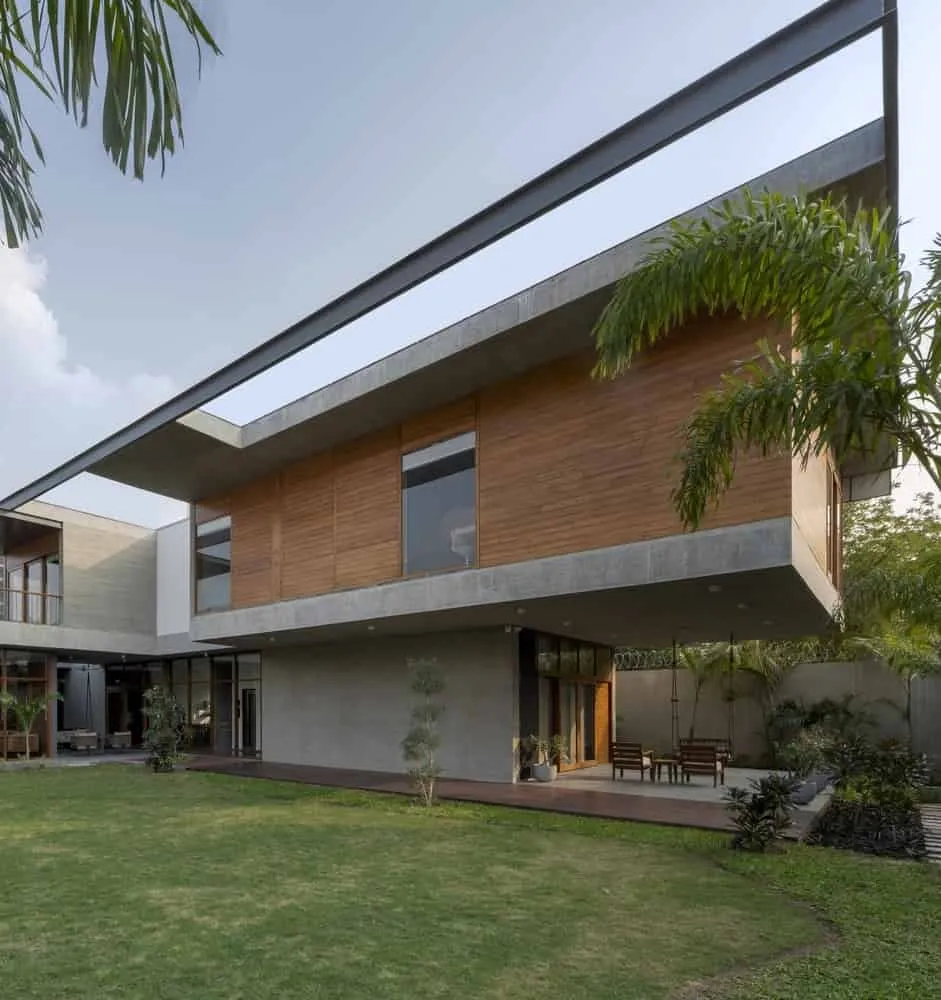
The client emphasized light, ventilation, and connection with nature. In response, Modo Designs created a compact footprint on the first floor, thus leaving most of the plot as an open garden. The upper floor 'hovers' above this footprint, expanding habitable space without compromising outdoor areas.
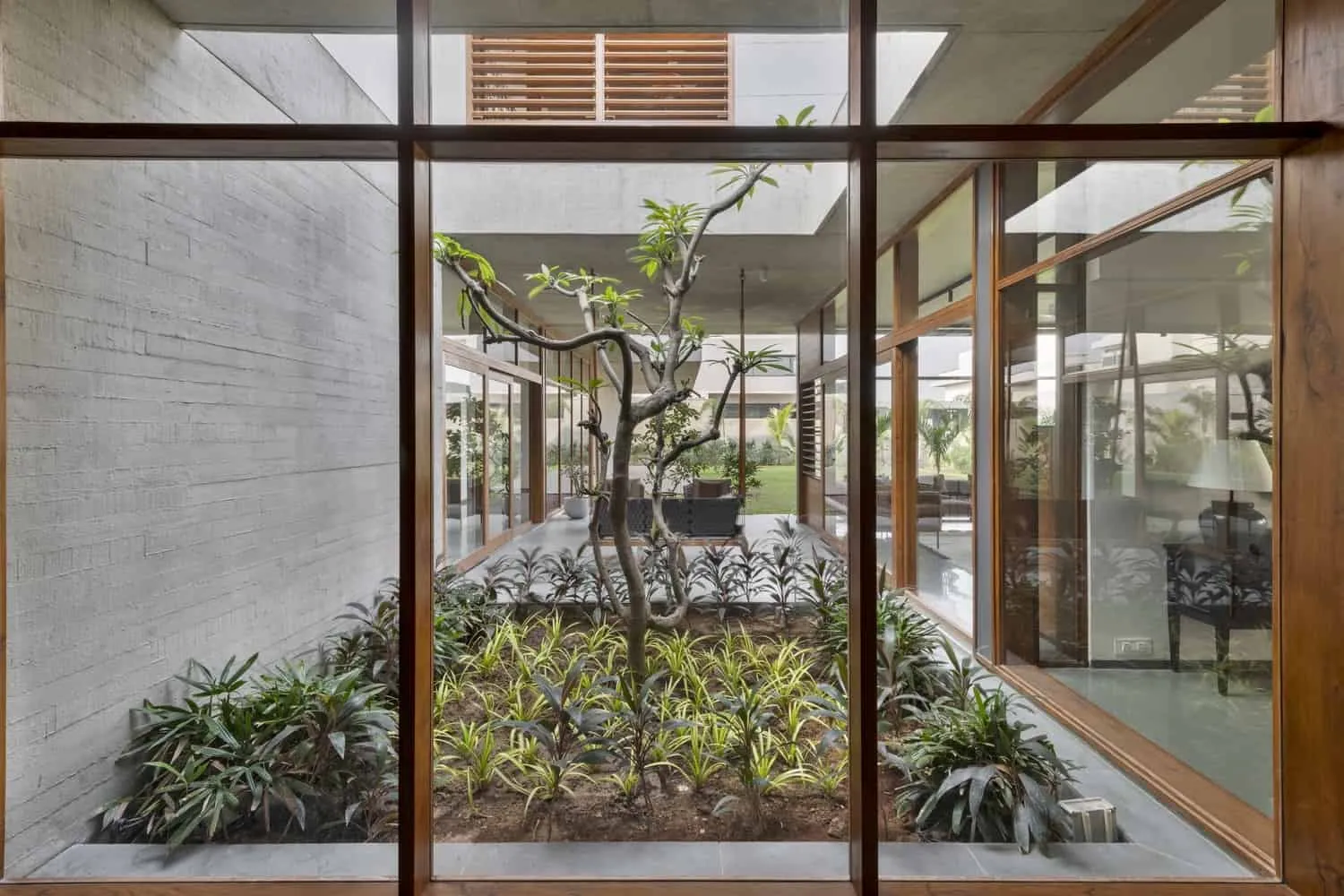
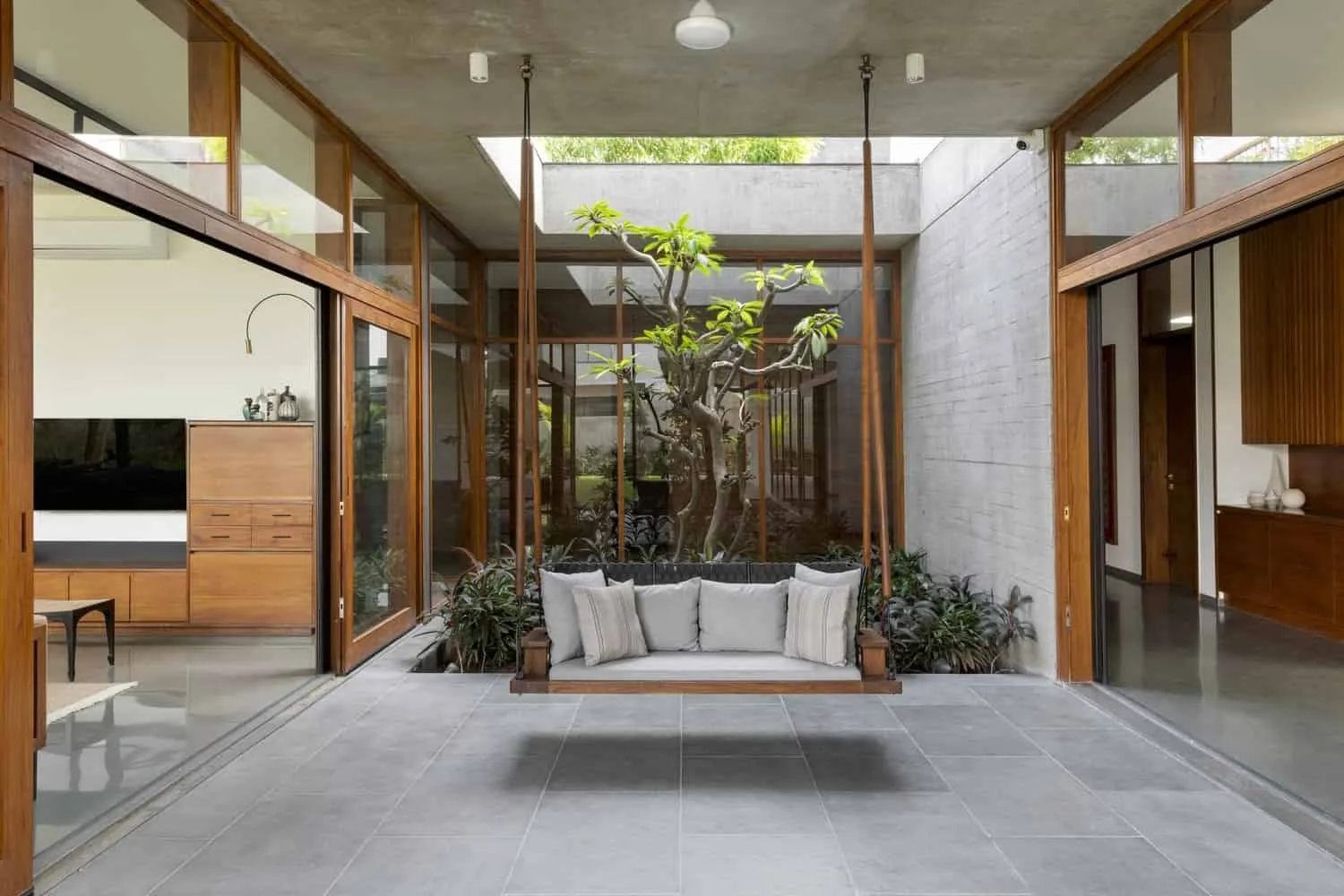
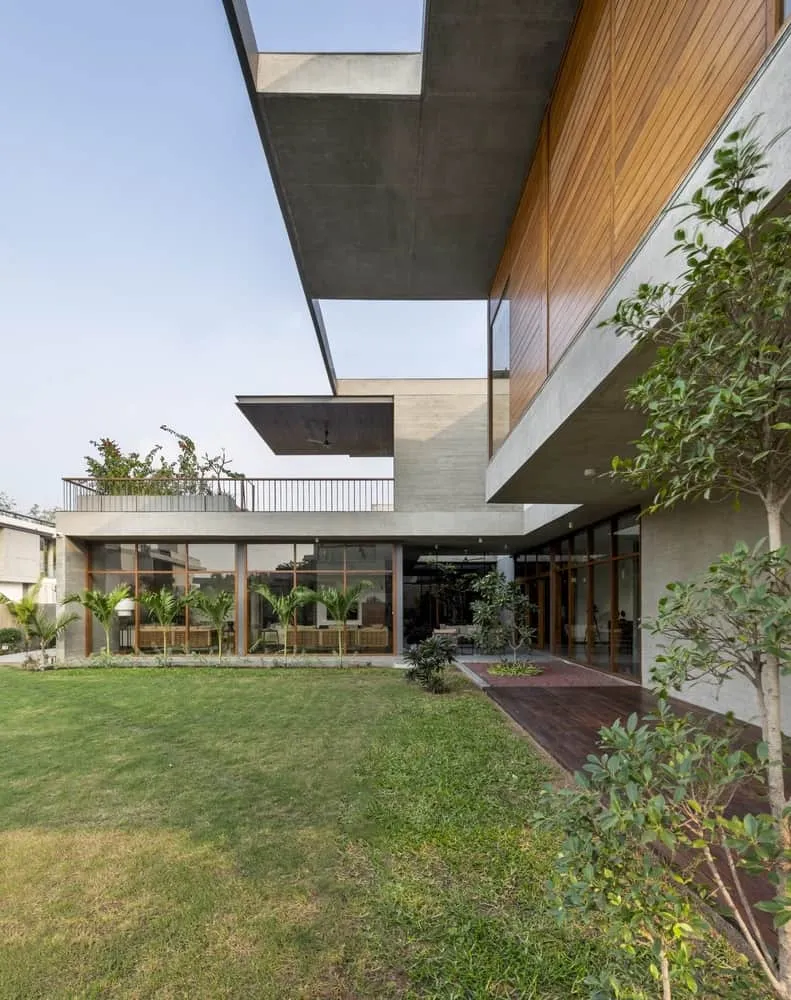
The L-shaped configuration defines two main edges of the plot, forming a central green courtyard that serves as both visual and social heart of the home. This indoor-outdoor balance allows the family to enjoy both privacy and openness.
Space Organization
The The Hovering House is designed as a fluid sequence of spaces, naturally transitioning from formal to private areas.
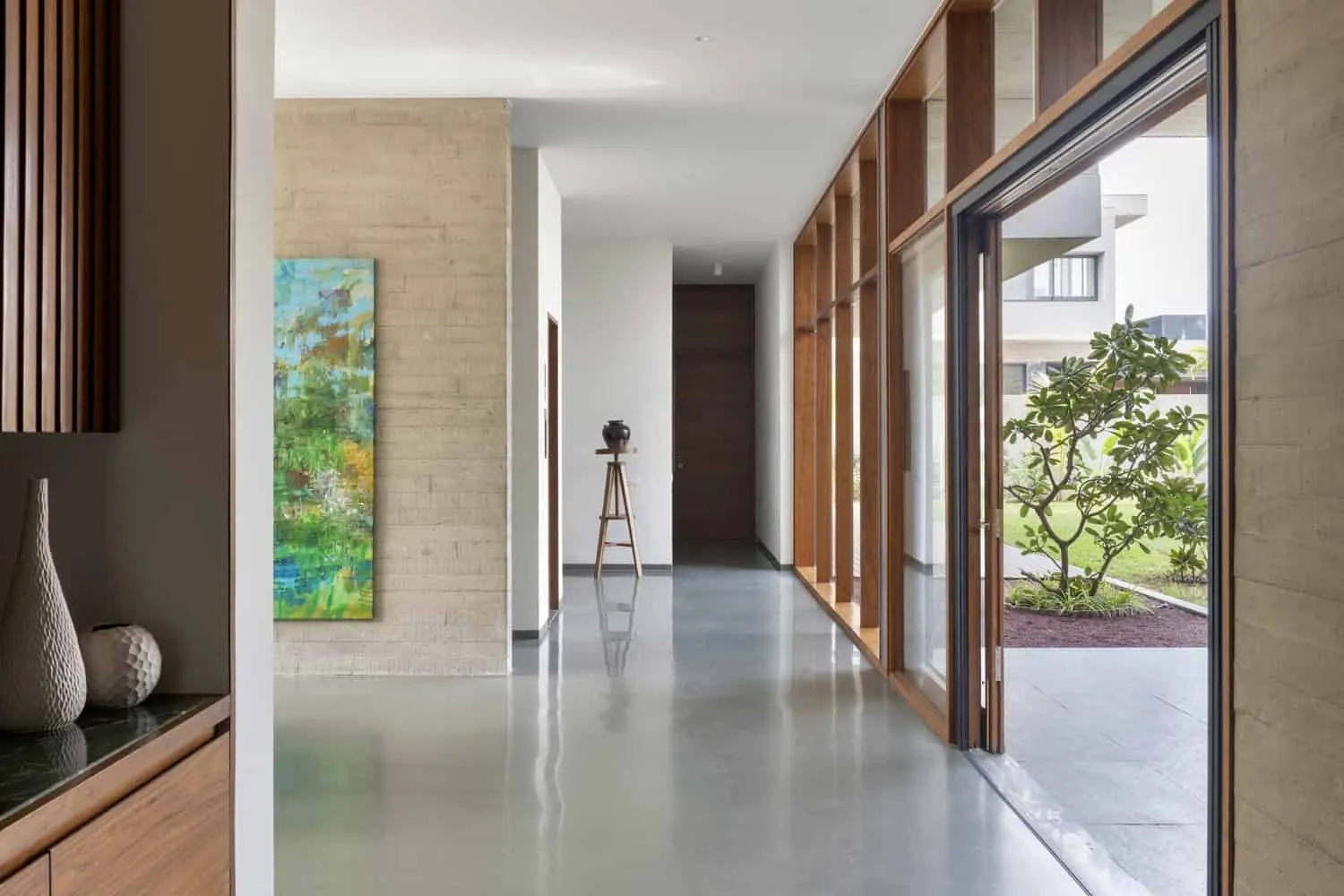
Entrance sequence: Arrival is marked by a foyer and vestibule, looking out toward the courtyard, immediately establishing themes of openness and greenery.
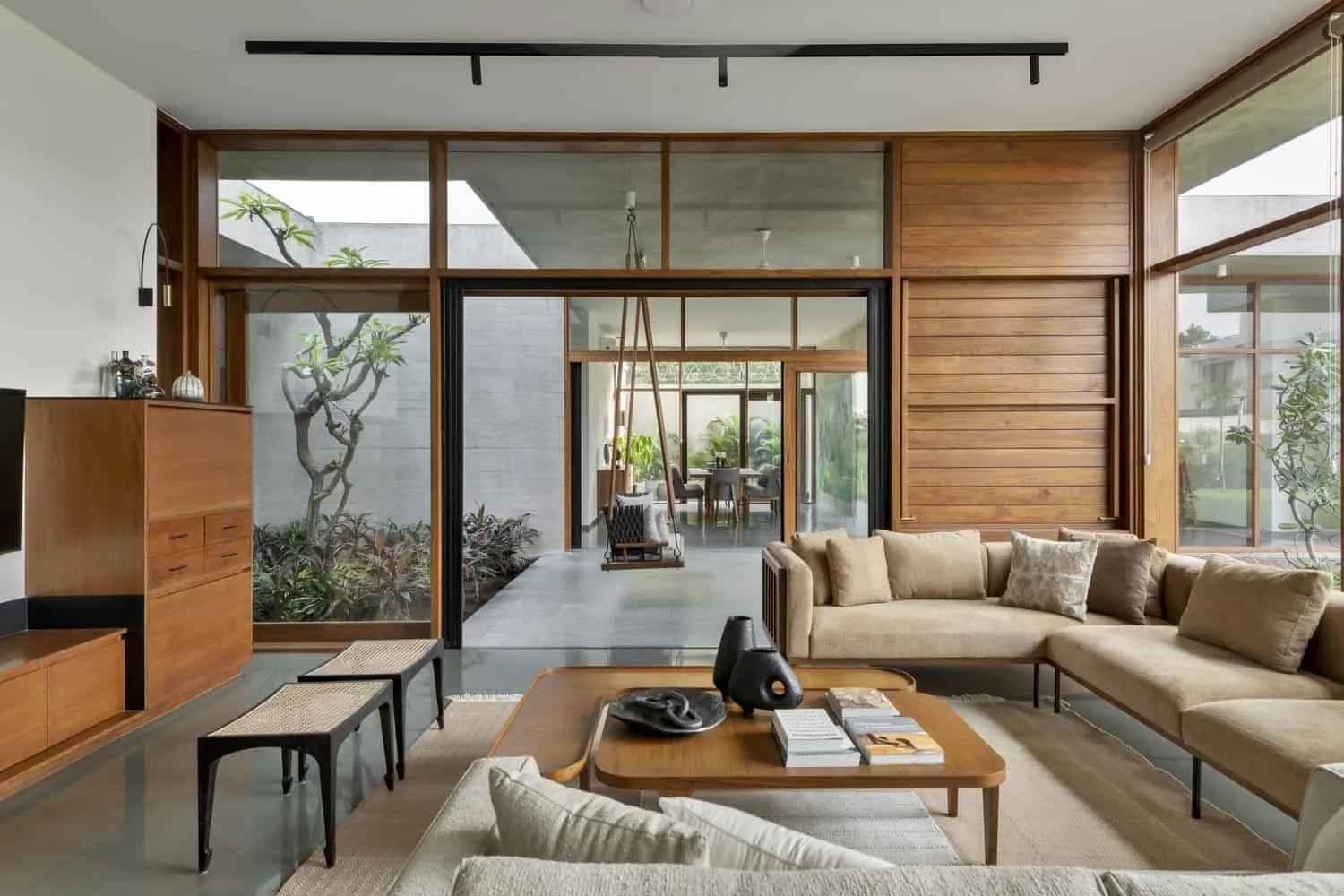
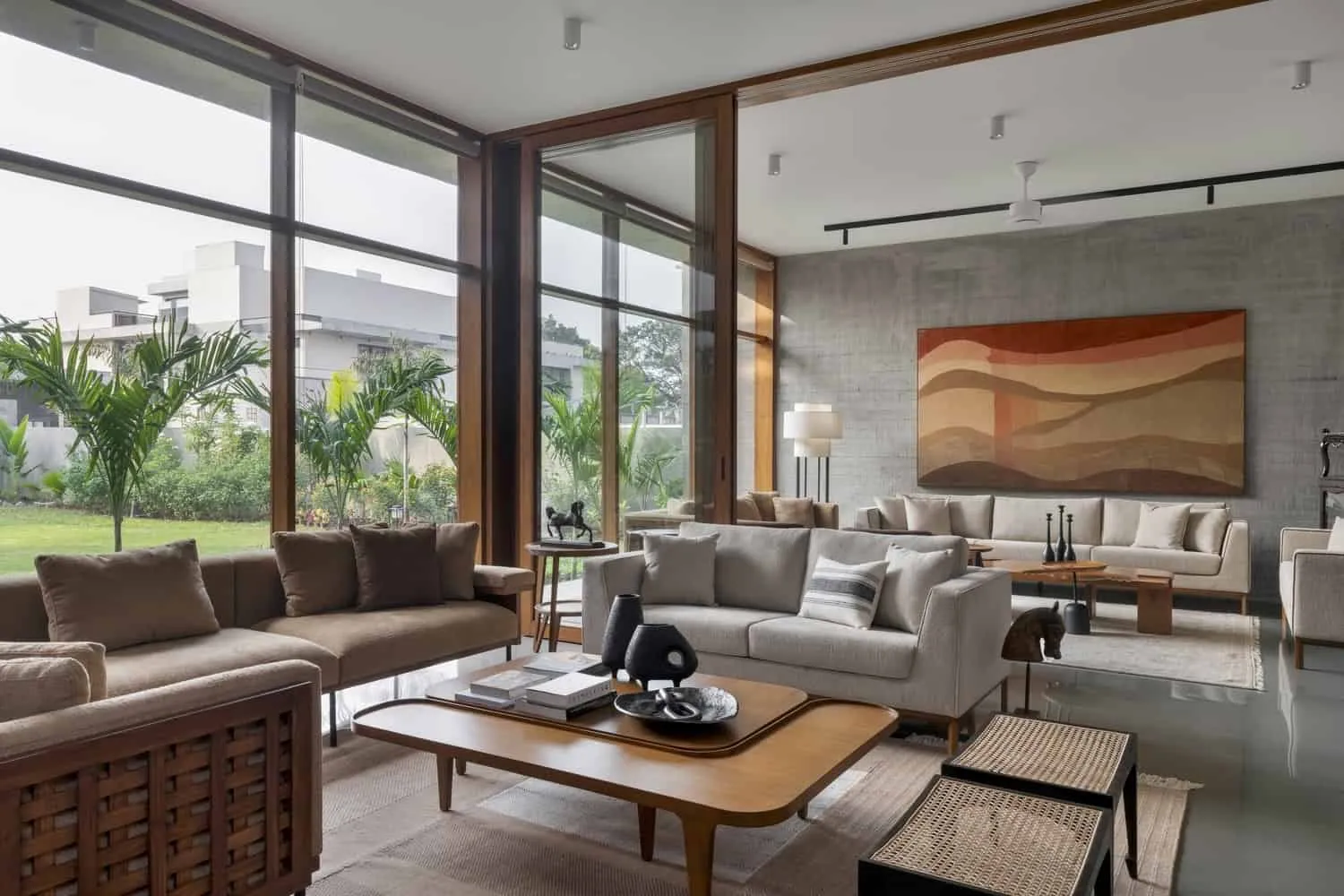
Formal living room: Located right behind the vestibule, it opens to landscaped gardens, offering an elegant space for guests.
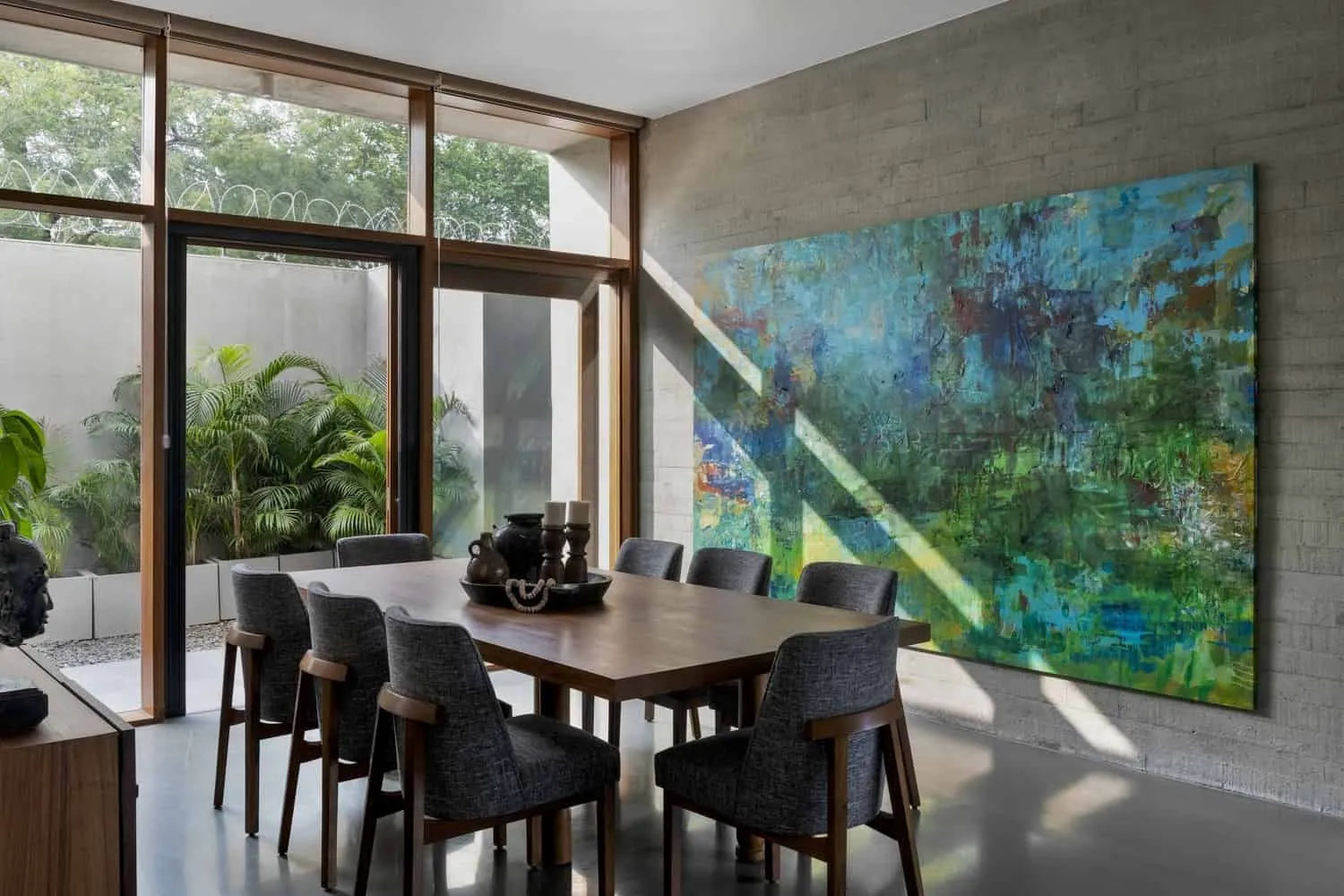
Living and dining area: The living room connects to the terrace and dining area behind it. Sliding doors allow the two areas to merge into one expansive zone for family events.
First floor bedrooms: The parents' bedroom is located in the southwest corner, ensuring privacy and a garden view.
Upper floor:
The son and granddaughter's bedrooms are connected through a cozy shared space.
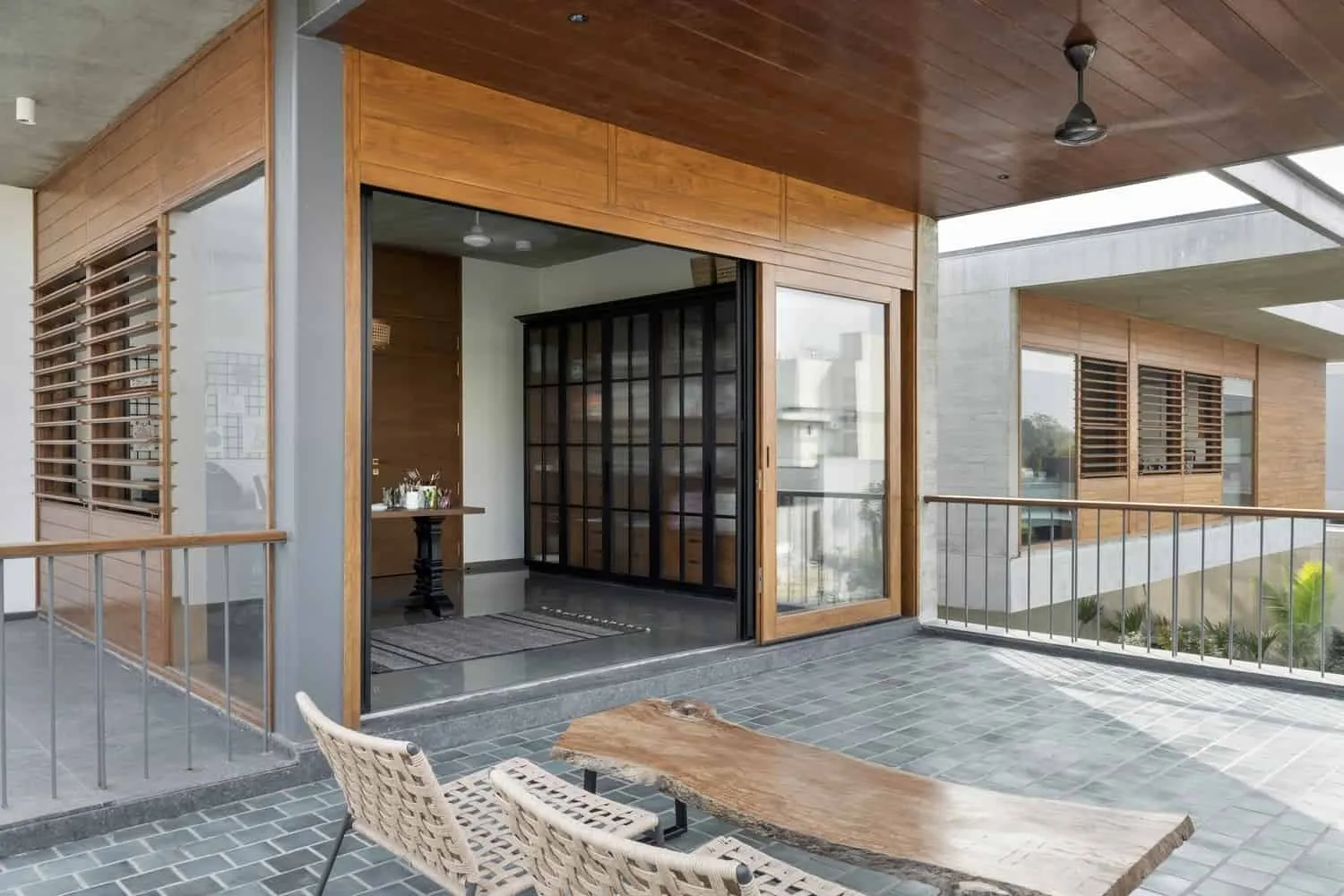
The guest bedroom and art studio are located on the opposite side, with the studio opening onto a terrace overlooking the garden below.
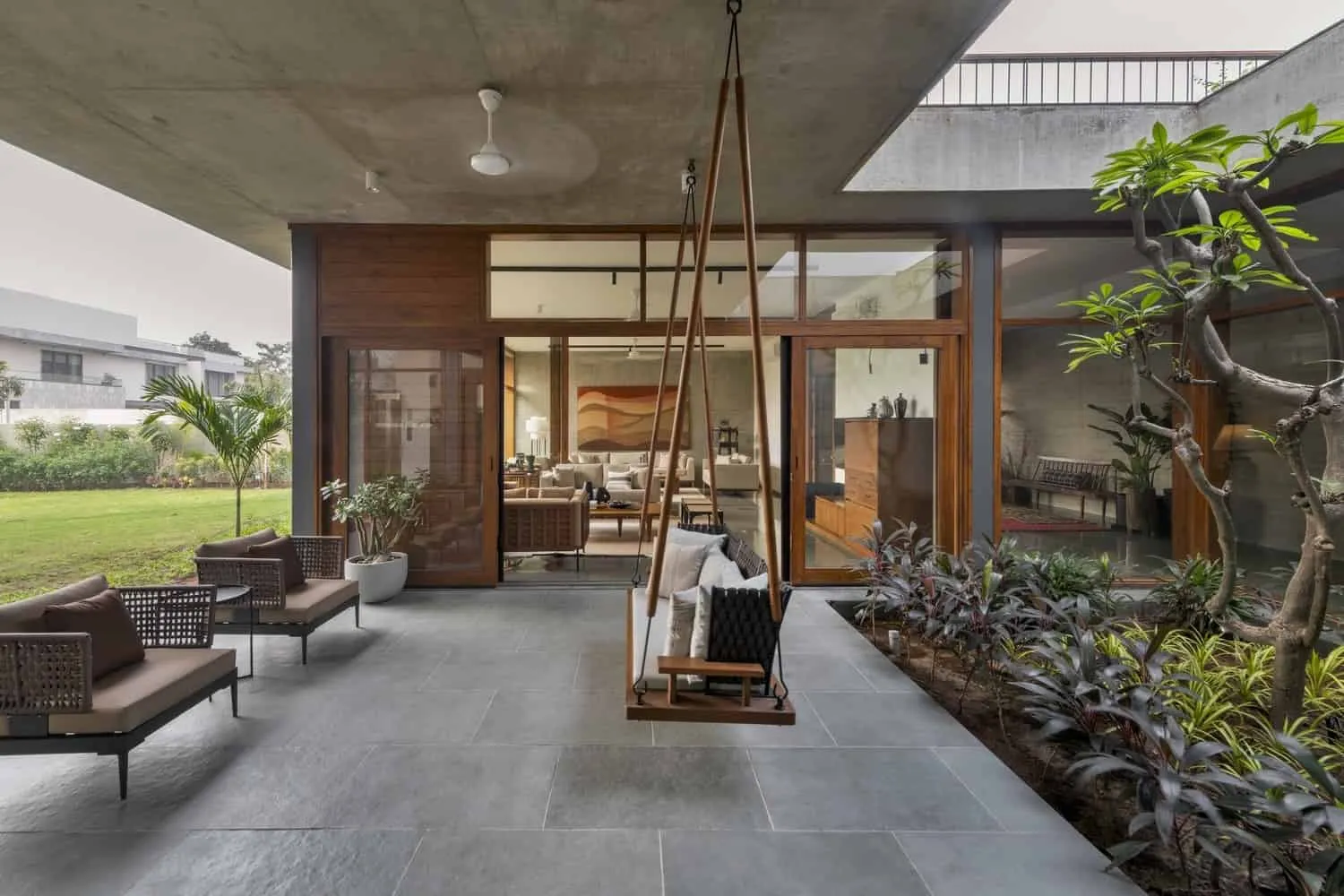
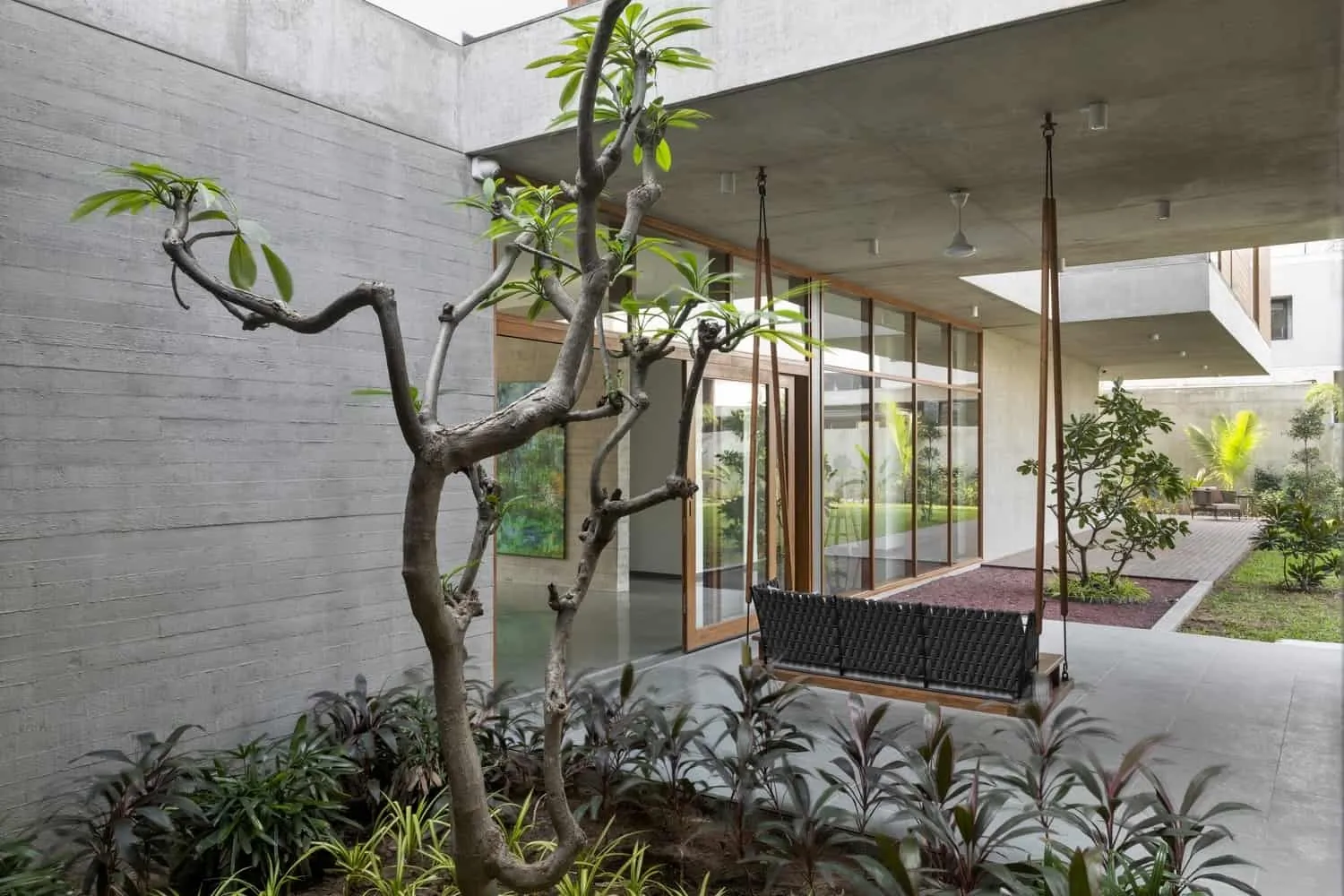
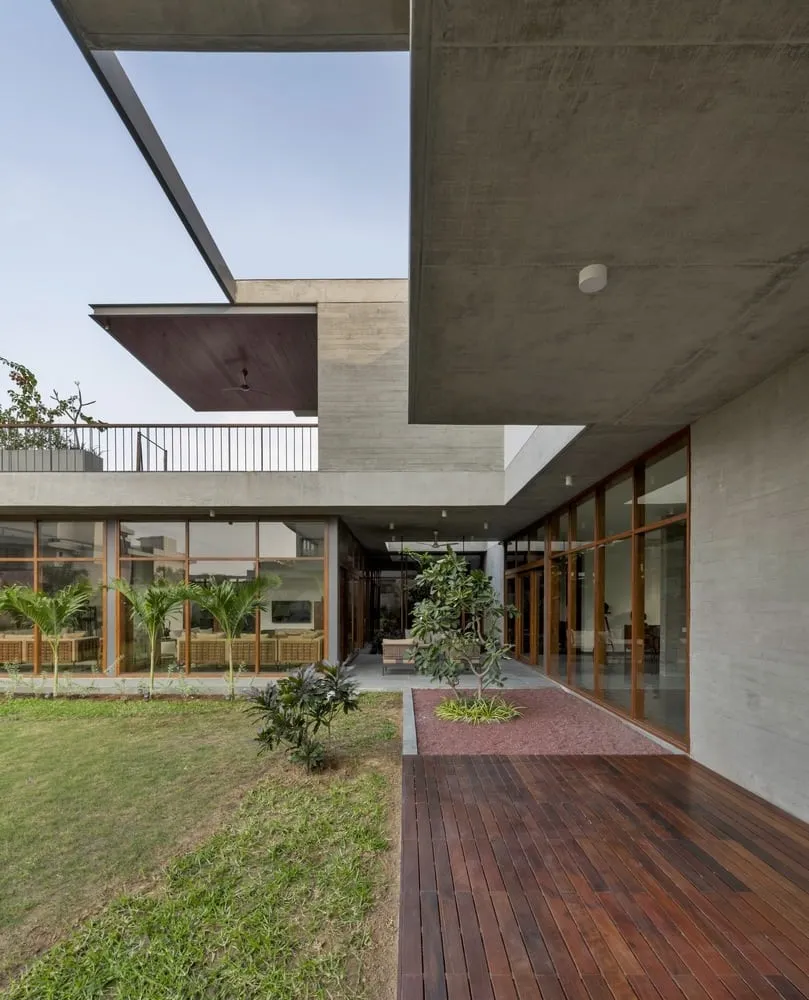
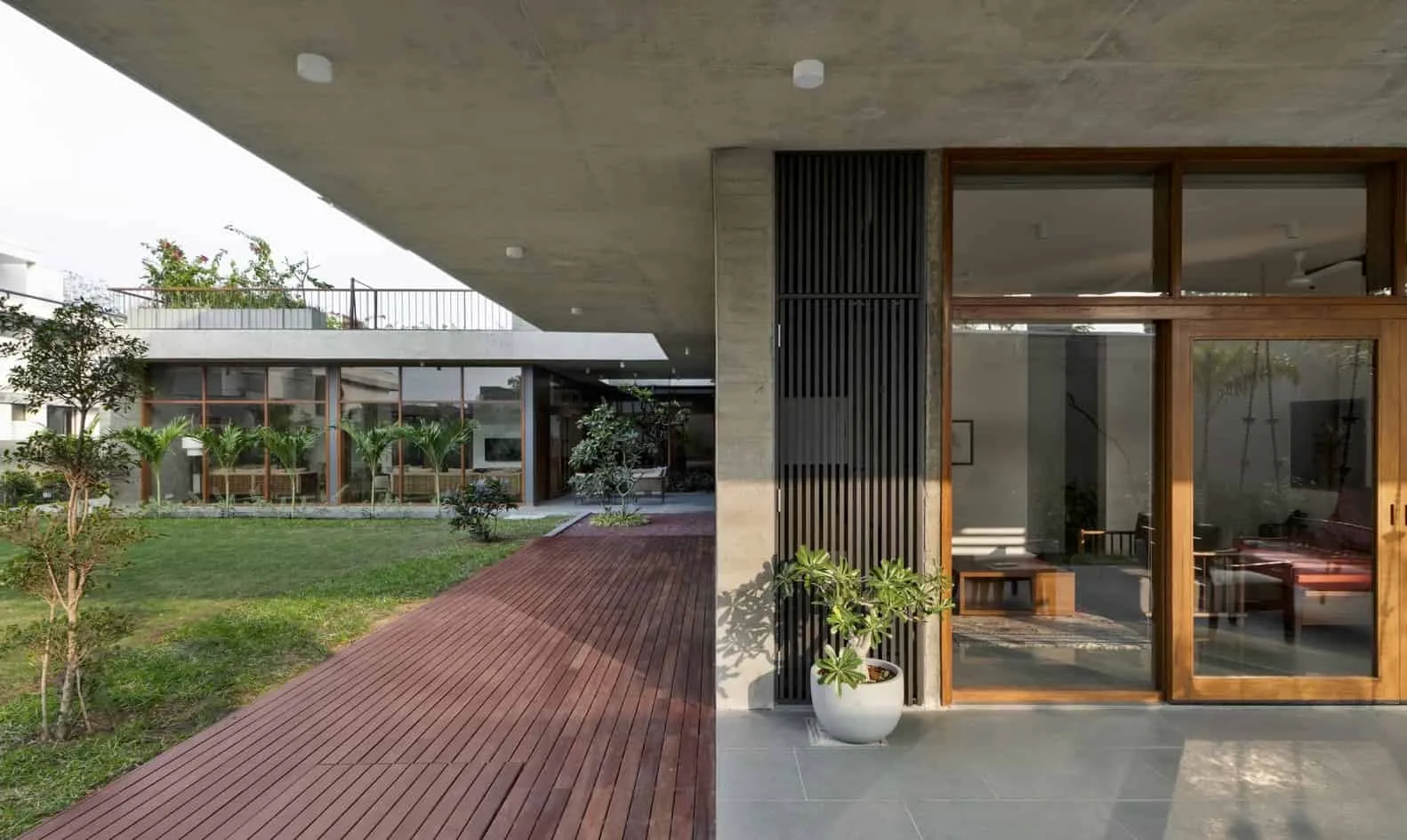
The outdoor terraces under the floating volume are designed for gatherings, celebrations, and evening relaxation.
The Floating Volume
The defining gesture of the project is a floating slab on the upper floor, extending over the garden and lower terrace. This not only increases living space above but also creates shaded outdoor zones for meetings. The interplay of weight and light gives the house its expressive identity.
Courtyard and Terrace: Passive Climate Design
The central courtyard and semi-open terrace provide natural light and airflow deep into the house. Adjustable sliding panels allow the family to adapt the level of openness based on weather and circumstances. These semi-open spaces echo traditional Indian vernacular layouts, offering a modern climate-responsive solution.
Interiors and Color Palette
The interior, designed in collaboration with Anarr Gunjaria, reflects a balance between tradition and modernity:
Color palette: A blend of warm wood, exposed concrete, and muted stone shelves creates a earthy yet contemporary atmosphere.
Furniture: The design combines contemporary Indian individual pieces with modern furniture solutions, ensuring comfort for all generations.
Lighting: Natural light dominates the interiors, supported by minimalist artificial lighting that highlights clean lines and open volumes.
The resulting aesthetic style is minimalist yet cozy, blending modern luxury with understated elegance.
A Home for Three Generations
The The Hovering House demonstrates how modern architecture can support multigenerational living. Each generation gets private sanctuaries, but shared zones, terraces, and courtyards foster unity.
From grandmothers to grandchildren, each family member finds connection and privacy in this layered design.
Architectural Significance
The The Hovering House embodies Modo Designs' aesthetic of contextual modernism:
The L-shaped layout creates open courtyards and green zones.
The floating upper floor expands habitable space without sacrificing ground-level garden areas.
The courtyard typology reinterprets traditional Indian vernacular in a contemporary context.
The climate-responsive design ensures natural lighting, cross-ventilation, and shaded outdoor spaces.
 Photos © PHX India
 Photos © PHX India
 Photos © PHX India
 Photos © PHX India
 Photos © PHX India
 Photos © PHX India
 Photos © PHX India
 Photos © PHX IndiaPhotos © PHX India
 Photos © PHX India
 Photos © PHX India
 Photos © PHX India
 Photos © PHX India
 Photos © PHX India
 Photos © PHX India
 Photos © PHX India