私人房屋保温安装

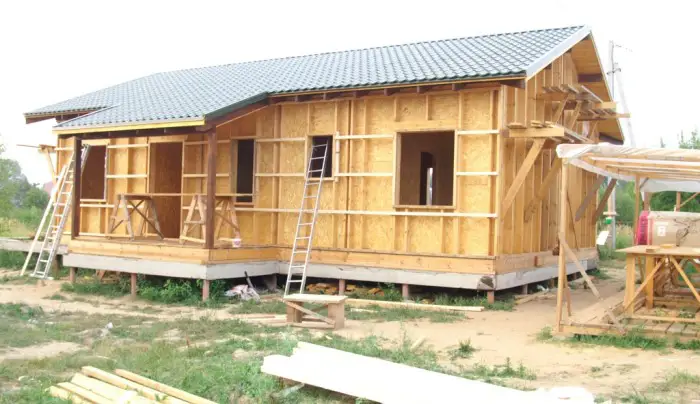
Photo 1 — Insulating a House
Types of Insulation Materials
The existing insulation technology uses several types of insulation materials, each with its own pros and cons. By material type, all insulation materials can be divided into:
- Fillable;
Insulation materials in granule form, filled either into wall cavities or onto floors. The most common is keramzit, which from a thermal insulation perspective is not very effective but its cost is quite attractive.
- Mineral or fibrous materials;
Supplied as sheets and rolls made of glass fiber (EKOWOOL, ROCKWOOL, FIBROLUX, МЕТРОТЕКСБ НОРТЕКС, АРМАТ, ИЗОРОК, URSA PUREONE); the main raw material for these materials is basalt, hence they are also called basalt insulation.
- Polypurthane foam;
A modern material with very low thermal conductivity and great potential for thermal insulation.
- Polystyrene foam;
Supplied in the form of boards; besides thermal insulation properties, it also has excellent moisture resistance and is frequently used in various utilities.

Photo 2 — Mineral Insulation
Except for keramzit, all mentioned insulation materials can be easily installed on ceilings, walls, or under siding.
Insulation Installation Procedure
The fastest way to insulate is by securing plates made of any kind of insulation material with plastic anchors followed by covering with finishing materials, such as pine tongue-and-groove boards.
The procedure for installing insulation is as follows:
Clean the wall or ceiling surface of debris and metal rods. If the insulation plates are not coated with vapor- and moisture-resistant layers, then a vapor barrier material is placed on the wall, and on top of the plates – a hydro-isolating one. Both materials should be sealed with sealing tape.
The plates or insulation panels are first attached with metal rods, which are later removed during installation with plastic anchors one by one.
After the insulation is secured, a frame is prepared for mounting the finishing layer, which can be made of gypsum board or tongue-and-groove boards.

Photo 3 — Installing Tongue-and-Groove Boards
Installing Tongue-and-Groove Boards
The process of installing tongue-and-groove boards has no tricks, so this type of finish can be installed by yourself.
The video shown below demonstrates how to cover a wall with tongue-and-groove boards. It does not use any insulation, but shows the gap between the wall and boards where insulation could be placed.
Installing Tongue-and-Groove Boards: Video Demonstrating Professional Installation
$ Installing Tongue-and-Groove Boards: Service Prices in Moscow and Kyiv
Cost of services for cladding walls or ceilings with tongue-and-groove boards (including plastic ones) in two capitals per square meter:
- Moscow – from 250 rubles;
- Kyiv – from 40 hryvnia.
As you can see, the cost of tongue-and-groove board installation is not so high as to exclude hiring professionals for this job.
$ Installing Insulation: Prices in Moscow and Kyiv
Insulation installation costs in both capitals start at:
- Moscow – 200 rubles per square meter;
- Kyiv – 25 hryvnia per square meter.